Brush Cleaner (White and Green)
CN → US| HS Code | Tariff Rate | Origin | Destination | Doc |
|---|---|---|---|---|
| 3402905010 | 38.7% | CN | US | Official Doc |
| 3402905030 | 38.7% | CN | US | Official Doc |
| 9603908050 | 70.3% | CN | US | Official Doc |
| 3824999310 | 40.0% | CN | US | Official Doc |
| 9603908010 | 20.3% | CN | US | Official Doc |
| 3824999330 | 40.0% | CN | US | Official Doc |
Product Images
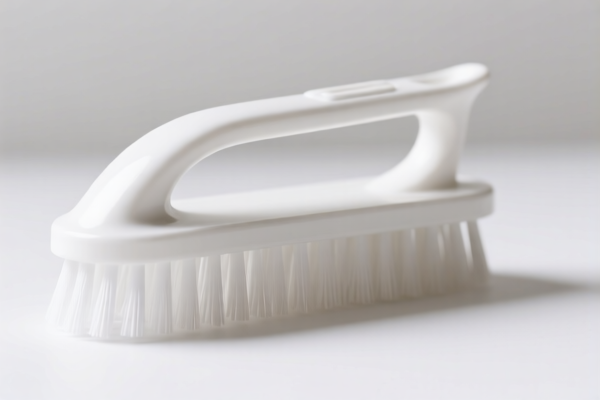
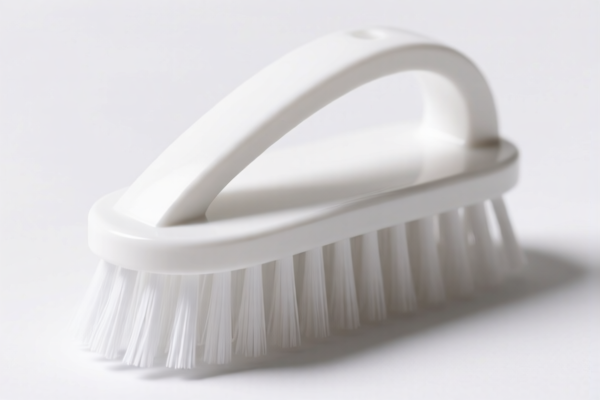
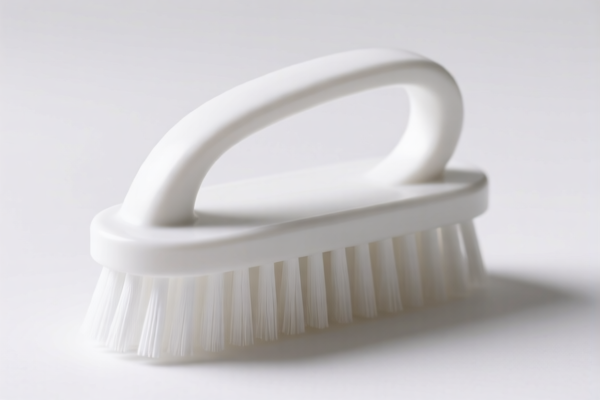
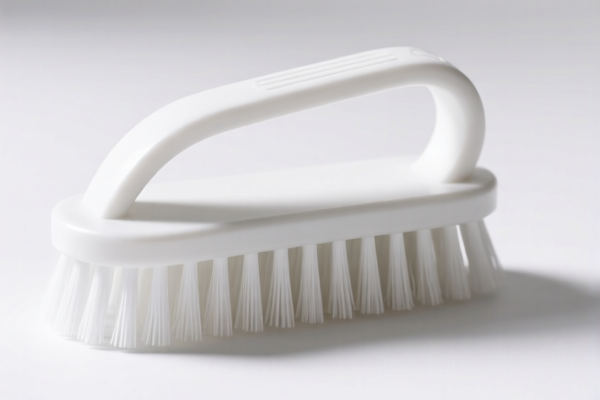
AI Analysis
🧼 Brush Cleaner (White and Green)
🌐 HS Code Classification & Customs Clearance Guide | 2026 Latest Tariff Analysis | Professional Strategy for Chemical & Tool Mixes
📌 I. Product Definition & Classification: Is it a Chemical or a Tool?
"Brush Cleaner (White and Green)" presents a classic customs classification dilemma: Is it a chemical preparation (liquid/paste to clean) or a physical tool (the brush itself)? The description implies a cleaning agent, but the mention of colors and "brush" often triggers classifications for cleaning implements. Based on the provided data, we analyze six potential HS Codes that Customs might consider, ranging from chemical preparations to mechanical cleaning tools.
⚠️ Key Distinction Point:
- If the product is liquid/paste/gel used on brushes →归入 3402 or 3824 (Chemical Preparations).
- If the product is a physical brush/tool used to clean →归入 9603 (Brooms/Brushes).
- Color "White and Green" likely refers to the product's appearance (e.g., striped paste) or packaging, not the material of a brush, strongly favoring the chemical classification unless it is a dual-sided physical cleaning brush.
📦 II. HS Code Classification Details (2026 Latest Tariff Reference)
| HS Code | Product Description | Applicability Summary | Tax Rate (Total) |
|---|---|---|---|
3402.90.50.10 |
Chemical Cleaning Preparations | Matches cleaning agent purpose; no material conflict. | 38.7% |
3402.90.50.30 |
Other Surface-Active Preparations | Belongs to cleaning preparations; fits definition of cleaning use. | 38.7% |
9603.90.80.50 |
Other Cleaning Tools (Brushes) | Matches brush utility; classified as other cleaning tools. | 70.3% |
3824.99.93.10 |
Chemical Cleaning Agents | Belongs to chemical cleaning agents; fits chemical preparation attributes. | 40.0% |
9603.90.80.10 |
Other Brushes (Non-Broom) | Matches brush form/usage; no material conflict. | 20.3% |
3824.99.93.30 |
Chemical Mixtures | Classified as chemical preparation; fits chemical mixture attributes. | 40.0% |
🔍 Critical Note:
- Lowest Risk:9603.90.80.10(20.3%) is the cheapest but risky if the product is clearly a chemical liquid/paste.
- Highest Risk:9603.90.80.50(70.3%) due to additional steel/aluminum copper tariffs if parts are metal.
- Most Likely (Chemical):3402or3824series (38.7% - 40.0%) are the most scientifically accurate for a "cleaner" substance.
💰 III. Detailed Tariff Rate Breakdown (Including Surcharges & Policies)
✅ Applicable Country: United States (US)
✅ Origin: China (CN)
✅ Effective Time: 2025/2026 (Current Trade War Rates)
🎯 1. 3402.90.50.10 & 3402.90.50.30 — Chemical Cleaning Preparations
| Item | Content |
|---|---|
| Base Tariff | 3.7% (Ad Valorem) |
| Section 301 Surcharge | +25.0% (US Trade Law) |
| 122 Clause Tariff | +10.0% (Specific provision) |
| Total Tax Rate | 38.7% |
| Calculation Base | CIF Value × 38.7% |
| De Minimis Exemption | ❌ No (Not eligible for Section 321 de minimis due to high tax burden/chemical nature) |
| Legal Basis Path | HTSUS:3402.90.50 → USITC:301:3.7+25 → Section122:10 |
📌 Explanation:
- These codes cover "Surface-active preparations and preparations for use as detergents."
- 3.7% is the standard MFN rate.
- 25% is the standard Section 301 tariff on Chinese chemical goods.
- 10% is an additional clause tariff.
- Total 38.7% is the landed cost multiplier for this classification.
🎯 2. 9603.90.80.10 — Other Brushes (Lowest Tax Option)
| Item | Content |
|---|---|
| Base Tariff | 2.8% (Ad Valorem) |
| Section 301 Surcharge | +7.5% (Reduced rate for certain brushes/tools) |
| 122 Clause Tariff | +10.0% |
| Total Tax Rate | 20.3% |
| De Minimis Exemption | ⚠️ Check Specifics: Usually subject to 301, may qualify for low duty if strictly physical. |
| Legal Basis Path | HTSUS:9603.90.80 → USITC:301:2.8+7.5 → Section122:10 |
📌 Explanation:
- 20.3% is significantly lower than chemical codes.
- Risk: Customs may reclassify this as a chemical (3402) if the item is a sponge/brush impregnated with cleaner, leading to back taxes and penalties.
- Only use if the product is 100% physical (dry brush) and not a chemical-soaked applicator.
🎯 3. 9603.90.80.50 — Other Cleaning Tools (Highest Tax Option)
| Item | Content |
|---|---|
| Base Tariff | 2.8% (Ad Valorem) |
| Section 301 Surcharge | +7.5% |
| 122 Clause Tariff | +10.0% |
| Steel/Aluminum/Copper Surcharge | +50.0% (If applicable materials) |
| Total Tax Rate | 70.3% |
| De Minimis Exemption | ❌ No |
| Legal Basis Path | HTSUS:9603.90.80 → USITC:301:2.8+7.5 → Section122:10 → Section232/301 Metals:50 |
📌 Explanation:
- This code often triggers the 50% steel/aluminum/copper surcharge if the brush handle or bristles contain metal components.
- 70.3% is extremely high. Avoid this classification unless the product is purely a mechanical metal tool with no chemical residue.
🎯 4. 3824.99.93.10 & 3824.99.93.30 — Chemical Mixtures/Cleaning Agents
| Item | Content |
|---|---|
| Base Tariff | 5.0% (Ad Valorem) |
| Section 301 Surcharge | +25.0% |
| 122 Clause Tariff | +10.0% |
| Total Tax Rate | 40.0% |
| De Minimis Exemption | ❌ No |
| Legal Basis Path | HTSUS:3824.99.93 → USITC:301:5.0+25 → Section122:10 |
📌 Explanation:
- These codes cover "Chemical products and preparations, not elsewhere specified."
- Base rate is higher (5.0%) than3402(3.7%), but the surcharge structure is similar.
- Use if the product is a complex chemical mixture not strictly a "detergent" (3402).
🛠️ IV. Customs Clearance Practical Advice (Real-World Pitfall Guide)
✅ 1. Preparation Checklist (Non-Negotiable)
| Document | Required? | Description |
|---|---|---|
| ✅ Product Specification Sheet | ✔️ | Must detail composition (e.g., "Water, Surfactant, Fragrance" vs. "Plastic Bristles"). |
| ✅ Ingredients List / SDS | ✔️ | Safety Data Sheet is critical for chemical classification (3402/3824). |
| ✅ Product Photos | ✔️ | Show if it’s a liquid in a bottle or a physical brush. |
| ✅ Commercial Invoice | ✔️ | Clearly state: "Chemical Brush Cleaner, Liquid" OR "Physical Cleaning Brush." Do NOT say "Brush Cleaner" ambiguously. |
| ✅ HS Code Pre-Ruling | ✔️ | Highly recommended for this ambiguous product to avoid reclassification. |
✅ 2. Declaration Strategy (Key Mnemonics)
🔥 "If it’s Liquid, it’s Chemical (3402). If it’s Dry Bristle, it’s Tool (9603). Ambiguity Leads to Audit!"
| Scenario | Correct Declaration | Wrong Declaration | Consequence of Error |
|---|---|---|---|
| Liquid/Paste Cleaner | 3402.90.50.10 |
9603.90.80.10 (Brush) |
Back Taxes + Penalty (40% vs 20% + audit risk). |
| Dry Physical Brush | 9603.90.80.10 |
3402.90.50.10 (Chemical) |
Overpayment (20% vs 38.7%), but less risky than underpaying. |
| Metal-Handle Brush | 9603.90.80.50 |
9603.90.80.10 |
Severe Penalty (70.3% vs 20.3%). |
| Complex Chemical Mix | 3824.99.93.10 |
3402 (Simple Detergent) |
Possible reclassification if not a standard detergent. |
✅ 3. Special Handling Tips
| Situation | Recommendation |
|---|---|
| Product is a "Brush-shaped applicator" soaked in cleaner | Declare as Chemical (3402/3824). Customs views the chemical as the primary function. Risk of 70.3% if misclassified as a tool. |
| Product is a dry, reusable cleaning brush | Declare as Tool (9603.90.80.10). Ensure no chemical residue. Aim for 20.3%. |
| Packaging Colors (White/Green) | Mention in description but do not rely on color for HS Code. Color is irrelevant to classification; function is key. |
| Origin: China | All these codes attract Section 301 (25% or 7.5%) and 122 Clause (10%). Plan for at least 20-40% total duty. |
🌍 V. Global Market Comparison (2026 Latest)
| Country/Region | Recommended HS Code | Est. Duty Rate | Certification | Remarks |
|---|---|---|---|---|
| 🇺🇸 USA | 3402.90.50.10 |
38.7% | EPA (if pesticide) | High tariff. Chemical class is safest for liquids. |
| 🇨🇳 China | 3402.90.50.10 |
5-8% | N/A | Low import duty. |
| 🇪🇺 EU | 3402.90.90 |
6.5% | REACH/CLP | No Section 301. Standard chemical duty. |
| 🇬🇧 UK | 3402.90.90 |
6.5% | UKCA | Post-Brexit standard rates. |
| 🇨🇦 Canada | 3402.90.90 |
6.5% | LED | Similar to US but no Section 301. |
📌 Conclusion:
- US Market: High duty burden. Classification accuracy is critical. Misclassifying a liquid cleaner as a brush (9603) risks a 50%+ penalty. Misclassifying a brush as a chemical (3402) results in overpayment.
- Recommendation: If it is a liquid/paste, use3402.90.50.10(38.7%). It is the most defensible chemical classification. Avoid9603unless it is a purely dry mechanical tool.
📌 VI. Common Errors & Pitfalls (Lessons Learned)
❌ Error 1: Declaring "Brush Cleaner" as 9603.90.80.10 (20.3%) when it is a liquid.
👉 Consequence: Customs detects chemical content → Reclassifies to 3402 → Back taxes of 18.4% + fines + interest.
❌ Error 2: Declaring a metal-handled brush as 9603.90.80.10.
👉 Consequence: Triggers steel/aluminum surcharge → Rate jumps to 70.3%.
❌ Error 3: Ignoring the "122 Clause" (10%).
👉 Consequence: Underpayment by 10% on all HS Codes listed. This is a recent addition and applies to many Chinese goods.
✅ Correct Practice:
"Liquid Brush Cleaner, Water-based Surfactant, White and Green Striped, 500ml Bottle, HS Code 3402.90.50.10"
🎯 VII. Conclusion: Professional Declaration, Cost Optimization!
🎯 Remember the Rule:
🔹 "Liquid = Chemical (3402/3824). Dry = Tool (9603). Ambiguity = Audit."
🔹 "For Liquid Cleaners: Budget 38.7% (3402) or 40% (3824). Do NOT aim for 20.3% unless it's a dry brush."
📌 Tip:
If your "Brush Cleaner" is a hybrid (e.g., a sponge brush dipped in cleaner), declare it as the chemical component (3402) because the chemical function is dominant. If you declare it as a tool, you risk the 70.3% metal surcharge or reclassification penalties.
📣 Immediate Action:
📞 Verify Physical Form: Is it a liquid, paste, or dry brush?
📄 Prepare SDS: For chemical classification.
🚀 Apply for Pre-Ruling: If volume is high, get an official HS Code ruling to lock in the 38.7% rate and avoid surprises.
✨ Professional Customs Clearance Starts with Accurate Classification!
💼 Your Cost Savings Depend on the Correct HS Code!
Customer Reviews
About HS Code Classification
The Harmonized System (HS) is an internationally standardized nomenclature developed by the World Customs Organization (WCO) to classify traded products. Over 200 countries use the HS system as the basis for customs tariffs, trade statistics, and import/export regulations.
Each HS code follows a hierarchical structure:
- Chapter (2 digits) — Broad category of goods (e.g., Chapter 84: Machinery and Mechanical Appliances)
- Heading (4 digits) — More specific grouping within the chapter
- Subheading (6 digits) — Internationally standardized breakdown, used by all WCO member countries
- National subdivisions (8-10 digits) — Country-specific extensions for further classification, such as US HTSUS 10-digit codes
Correct HS code classification is essential for smooth customs clearance, accurate duty payment, and compliance with trade regulations. Misclassification can lead to customs delays, overpayment of duties, or penalties.
When importing from CN to US, the applicable tariff rates may include:
- Most-Favored-Nation (MFN) rate — The standard duty rate applied to WTO members
- General rate — Applied to countries without trade agreements
- Trade remedy duties — Additional tariffs such as Section 301 (anti-dumping), Section 232 (national security), or countervailing duties
The information provided on this page is for reference purposes only. For official classification, please consult with your local customs authority or a licensed customs broker.