Brushless Controller
CN → US| HS Code | Tariff Rate | Origin | Destination | Doc |
|---|---|---|---|---|
| 8543706000 | 35.0% | CN | US | Official Doc |
| 8537109160 | 37.7% | CN | US | Official Doc |
| 8537109170 | 37.7% | CN | US | Official Doc |
| 8543709860 | 37.6% | CN | US | Official Doc |
| 8504404000 | 35.0% | CN | US | Official Doc |
Product Images
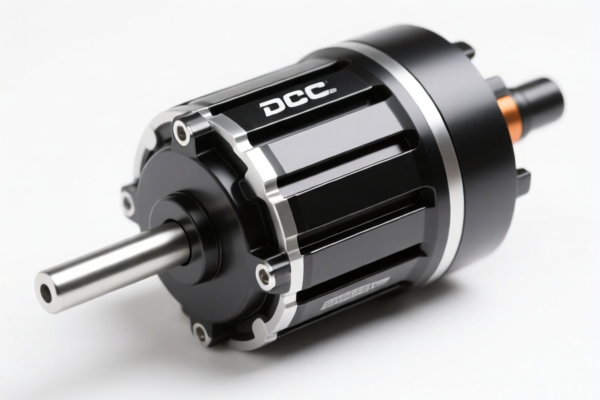
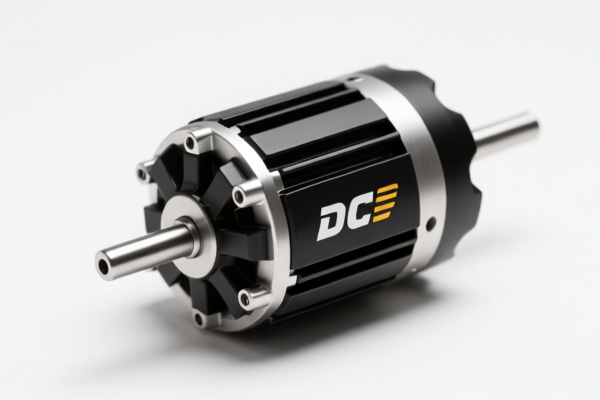
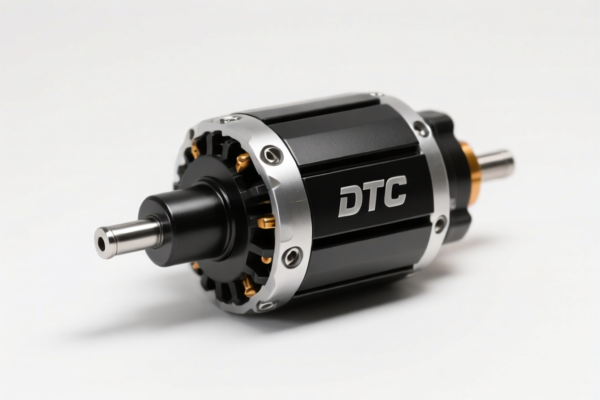
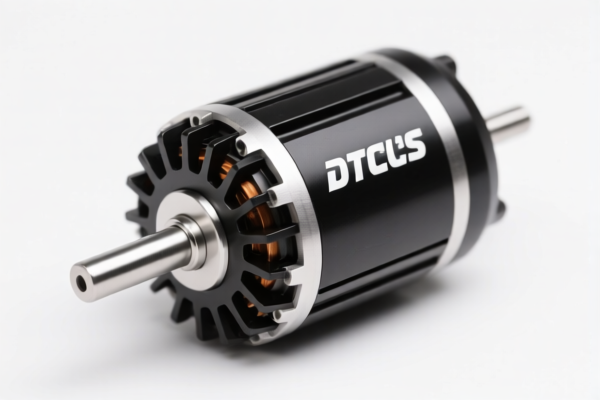
AI Analysis
⚡ Brushless Controller (BLDC Driver)
🌐 HS Code Reference & Customs Clearance Guide | 2026 Latest Tariff Analysis | Professional Classification Strategy
📌 I. Product Definition & Classification: What Exactly Is a "Brushless Controller"?
The Brushless Controller (often referred to as BLDC Driver or Electronic Speed Controller - ESC) is a critical electronic component used to control the speed, torque, and direction of Brushless DC (BLDC) motors. It is widely used in electric vehicles, drones, industrial automation, and consumer appliances.
In international trade, classification depends heavily on its functional priority and structural integration:
- Electronic Control Apparatus (HS 8537): If the device is primarily viewed as a "control board" or "switching apparatus" that manages electrical circuits for machinery.
- Other Specialized Electrical Machines/Apparatus (HS 8543): If it is viewed as a specialized electronic device designed to process signals or connect instruments, rather than a general power switch.
- Static Converters/Motor Drivers (HS 8504): If it is explicitly defined as a device for driving electric motors (speed control) rather than just switching power.
⚠️ Key Distinction Point:
- If the device is categorized as a control apparatus (managing circuits) → Go to HS 8537.
- If the device is categorized as a specialized electronic instrument/apparatus → Go to HS 8543.
- If the device is categorized as a motor speed driver/convertor → Go to HS 8504.
📦 II. HS Code Classification Details (2026 Latest Tariff Authority Comparison)
Based on the provided data, here are the five potential HS Codes for Brushless Controllers, ranked by their tax implications and classification logic.
| HS Code | Product Description | Classification Logic | Total Tax Rate (China Origin) |
|---|---|---|---|
8543.70.60.00 |
Specialized Electronic Apparatus | Classified as an electronic device connected to instruments. Inferred to be Integrated Circuits or electronic components. Focuses on the electronic signal processing aspect. | 35.0% |
8504.40.40.00 |
Motor Speed Driver / Static Converter | Classified specifically as a device for driving electric motor speed. Fits the definition of "Static Converters" and "Electric Motor Speed Drivers." Focuses on the motor control function. | 35.0% |
8543.70.98.60 |
Other Machines/Apparatus (Catch-all) | Classified as electrical control equipment where the core function falls under motors/electrical appliances. Uses the "Other machinery and apparatus" residual category. | 37.6% |
8537.10.91.60 |
Control Apparatus (Electric) | Classified as electrical control apparatus. Functionally consistent with programmable controllers. Inferred as an electronic component. | 37.7% |
8537.10.91.70 |
Power Control Equipment | Classified as power control equipment, fitting the usage of control devices under Heading 8537.10. Inferred as an electronic circuit assembly. | 37.7% |
🔍 Priority Recommendation:
- Lowest Tax:8543.70.60.00or8504.40.40.00(35.0%) are the most advantageous classifications.
- Highest Tax:8537.10.91.60and8537.10.91.70(37.7%) carry the highest burden.
- Strategy: Argue for 8504.40.40.00 if the product is strictly a motor driver, or 8543.70.60.00 if it is a specialized electronic signal controller. Avoid 8537 if possible, as it attracts the highest duties.
💰 III. 2026 Latest Tariff Rate Breakdown (Including Additional Duties)
✅ Applicable Country: United States (US)
✅ Origin: China (CN)
✅ Effective Date: Current trade policies (Section 301 + IEEPA)
🎯 1. The "Best Case" Scenarios: 8543.70.60.00 & 8504.40.40.00
Both codes offer the lowest total tax rate of 35.0% among the options provided.
| Item | Content |
|---|---|
| Base Duty Rate | 0.0% (ad valorem) |
| Section 301 Duty (USITC) | +25.0% |
| IEEPA Duty (122 Clause) | +10.0% |
| Total Effective Rate | 35.0% |
| Tax Calculation | CIF Value × 35.0% |
| De Minimis Exemption | ❌ Not Applicable |
| Legal Basis Path | USITC:8543.70.60.00 / USITC:8504.40.40.00 → FOOTNOTE:301 → IEEPA:9903 |
📌 Explanation:
- The Base Duty is 0%, which is rare and highly advantageous.
- The Total 35% is composed entirely of trade sanctions: 25% (Section 301) + 10% (IEEPA/Section 122).
- Risk: While the rate is lower than 37.7%, it is still significant. Ensure the product description clearly supports "Motor Driver" or "Electronic Instrument" to qualify for these specific sub-headings.
🎯 2. The "High Cost" Scenarios: 8537.10.91.60 & 8537.10.91.70
These codes result in the highest total tax rate of 37.7%.
| Item | Content |
|---|---|
| Base Duty Rate | 2.7% (ad valorem) |
| Section 301 Duty (USITC) | +25.0% |
| IEEPA Duty (122 Clause) | +10.0% |
| Total Effective Rate | 37.7% |
| Tax Calculation | CIF Value × 37.7% |
| De Minimis Exemption | ❌ Not Applicable |
| Legal Basis Path | USITC:8537.10.91.60 / USITC:8537.10.91.70 → FOOTNOTE:301 → IEEPA:9903 |
📌 Explanation:
- These codes classify the controller as a "Control Apparatus" (like PLCs or switchgear).
- They attract a Base Duty of 2.7% on top of the sanctions.
- Result: You pay 2.7% + 25% + 10% = 37.7%. This is 2.7 percentage points more expensive than the best-case scenario. Over large volumes, this is a significant cost difference.
🎯 3. The "Mid-Range" Scenario: 8543.70.98.60
| Item | Content |
|---|---|
| Base Duty Rate | 2.6% (ad valorem) |
| Section 301 Duty (USITC) | +25.0% |
| IEEPA Duty (122 Clause) | +10.0% |
| Total Effective Rate | 37.6% |
| Tax Calculation | CIF Value × 37.6% |
📌 Explanation:
- This is the "catch-all" for other machines.
- Base duty is 2.6%, leading to a 37.6% total.
- Recommendation: Avoid this code if possible; prefer8543.70.60.00(35.0%) which has the same functional description but a 0% base duty.
🛠️ IV. Customs Clearance Practical Advice (Pitfall Avoidance Guide)
✅ 1. Documentation Checklist (Mandatory)
| Document | Required | Notes |
|---|---|---|
| ✅ Product Spec Sheet | ✔️ | Must detail input/output voltage, current, control signals, and application (e.g., "For BLDC Motor Control"). |
| ✅ Circuit Diagram/Schematic | ✔️ | Critical for proving whether it is a "Control Apparatus" (8537) or "Motor Driver" (8504). |
| ✅ Product Photos | ✔️ | Clear images of the device, including labels, connectors, and internal board if possible. |
| ✅ Commercial Invoice | ✔️ | Clearly state: "Brushless DC Motor Controller, Electronic Speed Controller, Model [XYZ], for Industrial Use." Avoid vague terms like "Electric Part." |
| ✅ Origin Certificate | ✔️ | If not China-origin, provide to check for FTAA/USMCA exemptions (unlikely for electronics from CN). |
| ✅ Third-Party Reports | ✔️ | FCC (for US market), CE, RoHS compliance. |
✅ 2. Classification Strategy (Key Mantras)
🔥 "Motor Driver First, Control Board Second, Instrument Last!"
| Scenario | Recommended HS Code | Reason | Tax Rate |
|---|---|---|---|
| Dedicated Motor Speed Control | 8504.40.40.00 |
Explicitly defines "Electric Motor Speed Driver." | 35.0% (Best) |
| Specialized Electronic Instrument | 8543.70.60.00 |
Defined as electronic device connected to instruments. | 35.0% (Best) |
| General Electrical Control Panel | 8537.10.91.60/70 |
Treated as general control apparatus. | 37.7% (Worst) |
| Other/Miscellaneous Electrical | 8543.70.98.60 |
Catch-all category. | 37.6% |
⚠️ Critical Warning:
- Do NOT simply declare as "Electronic Part" or "Controller" without specifying the function. Customs will likely default to 8537 (Control Apparatus) due to ambiguity, resulting in the 37.7% rate.
- Argument for 8504.40.40.00: Emphasize that the device's primary purpose is to regulate motor speed via static conversion, not just to switch circuits.
- Argument for 8543.70.60.00: Emphasize that it is a specialized electronic apparatus with specific signal processing capabilities for instrument connection.
✅ 3. Special Circumstances
| Situation | Handling Advice |
|---|---|
| Integrated with Motor | If the controller is permanently attached to the motor, the entire assembly may be classified under the Motor (8501). Check HS 8501 subheadings. |
| Universal vs. Dedicated | Universal controllers might lean towards 8537. Dedicated controllers (for specific brands/motor types) lean towards 8504 or 8543. |
| Software-Filled | If the controller is sold with pre-loaded proprietary software for motor mapping, ensure the software is declared as part of the hardware value to avoid separate software classification issues. |
🌍 V. Global Market Comparison (2026 Update)
| Country/Region | Recommended HS Code | Approx. Tax (China Origin) | Certification | Notes |
|---|---|---|---|---|
| 🇺🇸 USA | 8504.40.40.00 |
35.0% | FCC, UL | High Section 301 + IEEPA duties. |
| 🇪🇺 EU | 8504.40.00 |
0% (Base) + VAT | CE, RoHS | No Section 301 equivalent. Competitive. |
| 🇨🇳 China | 8504.40.40.00 |
0% | CCC | Exporting to China? Low duty. |
| 🇻🇳 Vietnam | 8504.40.40.00 |
Check GSP/ASEAN | CE | Potential preferential rates if assembled locally. |
📌 Conclusion:
- The US market is the most expensive due to layered sanctions (25% + 10%).
- EU and China offer much lower tax burdens.
- For US imports, accurate classification is financially critical. A 2.7% base duty difference between HS codes translates to real profit loss.
📌 VI. Common Mistakes & Pitfalls (Lessons Learned)
❌ Mistake 1: Declaring as "Electronic Component"
👉 Result: Customs may assign 8543.70.98.60 (37.6%) or 8537 (37.7%) due to lack of specificity.
✅ Fix: Use precise terminology: "Brushless DC Motor Speed Controller."
❌ Mistake 2: Ignoring the "Motor Driver" aspect
👉 Result: Missing out on the 8504.40.40.00 (35.0%) classification.
✅ Fix: Highlight the static converter and motor drive function in the commercial invoice.
❌ Mistake 3: Assuming "Controller" = "Control Apparatus" (8537)
👉 Result: Automatically hitting the 37.7% rate.
✅ Fix: Provide technical documentation proving the device is a specialized electronic apparatus (8543) or motor driver (8504).
❌ Mistake 4: Not including FCC/CE Certs
👉 Result: Customs detention or refusal of entry in the US/EU.
✅ Fix: Attach compliance certificates with the shipment.
🎯 VII. Conclusion: Professional Classification Saves Money!
🎯 Key Takeaway:
Choose
8504.40.40.00or8543.70.60.00for a 35.0% total tax rate.
Avoid8537.10.91.xto escape the 37.7% penalty.
📌 Action Plan:
1. Review Product Specs: Ensure the description emphasizes "Motor Speed Control" or "Electronic Instrument."
2. Draft Invoice Carefully: Use the exact HS code in the declaration if possible, or describe the function to match 8504 or 8543.
3. Consult Customs Broker: Submit a Pre-Ruling Request to US Customs (CBP) to lock in the 8504.40.40.00 classification before shipping.
4. Calculate Landed Cost: Factor in the 35.0% total duty, not just the base rate.
📣 Final Tip:
"In the US, a 2.7% base duty difference is 2.7% of your entire CIF value. For a $100,000 shipment, that’s $2,700. Don't let lazy classification cost you profit!"
✨ Professional Customs Clearance Starts with Accurate Classification!
💼 Optimize Your HS Code, Maximize Your Margin!
Customer Reviews
About HS Code Classification
The Harmonized System (HS) is an internationally standardized nomenclature developed by the World Customs Organization (WCO) to classify traded products. Over 200 countries use the HS system as the basis for customs tariffs, trade statistics, and import/export regulations.
Each HS code follows a hierarchical structure:
- Chapter (2 digits) — Broad category of goods (e.g., Chapter 84: Machinery and Mechanical Appliances)
- Heading (4 digits) — More specific grouping within the chapter
- Subheading (6 digits) — Internationally standardized breakdown, used by all WCO member countries
- National subdivisions (8-10 digits) — Country-specific extensions for further classification, such as US HTSUS 10-digit codes
Correct HS code classification is essential for smooth customs clearance, accurate duty payment, and compliance with trade regulations. Misclassification can lead to customs delays, overpayment of duties, or penalties.
When importing from CN to US, the applicable tariff rates may include:
- Most-Favored-Nation (MFN) rate — The standard duty rate applied to WTO members
- General rate — Applied to countries without trade agreements
- Trade remedy duties — Additional tariffs such as Section 301 (anti-dumping), Section 232 (national security), or countervailing duties
The information provided on this page is for reference purposes only. For official classification, please consult with your local customs authority or a licensed customs broker.