Bubble Cushioning Film
CN → US| HS Code | Tariff Rate | Origin | Destination | Doc |
|---|---|---|---|---|
| 3921110000 | 40.3% | CN | US | Official Doc |
| 3921190010 | 41.5% | CN | US | Official Doc |
| 3926904800 | 13.4% | CN | US | Official Doc |
| 3926909989 | 22.8% | CN | US | Official Doc |
| 3920992000 | 39.2% | CN | US | Official Doc |
| 3920100000 | 39.2% | CN | US | Official Doc |
Product Images


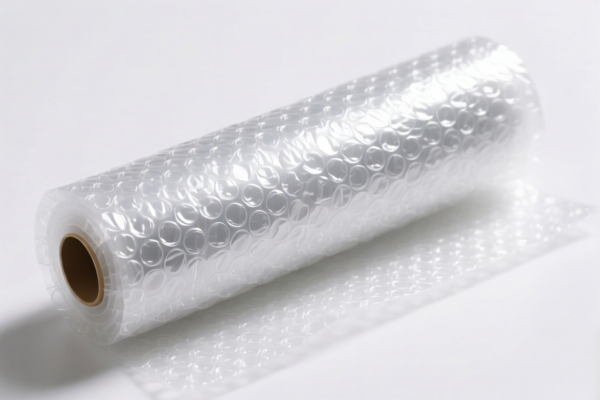
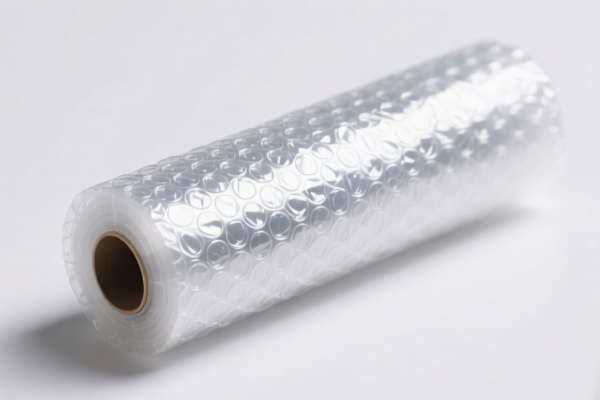
AI Analysis
🛡️ Bubble Cushioning Film (Air Bubble Wrap)
🌐 HS Code Reference & Customs Clearance Guide | 2026 Latest Tariff Analysis | Professional Entry Strategies
📌 I. Product Definition & Classification: Do You Really Understand "Bubble Film"?
Bubble cushioning film, commonly known as bubble wrap, is a versatile packaging material made primarily from polyethylene (PE) or other plastics. Its defining characteristic is the presence of small air-filled pockets (bubbles) designed to protect fragile items during transit.
In international trade, classification depends heavily on: 1. Material Composition: Is it pure PE, or a blend? 2. Physical Form: Is it considered a "flexible membrane/film" (Chapter 39) or a "finished plastic article" (Chapter 39/3926)? 3. Structure: Does it have specific reinforcing layers or is it a simple foam structure?
⚠️ Critical Distinction:
- Chapter 39 (Plastics & Articles Thereof): Most bubble films fall here. The key debate is whether it's classified under Headings 3920/3921 (films/sheets) or Heading 3926 (other plastic articles).
- Trade Restrictions: Imports from China to the US are subject to significant Section 301 tariffs and IEEPA sanctions, drastically affecting the final landed cost.
📦 II. HS Code Classification Details (2026 Tariff Schedule)
Based on the provided data, here are the specific HS Codes relevant to Bubble Cushioning Film, along with their logical justifications:
| HS Code | Product Description | Classification Logic | Total Tax Rate |
|---|---|---|---|
| 3921.11.00.00 | Other plastic plates, sheets, film, foil, and strip | Material: Plastic (PE, etc.). Form: Thin film/foil structure. Logic: Fits the general category of "Other plastic films" without specific polymer sub-categorization. |
40.3% |
| 3921.19.00.10 | Plastic film of polyethylene (PE) | Material: Specifically Polyethylene (PE). Form: Plastic film structure. Logic: More specific than 3921.11.00 because it identifies the polymer type (PE), fitting the structural characteristics of plastic films. |
41.5% |
| 3926.90.48.00 | Other plastic articles | Material: Plastic (PE, etc.). Form: Finished "Other" plastic article. Logic: Argues that bubble film is a distinct article rather than just a raw film, falling under the "Other" sub-category for plastic products. |
13.4% |
| 3926.90.99.89 | Other plastic articles (Miscellaneous) | Material: Plastic (PE). Form: Other plastic article. Logic: No material conflict; treated as a general "other" plastic product not specifically listed elsewhere. |
22.8% |
| 3920.99.20.00 | Other flexible membranes of plastic (PE) | Material: Plastic (PE). Form: Flexible membrane/sheet. Logic: Emphasizes the "flexible" nature of the material and its conformity to "other plastic-made flexible films." |
39.2% |
| 3920.10.00.00 | Plates, sheets, film, foil, and strip of polyethylene | Material: Polyethylene (PE). Form: Membrane/Strip. Logic: Direct match with "polyethylene制成的" (made of PE polymers) and "膜/带" (film/strip) morphology. |
39.2% |
🔍 Key Insight:
- Lower Tax Strategy: HS Code 3926.90.48.00 offers the lowest total tax rate (13.4%). This classification treats the bubble film as a "finished article" rather than a "raw film," bypassing higher Section 301 tariffs applicable to certain films.
- Higher Tax Risk: HS Codes like 3921.19.00.10 and 3920.10.00.00 carry higher rates (~40%) because they are classified strictly as PE films, which are heavily targeted by trade restrictions.
💰 III. 2026 Latest Tariff Rate Breakdown (Including Additional Duties)
✅ Applicable Country: United States (US)
✅ Origin: China (CN)
✅ Effective Date: From November 10, 2025 (and subsequent imports)
🎯 1. 3926.90.48.00 — Other Plastic Articles (Lowest Tax Strategy)
| Item | Content |
|---|---|
| Base Tariff | 3.4% (ad valorem) |
| Section 301 Tariff (Add-on) | 0.0% |
| IEEPA Sanction (122 Clause) | +10.0% |
| Total Tax Rate | 13.4% |
| Tax Calculation | CIF Value × 13.4% |
| De Minimis Eligibility | ❌ Not Eligible (deny_de_minimis) |
| Legal Basis Path | USITC:3926.90.48.00 → IEEPA:9903.01.10 |
📌 Explanation:
- The 0% Section 301 tariff is crucial. By classifying bubble wrap as an "other plastic article" (3926) rather than a specific PE film (3920/3921), importers may avoid the heavy 25% Section 301 levy.
- The 10% IEEPA tariff still applies to Chinese goods under specific sanctions clauses.
- Total: 13.4% is significantly cheaper than the ~40% rates for other classifications.
🎯 2. 3921.11.00.00 & 3921.19.00.10 — Plastic Films (High Tax Scenario)
| Item | Content |
|---|---|
| Base Tariff | 5.3% - 6.5% |
| Section 301 Tariff (Add-on) | +25.0% |
| IEEPA Sanction (122 Clause) | +10.0% |
| Total Tax Rate | 40.3% - 41.5% |
| Tax Calculation | CIF Value × ~41% |
| De Minimis Eligibility | ❌ Not Eligible |
| Legal Basis Path | USITC:3921.11.00.00 → USITC Footnote 9903.88.01 → IEEPA:9903.01.25 |
📌 Warning:
- Section 301 (25%) is the primary driver of high costs for film classifications.
- If your product is deemed a "plastic film" rather than an "article," you face a 3x higher tax burden compared to the 3926 classification.
🎯 3. 3920.10.00.00 & 3920.99.20.00 — PE Flexible Membranes
| Item | Content |
|---|---|
| Base Tariff | 4.2% |
| Section 301 Tariff (Add-on) | +25.0% |
| IEEPA Sanction (122 Clause) | +10.0% |
| Total Tax Rate | 39.2% |
| Tax Calculation | CIF Value × 39.2% |
| De Minimis Eligibility | ❌ Not Eligible |
📌 Note:
- Similar to the 3921 codes, these fall under flexible membranes.
- The logic is consistent: PE Film = High Section 301 Tariff.
🎯 4. 3926.90.99.89 — Other Plastic Articles (Miscellaneous)
| Item | Content |
|---|---|
| Base Tariff | 5.3% |
| Section 301 Tariff (Add-on) | +7.5% |
| IEEPA Sanction (122 Clause) | +10.0% |
| Total Tax Rate | 22.8% |
| Tax Calculation | CIF Value × 22.8% |
📌 Note:
- A middle-ground option. Lower Section 301 (7.5%) than films, but higher than the preferred 3926.90.48.00.
🛠️ IV. Customs Clearance Practical Advice (Real-World Pitfall Avoidance)
✅ 1. Documentation Checklist (Non-Negotiable)
| Document | Required? | Purpose |
|---|---|---|
| ✅ Product Specification Sheet | ✔️ | Must explicitly state material (e.g., "LDPE Bubble Wrap"), thickness, bubble size, and dimensions. |
| ✅ HS Code Pre-Ruling Request | ✔️ | Critical. Submit a request to CBP to classify as 3926.90.48.00 to save ~28% in taxes. |
| ✅ Commercial Invoice | ✔️ | Must describe goods as "Plastic Packaging Film" or "Bubble Cushioning," NOT "Polyethylene Resin." |
| ✅ Packing List | ✔️ | Details net/gross weight, quantity, and packaging type. |
| ✅ Country of Origin Certificate | ✔️ | Proves Chinese origin (triggers Section 301/IEEPA). |
| ✅ Material Safety Data Sheet (MSDS) | ✔️ | Confirms no hazardous chemicals used in manufacturing. |
✅ 2. Classification Strategy (Key Tips)
🔥 “File as Article, Not Film; Save 28% Tax!”
| Scenario | Recommended HS Code | Why? |
|---|---|---|
| Standard Bubble Wrap Rolls | 3926.90.48.00 |
Best Option. Argues it’s a “manufactured article” for protection, not just raw film. Lowest tax (13.4%). |
| Bubble Wrap with Printing/Logo | 3926.90.48.00 |
Printing reinforces the "article" status (finished product). |
| Plain PE Film with Bubbles | 3921.19.00.10 / 3920.10.00.00 |
Risky. Customs may view this as raw film, triggering 40%+ taxes. |
| Small Sample Pieces | N/A | If under $800 (de minimis), no duty. But large shipments are denied. |
⚠️ Customs Reality Check:
CBP officers may challenge the 3926 classification if the product appears to be a simple film. You must provide technical data showing it is a "cushioning article" with specific structural integrity, not just a flexible sheet.
✅ 3. Special Situations & Workarounds
| Situation | Suggested Action |
|---|---|
| High Volume Shipments | Apply for HTSUS Exclusion. If your specific product was excluded from Section 301 in previous years, apply for renewal. |
| OEM Custom Bubble Wrap | Provide client design specs. Customization strengthens the "article" argument. |
| Mixed Packaging | If bubble wrap is packed inside a box with other goods, ensure the invoice clearly separates the value. Do not hide it as part of the main product. |
| Transshipment Risk | Do not attempt to re-label origin. Section 301 applies to Chinese origin, not just final assembly. |
🌍 V. Global Market Comparison (2026)
| Country/Region | Recommended HS Code | Estimated Tax (China Origin) | Key Requirements | Notes |
|---|---|---|---|---|
| 🇺🇸 USA | 3926.90.48.00 |
13.4% | IEEPA + Section 301 Exclusion Check | Best tax outcome if 3926 is accepted. |
| 🇺🇸 USA | 3920.10.00.00 |
39.2% | Standard Film Declaration | High risk of audit. |
| 🇨🇳 China | 3921.11.00.00 |
~5-10% | Standard Import | Lower tariffs for imported goods. |
| 🇪🇺 EU | 3920.10.00.00 |
~6.5% | CE/RoHS (if applicable) | No Section 301 equivalent, but VAT applies. |
| 🇬🇧 UK | 3920.10.00.00 |
~6.5% | UKCA Marking (if applicable) | Post-Brexit tariffs may vary. |
📌 Conclusion:
- USA is the most complex market due to political tariffs.
- Strategic Classification is Key: Using 3926.90.48.00 instead of 3920/3921 codes can save ~26-28% in duty costs.
- Proactive Ruling: Always seek a CBP Binding Ruling before shipping large volumes.
📌 VI. Common Errors & Pitfalls (Lessons Learned)
❌ Error 1: Declaring as "Plastic Film" (3920/3921) instead of "Packaging Article" (3926)
👉 Consequence: Paying 40%+ instead of 13.4%.
👉 Fix: Emphasize "cushioning function" and "finished structure" in documentation.
❌ Error 2: Ignoring Section 301 applicability
👉 Consequence: Sudden duty bill at customs, leading to storage fees and delays.
👉 Fix: Calculate landed cost using the correct HS code before pricing.
❌ Error 3: Vague Description on Invoice ("Plastic Wrap")
👉 Consequence: Customs assigns highest default duty rate.
👉 Fix: Use precise terms: "Bubble Cushioning Film, PE Material, Art. 3926."
❌ Error 4: Assuming De Minimis ($800) Applies
👉 Consequence: Shipment held at border; de minimis is denied for Section 301/IEEPA goods from China.
👉 Fix: Always file entry for shipments >$800 if Chinese origin.
🎯 VII. Conclusion: Smart Classification, Maximum Profit!
🎯 Remember the Mantra:
🔹 "Don't call it film; call it article. Save 28% and sleep tight!"
🔹 "PE is not just PE; context matters. Section 301 bites hard!"
🔹 "Get a Ruling. Save Dollars. Avoid Delays."
📌 Pro Tip:
If you are importing large volumes, consider supply chain diversification. Sourcing bubble wrap from Vietnam, Mexico, or Malaysia may allow you to bypass Chinese origin labels, potentially qualifying for lower tariffs or exclusions.
📣 Immediate Action:
📞 Contact a Licensed Customs Broker.
📄 Request a CBP Pre-Ruling for HS 3926.90.48.00.
🚀 Optimize your landed cost today!
✨ Precision in Classification, Profitability in Practice!
💼 Every percentage point saved is pure margin.
Customer Reviews
About HS Code Classification
The Harmonized System (HS) is an internationally standardized nomenclature developed by the World Customs Organization (WCO) to classify traded products. Over 200 countries use the HS system as the basis for customs tariffs, trade statistics, and import/export regulations.
Each HS code follows a hierarchical structure:
- Chapter (2 digits) — Broad category of goods (e.g., Chapter 84: Machinery and Mechanical Appliances)
- Heading (4 digits) — More specific grouping within the chapter
- Subheading (6 digits) — Internationally standardized breakdown, used by all WCO member countries
- National subdivisions (8-10 digits) — Country-specific extensions for further classification, such as US HTSUS 10-digit codes
Correct HS code classification is essential for smooth customs clearance, accurate duty payment, and compliance with trade regulations. Misclassification can lead to customs delays, overpayment of duties, or penalties.
When importing from CN to US, the applicable tariff rates may include:
- Most-Favored-Nation (MFN) rate — The standard duty rate applied to WTO members
- General rate — Applied to countries without trade agreements
- Trade remedy duties — Additional tariffs such as Section 301 (anti-dumping), Section 232 (national security), or countervailing duties
The information provided on this page is for reference purposes only. For official classification, please consult with your local customs authority or a licensed customs broker.