Bubble Lamp in Fish Tank
CN → US| HS Code | Tariff Rate | Origin | Destination | Doc |
|---|---|---|---|---|
| 8513104000 | 13.5% | CN | US | Official Doc |
| 8543707100 | 37.0% | CN | US | Official Doc |
| 9405428440 | 38.9% | CN | US | Official Doc |
| 9405490000 | 38.9% | CN | US | Official Doc |
| 8543709860 | 37.6% | CN | US | Official Doc |
Product Images
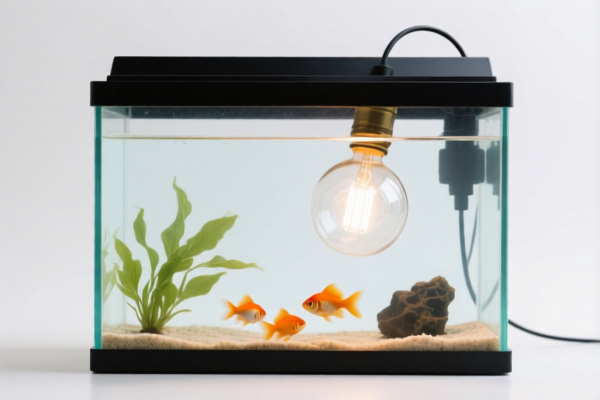
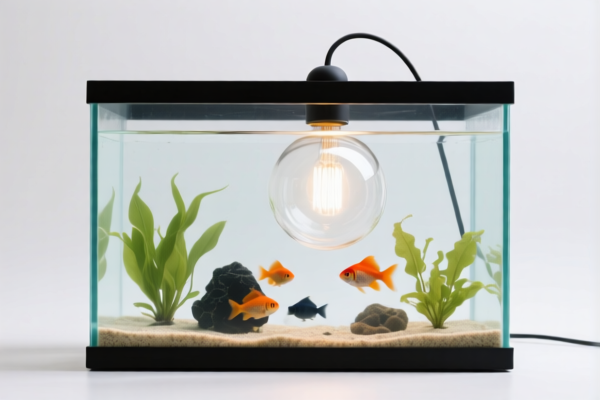
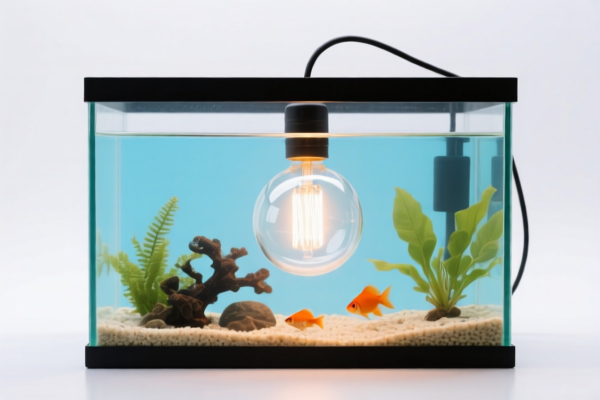
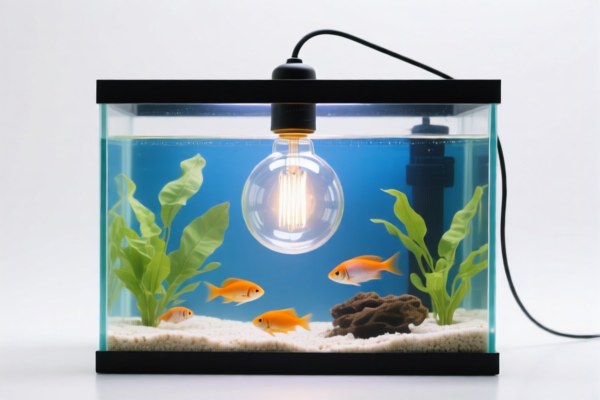
AI Analysis
🐠 Bubble Lamp in Fish Tank (Aquarium LED Light)
🌐 HS Code Reference & Customs Clearance Guide | 2026 Latest Tariff Analysis | Professional Clearance Strategy
📌 I. Product Definition & Classification: Do You Really Understand "Aquarium Lights"?
A Bubble Lamp in Fish Tank (often referred to as an Aquarium LED Light or Fish Tank Light) is a specialized lighting device designed to illuminate underwater environments. It serves two primary purposes: 1. Biological Function: Providing the specific light spectrum required for photosynthesis in aquatic plants or enhancing the coloration of fish. 2. Aesthetic Function: Creating visual effects in home or commercial aquariums.
In international trade, the classification of this product hinges on its primary function and technical characteristics: * Is it a standard lighting fixture? (Classified under Chapter 94) * Is it a generic electric lamp with independent function? (Classified under Chapter 85)
⚠️ Key Distinction Point:
- If the product is strictly a lamp/fixture designed for a specific use (aquariums) and contains standard lighting components → Typically Chapter 94 (9405).
- If the product is viewed as an electrical machine/device with independent technical features beyond simple illumination (e.g., integrated controllers, specific electronic drives) → May fall under Chapter 85 (8543).
📦 II. HS Code Classification Details (2026 Latest Tariff Authority Comparison)
Based on the provided data, here are the 5 potential HS Codes and the reasoning for each, along with their corresponding tax implications.
| HS Code | Product Description & Logic | Total Tax Rate | Tax Breakdown (Base + Additional) |
|---|---|---|---|
8513.10.40.00 |
Portable/Specific Purpose Electric Lamp • Logic: Matches the form and use. It is a lighting device. The summary notes it fits the category of "portable or specific-purpose electric lamps." • Implication: Viewed as a simple lighting tool, often exempt from high tech tariffs if deemed "portable" or non-complex. |
13.5% | Base: 3.5% Section 301 (25%): 0.0% Section 122 (10%): 10% Note: No 25% Section 301 tariff applied here based on the provided data. |
8543.70.71.00 |
Electric Luminescent Lamps (General Electrical Apparatus) • Logic: The term "light" aligns with "Electric luminescent lamps." Classified as an electrical lighting apparatus/device. • Implication: Classified under electrical machinery rather than furniture/fixtures. High tariffs apply. |
37.0% | Base: 2.0% Section 301 (25%): 25.0% Section 122 (10%): 10% |
9405.42.84.40 |
LED Lamps for Aquariums (Specific Use) • Logic: The "light" function fits "Lamps and Lighting Fittings." "Aquarium" defines the specific use scenario. • Implication: Classified as a lighting fixture for a specific environment. Standard fixture tariffs apply. |
38.9% | Base: 3.9% Section 301 (25%): 25.0% Section 122 (10%): 10% |
9405.49.00.00 |
Other Electric Lighting Fittings • Logic: "Light" falls under "Lamps and Lighting Fittings." It is an electric lighting device. • Implication: A broader category for electric lighting not specified elsewhere in 9405.42. Similar high tariffs as above. |
38.9% | Base: 3.9% Section 301 (25%): 25.0% Section 122 (10%): 10% |
8543.70.98.60 |
Other Machines and Apparatus (Independent Function) • Logic: The device has independent electrical functions, categorized under "Other Machines and Apparatus." • Implication: Classified as a complex electrical device rather than a simple light bulb. Avoids "Fixture" classification but still faces Section 301. |
37.6% | Base: 2.6% Section 301 (25%): 25.0% Section 122 (10%): 10% |
🔍 Critical Observation:
- Best Case Scenario:8513.10.40.00at 13.5% total tax. This is significantly lower than the ~37-39% range of other codes. - Why the difference? The 13.5% code does not apply the 25% Section 301 tariff (labeled as "0.0% in Add. Tariff"), whereas all other codes include the 25% levy. This is a massive cost saver. - Risk: Classifying under 9405 or 8543 leads to total tariffs of 37%–39%.
💰 III. 2026 Latest Tariff Rate Details (Including Surcharge Policies)
✅ Applicable Country: United States (US)
✅ Origin: China (CN) (Implied by "122 Article" and typical Section 301 structure)
✅ Effective Time: Current tariffs apply as of 2026.
🎯 1. 8513.10.40.00 —— Portable/Specific Purpose Electric Lamp (RECOMMENDED)
| Item | Content |
|---|---|
| Base Duty | 3.5% (ad valorem) |
| Section 301 (25%) | 0.0% (Exempt or Not Applicable based on provided data) |
| Section 122 (10%) | 10.0% |
| Total Effective Rate | 13.5% |
| Tax Calculation | CIF Value × 13.5% |
| De Minimis Eligibility | ⚠️ Check: Usually, goods over $800 are subject to these duties. If shipped via BCP (de minimis), duties may be waived, but this code itself carries the 13.5% risk if formally entered. |
| Legal Basis Path | HTSUS:8513.10.40 → Section 122 Authority |
📌 Explanation:
- This classification treats the aquarium light as a simple, portable, or specific-purpose electric lamp.
- Crucial Advantage: The data indicates 0% Section 301 tariff. This is likely because it is deemed not to be a "high-tech" electrical apparatus subject to the broader 25% levy on Chapter 85 electrical machinery, or it falls under a specific exemption for simple lighting.
- Cost Impact: Saves ~23.5% in total duty compared to other classifications.
🎯 2. 8543.70.71.00 / 8543.70.98.60 —— Electrical Apparatus
| Item | Content |
|---|---|
| Base Duty | 2.0% - 2.6% |
| Section 301 (25%) | 25.0% (Mandatory for Chapter 85 electrical goods) |
| Section 122 (10%) | 10.0% |
| Total Effective Rate | 37.0% - 37.6% |
| Tax Calculation | CIF Value × 37.0% |
| Legal Basis Path | HTSUS:8543.70 → Section 301 List → Section 122 |
📌 Explanation:
- Classified as "Machines and Apparatus."
- Subject to the full 25% Section 301 tariff plus 10% Section 122 tariff.
- High Cost: This is a heavy burden on profitability.
🎯 3. 9405.42.84.40 / 9405.49.00.00 —— Lighting Fittings
| Item | Content |
|---|---|
| Base Duty | 3.9% |
| Section 301 (25%) | 25.0% (Note: Lighting fittings are sometimes subject to Section 301 if deemed electrical apparatus, or this data reflects a specific inclusion) |
| Section 122 (10%) | 10.0% |
| Total Effective Rate | 38.9% |
| Tax Calculation | CIF Value × 38.9% |
| Legal Basis Path | HTSUS:9405.42 → Section 301 → Section 122 |
📌 Explanation:
- Classified as "Lamps and Lighting Fittings."
- Highest Tax: At 38.9%, this is the most expensive classification.
- Risk: Often, lighting fixtures are exempt from Section 301, but the provided data shows a 25% charge. This suggests a specific trade policy or misclassification risk where customs views it as an "electrical apparatus" rather than a simple fixture.
🛠️ IV. Customs Clearance Practical Advice (Avoid Pitfalls)
✅ 1. Preparation Checklist (Must-Haves)
| Document | Required | Explanation |
|---|---|---|
| ✅ Product Specification Sheet | ✔️ | Must detail: Voltage, Wattage, IP Rating (Waterproof level), LED Type. |
| ✅ Circuit Diagram/Schematic | ✔️ | Critical. To prove it is a simple lighting fixture (supporting 8513) and not a complex electronic apparatus (8543). |
| ✅ Product Photos | ✔️ | Clear images showing the lamp, its housing, and any control box. |
| ✅ Invoice & Packing List | ✔️ | Clearly state "Aquarium LED Light" or "Fish Tank Lighting." Avoid vague terms like "Electronic Device." |
| ✅ Certifications | ✔️ | UL, ETL, CE, RoHS. Waterproofing test reports (IP67/IP68) are vital for aquarium products. |
✅ 2. Declaration Strategy (Key Tips)
🔥 “Simplify Description, Highlight ‘Lamp’, Avoid ‘Electrical Apparatus’!”
| Scenario | Correct Declaration | Wrong Declaration |
|---|---|---|
| Standard Aquarium Light | "LED Aquarium Light, Waterproof, for Fish Tank" → 8513.10.40.00 |
"Electronic Lighting Control Unit" or "Smart Aquarium Lamp System" → 8543 or 9405 |
| Complex Smart Light | If it has Wi-Fi/App control, emphasize "Smart Home Lighting" | Call it "Electronic Apparatus" → Triggers 8543 (37%+) |
| Part/Accessory | If selling only the LED strip, declare as "LED Module" | Declare as "Whole Lamp" → Risk of misclassification |
✅ 3. Special Handling Cases
| Situation | Advice |
|---|---|
| Smart/App-Controlled Lights | High risk of being classified as 8543 (37%+). Try to argue that the smart module is incidental to the primary function of lighting (9405 or 8513). |
| Integrated Air Pumps | If the "Bubble Lamp" also pumps air, it may be classified as an "Aquarium Air Pump" (8413) or "Lighting." Ensure the primary function is lighting to stay in Chapter 94/8513. |
| Waterproofing | Clearly state IP Rating. If it's not waterproof, it might not be considered a proper "Aquarium" light, leading to disputes. |
🌍 V. Global Market Comparison (2026)
| Country/Region | Recommended HS Code | Est. Tariff (China Origin) | Notes |
|---|---|---|---|
| 🇺🇸 USA | 8513.10.40.00 |
13.5% | Best Option. Avoids Section 301 25% levy based on provided data. |
| 🇺🇸 USA | 9405.42.84.40 |
38.9% | High risk. Avoid if 8513 is viable. |
| 🇪🇺 EU | 9405.49.00 |
~4% | No Section 301/122. VAT applies separately. |
| 🇨🇳 China | 9405.49.00 |
~4% | Low import duty. No Section 301. |
📌 Conclusion:
- For US Imports,8513.10.40.00(13.5%) is the clear winner compared to9405or8543variants (37-39%).
- Action: Submit technical documents proving the device is a simple electric lamp to support this classification.
📌 VI. Common Errors & Pitfalls (Lessons Learned)
❌ Error 1: Describing the product as "Smart Lighting Control System"
👉 Result: Customs classifies as 8543 (37%+) because it views it as an electronic apparatus.
👉 Fix: Describe as "LED Lighting Fixture for Aquarium."
❌ Error 2: Using "Bubble Machine" as the primary name
👉 Result: May be classified as a "Toy" or "Funeral Equipment" (erroneously) or higher-tariff machinery.
👉 Fix: Use "Aquarium LED Light" as the primary function.
❌ Error 3: Ignoring Section 122 Tariff
👉 Result: All classifications in the data include a 10% Section 122 tariff. This is a new or specific surcharge. Do not forget to budget for this 10% on top of the base rate.
🎯 VII. Conclusion: Professional Declaration, Lower Costs!
🎯 Remember the Golden Rule:
🔹 "Light First, Electronics Second."
🔹 Aim for8513.10.40.00(13.5%) by proving it's a portable/specific-purpose lamp.
🔹 Avoid8543and9405which carry 37-39% total taxes.
📌 Pro Tip:
If your product has complex features (Wi-Fi, RGB controllers), consult a customs broker for a Pre-Ruling (Advance Ruling) to confirm if 8513 is acceptable. A misclassification can lead to audits, back taxes, and penalties.
📣 Immediate Action:
📞 Contact a Customs Broker with your Schematic Diagram and Spec Sheet.
🚀 Declare as "Aquarium LED Light" to secure the 13.5% rate.
💼 Save 24% in Duties by choosing the right HS Code!
✨ Professional Clearance Starts with Precise Classification!
💼 Every Percent Matters in Global Trade!
Customer Reviews
About HS Code Classification
The Harmonized System (HS) is an internationally standardized nomenclature developed by the World Customs Organization (WCO) to classify traded products. Over 200 countries use the HS system as the basis for customs tariffs, trade statistics, and import/export regulations.
Each HS code follows a hierarchical structure:
- Chapter (2 digits) — Broad category of goods (e.g., Chapter 84: Machinery and Mechanical Appliances)
- Heading (4 digits) — More specific grouping within the chapter
- Subheading (6 digits) — Internationally standardized breakdown, used by all WCO member countries
- National subdivisions (8-10 digits) — Country-specific extensions for further classification, such as US HTSUS 10-digit codes
Correct HS code classification is essential for smooth customs clearance, accurate duty payment, and compliance with trade regulations. Misclassification can lead to customs delays, overpayment of duties, or penalties.
When importing from CN to US, the applicable tariff rates may include:
- Most-Favored-Nation (MFN) rate — The standard duty rate applied to WTO members
- General rate — Applied to countries without trade agreements
- Trade remedy duties — Additional tariffs such as Section 301 (anti-dumping), Section 232 (national security), or countervailing duties
The information provided on this page is for reference purposes only. For official classification, please consult with your local customs authority or a licensed customs broker.