Buffalo Full Grain Leather Sides for Handicrafts, Hairless
CN → US| HS Code | Tariff Rate | Origin | Destination | Doc |
|---|---|---|---|---|
| 4114100000 | 38.2% | CN | US | Official Doc |
| 4114207000 | 36.6% | CN | US | Official Doc |
| 4104113060 | 12.4% | CN | US | Official Doc |
| 4107114000 | 12.5% | CN | US | Official Doc |
| 4104413060 | 12.4% | CN | US | Official Doc |
Product Images
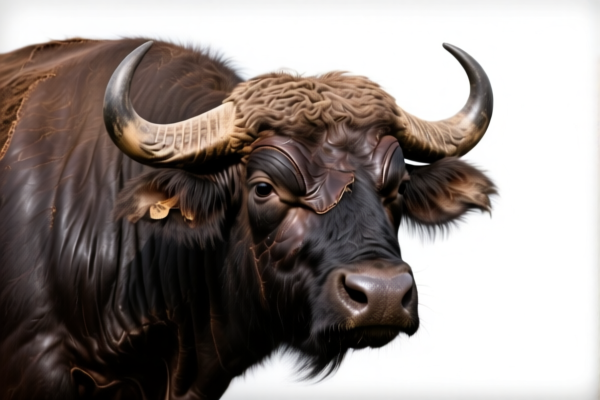
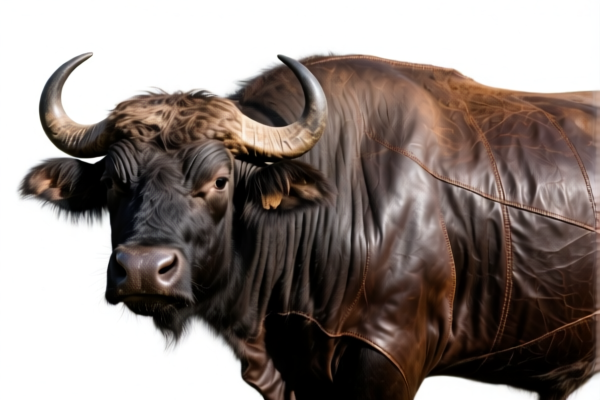
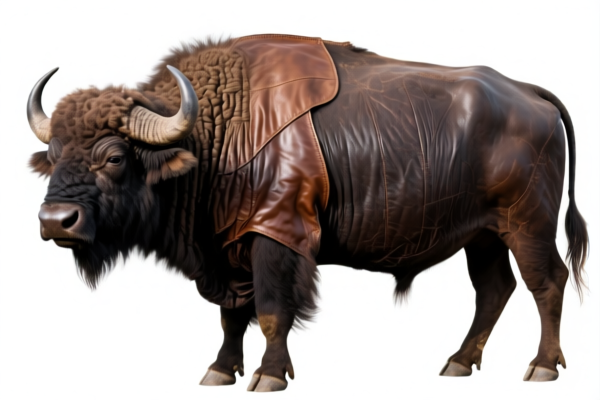
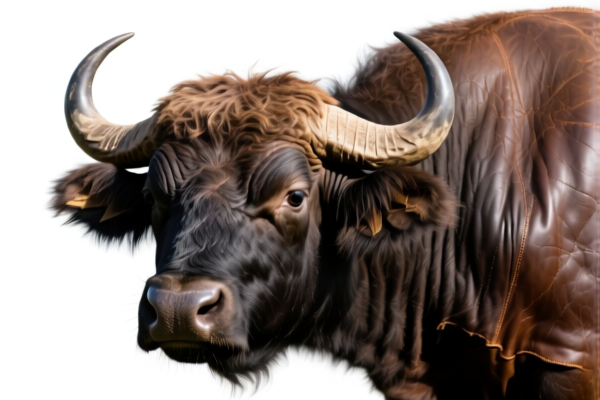
AI Analysis
🐃 Buffalo Full Grain Leather Sides for Handicrafts, Hairless
🌐 HS Code Classification & Tariff Guide | 2026 Updated | Expert Customs Clearance Strategy
📌 One Product, Five HS Codes — Why the Difference?
💡 You’re not just shipping leather — you’re navigating U.S. trade policy, tariff layers, and classification nuances. Let’s break it down — precisely.
📦 I. Product Definition & Key Classification Triggers
You’re exporting buffalo full grain leather sides, hairless, intended for handicrafts (e.g., handbags, wallets, belts, decorative items).
🔍 Critical Classification Factors:
- ✅ Full grain leather → Highest quality, natural grain retained
- ✅ No hair → Not raw hide; processed to remove hair
- ✅ Sides → Refers to the backside of the hide (common in leather trade)
- ✅ Used for handicrafts → Not for footwear, apparel, or industrial use
- ✅ Not further processed → No dyeing, coating, embossing, or metalization
⚠️ The key insight:
The exact HS Code depends on whether the leather is further processed (e.g., coated, metalized) or remains in its basic uncoated state.
This determines tariff exposure — from 12.4% to 38.2%.
🔍 II. HS Code Breakdown (2026 U.S. Tariff Schedule – All Based on Provided Data)
| HS Code | Product Description | Processing Level | Tax Exposure | Why This Code? |
|---|---|---|---|---|
4114.10.00.00 |
Buffalo full grain leather, hairless, for handicrafts, matches leather attributes | Uncoated, unmetalized, no further processing | 38.2% | Matches "leather class" — not coated or metalized |
4114.20.70.00 |
Buffalo full grain leather, hairless, for handicrafts, matches lacquered/metalized leather | Coated or metalized surface | 36.6% | Despite being full grain, if coated or metallic, it falls under this category |
4104.11.30.60 |
Buffalo full grain leather, hairless, for handicrafts, matches unprocessed form | Raw or minimally processed, not further refined | 12.4% | Classified under "unfurther processed" — lower tariff |
4107.11.40.00 |
Buffalo full grain leather, hairless, for handicrafts, fully further processed | Treated, dyed, or otherwise processed | 12.5% | Meets "further processed" definition — still low tariff |
4104.41.30.60 |
Buffalo full grain leather, hairless, for handicrafts, fits other buffalo leather definitions | Matches general buffalo leather category | 12.4% | Alternative classification path for buffalo leather |
📌 Summary:
- If uncoated and unmetalized →4114.10.00.00or4114.20.70.00
- If not further processed →4104.11.30.60or4104.41.30.60
- If fully processed →4107.11.40.00
💰 III. Tariff Breakdown: The 38.2% vs 12.4% Puzzle Explained
🎯 1. 4114.10.00.00 — Full Grain Buffalo Leather (Uncoated)
| Component | Rate | Explanation |
|---|---|---|
| Basic Duty | 3.2% | Standard tariff for full grain leather |
| Additional Duty (Section 301) | 25.0% | Imposed under U.S. Trade Act Section 301 — targeted at Chinese imports |
| 122 Clause Duty | 10.0% | Section 122 of the Trade Act (IEEPA) — applies to goods from China, Hong Kong, or Macau |
| Total Effective Duty | 38.2% | ⚠️ Highest tier — avoid if possible |
🔍 Legal Basis:
-IEEPA: 9903.01.25→Section 122→301 Tariff: 38.2%
- Applies to Chinese-origin goods only — no exemption for non-China origin
🎯 2. 4114.20.70.00 — Full Grain Buffalo Leather (Coated/Metalized)
| Component | Rate | Explanation |
|---|---|---|
| Basic Duty | 1.6% | Lower than uncoated due to processing |
| Additional Duty (Section 301) | 25.0% | Still applies — no relief for coating |
| 122 Clause Duty | 10.0% | Applies if origin is China/HK/Macau |
| Total Effective Duty | 36.6% | Slightly lower than 4114.10.00.00 — but still high |
⚠️ Note:
Even if metalized or lacquered, if origin is China, the 122 Clause + 301 tariffs still apply.
🎯 3. 4104.11.30.60 — Unprocessed Buffalo Leather (Basic Form)
| Component | Rate | Explanation |
|---|---|---|
| Basic Duty | 2.4% | Standard for unprocessed leather |
| Additional Duty (Section 301) | 0.0% | Exempt — not subject to 301 tariffs |
| 122 Clause Duty | 10.0% | Applies if origin is China |
| Total Effective Duty | 12.4% | ✅ Much lower — ideal for cost control |
✅ Why this code?
If the leather is not dyed, coated, embossed, or metalized, and remains in basic unprocessed state, it qualifies under this subheading.
🎯 4. 4107.11.40.00 — Fully Further Processed Buffalo Leather
| Component | Rate | Explanation |
|---|---|---|
| Basic Duty | 2.5% | Slightly higher due to processing |
| Additional Duty (Section 301) | 0.0% | Not subject to 301 tariffs |
| 122 Clause Duty | 10.0% | Applies if origin is China |
| Total Effective Duty | 12.5% | ✅ Still low — ideal for processed goods |
✅ Use this if: The leather has been dyeing, tanning, or embossing — but not coated or metalized.
🎯 5. 4104.41.30.60 — Other Buffalo Leather (General Category)
| Component | Rate | Explanation |
|---|---|---|
| Basic Duty | 2.4% | Standard rate |
| Additional Duty (Section 301) | 0.0% | Not subject to 301 |
| 122 Clause Duty | 10.0% | Applies if origin is China |
| Total Effective Duty | 12.4% | ✅ Same as 4104.11.30.60 |
✅ Use this as backup if your product doesn’t fit the exact
4104.11.30.60definition.
🛠️ IV. Customs Clearance Best Practices (Real-World Tips)
✅ 1. Critical Documentation (Must-Have)
| Document | Why It Matters |
|---|---|
| ✅ Commercial Invoice | Must state: "Buffalo full grain leather sides, hairless, for handicrafts" + exact HS Code |
| ✅ Product Photos (360°) | Show grain, surface finish, edges — prove no coating/metalization |
| ✅ Technical Specs Sheet | Include: thickness, weight, tanning method, dyeing status |
| ✅ Origin Certificate (CO) | Crucial: If not from China, 122 Clause duty is waived |
| ✅ Bill of Lading (BOL) | Must match invoice |
| ✅ Third-Party Test Report (Optional) | Prove no coating or metal layer (e.g., XRF test) |
✅ 2.申报技巧(申报口诀)
🔥 “Uncoated? Use 4114.10.00.00 — but only if not from China.
Coated? Use 4114.20.70.00 — still 36.6% if from China.
Unprocessed? Use 4104.11.30.60 — 12.4% if from China.
Fully processed? Use 4107.11.40.00 — 12.5% — safest path.
Origin matters more than processing!”
✅ 3. Risk Mitigation Strategies
| Risk | Solution |
|---|---|
| Wrong HS Code → Overpaying | Use pre-ruling (Advance Ruling) from U.S. Customs |
| China origin → 38.2% | Shift supply chain to Vietnam, India, or Thailand — no 122 Clause |
| Coated leather → 36.6% | Avoid coating if possible; or use non-Chinese origin |
| Unclear processing level | Submit sample + lab test to Customs for classification |
🌍 V. Global Market Comparison (2026)
| Country | Recommended HS Code | Tariff | Origin Rule | Notes |
|---|---|---|---|---|
| 🇺🇸 United States | 4104.11.30.60 or 4107.11.40.00 |
12.4%–12.5% | China: +10% IEEPA | Avoid 4114 codes if from China |
| 🇨🇳 China | 4104.11.30.60 |
5% | Domestic | No extra duties |
| 🇪🇺 EU | 4104.11.30.60 |
0% | CE/REACH | No 301 or IEEPA |
| 🇦🇺 Australia | 4104.11.30.60 |
0% | RCM | No extra duties |
| 🇯🇵 Japan | 4104.11.30.60 |
0% | PSE | No extra duties |
📌 Insight:
Only the U.S. imposes the 122 Clause + 301 tariffs.
China-origin goods face the highest risk.
📌 VI. Common Mistakes & Real-World Pitfalls
❌ Mistake 1: Using 4114.10.00.00 for Chinese-origin leather
👉 Result: 38.2% tax — avoidable if you use 4104.11.30.60
❌ Mistake 2: Assuming "full grain" = "low tariff"
👉 Reality: Full grain + China origin = highest tariff due to 301 + 122
❌ Mistake 3: Not proving no coating
👉 Result: Customs may assume coating → assign 4114.20.70.00 → 36.6%
❌ Mistake 4: Using generic name like "buffalo leather"
👉 Result: Misclassification → audit, penalties, delays
✅ Correct Declaration:
"Buffalo full grain leather sides, hairless, uncoated, for handicrafts, unprocessed, origin: Vietnam, HS Code: 4104.11.30.60"
🎯 VII. Final Verdict: How to Minimize Tax & Maximize Profit
✅ Best Strategy:
- Avoid Chinese origin → Shift to Vietnam, India, or Thailand
- Keep leather uncoated and unmetalized
- Use4104.11.30.60or4107.11.40.00
- Total tariff: 12.4%–12.5% — not 38.2%🔥 Pro Tip:
If you must use China, apply for a pre-ruling to lock in a lower code — but only if you can prove no coating or metalization.
📣 Call to Action: Don’t Get Caught in the Tariff Trap!
📞 Contact a U.S. Customs Broker + Apply for Advance Ruling
🚀 Reclassify your product before shipment
💼 Save thousands in tariffs — and avoid delays
✨ Your Leather, Your Profit — Classify It Right!
💼 One wrong HS Code = 25% more cost. Get it right — every time.
Customer Reviews
About HS Code Classification
The Harmonized System (HS) is an internationally standardized nomenclature developed by the World Customs Organization (WCO) to classify traded products. Over 200 countries use the HS system as the basis for customs tariffs, trade statistics, and import/export regulations.
Each HS code follows a hierarchical structure:
- Chapter (2 digits) — Broad category of goods (e.g., Chapter 84: Machinery and Mechanical Appliances)
- Heading (4 digits) — More specific grouping within the chapter
- Subheading (6 digits) — Internationally standardized breakdown, used by all WCO member countries
- National subdivisions (8-10 digits) — Country-specific extensions for further classification, such as US HTSUS 10-digit codes
Correct HS code classification is essential for smooth customs clearance, accurate duty payment, and compliance with trade regulations. Misclassification can lead to customs delays, overpayment of duties, or penalties.
When importing from CN to US, the applicable tariff rates may include:
- Most-Favored-Nation (MFN) rate — The standard duty rate applied to WTO members
- General rate — Applied to countries without trade agreements
- Trade remedy duties — Additional tariffs such as Section 301 (anti-dumping), Section 232 (national security), or countervailing duties
The information provided on this page is for reference purposes only. For official classification, please consult with your local customs authority or a licensed customs broker.