Buffalo Full Grain Raw Leather
CN → US| HS Code | Tariff Rate | Origin | Destination | Doc |
|---|---|---|---|---|
| 4114100000 | 38.2% | CN | US | Official Doc |
| 4114207000 | 36.6% | CN | US | Official Doc |
| 4104113060 | 12.4% | CN | US | Official Doc |
| 4107114000 | 12.5% | CN | US | Official Doc |
| 4104413060 | 12.4% | CN | US | Official Doc |
Product Images
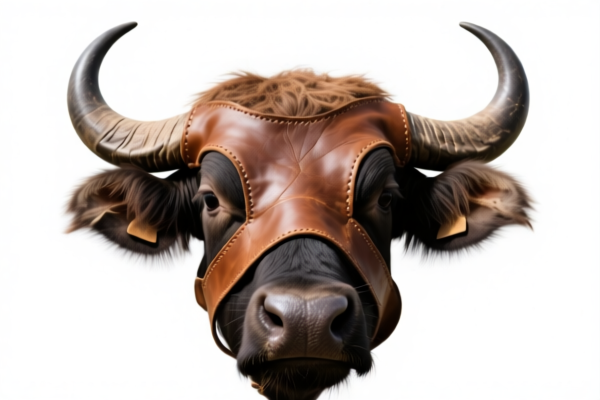
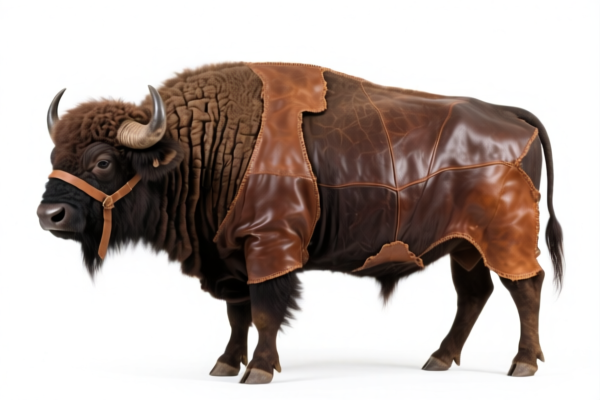
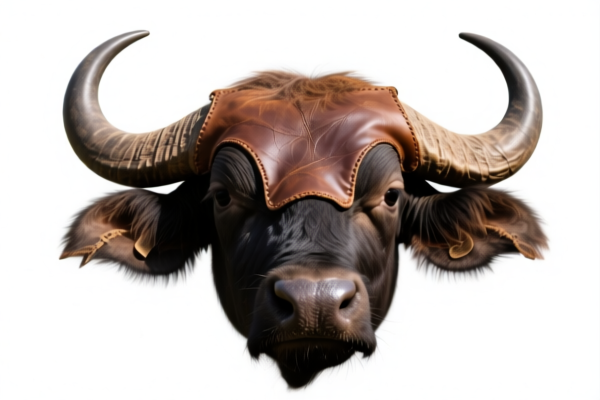
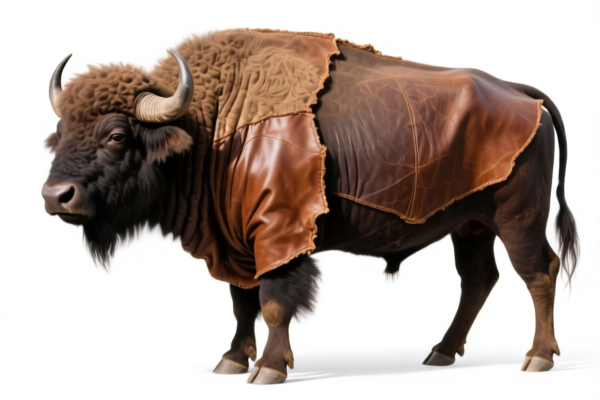
AI Analysis
🐃 Buffalo Full Grain Raw Leather (Water Buffalo Hide)
🌐 HS Code Reference & Customs Clearance Guide | 2026 Latest Tariff Analysis | Professional Entry Strategies
📌 I. Product Definition & Classification: What Exactly Is “Raw Leather”?
Buffalo Full Grain Raw Leather refers to the skin of water buffalo that has been tanned but not further processed into finished goods. In international trade, the classification depends heavily on the chemical process, surface treatment, and final appearance. It is critical to distinguish between:
1. Chrome-Tanned / Unfinished Leather (Uncoated):
- The leather is tanned (usually chrome-tanned) but retains its natural grain.
- It has no paint, metal, or lacquer coating.
- It is considered "unfinished" or "semi-finished" in some contexts, falling under general tanned hide codes.
2. Lacquered/Metalized Leather (Finished):
- The leather has been coated with a layer of paint, lacquer, or metallic finish.
- This significantly changes its tariff classification to “Lacquered or Metallic Leather.”
3. Specialty Uses (Craft/Handicraft vs. Footwear):
- If specifically cut for handcrafts, it may fall under specific subheadings.
- If intended for footwear uppers, different codes may apply (though most general raw leather codes cover the material itself).
⚠️ Key Distinction Point:
- No Coating + Chrome Tanned → Typically 4104 or 4107 series.
- Coated/Lacquered/Metallic → 4114 series.
- Specific Handicraft Use → May trigger specific subheadings like 4114.10.
📦 II. HS Code Classification Details (2026 Latest Tariff Authority Comparison)
Based on the provided data, here are the four potential HS Codes for Buffalo Full Grain Raw Leather, categorized by treatment and use:
| HS Code | Product Description | Applicable Scenario | Surface Treatment |
|---|---|---|---|
4114.10.00.00 |
Buffalo Full Grain Leather Sheets, Hair-Removed, for Handicrafts | Specifically declared for handicrafts; matches leather attributes for crafts. | No coating specified, but grouped under special use. |
4114.20.70.00 |
Buffalo Full Grain Leather Sheets, Hair-Removed, under Lacquered or Metallic Leather | Belongs to the Lacquered or Metallic leather category. | Coated with lacquer, metal, or plastic. |
4104.11.30.60 |
Buffalo Full Grain, Hair-Removed Leather Sheets, Unfurther Processed | Fits the unfurther processed form; standard tanned hide. | Uncoated, natural grain, typical chrome-tanned raw leather. |
4107.11.40.00 |
Buffalo Full Grain Leather, Hair-Removed, Further Processed | Further processed tanned leather (e.g., re-tanned, dyed, but not coated). | Further processed beyond basic tanning, but still uncoated. |
4104.41.30.60 |
Buffalo Hair-Removed Leather Sheets, Other Buffalo Classification, Non-Footwear | Falls under other buffalo leather; explicitly not for shoe uppers. | Uncoated, general purpose, non-footwear. |
🔍 Key Reminder:
-4114Series: Always involves coating (lacquer/metal). If your leather is shiny or painted, use this code.
-4104/4107Series: Uncoated leathers.4104is for general tanned hides;4107is for further processed (e.g., wet-blue, re-tanned).
- Footwear Exclusion: Codes like4104.41.30.60explicitly exclude footwear uppers. If used for shoes, different codes may apply.
💰 III. 2026 Latest Tariff Rate Details (Including Additional Taxes & Policy Surcharges)
✅ Applicable Country: United States (US)
✅ Origin: China (CN)
✅ Effective Date: From November 10, 2025 (and subsequent imports)
🎯 1. 4114.10.00.00 —— Buffalo Leather for Handicrafts
| Item | Content |
|---|---|
| Base Tariff | 3.2% (ad valorem) |
| Section 301 Surcharge | +25.0% (USITC Footnote 9903.88.01 equivalent for leather) |
| IEEPA Surcharge | +10.0% (Targeting Chinese/Hong Kong products, effective from Nov 10, 2025) |
| Total Rate | 38.2% |
| Tax Calculation | CIF Value × 38.2% |
| De Minimis Eligibility | ❌ No (deny_de_minimis) |
| Legal Path | IEEPA:9903.01.25 → IEEPA:9903.01.24 → USITC:4114.10.00.00 |
📌 Explanation:
- Although this code is for "handicrafts," it still falls under the Section 301 list if the product type is included.
- Total 38.2% is high. Ensure the declaration strictly matches "handicraft" usage to avoid misclassification penalties.
🎯 2. 4114.20.70.00 —— Lacquered/Metallic Buffalo Leather
| Item | Content |
|---|---|
| Base Tariff | 1.6% (ad valorem) |
| Section 301 Surcharge | +25.0% |
| IEEPA Surcharge | +10.0% |
| Total Rate | 36.6% |
| Tax Calculation | CIF Value × 36.6% |
| De Minimis Eligibility | ❌ No |
| Legal Path | IEEPA:9903.01.25 → IEEPA:9903.01.24 → USITC:4114.20.70.00 |
📌 Note:
- Lower base rate (1.6%) compared to uncoated leather, but the 25%+10% surcharges remain.
- Total 36.6%. This is for leather with visible coatings (paint, metal, plastic).
🎯 3. 4104.11.30.60 —— Unfurther Processed Buffalo Leather
| Item | Content |
|---|---|
| Base Tariff | 2.4% (ad valorem) |
| Section 301 Surcharge | 0.0% (Note: Some leather subheadings may be exempt from 301, check current list) |
| IEEPA Surcharge | +10.0% |
| Total Rate | 12.4% |
| Tax Calculation | CIF Value × 12.4% |
| De Minimis Eligibility | ❌ No |
| Legal Path | IEEPA:9903.01.25 → USITC:4104.11.30.60 |
📌 Important:
- Significantly Lower Rate (12.4%)!
- This code applies to standard, uncoated, unfurther processed full-grain leather.
- Crucial: Ensure the leather is NOT lacquered or metallic. If it has any coating, it must be reclassified to4114(36.6%).
🎯 4. 4107.11.40.00 —— Further Processed Buffalo Leather
| Item | Content |
|---|---|
| Base Tariff | 2.5% (ad valorem) |
| Section 301 Surcharge | 0.0% |
| IEEPA Surcharge | +10.0% |
| Total Rate | 12.5% |
| Tax Calculation | CIF Value × 12.5% |
| De Minimis Eligibility | ❌ No |
| Legal Path | IEEPA:9903.01.25 → USITC:4107.11.40.00 |
📌 Note:
- 12.5% Total. Applies to leather that has been re-tanned, dyed, or otherwise processed beyond basic tanning, but still uncoated.
- Distinguish from4104:4107is for further processed hides (e.g., wet-blue, crust leather).
🎯 5. 4104.41.30.60 —— Other Buffalo Leather (Non-Footwear)
| Item | Content |
|---|---|
| Base Tariff | 2.4% (ad valorem) |
| Section 301 Surcharge | 0.0% |
| IEEPA Surcharge | +10.0% |
| Total Rate | 12.4% |
| Tax Calculation | CIF Value × 12.4% |
| De Minimis Eligibility | ❌ No |
| Legal Path | IEEPA:9903.01.25 → USITC:4104.41.30.60 |
📌 Note:
- 12.4% Total. For buffalo leather that does not fit other specific categories and is not for footwear uppers.
- Key Constraint: Must not be intended for shoe uppers. If used for shoes, different codes apply.
🛠️ IV. Customs Clearance Practical Advice (Real-World Pitfall Avoidance)
✅ 1. Required Documents Checklist (Non-Negotiable)
| Document | Required | Description |
|---|---|---|
| ✅ Product Specification Sheet | ✔️ | Details: Tanning method (Chrome/Veg), Surface treatment (Coated/Uncoated), Thickness, Grain type. |
| ✅ Photos of Leather | ✔️ | Clear images showing grain, cross-section, and surface (to prove if coated or not). |
| ✅ Commercial Invoice | ✔️ | Must clearly state: "Water Buffalo Full Grain Leather, Tanned, [Coated/Uncoated], For [Use Case]." |
| ✅ Packing List | ✔️ | Weight, dimensions, number of hides/pieces. |
| ✅ Certificate of Origin (CO) | ✔️ | If claiming preferential rates (not applicable here due to tariffs, but still required for origin proof). |
| ✅ Third-Party Lab Report | Optional | To prove tanning method if challenged by customs. |
✅ 2. Declaration Tips (Key Rules)
🔥 “Uncoated is 12%, Coated is 36%! Declare Surface Treatment Clearly!”
| Situation | Correct HS Code | Wrong Action | Consequence |
|---|---|---|---|
| Uncoated, Standard Raw Leather | 4104.11.30.60 or 4104.41.30.60 |
Misdeclare as Lacquered | Overpay tax (38.2% vs 12.4%) |
| Uncoated, Further Processed | 4107.11.40.00 |
Misdeclare as Unfurther Processed | Minor discrepancy, possible audit |
| Lacquered/Metallic Leather | 4114.20.70.00 |
Misdeclare as Uncoated | Severe Penalty: Underpayment (12.4% vs 36.6%) + Fines |
| Leather for Handicrafts | 4114.10.00.00 |
Misdeclare as General Leather | Overpay tax (38.2% vs 12.4% if eligible for other code) |
| Leather for Footwear | Other Codes (Not in list) | Declare as 4104.41.30.60 |
Rejected: This code explicitly excludes footwear |
✅ 3. Special Scenarios
| Scenario | Handling Advice |
|---|---|
| OEM Custom Leather | Provide design specs and client orders. Ensure surface treatment is documented. |
| Mixed Batches (Coated + Uncoated) | Split Declaration. Do not mix. Each batch must be declared separately to avoid audit flags. |
| Leather for Upholstery | Use 4104.41.30.60 (if non-footwear) or 4107.11.40.00. |
| Leather for Handbags | Check if considered "footwear accessory." If not, 4104 or 4107 applies. |
🌍 V. Global Market Customs Comparison (2026 Latest)
| Country/Region | Recommended HS Code | Tariff Rate | Certification | Notes |
|---|---|---|---|---|
| 🇺🇸 USA | 4104.11.30.60 |
12.4% (Uncoated) / 36.6% (Coated) | None for Leather | High tariffs due to 301 + IEEPA. |
| 🇨🇳 China | 4104.11.30.60 |
8% (Import Duty) | None | Lower base duty, no 301. |
| 🇪🇺 EU | 4104.11.00 |
6.5% | REACH Compliance | No Section 301. |
| 🇬🇧 UK | 4104.11.00 |
6.5% | UK REACH | Post-Brexit rules apply. |
| 🇯🇵 Japan | 4104.11.00 |
3.0% | JIS Standards | Low tariff, easy clearance. |
📌 Conclusion:
- USA is the most expensive market for Chinese-origin buffalo leather due to IEEPA + Section 301.
- EU/UK/Japan offer significantly lower tariffs (3%-8%) and no political surcharges.
- Strategy: If targeting the US, ensure accurate classification to avoid paying 36.6% when you might qualify for 12.4%.
📌 VI. Common Mistakes & Pitfalls (Lessons Learned)
❌ Mistake 1: Declaring Lacquered Leather as Uncoated
👉 Result: Underpayment of tax (12.4% vs 36.6%) → Back taxes + Fines + Seizure.
❌ Mistake 2: Declaring Footwear Leather as Non-Footwear (4104.41.30.60)
👉 Result: Customs rejects declaration → Delay + Return Shipment.
❌ Mistake 3: Using vague descriptions like "Buffalo Leather"
👉 Result: Customs cannot determine coating status → Audit Request + Storage Fees.
❌ Mistake 4: Ignoring the IEEPA 10% Surcharge
👉 Result: Budget miscalculation. Even if base tariff is low, 10% is mandatory for Chinese origin.
✅ Correct Practice:
“Water Buffalo Full Grain Leather, Chrome-Tanned, Uncoated, For Upholstery, 2.5mm Thickness, Batch #123”
🎯 VII. Conclusion: Precise Classification Saves Money!
🎯 Remember the Golden Rule:
🔹 “Coated? 36.6%. Uncoated? 12.4%. Footwear? Not This List. Handicraft? 38.2%.”
🔹 “IEEPA 10% is always on. Section 301 is on for 4114. Off for 4104/4107.”
📌 Pro Tip:
- If your leather is Uncoated, aim for 4104.11.30.60 or 4104.41.30.60 for the lowest effective rate (12.4%).
- If your leather is Coated, expect 36.6%.
- Always provide photos and specifications to prove coating status.
📣 Immediate Action:
📞 Contact your customs broker + Provide Product Photos + Apply for Advance Ruling if unsure.
🚀 Clear your buffalo leather smoothly, control costs, and maximize profits!
✨ Professional Customs Clearance Starts with Accurate Classification!
💼 Every percentage point saved is pure profit!
Customer Reviews
About HS Code Classification
The Harmonized System (HS) is an internationally standardized nomenclature developed by the World Customs Organization (WCO) to classify traded products. Over 200 countries use the HS system as the basis for customs tariffs, trade statistics, and import/export regulations.
Each HS code follows a hierarchical structure:
- Chapter (2 digits) — Broad category of goods (e.g., Chapter 84: Machinery and Mechanical Appliances)
- Heading (4 digits) — More specific grouping within the chapter
- Subheading (6 digits) — Internationally standardized breakdown, used by all WCO member countries
- National subdivisions (8-10 digits) — Country-specific extensions for further classification, such as US HTSUS 10-digit codes
Correct HS code classification is essential for smooth customs clearance, accurate duty payment, and compliance with trade regulations. Misclassification can lead to customs delays, overpayment of duties, or penalties.
When importing from CN to US, the applicable tariff rates may include:
- Most-Favored-Nation (MFN) rate — The standard duty rate applied to WTO members
- General rate — Applied to countries without trade agreements
- Trade remedy duties — Additional tariffs such as Section 301 (anti-dumping), Section 232 (national security), or countervailing duties
The information provided on this page is for reference purposes only. For official classification, please consult with your local customs authority or a licensed customs broker.