Buffalo Grain Semi Finished Leather
CN → US| HS Code | Tariff Rate | Origin | Destination | Doc |
|---|---|---|---|---|
| 4205004000 | 36.8% | CN | US | Official Doc |
| 4205000500 | 37.9% | CN | US | Official Doc |
| 4104495000 | 13.3% | CN | US | Official Doc |
| 4107117040 | 15.0% | CN | US | Official Doc |
| 4107127040 | 15.0% | CN | US | Official Doc |
Product Images
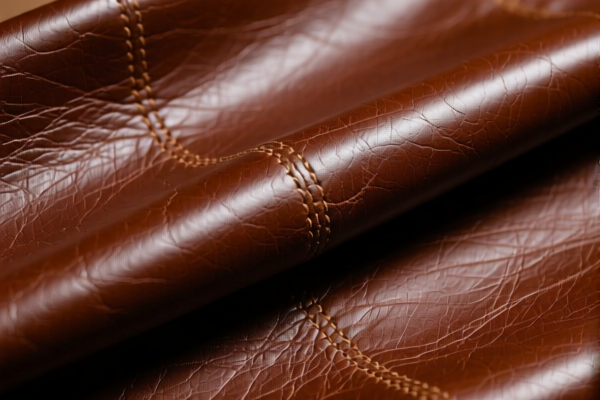

AI Analysis
🐂 Buffalo Grain Semi-Finished Leather (Tanned but Not Further Processed)
🌐 HS Code Reference & Customs Clearance Guide | 2026 Latest Tariff Analysis | Professional Strategy for US Imports
📌 I. Product Definition & Classification: What is "Buffalo Grain Semi-Finished Leather"?
Buffalo grain leather, in its semi-finished state, represents a critical intermediate good in the leather goods supply chain. It is tanned (preserved) but not yet fully finished into final apparel or accessories. The term "Grain" refers to the natural surface texture of the hide.
In international trade (specifically under US HTSUS), the classification hinges on two factors: 1. Process State: Is it merely tanned (Chapter 41) or is it worked into a specific form (e.g., straps, strips) ready for immediate assembly? 2. Species: Is it Bovine (Cattle/Buffalo) or other animals? Note: "Buffalo" in US customs typically falls under Bovine hides (Ch 41) unless specified as exotic/other.
⚠️ Key Distinction:
- If the leather is tanned but in hide/skin form (sheets) →归入 Chapter 41 (Hides and Skins).
- If the leather is cut into strips, straps, or specific shapes for belts/straps →归入 Chapter 42 (Articles of Leather).
📦 II. HS Code Classification Details (2026 Latest Tariff Alignment)
Based on the provided data, here are the precise HS Codes for Buffalo/Bison leather semi-finished products:
| HS Code | Product Description | Application Scenario | Processing State |
|---|---|---|---|
4104.49.50.00 |
Bovine Leather Semi-Finished | Semi-tanned, unworked bovine hides (including buffalo) for apparel. | ✅ Tanned, no further working. |
4107.11.70.40 |
Bovine Leather for Apparel/Gloves | Bovine/marble skin used for gloves/apparel, tanned but not further processed. | ✅ Tanned, specific use (apparel). |
4107.12.70.40 |
Bovine Leather Processed for Apparel | Boiling-treated or specifically processed bovine skin for garment use. | ✅ Tanned, processed for clothing. |
4205.00.05.00 |
Leather Articles (Semi-Finished) | Semi-finished leather articles (e.g., cut shapes) for clothing/apparel. | ✅ Cut/Shaped, ready for assembly. |
4205.00.40.00 |
Leather Straps/Belts (Semi-Finished) | Semi-finished leather belt straps/materials. | ✅ Cut into strips/straps. |
🔍 Critical Note:
- "Buffalo" = Bovine: In US HTSUS, buffalo hides are classified under Heading 4104 (Bovine leather). They are NOT treated as exotic leather unless explicitly specified otherwise (e.g., 4114 for exotic skins). - Chapter 41 vs. 42:
- 41xx: Leather in the hide form (even if tanned and dyed).
- 4205/4206: Leather that has been cut, perforated, or formed into specific shapes/straps.
💰 III. 2026 Latest Tariff Rate Breakdown (Detailed & Strategic)
✅ Applicable Country: United States (US)
✅ Origin: China (CN)
✅ Effective Date: Post-2025 Tariff Regime (Section 301 + IEEPA)
🎯 1. 4104.49.50.00 —— Bovine Leather, Semi-Finished (Tanned, Not Further Worked)
| Item | Detail |
|---|---|
| Base Tariff | 3.3% (Ad Valorem) |
| USITC Additional Tariff | 0.0% (Standard MFN rate applies for this subheading under Section 301 exclusions if applicable, but data shows 0.0%) |
| IEEPA Add-on Tariff | 10% (Against China/HK products) |
| Total Effective Rate | 13.3% |
| Calculation Basis | CIF Value × 13.3% |
| De Minimis Eligibility | ❌ No (Deny De Minimis for textiles/leather from China) |
| Legal Pathway | HTSUS:4104.49.50.00 → USITC:301 → IEEPA:9903.01.24 |
📌 Interpretation:
- This is the most cost-effective route for bulk hides. - The 0% Section 301 for this specific subheading suggests it may be exempt or lower-tier compared to other leather goods. - Warning: Ensure the product is truly "not further worked." If cut into straps, it moves to Chapter 42.
🎯 2. 4107.11.70.40 & 4107.12.70.40 —— Bovine Leather for Apparel/Gloves
| Item | Detail |
|---|---|
| Base Tariff | 5.0% |
| USITC Additional Tariff | 0.0% |
| IEEPA Add-on Tariff | 10% |
| Total Effective Rate | 15.0% |
| Calculation Basis | CIF Value × 15.0% |
| De Minimis Eligibility | ❌ No |
📌 Interpretation:
- Slightly higher than4104.49.50.00due to specific "Apparel/Glove" designation. - Used when the leather is intended specifically for the garment industry (e.g., leather jackets, gloves). - Must provide proof of intended use (e.g., buyer’s specification for apparel).
🎯 3. 4205.00.40.00 —— Leather Belt Straps (Semi-Finished)
| Item | Detail |
|---|---|
| Base Tariff | 1.8% |
| USITC Additional Tariff | 25.0% (High Surcharge) |
| IEEPA Add-on Tariff | 10% |
| Total Effective Rate | 36.8% |
| Calculation Basis | CIF Value × 36.8% |
| De Minimis Eligibility | ❌ No |
| Legal Pathway | HTSUS:4205.00.40.00 → USITC:301 (Footnote 9903.88.01) → IEEPA:9903.01.24 |
📌 Interpretation:
- High Risk Code: The 25% USITC tariff is applied to leather articles (including straps) under Section 301. - This code applies if the leather is already cut into strap form. - Strategy: If possible, import as hides (4104.49.50.00) and cut in the US to avoid the 25% surcharge, provided your US facility has cutting capabilities.
🎯 4. 4205.00.05.00 —— Leather Articles (Semi-Finished for Apparel)
| Item | Detail |
|---|---|
| Base Tariff | 2.9% |
| USITC Additional Tariff | 25.0% (High Surcharge) |
| IEEPA Add-on Tariff | 10% |
| Total Effective Rate | 37.9% |
| Calculation Basis | CIF Value × 37.9% |
| De Minimis Eligibility | ❌ No |
📌 Interpretation:
- Covers other semi-finished leather articles (e.g., pre-cut shapes for bags, shoes, jackets). - Like4205.00.40.00, it incurs the 25% Section 301 tariff. - Total Tax: 37.9% – This is the highest cost scenario.
🛠️ IV. Customs Clearance Practical Advice (Pitfall Avoidance)
✅ 1. Documentation Checklist (Mandatory)
| Document | Requirement | Purpose |
|---|---|---|
| ✅ Commercial Invoice | Must state "Buffalo Hide," "Tanned," "Grain" | Determines HS Code |
| ✅ Bill of Lading | Weight, Quantity, Dimensions | Verifies shipment volume |
| ✅ Certificate of Origin | CO Form A or B (if applicable) | Proof of China Origin (triggers IEEPA 10%) |
| ✅ Processing Description | Detail if "Tanned Only" or "Cut/Strapped" | Critical for 41xx vs. 42xx |
| ✅ Product Photos | Front, Back, Edge, Grain Texture | Proof of "Grain" surface |
| ✅ Third-Party Test Report | Chrome content, pH, Tensile Strength | Ensures compliance with REACH/Prop 65 |
✅ 2. Declaration Strategy (Key Mnemonics)
🔥 "Tanned Sheets = 41xx (Low Tax); Cut Straps = 42xx (High Tax)!"
| Scenario | Correct HS Code | Tax Rate | Strategy |
|---|---|---|---|
| Bulk Hides (Tanned) | 4104.49.50.00 |
13.3% | ✅ Best Option. Import hides, cut in US. |
| Apparel-Specific Hides | 4107.11.70.40 |
15.0% | ✅ Good for glove/jacket manufacturers. |
| Pre-Cut Belt Strips | 4205.00.40.00 |
36.8% | ❌ Avoid if possible. High tariff. |
| Pre-Cut Shapes | 4205.00.05.00 |
37.9% | ❌ Avoid if possible. Highest tariff. |
📌 Critical Tip:
- If you are importing belt straps or pre-cut leather shapes directly from China, you MUST pay the 25% USITC tariff. - Alternative Strategy: Import tanned hides (4104.49.50.00) and perform the cutting/strapping process in the US. This can save ~23-25% in tariffs.
✅ 3. Special Cases & Handling
| Situation | Handling Advice |
|---|---|
| OEM Custom Colors | Specify exact color code in invoice. Avoid vague terms like "Mixed Colors." |
| Chrome vs. Vegetable Tanned | Declare clearly. Chrome-tanned is standard for apparel; Vegetable-tanned may have different processing requirements. |
| Grain vs. Split | "Grain" implies the top layer. "Split" is lower value. Misdeclaration leads to penalties. |
| Buffalo vs. Cow | Declare as "Bovine" (Buffalo). Do not declare as "Exotic" unless it is a protected species (e.g., Water Buffalo may have different rules, but generally Buffalo in trade = Bovine). |
🌍 V. Global Market Comparison (2026)
| Country | HS Code | Tariff Rate | Notes |
|---|---|---|---|
| 🇺🇸 USA | 4104.49.50.00 |
13.3% | Includes 10% IEEPA. Section 301 is 0% for this code. |
| 🇨🇳 China | 4104.49.50.00 |
~5-10% | Import duties for Chinese domestic use. |
| 🇪🇺 EU | 4104.49 |
~4-6% | No IEEPA. Lower base rates. |
| 🇬🇧 UK | 4104.49 |
~4-6% | Post-Brexit tariffs apply. |
| 🇲🇽 Mexico | 4104.49 |
~4-8% | USMCA may apply if processed in NAFTA region. |
📌 Conclusion:
- USA is the highest cost market due to IEEPA 10% and potential Section 301 for processed goods. - Chapter 41 (Hides) is significantly cheaper than Chapter 42 (Articles) in the US.
📌 VI. Common Mistakes & Pitfalls (Lessons Learned)
❌ Mistake 1: Declaring "Cut Straps" as "Hides" to avoid 25% tariff.
👉 Consequence: Customs audit, seizure, penalties, and back-taxes. Do not misclassify.
❌ Mistake 2: Using "Leather" without specifying "Tanned."
👉 Consequence: Unclear classification. Must specify "Tanned Bovine Leather."
❌ Mistake 3: Ignoring IEEPA 10% Add-on.
👉 Consequence: Underpayment of duties. The 10% is mandatory for Chinese-origin goods.
✅ Correct Practice:
"Tanned Buffalo Grain Hides, Bovine, Unworked, for Apparel Manufacturing, Model BFF-2026"
🎯 VII. Conclusion: Professional Declaration, Cost Optimization!
🎯 Remember the Golden Rule:
🔹 "Hides = 13-15%; Cut Straps = 36-38%!"
🔹 "If you can cut in the US, import hides!"
🔹 "Never understate the value; always declare origin accurately."
📌 Pro Tip:
- If your product is Chrome-Free or Vegetable-Tanned, highlight this in marketing (US consumers prefer eco-friendly leather).
- For Bulk Imports, consider using a Bonded Warehouse in the US to defer tariff payment until the goods are sold or further processed.
📣 Immediate Action:
📞 Contact your customs broker with product photos and processing details.
📝 Request a Binding Tariff Ruling (BTR) from CBP if your product is on the borderline between4104and4205.
✨ Professional Clearance Starts with Accurate Classification!
💼 Every percentage point saved is pure profit!
Customer Reviews
About HS Code Classification
The Harmonized System (HS) is an internationally standardized nomenclature developed by the World Customs Organization (WCO) to classify traded products. Over 200 countries use the HS system as the basis for customs tariffs, trade statistics, and import/export regulations.
Each HS code follows a hierarchical structure:
- Chapter (2 digits) — Broad category of goods (e.g., Chapter 84: Machinery and Mechanical Appliances)
- Heading (4 digits) — More specific grouping within the chapter
- Subheading (6 digits) — Internationally standardized breakdown, used by all WCO member countries
- National subdivisions (8-10 digits) — Country-specific extensions for further classification, such as US HTSUS 10-digit codes
Correct HS code classification is essential for smooth customs clearance, accurate duty payment, and compliance with trade regulations. Misclassification can lead to customs delays, overpayment of duties, or penalties.
When importing from CN to US, the applicable tariff rates may include:
- Most-Favored-Nation (MFN) rate — The standard duty rate applied to WTO members
- General rate — Applied to countries without trade agreements
- Trade remedy duties — Additional tariffs such as Section 301 (anti-dumping), Section 232 (national security), or countervailing duties
The information provided on this page is for reference purposes only. For official classification, please consult with your local customs authority or a licensed customs broker.