Buffalo Grain Split Leather
CN → US| HS Code | Tariff Rate | Origin | Destination | Doc |
|---|---|---|---|---|
| 4115100000 | 35.0% | CN | US | Official Doc |
| 4115200000 | 17.5% | CN | US | Official Doc |
| 4104113060 | 12.4% | CN | US | Official Doc |
| 4104413060 | 12.4% | CN | US | Official Doc |
| 4107124000 | 12.5% | CN | US | Official Doc |
| 4107924000 | 12.5% | CN | US | Official Doc |
Product Images



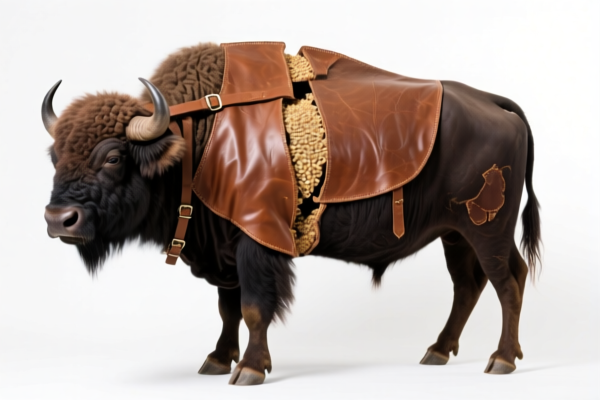
AI Analysis
🐃 Buffalo Grain Split Leather (Full & Partial)
🌐 HS Code Reference & Customs Clearance Guide | 2026 Latest Tariff Analysis | Professional Compliance Strategy
📌 I. Product Definition & Classification: What is "Buffalo Grain Split Leather"?
Buffalo leather is a durable, thick material derived from bovine hides, specifically buffalo. It is renowned for its natural grain patterns, strength, and unique texture. In international trade, it is classified based on its state (wet/dry) and processing level (crust/further prepared).
Key Distinctions: * "Grain Split": Refers to the lower layers of the hide after the top "full grain" layer has been separated. It retains some grain texture but is less durable than full grain. * "Crust" (Tanned but not finished): Leather that has been tanned and dried (or kept wet) but has not received final surface coatings (pigments, dyes, waxes, or finishes). * "Further Prepared": Leather that has undergone additional processes like dyeing, fatliquoring, or finishing to make it ready for manufacturing.
⚠️ Critical Classification Points:
- Wet State (Wet-Blue): Tanned leather kept in water/salt solution. Not fully dried.
- Dry State (Crust): Tanned leather that has been dried but not yet finished.
- Finished/Prepared: Leather ready for use in bags, shoes, or upholstery.
- Composition Leather: Not real hide, but leather fiber bonded together.
📦 II. HS Code Classification Details (2026 Latest Tariff Alignment)
| HS Code | Product Description | State/Type | Tax Rate | Key Distinction |
|---|---|---|---|---|
4104.11.30.60 |
Tanned/Crust Hides: Full grains, unsplit; Grain splits: Other: Buffalo | Wet State (e.g., Wet-Blue) | 2.4% | Wet, unprocessed buffalo splits. |
4104.41.30.60 |
Tanned/Crust Hides: Crust: Full grains, unsplit; Grain splits: Other: Buffalo | Dry State (Crust) | 0.0% | Dried, unfinished buffalo splits. |
4107.12.40.00 |
Leather Further Prepared: Whole hides/skins: Grain splits: Other: Buffalo | Further Prepared | 0.0% | Finished buffalo grain splits (whole hides). |
4107.92.40.00 |
Leather Further Prepared: Other (incl. sides): Grain splits: Buffalo | Further Prepared | 0.0% | Finished buffalo grain splits (sides/sections). |
4115.10.00.00 |
Composition Leather: Basis of leather fiber, in slabs/sheets/strips | Non-Hide Material | 25.0% | Not real buffalo hide. Recycled leather fiber bonded. |
4115.20.00.00 |
Parings, Waste, Dust, Powder of Leather | Waste Material | 7.5% | Scraps and off-cuts from buffalo leather processing. |
🔍 Important Note:
- Real Buffalo Hide falls under 4104 or 4107 series.
- Composition Leather (recycled fiber) is NOT buffalo hide. It is classified under 4115.
- Waste (scraps) is classified under 4115.20.
💰 III. 2026 Tariff Rate Breakdown (Detailed Tax Analysis)
✅ Applicable Country: United States (US)
✅ Origin: China (CN) (Note: If origin is different, tax rates may vary significantly. This analysis assumes standard US-China trade context based on provided data.)
✅ Effective Date: 2025/2026 (Current Data Set)
🎯 1. 4104.11.30.60 —— Buffalo Grain Split Leather (Wet State)
| Item | Detail |
|---|---|
| Base Tariff | 2.4% |
| Additional Tariff (Section 301/IEEPA) | 0.0% |
| Total Tariff | 2.4% |
| Tax Calculation | CIF Value × 2.4% |
| De Minimis Exemption | ❌ No (Below $800? Check specific rules, but generally commercial shipments taxed) |
| Legal Basis | USITC:4104.11.30.60 |
📌 Explanation:
- Wet-state buffalo leather attracts a low base tariff of 2.4%.
- No additional 25% or 10% tariff is applied to this specific HS code in the provided data. This is favorable for wet-process tanneries.
🎯 2. 4104.41.30.60 —— Buffalo Grain Split Leather (Dry/Crust State)
| Item | Detail |
|---|---|
| Base Tariff | 0.0% |
| Additional Tariff | 0.0% |
| Total Tariff | 0.0% |
| Tax Calculation | Duty-Free |
| Legal Basis | USITC:4104.41.30.60 |
📌 Explanation:
- Zero duty for dry, unfinished buffalo leather splits.
- This encourages import of raw materials for further finishing in the US.
🎯 3. 4107.12.40.00 & 4107.92.40.00 —— Further Prepared Buffalo Leather
| Item | Detail |
|---|---|
| Base Tariff | 0.0% |
| Additional Tariff | 0.0% |
| Total Tariff | 0.0% |
| Legal Basis | USITC:4107.12.40.00 / 4107.92.40.00 |
📌 Explanation:
- Finished buffalo leather (grain splits) is also duty-free.
- This applies whether the leather is in whole hides (4107.12) or sides (4107.92).
🚨 4. 4115.10.00.00 —— Composition Leather (NOT Real Buffalo)
| Item | Detail |
|---|---|
| Base Tariff | 0.0% |
| Additional Tariff | 25.0% |
| Total Tariff | 25.0% |
| Legal Basis | USITC:4115.10.00.00 |
📌 CRITICAL WARNING:
- Do NOT misdeclare "Buffalo Grain Split" as "Composition Leather" to avoid duties.
- Composition leather is made from leather fibers/resin, NOT whole hides.
- If you import real buffalo hide, it is NOT composition leather. Misclassification leads to fraud penalties.
- However, if you are importing recycled leather fiber sheets, the 25% tariff applies.
🚨 5. 4115.20.00.00 —— Leather Waste & Scraps
| Item | Detail |
|---|---|
| Base Tariff | 0.0% |
| Additional Tariff | 7.5% |
| Total Tariff | 7.5% |
| Legal Basis | USITC:4115.20.00.00 |
📌 Explanation:
- Scraps, parings, and dust from buffalo leather processing attract 7.5% tariff.
- Ensure proper documentation proving these are waste/by-products, not finished goods.
🛠️ IV. Customs Clearance Practical Advice (Avoid Pitfalls)
✅ 1. Required Documentation Checklist
| Document | Required? | Notes |
|---|---|---|
| ✅ Commercial Invoice | ✔️ | Must specify: "Buffalo Grain Split Leather," state (wet/dry), and process (crust/prepared). |
| ✅ Packing List | ✔️ | Detail weight, dimensions, and packaging type. |
| ✅ Bill of Lading/Air Waybill | ✔️ | Standard shipping document. |
| ✅ Certificate of Origin | ✔️ | To verify country of origin (e.g., China, Vietnam, etc.). |
| ✅ Tanning Certificate/Process Description | ✔️ | CRITICAL: To distinguish between Wet, Crust, and Further Prepared. |
| ✅ Material Composition Statement | ✔️ | If claiming "Composition Leather," provide lab test results proving it’s not solid hide. |
✅ 2. Declaration Tips (Key Phrases)
🔥 “Be Specific: State, Process, and Material!”
| Situation | Correct Declaration | Incorrect Declaration |
|---|---|---|
| Wet buffalo splits | "Buffalo Grain Split Leather, Wet State, Unsplit" | "Buffalo Leather" (Too vague) |
| Dried crust buffalo splits | "Buffalo Grain Split Leather, Dry State, Crust" | "Buffalo Leather Pieces" |
| Finished buffalo splits | "Buffalo Grain Split Leather, Further Prepared" | "Leather Rolls" |
| Recycled leather sheets | "Composition Leather, Leather Fiber Basis" | "Buffalo Leather" (Fraud!) |
| Leather scraps | "Parings and Waste of Leather" | "Raw Leather" |
✅ 3. Special Scenarios
| Scenario | Handling Advice |
|---|---|
| Mixed Lots (Wet & Dry) | Split shipment or declare separately. Mixed states may require detailed breakdown to apply correct duty (0% vs 2.4%). |
| Composition vs. Real Leather | Provide lab analysis (microscopic or chemical) to prove material. Misdeclaring composition as real hide can lead to seizure. |
| Waste vs. Raw Material | Ensure waste is clearly identified as parings/scraps. If too large, customs may classify as "used leather" or refuse entry. |
| High-Value Finished Leather | Even though duty is 0%, ensure proper valuation (CIF) for tax records. |
🌍 V. Global Market Comparison (2026)
| Country/Region | Recommended HS Code | Tariff | Notes |
|---|---|---|---|
| 🇺🇸 USA | 4104.41.30.60 / 4107.92.40.00 |
0% | Duty-free for crust/prepared buffalo leather. |
| 🇪🇺 EU | Similar HS Codes (4104/4107) | 0-4.7% | Varies by specific subheading. Generally low. |
| 🇨🇳 China | 4104.11.30.60 |
~2-5% | Import tariffs on raw hides. |
| 🇻🇳 Vietnam | Varies | 0% | Many tanneries export duty-free to US under trade agreements. |
📌 Conclusion:
- USA offers 0% duty on most finished and crust buffalo leather splits.
- Wet-state leather has a small duty (2.4%).
- Composition leather is heavily taxed (25%) to protect domestic materials.
📌 VI. Common Mistakes & Pitfalls (Lessons Learned)
❌ Mistake 1: Declaring "Composition Leather" as "Buffalo Leather"
👉 Consequence: 25% tariff avoided, but if caught, fraud penalties + seizure.
✅ Fix: Always provide material composition proof.
❌ Mistake 2: Not specifying "Wet" vs. "Dry" state
👉 Consequence: Customs may apply highest duty rate or delay classification.
✅ Fix: Explicitly state "Wet State" or "Dry/Crust" in invoice.
❌ Mistake 3: Mixing "Full Grain" and "Split" in one line item
👉 Consequence: Incorrect duty calculation. Full grain may have different rates.
✅ Fix: Split into separate line items with distinct HS Codes.
❌ Mistake 4: Ignoring "Further Prepared" status
👉 Consequence: Misclassification between 4104 (Crust) and 4107 (Prepared). Both are 0%, but documentation must match.
✅ Fix: Provide tanning process details to confirm status.
🎯 VII. Conclusion: Professional Declaration for Cost Efficiency
🎯 Remember the Rule:
🔹 "Wet = 2.4% | Dry/Crust = 0% | Prepared = 0% | Composition = 25% | Waste = 7.5%"
🔹 "Buffalo Split is Real Hide, Not Composition. Declare Accurately."
📌 Pro Tip:
If you are importing composition leather (recycled), expect a 25% tariff. Consider sourcing from countries with FTAs (Free Trade Agreements) with the US to reduce this burden.
For real buffalo leather, ensure your supplier provides tanning certificates to prove origin and state (wet/dry/prepared).
📣 Immediate Action:
📞 Contact your customs broker with the HS Codes above.
📄 Prepare Tanning Certificates and Material Statements.
🚀 Optimize your supply chain to take advantage of 0% duties on crust and prepared buffalo leather.
✨ Precise Classification, Zero Surprises!
💼 Your Leather Imports, Streamlined and Compliant!
Customer Reviews
About HS Code Classification
The Harmonized System (HS) is an internationally standardized nomenclature developed by the World Customs Organization (WCO) to classify traded products. Over 200 countries use the HS system as the basis for customs tariffs, trade statistics, and import/export regulations.
Each HS code follows a hierarchical structure:
- Chapter (2 digits) — Broad category of goods (e.g., Chapter 84: Machinery and Mechanical Appliances)
- Heading (4 digits) — More specific grouping within the chapter
- Subheading (6 digits) — Internationally standardized breakdown, used by all WCO member countries
- National subdivisions (8-10 digits) — Country-specific extensions for further classification, such as US HTSUS 10-digit codes
Correct HS code classification is essential for smooth customs clearance, accurate duty payment, and compliance with trade regulations. Misclassification can lead to customs delays, overpayment of duties, or penalties.
When importing from CN to US, the applicable tariff rates may include:
- Most-Favored-Nation (MFN) rate — The standard duty rate applied to WTO members
- General rate — Applied to countries without trade agreements
- Trade remedy duties — Additional tariffs such as Section 301 (anti-dumping), Section 232 (national security), or countervailing duties
The information provided on this page is for reference purposes only. For official classification, please consult with your local customs authority or a licensed customs broker.