Buffalo Grain Split Leather for Furniture
CN → US| HS Code | Tariff Rate | Origin | Destination | Doc |
|---|---|---|---|---|
| 4114207000 | 36.6% | CN | US | Official Doc |
| 4114203000 | 37.3% | CN | US | Official Doc |
| 4107124000 | 12.5% | CN | US | Official Doc |
| 4107924000 | 12.5% | CN | US | Official Doc |
| 4104113060 | 12.4% | CN | US | Official Doc |
| 4104413060 | 12.4% | CN | US | Official Doc |
Product Images
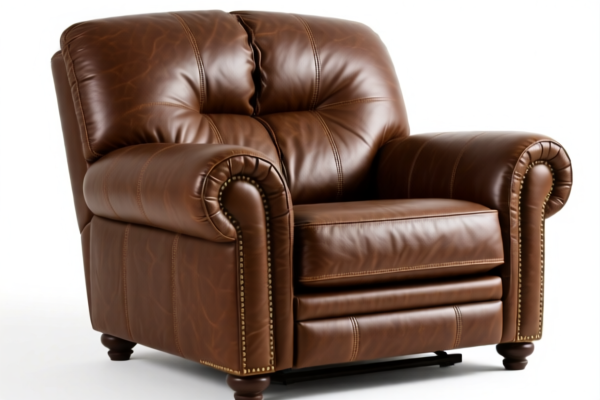
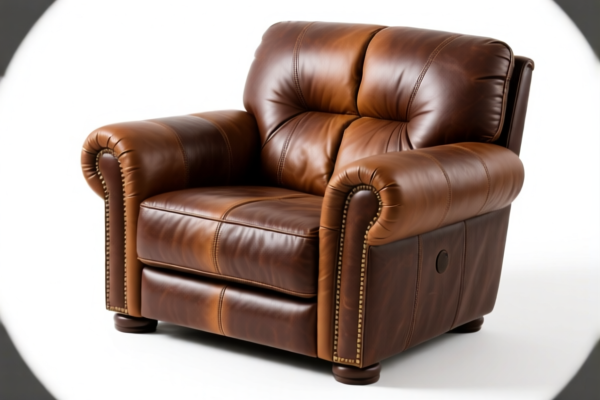
AI Analysis
🛋️ Buffalo Grain Split Leather for Furniture
🌐 HS Code Reference & Customs Clearance Guide | 2026 Latest Tariff Analysis | Professional Compliance Strategy
📌 I. Product Definition & Classification: Do You Really Know "Buffalo Grain Split Leather"?
Buffalo leather is a premium, durable material widely used in high-end furniture, automotive interiors, and fashion goods. In international trade, it is strictly categorized based on its state (wet/dry), preparation level (crust/further prepared), and anatomical part (split).
Grain Split Leather (Buffalo): This refers to the inner layer of the hide after the top "grain" layer has been separated. It is thicker than suede but has a natural fibrous structure rather than a smooth grain surface. It is often used for "pull-up" leather or corrected grain leather in furniture.
⚠️ Critical Distinction:
- If the leather is wet (just tanned, no further processing like dyeing/finishing) → Classified under 4104.11.30.60
- If the leather is dry (crust state, tanned but not further prepared) → Classified under 4104.41.30.60
- If the leather is further prepared (dyed, finished, corrected grain for upholstery) → Classified under 4107.12.40.00 or 4107.92.40.00
📦 II. HS Code Classification Details (2026 Latest Tariff Authority Reference)
The following HS Codes are derived strictly from the provided data. Note that the classification depends heavily on whether the leather is in a "crust" (dry, unprepared) or "further prepared" state.
| HS Code | Product Description | State | Application Scenario | Tax Rate (Total) |
|---|---|---|---|---|
4104.11.30.60 |
Tanned/Crust Hides (Bovine/Equine), Wet State: Full grains, unsplit; Grain splits: Buffalo Other | Wet | Raw wet splits, not yet dried or finished for final use | 2.4% |
4104.41.30.60 |
Tanned/Crust Hides (Bovine/Equine), Dry State (Crust): Full grains, unsplit; Grain splits: Buffalo Other | Dry/Crust | Dried splits, tanned but not yet dyed/finished for furniture | 0.0% |
4107.12.40.00 |
Leather Further Prepared: Whole hides/skins: Grain splits: Buffalo | Prepared | Dyed, finished buffalo split leather ready for upholstery/furniture | 0.0% |
4107.92.40.00 |
Leather Further Prepared: Other (including sides): Grain splits: Buffalo | Prepared | Finished buffalo split leather (sides/splits) for non-whole hide applications | 0.0% |
🔍 Key Reminder:
- Wet vs. Dry: If your buffalo split leather is shipped in a wet state (often packed in salt or wet barrels), it falls under4104.11.30.60(2.4% tax).
- Crust vs. Prepared: If it is dried but not yet colored/finished ("crust"), it falls under4104.41.30.60(0.0% tax).
- Finished Leather: If it is already dyed, polished, or treated for furniture use, it is "further prepared" and falls under4107.12.40.00or4107.92.40.00(0.0% tax).
- Avoid Confusion: Do not confuse "Grain Splits" with "Patent Leather" (4114.20.70.00) or "Patent Leather" (4114.20.30.00). Buffalo furniture leather is typically not patent or metallized leather.
💰 III. 2026 Latest Tariff Rate Breakdown (Including Additional Taxes)
✅ Applicable Country: United States (US)
✅ Origin: China (CN)
✅ Effective Date: Current tariff schedule applies
🎯 1. 4104.11.30.60 – Wet Buffalo Grain Split Leather
| Item | Detail |
|---|---|
| Base Tariff | 2.4% (Ad Valorem) |
| Additional Tariff | 0.0% |
| Total Tax Rate | 2.4% |
| Tax Calculation | CIF Value × 2.4% |
| De Minimis Eligibility | ❌ No (De Minimis does not apply to leather products) |
| Legal Basis | Standard HTSUS 4104.11.30.60 |
📌 Explanation:
- Wet-state leather carries a small base duty of 2.4% due to its unfinished nature and potential volume.
- No Section 301 additional tariffs apply to this specific subheading based on the provided data.
🎯 2. 4104.41.30.60 – Dry (Crust) Buffalo Grain Split Leather
| Item | Detail |
|---|---|
| Base Tariff | 0.0% |
| Additional Tariff | 0.0% |
| Total Tax Rate | 0.0% |
| Tax Calculation | CIF Value × 0.0% |
| De Minimis Eligibility | ❌ No |
| Legal Basis | Standard HTSUS 4104.41.30.60 |
📌 Explanation:
- Dry crust leather is duty-free (0.0%). This is a strategic advantage for importers who plan to do further finishing domestically.
- No additional tariffs apply.
🎯 3. 4107.12.40.00 & 4107.92.40.00 – Further Prepared Buffalo Split Leather
| Item | Detail |
|---|---|
| Base Tariff | 0.0% |
| Additional Tariff | 0.0% |
| Total Tax Rate | 0.0% |
| Tax Calculation | CIF Value × 0.0% |
| De Minimis Eligibility | ❌ No |
| Legal Basis | Standard HTSUS 4107.12.40.00 / 4107.92.40.00 |
📌 Explanation:
- Finished buffalo split leather for furniture is also duty-free (0.0%).
- This makes the US a competitive market for importing finished buffalo leather goods, provided the classification is correct.
⚠️ Important Note on Incorrect Classification:
If you mistakenly classify buffalo split leather as Patent Leather (4114.20.30.00 or 4114.20.70.00), the tax implications change drastically:
- 4114.20.30.00 (Patent Leather): 27.3% Total Tax (2.3% Base + 25% Additional).
- 4114.20.70.00 (Other Patent/Metallized): 0.0% Total Tax.
🚫 Risk: If your buffalo leather is NOT patent or metallized, classifying it as such may lead to customs audits, back duties, and penalties. Ensure your product description matches the physical properties (e.g., "Buffalo Grain Split Leather, Unfinished" or "Dyed Buffalo Split").
🛠️ IV. Customs Clearance Practical Advice (Real-World Pitfall Avoidance)
✅ 1. Document Checklist (Mandatory)
| Document | Required | Description |
|---|---|---|
| ✅ Commercial Invoice | ✔️ | Must clearly state: "Buffalo Grain Split Leather," specify "Wet," "Crust," or "Finished," and declare material content (100% Bovine). |
| ✅ Packing List | ✔️ | Detail weight (net/gross), number of hides/splits, and packaging type (bales, cartons). |
| ✅ Certificate of Origin | ✔️ | Proof of origin (e.g., China) to verify tariff eligibility. |
| ✅ Product Photographs | ✔️ | Show the surface texture (grain split) to distinguish from patent or full-grain leather. |
| ✅ Tanning Process Description | ✔️ | Briefly describe the tanning method (e.g., vegetable, chrome) if requested, though not always mandatory for classification. |
✅ 2. Declaration Tips (Key Mantras)
🔥 "Wet is 2.4%, Dry is 0%, Finished is 0%. Don't call it Patent!"
| Scenario | Correct Classification | Incorrect Practice |
|---|---|---|
| Wet buffalo splits (un-dyed) | 4104.11.30.60 |
Declare as "Finished Leather" → Risk of misclassification |
| Dry crust splits (tanned, no color) | 4104.41.30.60 |
Declare as "Wet" → Unnecessary 2.4% tax |
| Finished buffalo leather (dyed/polished) | 4107.12.40.00 or 4107.92.40.00 |
Declare as "Crust" → May trigger additional questions |
| Any buffalo split leather | NOT 4114.20.30.00 |
Calling it "Patent Leather" → 27.3% tax if deemed patent, or penalties if deemed false |
✅ 3. Special Cases
| Case | Handling Advice |
|---|---|
| Mixed Shipments | If a shipment contains both wet and dry splits, they must be declared separately with distinct HS Codes. Do not consolidate under one code to avoid discrepancies. |
| Buffalo vs. Cowhide | Ensure the invoice specifies "Buffalo" if the duty rate differs (though in this dataset, Buffalo splits are 0-2.4%, similar to other bovine splits). Specificity helps customs verify origin. |
| Sample Shipments | Even samples are subject to duty. Do not claim "No Value" to avoid tariffs. Properly declare at actual value. |
🌍 V. Global Market Comparison (2026 Latest)
| Country/Region | Recommended HS Code | Tariff Rate | Notes |
|---|---|---|---|
| 🇺🇸 USA | 4107.12.40.00 / 4104.41.30.60 |
0.0% | Duty-free for finished/crust. Wet is 2.4%. No Section 301 on these codes. |
| 🇨🇳 China | 4107.12.40.00 |
~5-10% | Check latest Chinese tariff schedule for import duties. |
| 🇪🇺 EU | 4107 |
~5-6% | EU typically applies ~5.5% for prepared bovine leather. |
| 🇬🇧 UK | 4107 |
~5% | Post-Brexit UK tariff schedule similar to EU for leather. |
| 🇯🇵 Japan | 4107 |
~5% | Japan generally imposes low duties on finished leather. |
📌 Conclusion:
- The US offers the most favorable tariff treatment for buffalo grain split leather, with 0.0% duty for dry and finished states.
- Wet leather incurs a small 2.4% duty.
- Avoid misclassification as Patent Leather to prevent unexpected 27.3% liabilities.
📌 VI. Common Errors & Pitfall Guide (Lessons Learned)
❌ Error 1: Declaring "Buffalo Leather" without specifying "Split" or "Grain"
👉 Consequence: Customs may default to a higher-rate code (e.g., full grain) or request additional info, causing delays.
✅ Fix: Always specify "Buffalo Grain Split Leather."
❌ Error 2: Confusing "Crust" with "Finished"
👉 Consequence: If you declare "Crust" but provide photos of dyed leather, customs may reject the declaration or assess penalties.
✅ Fix: Ensure photos match the declared state. "Crust" = No color/finish. "Finished" = Dyed/Treated.
❌ Error 3: Using "Patent Leather" for Shiny Buffalo Split
👉 Consequence: Some buffalo splits are highly polished. If not chemically coated to be "patent," calling it patent is incorrect. If deemed patent incorrectly, you might avoid tax now but face audits later. If deemed patent correctly, you pay 27.3%.
✅ Fix: Use accurate technical descriptions: "High-Gloss Finished Buffalo Split."
❌ Error 4: Ignoring the "Wet" State
👉 Consequence: Wet leather is heavy and smells. If not declared as wet, it may be subject to phytosanitary or other inspections.
✅ Fix: Clearly state "Wet State" in the commercial invoice.
🎯 VII. Conclusion: Smart Classification Saves Money!
🎯 Remember the Mantra:
🔹 "Wet 2.4%, Dry 0%, Finished 0%. No Patent, No Problem!"
🔹 "Specify 'Grain Split' to avoid defaults. Be precise, save time."
📌 Pro Tip:
If you are importing finished buffalo split leather for furniture, use 4107.12.40.00 or 4107.92.40.00 for 0% duty.
If you are importing raw splits for your own finishing, use 4104.41.30.60 for 0% duty.
Only pay 2.4% if the leather is wet.
📣 Action Required:
📞 Contact a licensed customs broker + Provide product photos + Verify "Wet/Dry/Finished" state before shipment
🚀 Clear your buffalo leather imports smoothly, avoid unexpected 27.3% taxes, and maximize your furniture margin!
✨ Professional Customs Compliance Starts with Accurate Classification!
💼 Every percentage point counts in global trade!
Customer Reviews
About HS Code Classification
The Harmonized System (HS) is an internationally standardized nomenclature developed by the World Customs Organization (WCO) to classify traded products. Over 200 countries use the HS system as the basis for customs tariffs, trade statistics, and import/export regulations.
Each HS code follows a hierarchical structure:
- Chapter (2 digits) — Broad category of goods (e.g., Chapter 84: Machinery and Mechanical Appliances)
- Heading (4 digits) — More specific grouping within the chapter
- Subheading (6 digits) — Internationally standardized breakdown, used by all WCO member countries
- National subdivisions (8-10 digits) — Country-specific extensions for further classification, such as US HTSUS 10-digit codes
Correct HS code classification is essential for smooth customs clearance, accurate duty payment, and compliance with trade regulations. Misclassification can lead to customs delays, overpayment of duties, or penalties.
When importing from CN to US, the applicable tariff rates may include:
- Most-Favored-Nation (MFN) rate — The standard duty rate applied to WTO members
- General rate — Applied to countries without trade agreements
- Trade remedy duties — Additional tariffs such as Section 301 (anti-dumping), Section 232 (national security), or countervailing duties
The information provided on this page is for reference purposes only. For official classification, please consult with your local customs authority or a licensed customs broker.