Buffalo Hide Preserved by Other Methods
CN → US| HS Code | Tariff Rate | Origin | Destination | Doc |
|---|---|---|---|---|
| 4103902000 | 20.8% | CN | US | Official Doc |
| 4103901190 | 17.5% | CN | US | Official Doc |
| 4104495000 | 13.3% | CN | US | Official Doc |
| 4107194000 | 12.5% | CN | US | Official Doc |
| 4104195080 | 13.3% | CN | US | Official Doc |
| 4101901030 | 17.5% | CN | US | Official Doc |
Product Images
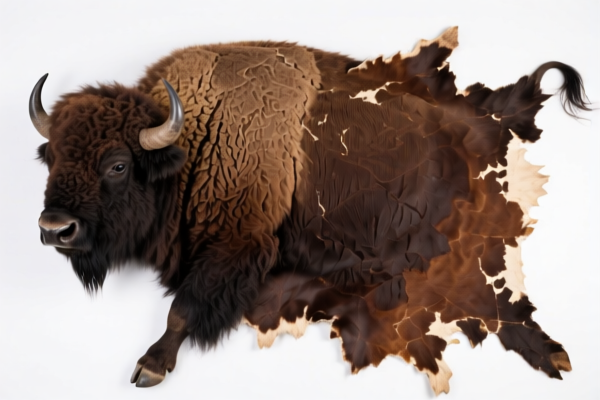
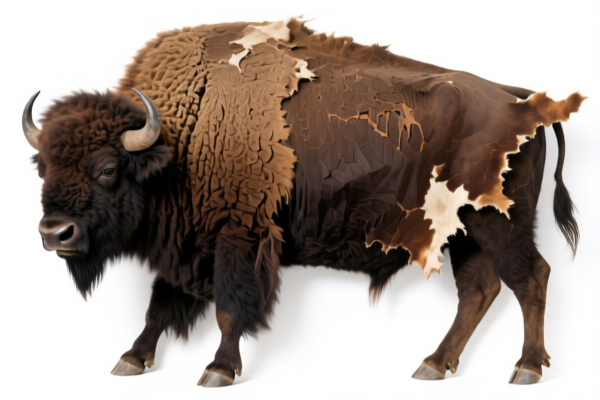
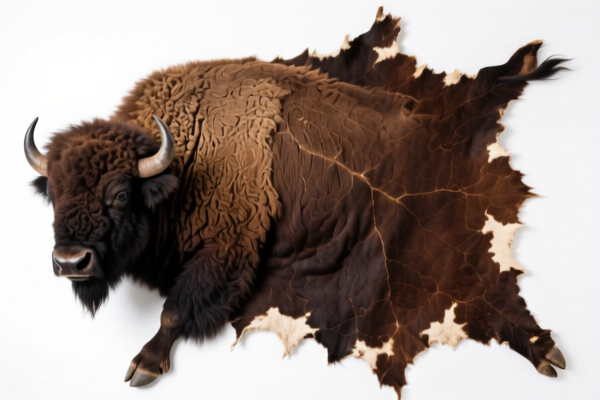
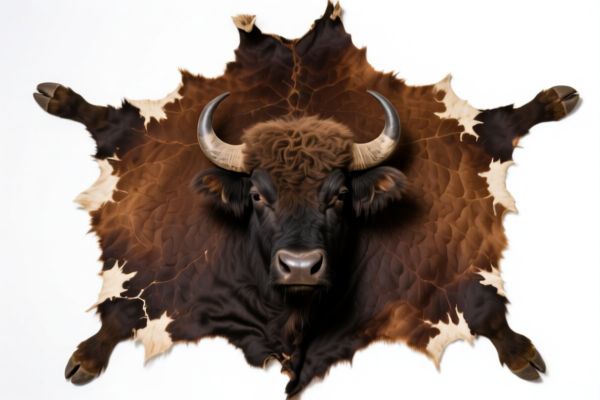
AI Analysis
🐃 Buffalo Hides: Other Preservation Methods
(Other Methods of Preserving Buffalo Hides)
🌐 HS Code Reference & Customs Clearance Guide | 2026 Latest Tariff Analysis | Professional Clearance Strategy
📌 I. Product Definition & Classification: Do You Truly Understand "Preserved Buffalo Hides"?
Buffalo hides (including water buffalo) are raw materials for the leather industry, footwear, and accessories. In international trade, they are classified based on their preservation method (salting, drying, freezing, etc.) and degree of processing (unprocessed, pre-tanned, fully tanned).
This guide focuses specifically on "Preserved by Other Methods" (excluding salt-curing or freeze-drying as primary categories in some specific sub-headings) and covers the relevant HS codes found in the provided dataset.
⚠️ Key Distinction Point:
- "Raw/Untanned" vs. "Pre-tanned": Does the hide undergo any chemical treatment beyond basic preservation?
- "Dried" vs. "Salted": Dried hides often fall under different sub-headings than salted or chemically preserved hides.
- "Other Methods": This usually refers to chemical preservation, freeze-drying, or other non-standard methods not explicitly listed as "salted" or "fresh."
📦 II. HS Code Classification Details (Latest Tariff Data Analysis)
Based on the provided dataset, here are the specific HS codes for Buffalo Hides Preserved by Other Methods. Note that the tax rates vary significantly depending on the specific sub-category and current trade policies (including Section 301/122 tariffs).
| HS Code | Product Description | Preservation Status | Total Tax Rate | Tax Breakdown |
|---|---|---|---|---|
| 4103.90.20.00 | Other preserved buffalo hides | Untanned (Raw) | 20.8% | Base: 3.3% Add-on: 7.5% Sec. 122: 10% |
| 4103.90.11.90 | Other preserved buffalo hides | Pre-tanned (Green/Pre-treatment) | 17.5% | Base: 0.0% Add-on: 7.5% Sec. 122: 10% |
| 4104.49.50.00 | Other preserved cattle hides | Dried (Cow/Horse class) | 13.3% | Base: 3.3% Add-on: 0.0% Sec. 122: 10% |
| 4107.19.40.00 | Other preserved cattle hides | Other (Not in 4114 or specific cat.) | 12.5% | Base: 2.5% Add-on: 0.0% Sec. 122: 10% |
| 4104.19.50.80 | Other preserved cattle hides | Other (General Category) | 13.3% | Base: 3.3% Add-on: 0.0% Sec. 122: 10% |
🔍 Critical Observation:
- HS 4103: Generally covers raw hides (untanned).
- HS 4104: Generally covers chrome-tanned or fully tanned hides or specific preservation methods like drying.
- HS 4107: Covers other preserved hides not specified elsewhere.
- Section 122 Tariff (10%): Applies uniformly to all listed codes, indicating a specific additional duty on these goods (likely related to recent trade measures).
- Base Tariffs: Range from 0% to 3.3%, heavily influenced by whether the hide is raw (4103) or processed/preserved (4104/4107).
💰 III. 2026 Latest Tariff Rate Breakdown (With Add-on Taxes & Policy Add-ons)
✅ Applicable Country: United States (US)
✅ Origin: China (CN) (Inferred from the "Section 122" and "Add-on" structure typical of US-China trade data)
✅ Effective Time: Current as of latest tariff schedule updates
🎯 1. 4103.90.20.00 – Other Preserved Buffalo Hides (Untanned)
| Item | Detail |
|---|---|
| Base Tariff | 3.3% |
| Add-on Tariff (Section 301/Other) | +7.5% |
| Section 122 Tariff | +10.0% |
| Total Tax Rate | 20.8% |
| Tax Calculation | CIF Value × 20.8% |
| De Minimis Eligibility | ❌ No (Raw hides are generally not eligible for Section 321 de minimis) |
| Legal Basis Path | HTSUS:4103.90.20.00 → Section 122 Duty → Add-on Tariff 7.5% |
📌 Explanation:
- This is the most common code for raw, salted, or chemically preserved buffalo hides.
- The 7.5% add-on is likely from the Section 301 list.
- The 10% Section 122 is an additional duty imposed on specific agricultural/leather products.
🎯 2. 4103.90.11.90 – Other Preserved Buffalo Hides (Pre-tanned)
| Item | Detail |
|---|---|
| Base Tariff | 0.0% |
| Add-on Tariff | +7.5% |
| Section 122 Tariff | +10.0% |
| Total Tax Rate | 17.5% |
| Tax Calculation | CIF Value × 17.5% |
| De Minimis Eligibility | ❌ No |
| Legal Basis Path | HTSUS:4103.90.11.90 → Section 122 Duty → Add-on Tariff 7.5% |
📌 Explanation:
- This code is for hides that have undergone pre-tanning (e.g., pickling) but are not fully tanned.
- The base tariff is 0%, but the add-ons still apply, resulting in a lower total rate than raw hides.
🎯 3. 4104.49.50.00 – Other Preserved Cattle Hides (Dried)
| Item | Detail |
|---|---|
| Base Tariff | 3.3% |
| Add-on Tariff | 0.0% |
| Section 122 Tariff | +10.0% |
| Total Tax Rate | 13.3% |
| Tax Calculation | CIF Value × 13.3% |
| De Minimis Eligibility | ❌ No |
| Legal Basis Path | HTSUS:4104.49.50.00 → Section 122 Duty |
📌 Explanation:
- This code is for dried hides (often cow/horse, but may apply to buffalo if classified under "cattle").
- No add-on tariff, only the 10% Section 122 and 3.3% base.
- Lower risk, lower cost compared to raw hides.
🎯 4. 4107.19.40.00 – Other Preserved Cattle Hides (Other)
| Item | Detail |
|---|---|
| Base Tariff | 2.5% |
| Add-on Tariff | 0.0% |
| Section 122 Tariff | +10.0% |
| Total Tax Rate | 12.5% |
| Tax Calculation | CIF Value × 12.5% |
| De Minimis Eligibility | ❌ No |
| Legal Basis Path | HTSUS:4107.19.40.00 → Section 122 Duty |
📌 Explanation:
- This is a "catch-all" for preserved hides not fitting other specific categories.
- Lowest total rate in the dataset (12.5%).
- Suitable for hides preserved by unusual methods not covered by 4103 or 4104.
🎯 5. 4104.19.50.80 – Other Preserved Cattle Hides (General)
| Item | Detail |
|---|---|
| Base Tariff | 3.3% |
| Add-on Tariff | 0.0% |
| Section 122 Tariff | +10.0% |
| Total Tax Rate | 13.3% |
| Tax Calculation | CIF Value × 13.3% |
| De Minimis Eligibility | ❌ No |
| Legal Basis Path | HTSUS:4104.19.50.80 → Section 122 Duty |
📌 Explanation:
- Similar to4104.49.50.00, but may differ in specific preservation method or origin rules.
- 13.3% total rate.
🛠️ IV. Customs Clearance Practical Advice (Risk Avoidance Guide)
✅ 1. Required Documentation Checklist
| Document | Required | Notes |
|---|---|---|
| ✅ Commercial Invoice | ✔️ | Must clearly state "Buffalo Hide," "Preservation Method," and "Weight" |
| ✅ Packing List | ✔️ | Include gross/net weight, number of hides, and preservation method |
| ✅ Certificate of Origin | ✔️ | If applicable, to verify origin and potential tariff exemptions |
| ✅ Preservation Method Statement | ✔️ | Critical: Specify if salted, dried, freeze-dried, or chemically preserved |
| ✅ Phytosanitary Certificate | ✔️ | If required by USDA for animal products |
| ✅ Bill of Lading/Air Waybill | ✔️ | Standard shipping document |
✅ 2. Classification Strategy (Key Tips)
🔥 "Preserve Method Determines Code, Not Just Animal Type!"
| Scenario | Recommended HS Code | Risk Level |
|---|---|---|
| Raw, Salted Buffalo Hide | 4103.90.20.00 |
Medium (20.8% tax) |
| Pre-tanned/Pickled Hide | 4103.90.11.90 |
Low-Medium (17.5% tax) |
| Dried Buffalo Hide | 4104.49.50.00 |
Low (13.3% tax) |
| Other Preservation (Chemical/Freeze-dried) | 4107.19.40.00 or 4104.19.50.80 |
Low (12.5%–13.3% tax) |
⚠️ Common Mistakes:
- Misclassifying Raw Hides as Dried: If you ship raw salted hides but classify them as dried (4104), you may face penalties and back taxes.
- Ignoring Section 122: All codes listed have a 10% additional duty. Failing to include this in cost calculations leads to unexpected costs.
- Confusing "Buffalo" with "Cow": While both are bovine, specific descriptions must match the shipment. If the hide is from a water buffalo, ensure it’s not mistakenly classified under standard cow hides if different rules apply.
✅ 3. Special Cases & Mitigation
| Case | Recommendation |
|---|---|
| Mix of Raw and Tanned Hides | Separate shipments or clearly declare separate HS codes. Mixing can lead to rejection or audit. |
| Small Shipments (Under $800) | ❌ Not Eligible: Raw/processed hides are not eligible for de minimis (Section 321) exemption. Full duty applies. |
| Pre-tanned Hides | Provide chemical treatment records to prove pre-tanning status, potentially qualifying for lower base tariffs. |
| Dried Hides | Ensure proper drying (no moisture > 30%) to qualify for 4104 codes, which have lower add-on tariffs. |
🌍 V. Global Market Comparison (2026)
| Country/Region | Recommended HS Code | Total Tariff | Certification Required | Notes |
|---|---|---|---|---|
| 🇺🇸 USA | 4103.90.20.00 (Raw) |
20.8% | USDA Phytosanitary | High due to Section 122 |
| 🇺🇸 USA | 4107.19.40.00 (Other) |
12.5% | USDA Phytosanitary | Lowest US tariff in dataset |
| 🇨🇳 China | 4103.90.20.00 |
Varies (MFN) | Import License | Lower base tariffs in China |
| 🇪🇺 EU | 4103.90.20.00 |
~3-6% | EORI + Import Declaration | No Section 122 equivalent |
| 🇬🇧 UK | 4103.90.20.00 |
~3-6% | UK EORI | Post-Brexit tariff schedule applies |
📌 Conclusion:
- USA is the highest-cost market due to Section 122 (10%) and Add-on Tariffs (7.5%).
- EU/UK/China have no equivalent Section 122, resulting in significantly lower total tariffs.
- Strategy: If targeting the US market, consider processing hides into pre-tanned (4103.90.11.90) or dried (4104.49.50.00) states to reduce the total tax burden.
📌 VI. Common Errors & Pitfalls (Lessons Learned)
❌ Error 1: Classifying Raw Salted Hides as Dried Hides
👉 Consequence: Misdeclaration, potential fines, and back payment of 7.5% add-on.
❌ Error 2: Ignoring Section 122 (10%) in cost calculations
👉 Consequence: Unexpected cost increase, eroding profit margins.
❌ Error 3: Assuming De Minimis Exemption applies to raw hides
👉 Consequence: Entry refusal or seizure for undervaluation/missing duties.
✅ Correct Approach:
"Buffalo Hide, Preserved by [Method], Raw/Pre-tanned/Dried, Weight: [X] kg, Origin: China"
+ Supporting Documents: Preservation certificate, USDA phytosanitary (if required).
🎯 VII. Conclusion: Professional Classification Saves Money!
🎯 Key Takeaway:
🔹 "Preservation Method Dictates Tariff!"
🔹 "Raw = 20.8% (High), Pre-tanned = 17.5% (Medium), Dried = 13.3% (Low)."
🔹 "Section 122 is Non-Negotiable: +10% on All!"
📌 Pro Tip:
If you have flexibility in the supply chain, drying or pre-tanning hides before export to the US can save 3%–8.3% in total tariffs. Always consult with a customs broker to verify the exact preservation method against HS code definitions.
📣 Immediate Action:
📞 Contact a Customs Broker + Verify Preservation Method + Calculate Total Landed Cost (Including 10% Sec. 122)
🚀 Optimize Your HS Code Selection to Minimize Tariffs and Ensure Smooth Clearance!
✨ Precision in Classification, Profit in Clearance!
💼 Every Percent Saved is a Percent Earned!
Customer Reviews
About HS Code Classification
The Harmonized System (HS) is an internationally standardized nomenclature developed by the World Customs Organization (WCO) to classify traded products. Over 200 countries use the HS system as the basis for customs tariffs, trade statistics, and import/export regulations.
Each HS code follows a hierarchical structure:
- Chapter (2 digits) — Broad category of goods (e.g., Chapter 84: Machinery and Mechanical Appliances)
- Heading (4 digits) — More specific grouping within the chapter
- Subheading (6 digits) — Internationally standardized breakdown, used by all WCO member countries
- National subdivisions (8-10 digits) — Country-specific extensions for further classification, such as US HTSUS 10-digit codes
Correct HS code classification is essential for smooth customs clearance, accurate duty payment, and compliance with trade regulations. Misclassification can lead to customs delays, overpayment of duties, or penalties.
When importing from CN to US, the applicable tariff rates may include:
- Most-Favored-Nation (MFN) rate — The standard duty rate applied to WTO members
- General rate — Applied to countries without trade agreements
- Trade remedy duties — Additional tariffs such as Section 301 (anti-dumping), Section 232 (national security), or countervailing duties
The information provided on this page is for reference purposes only. For official classification, please consult with your local customs authority or a licensed customs broker.