Buffalo Leather Hide, Full Grain, Unsplit
CN → US| HS Code | Tariff Rate | Origin | Destination | Doc |
|---|---|---|---|---|
| 4107111020 | 35.0% | CN | US | Official Doc |
| 4107113000 | 13.6% | CN | US | Official Doc |
| 4107194000 | 12.5% | CN | US | Official Doc |
| 4107124000 | 12.5% | CN | US | Official Doc |
| 4104113060 | 12.4% | CN | US | Official Doc |
| 4104413060 | 12.4% | CN | US | Official Doc |
Product Images
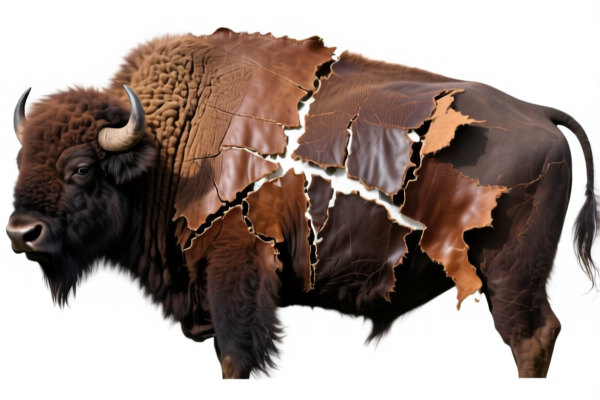
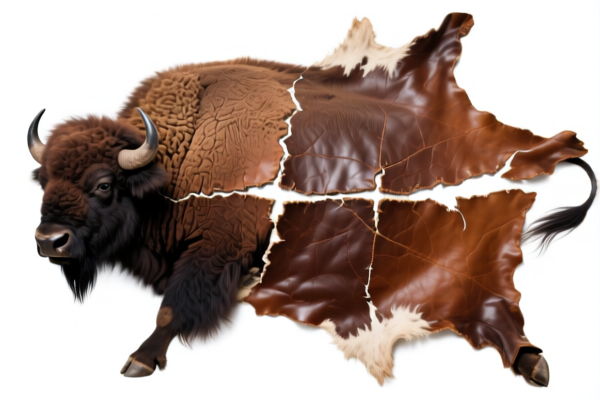
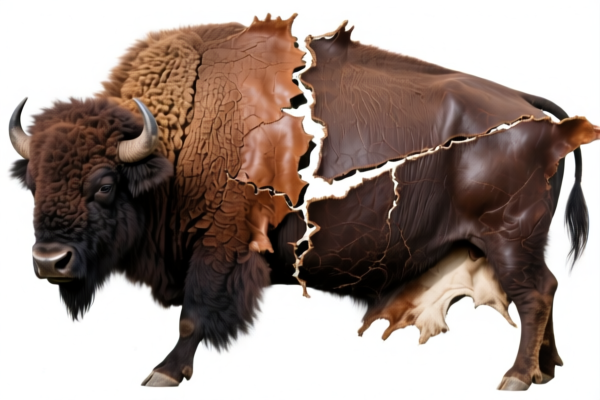
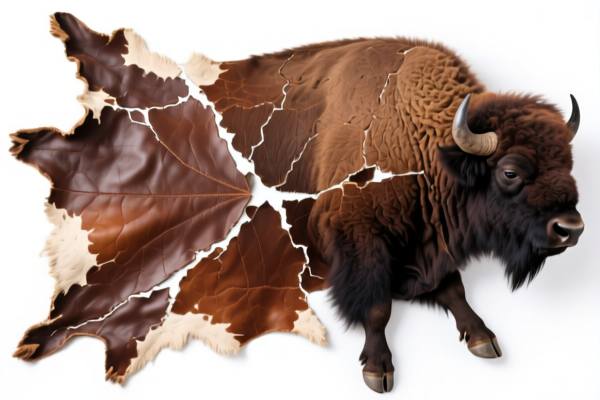
AI Analysis
🐃 Buffalo Leather Hide: Full Grain, Unsplit
🌐 HS Code Reference & Customs Clearance Guide | 2026 Latest Tariff Analysis | Professional Compliance Strategy
📌 I. Product Definition & Classification: Do You Truly Understand "Buffalo Leather"?
Buffalo Leather Hide, specifically Full Grain, Unsplit, represents the highest quality tier of raw hides in international trade. It is characterized by retaining the natural grain surface without being split into layers. In customs classification, the distinction lies between Cowhide (Bovine) and Buffalo (Bubaline) origins, and whether the leather is "further prepared" or merely "unchromed/unsplit."
⚠️ Key Distinction Point:
- If the hide is Cowhide (Bos Taurus) and retains the natural grain → Classified under 4107 (Leather of Bovines).
- If the hide is Buffalo (Bubalus bubalis) and is unsplit → Classified under 4107 or 4104 depending on specific processing state (untanned vs. tanned).
- "Unsplit" means the hide has not been divided into multiple layers (e.g., top grain and flesh layers).
- "Full Grain" implies the natural grain surface is intact.
📦 II. HS Code Classification Details (2026 Latest Tariff Authority Comparison)
| HS Code | Product Description | Application Scenario | Is it Split? |
|---|---|---|---|
4107.11.10.20 |
Full Grain Cowhide, Unsplit | High-end bovine leather retaining natural grain | ❌ No |
4107.11.30.00 |
Full Grain Cowhide, Unsplit | General bovine leather, full grain definition | ❌ No |
4107.19.40.00 |
Whole Buffalo Hide, No Hair | Specifically for Buffalo (Bubalus), unsplit, hair removed | ❌ No |
4107.12.40.00 |
Whole Buffalo Hide, No Hair | Buffalo leather, no hair, unsplit state | ❌ No |
4104.11.30.60 |
Whole Buffalo Hide, No Hair | Unprocessed buffalo leather, no hair (Chromed/Prepared) | ❌ No |
4104.41.30.60 |
Whole Buffalo Hide, No Hair | Unprocessed buffalo leather, no hair (Definition based) | ❌ No |
🔍 Key Reminder:
- Bovine vs. Bovine:4107series primarily covers Cow/Steer/Ox hides.4104covers other bovine animals or specific processing states. However, the provided data explicitly links4107.19.40.00and4107.12.40.00to Buffalo hides, indicating a specific customs interpretation where Buffalo falls under Chapter 41 Headings 4107 for "Unsplit" states. - "Unsplit" is Critical: Once split, the tax rate and HS code may change significantly. Always declare "Unsplit" clearly. - "No Hair" (Dehaired): Most commercial buffalo hides are dehaired before export. Ensure your product matches the "No Hair" description in4107.19.40.00,4107.12.40.00,4104.11.30.60, and4104.41.30.60.
💰 III. 2026 Latest Tariff Rate Breakdown (Including Surcharges & Policy Add-ons)
✅ Applicable Country: USA (US)
✅ Origin: China (CN)
✅ Effective Date: From November 10, 2025 (Including subsequent imports)
🎯 1. 4107.11.10.20 —— Full Grain Cowhide, Unsplit
| Item | Content |
|---|---|
| Base Duty Rate | 0% |
| USITC Surcharge (Section 301) | +25% |
| 122 Clause Tariff (IEEPA) | +10% |
| Total Tax Rate | 35.0% |
| Tax Calculation | CIF Value × 35% |
| De Minimis Eligibility | ❌ No (Denied) |
| Legal Basis Path | Section 301: 4107.11.10 → IEEPA: 9903.01.10 (122 Clause) |
📌 Explanation:
- This is a high-duty item due to the combination of Section 301 tariffs and the 122 Clause. - Total 35% is significant. Must be factored into cost structures.
🎯 2. 4107.11.30.00 —— Full Grain Cowhide, Unsplit (General)
| Item | Content |
|---|---|
| Base Duty Rate | 3.6% |
| USITC Surcharge (Section 301) | 0% |
| 122 Clause Tariff (IEEPA) | +10% |
| Total Tax Rate | 13.6% |
| Tax Calculation | CIF Value × 13.6% |
| De Minimis Eligibility | ❌ No (Denied) |
| Legal Basis Path | Section 301: Excluded → IEEPA: 9903.01.10 (122 Clause) |
📌 Note:
- Lower base duty (3.6%) but still subject to the 122 Clause. - Total 13.6% is more favorable than4107.11.10.20. - Clarify if your "Full Grain" fits this subheading or the10.20subheading based on specific USITC rulings.
🎯 3. 4107.19.40.00 —— Whole Buffalo Hide, No Hair
| Item | Content |
|---|---|
| Base Duty Rate | 2.5% |
| USITC Surcharge (Section 301) | 0% |
| 122 Clause Tariff (IEEPA) | +10% |
| Total Tax Rate | 12.5% |
| Tax Calculation | CIF Value × 12.5% |
| De Minimis Eligibility | ❌ No (Denied) |
| Legal Basis Path | IEEPA: 9903.01.10 (122 Clause) |
📌 Important:
- Specifically for Buffalo. If your product is genuinely Buffalo (not Cow), this is a key candidate. - Total 12.5%.
🎯 4. 4107.12.40.00 —— Whole Buffalo Hide, No Hair
| Item | Content |
|---|---|
| Base Duty Rate | 2.5% |
| USITC Surcharge (Section 301) | 0% |
| 122 Clause Tariff (IEEPA) | +10% |
| Total Tax Rate | 12.5% |
| Tax Calculation | CIF Value × 12.5% |
| De Minimis Eligibility | ❌ No (Denied) |
| Legal Basis Path | IEEPA: 9903.01.10 (122 Clause) |
📌 Note:
- Similar to4107.19.40.00, applies to Buffalo hides. - Total 12.5%.
🎯 5. 4104.11.30.60 —— Whole Buffalo Hide, No Hair (Unprocessed)
| Item | Content |
|---|---|
| Base Duty Rate | 2.4% |
| USITC Surcharge (Section 301) | 0% |
| 122 Clause Tariff (IEEPA) | +10% |
| Total Tax Rate | 12.4% |
| Tax Calculation | CIF Value × 12.4% |
| De Minimis Eligibility | ❌ No (Denied) |
| Legal Basis Path | IEEPA: 9903.01.10 (122 Clause) |
📌 Explanation:
- Chapter 41 Heading 4104 often covers leathers not specified in 4107. - Total 12.4% is the lowest among the options provided. - Ensure the product meets the "Unprocessed" or specific definition for 4104.
🎯 6. 4104.41.30.60 —— Whole Buffalo Hide, No Hair (Unprocessed)
| Item | Content |
|---|---|
| Base Duty Rate | 2.4% |
| USITC Surcharge (Section 301) | 0% |
| 122 Clause Tariff (IEEPA) | +10% |
| Total Tax Rate | 12.4% |
| Tax Calculation | CIF Value × 12.4% |
| De Minimis Eligibility | ❌ No (Denied) |
| Legal Basis Path | IEEPA: 9903.01.10 (122 Clause) |
📌 Note:
- Same as above, different subheading nuance. - Total 12.4%.
🛠️ IV. Customs Clearance Practical Advice (Battle-Proven Pitfall Avoidance)
✅ 1. Documentation Checklist (Must-Have)
| Document | Required | Description |
|---|---|---|
| ✅ Product Specification Sheet | ✔️ | Must state "Full Grain," "Unsplit," "Buffalo/Cow," "Dehaired." |
| ✅ Photos of Hide | ✔️ | Clear images showing natural grain, no split layers, no hair. |
| ✅ Commercial Invoice | ✔️ | Accurate description: "Buffalo Leather Hide, Full Grain, Unsplit, No Hair." |
| ✅ Packing List | ✔️ | Weight, dimensions, number of hides. |
| ✅ Certificate of Origin | ✔️ | Proof of Chinese origin (subject to tariffs). |
| ✅ Third-Party Lab Test | ✔️ | Optional but recommended to confirm species (Cow vs. Buffalo) and tanning state. |
✅ 2. Declaration Tips (Key Mnemonic)
🔥 "Species Matters, Split Status King, 122 Clause Always!"
| Scenario | Correct Declaration | Wrong Action |
|---|---|---|
| Buffalo Hide | Use 4107.19.40.00, 4107.12.40.00, 4104.11.30.60, or 4104.41.30.60 (12.4%-12.5%) |
Misdeclare as Cowhide (4107.11) → 13.6%-35% |
| Cowhide Full Grain | Use 4107.11.10.20 or 4107.11.30.00 |
Misdeclare as Buffalo → Potential penalty |
| Split Leather | Cannot use "Unsplit" HS codes | Declare "Unsplit" when split → 122 Clause may still apply but misdeclaration leads to fines |
| Dehaired vs. Non-Dehaired | Must match "No Hair" description | Declare "No Hair" when hairy → Rejection |
📌 Critical:
- The 122 Clause (10%) applies to ALL the above HS codes. There is no exemption. - Section 301 (25%) does NOT apply to4107.19.40.00,4107.12.40.00,4104.11.30.60, or4104.41.30.60. It DOES apply to4107.11.10.20. It does NOT apply to4107.11.30.00. - Therefore, for Buffalo, the lowest duty is 12.4% (4104series). For Cow, it is 13.6% (4107.11.30.00) or 35% (4107.11.10.20).
✅ 3. Special Cases
| Scenario | Handling Advice |
|---|---|
| Mixed Species | Separate shipment by species. Do not mix Cow and Buffalo. |
| Partially Split | If any part is split, the entire lot may be classified as split leather, changing HS code. |
| OEM Orders | Provide buyer's specification to prove "Full Grain" and "Unsplit." |
| Transshipment | Ensure no re-labeling that obscures origin. US Customs tracks Chinese origin closely. |
🌍 V. Global Market Comparison (2026 Latest)
| Country/Region | Recommended HS Code (for Buffalo) | Tariff Rate | Notes |
|---|---|---|---|
| 🇺🇸 USA | 4104.11.30.60 / 4104.41.30.60 |
12.4% | 122 Clause applies. Section 301 does not. |
| 🇨🇳 China | 4104.11.30.60 |
~5-10% | Check latest Chinese tariff schedule. |
| 🇪🇺 EU | 4104 Series |
12-15% | No 122 Clause or Section 301. |
| 🇬🇧 UK | 4104 Series |
12-15% | Post-Brexit rules apply. |
| 🇯🇵 Japan | 4104 Series |
5-10% | J-EPA may offer reduction. |
📌 Conclusion:
- USA is the most complex due to 122 Clause (10%) and potential Section 301. - Buffalo hides (4104series) offer the lowest duty (12.4%) in the US among the provided options, avoiding the 25% Section 301 surcharge. - Cow hides (4107.11.10.20) have the highest duty (35%) due to combined 301 and 122 clauses.
📌 VI. Common Errors & Pitfalls (Blood & Tears Lessons)
❌ Error 1: Declaring Buffalo as Cowhide to try to get a lower rate
👉 Consequence: If inspected and found to be Buffalo, penalties and retroactive taxes for 4107 rates may apply, plus misdeclaration fines.
❌ Error 2: Ignoring the "Unsplit" requirement
👉 Consequence: If the hide is split, it may fall under different HS codes with different rates. Misdeclaration leads to delays.
❌ Error 3: Assuming "Full Grain" exempts from 122 Clause
👉 Consequence: 122 Clause (10%) applies to ALL listed HS codes. No exemption.
❌ Error 4: Using vague descriptions like "Leather"
👉 Consequence: Customs may classify under the highest default rate or require additional documentation.
✅ Correct Declaration Example:
"BUFFALO LEATHER HIDE, FULL GRAIN, UNSPLIT, DEHAIRED, CHROME TANNED (if applicable), HS CODE 4104.11.30.60"
🎯 VII. Conclusion: Precision in Classification Saves Money!
🎯 Key Takeaways:
🔹 "Buffalo vs. Cow Matters": Buffalo hides (
4104series) attract 12.4% duty in the US, while Cow hides (4107.11.10.20) attract 35%. 🔹 "122 Clause is Universal": 10% surcharge applies to all listed codes. 🔹 "Section 301 is Selective": Only applies to4107.11.10.20(35% total), not to Buffalo or other Cow subheadings in this list. 🔹 "Unsplit is Crucial": Must declare "Unsplit" to qualify for these rates.
📌 Pro Tip:
If your product is Buffalo, strive to classify under
4104.11.30.60or4104.41.30.60for the lowest US duty (12.4%). If your product is Cow, classify under4107.11.30.00for 13.6% rather than4107.11.10.20(35%). Always verify the species and split status with a lab test if uncertain.
📣 Immediate Action:
📞 Consult a Customs Broker + Provide Product Specs + Apply for Advance Ruling if high volume.
🚀 Optimize your HS Code to save 20%+ in tariffs!
✨ Professional Classification, Start with Precision!
💼 Every Dollar Saved in Duty is Pure Profit!
Customer Reviews
About HS Code Classification
The Harmonized System (HS) is an internationally standardized nomenclature developed by the World Customs Organization (WCO) to classify traded products. Over 200 countries use the HS system as the basis for customs tariffs, trade statistics, and import/export regulations.
Each HS code follows a hierarchical structure:
- Chapter (2 digits) — Broad category of goods (e.g., Chapter 84: Machinery and Mechanical Appliances)
- Heading (4 digits) — More specific grouping within the chapter
- Subheading (6 digits) — Internationally standardized breakdown, used by all WCO member countries
- National subdivisions (8-10 digits) — Country-specific extensions for further classification, such as US HTSUS 10-digit codes
Correct HS code classification is essential for smooth customs clearance, accurate duty payment, and compliance with trade regulations. Misclassification can lead to customs delays, overpayment of duties, or penalties.
When importing from CN to US, the applicable tariff rates may include:
- Most-Favored-Nation (MFN) rate — The standard duty rate applied to WTO members
- General rate — Applied to countries without trade agreements
- Trade remedy duties — Additional tariffs such as Section 301 (anti-dumping), Section 232 (national security), or countervailing duties
The information provided on this page is for reference purposes only. For official classification, please consult with your local customs authority or a licensed customs broker.