Buffalo Leather Key Holders
CN → US| HS Code | Tariff Rate | Origin | Destination | Doc |
|---|---|---|---|---|
| 3926902500 | 24.0% | CN | US | Official Doc |
| 4205008000 | 35.0% | CN | US | Official Doc |
| 3926909989 | 22.8% | CN | US | Official Doc |
| 7117909000 | 28.5% | CN | US | Official Doc |
Product Images
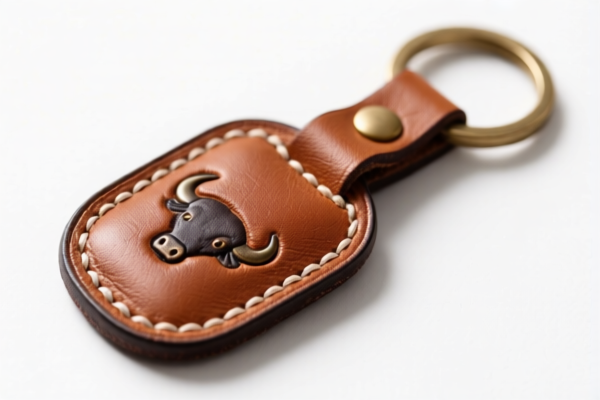
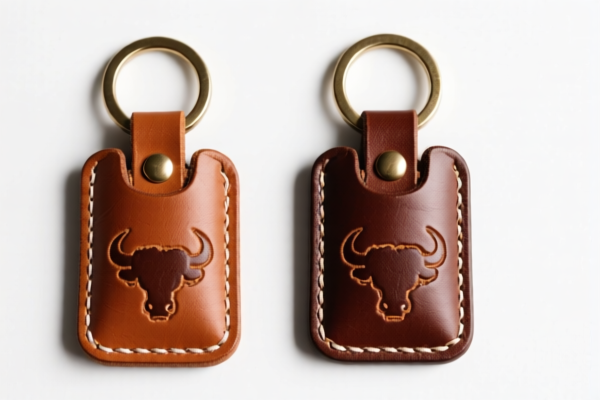
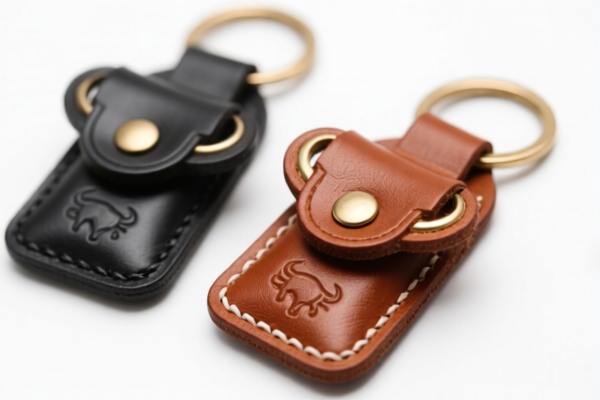
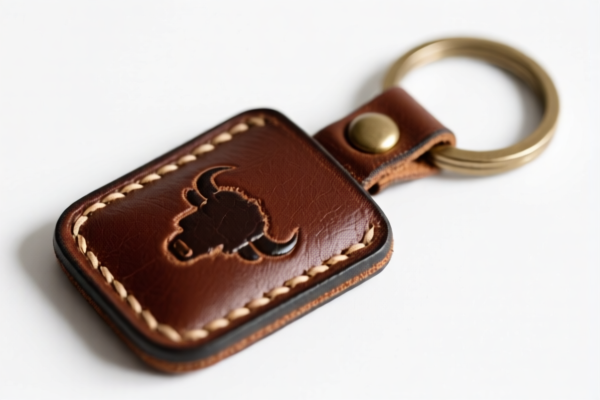
AI Analysis
🐂 Buffalo Leather Key Holders (Faux Leather Keychains)
🌐 HS Code Reference & Clearance Guide | 2026 Latest Tariff Analysis | Professional Clearance Strategy
📌 I. Product Definition & Classification: What Exactly Is a "Faux Leather Key Holder"?
Buffalo Leather Key Holders (often marketed as "Faux Leather" or "PU Leather" keychains) are small accessories used to organize keys, cards, or small items. In international trade, their classification is highly contentious because they can be viewed as either: 1. Artificial Plastic/Resin Products: Due to the synthetic nature of "faux" leather. 2. Leather/Synthetic Leather Articles: Due to the material appearance and traditional categorization of leather goods. 3. Imitation Jewelry/Accessories: Due to their decorative nature.
⚠️ Critical Distinction:
- If classified as Plastic/Resin, it falls under Chapter 39.
- If classified as Leather/Synthetic Leather, it falls under Chapter 42.
- If classified as Imitation Jewelry, it falls under Chapter 71.
The choice of HS Code directly impacts your total tax burden by up to 12.2%!
📦 II. HS Code Classification Details (2026 Latest Tariff Authority Comparison)
Based on the provided data, here are the four potential classification paths for "Faux Leather Key Holders":
| HS Code | Product Description | Summary / Reasoning | Key Characteristic |
|---|---|---|---|
3926.90.25.00 |
Plastic/Synthetic Resin Articles | Classified as plastic products | "Faux leather" is technically a plastic coating/fabric; viewed as general plastic制品. |
4205.00.80.00 |
Leather or Synthetic Leather Articles | Classified as leather goods | Treated as "leather accessories" despite being faux; traditional leather category. |
3926.90.99.89 |
Other Plastic Articles | Classified as miscellaneous plastic items | A "catch-all" for plastic items not specifically listed elsewhere. |
7117.90.90.00 |
Imitation Jewelry/Accessories | Classified as fashion accessories | Viewed primarily as decorative jewelry/keychains rather than utility or material-specific goods. |
🔍 Key Insight:
- The term "Faux Leather" is the root of ambiguity. Customs authorities may interpret it differently based on the primary material (plastic backing vs. leather-like surface).
-4205.00.80.00carries the highest tax burden (35%), while3926.90.99.89carries the lowest (22.8%).
💰 III. 2026 Latest Tariff Rate Breakdown (Including Additional Taxes)
✅ Applicable Country: United States (US)
✅ Origin: China (CN)
✅ Effective Date: Current (includes Section 301 and IEEPA tariffs)
🎯 1. 3926.90.25.00 —— Plastic/Synthetic Resin Articles
| Item | Content |
|---|---|
| Base Tariff | 6.5% |
| Section 301 Additional Tax | +7.5% |
| IEEPA Additional Tax (Section 122) | +10% |
| Total Tariff | 24.0% |
| Tax Calculation | CIF Value × 24% |
| De Minimis Exemption? | ❌ No (Subject to high tariffs) |
| Legal Basis Path | IEEPA:9903.01.25 → USITC:3926.90.25.00 → SECTION_301:7.5% |
📌 Explanation:
- This classification treats the item as a standard plastic good.
- The 24% rate is moderate compared to other options but still significant due to the combination of base + Section 301 + IEEPA tariffs.
🎯 2. 4205.00.80.00 —— Leather or Synthetic Leather Articles
| Item | Content |
|---|---|
| Base Tariff | 0.0% |
| Section 301 Additional Tax | +25.0% |
| IEEPA Additional Tax (Section 122) | +10% |
| Total Tariff | 35.0% |
| Tax Calculation | CIF Value × 35% |
| De Minimis Exemption? | ❌ No |
| Legal Basis Path | IEEPA:9903.01.24 → USITC:4205.00.80.00 → SECTION_301:25% |
📌 Warning:
- Although the base tariff is 0%, the Section 301 tariff jumps to 25% (higher than the 7.5% for plastics).
- Total 35% is the highest rate among the options.
- Risk: Customs may classify it here if they emphasize the "leather-like" appearance over the material composition.
🎯 3. 3926.90.99.89 —— Other Plastic Articles
| Item | Content |
|---|---|
| Base Tariff | 5.3% |
| Section 301 Additional Tax | +7.5% |
| IEEPA Additional Tax (Section 122) | +10% |
| Total Tariff | 22.8% |
| Tax Calculation | CIF Value × 22.8% |
| De Minimis Exemption? | ❌ No |
| Legal Basis Path | IEEPA:9903.01.25 → USITC:3926.90.99.89 → SECTION_301:7.5% |
📌 Advantage:
- This is the lowest total tariff rate (22.8%).
- It relies on a lower base tariff (5.3%) compared to3926.90.25.00(6.5%).
- Ideal if you can justify it as a "general plastic article" not specifically covered by other plastic subheadings.
🎯 4. 7117.90.90.00 —— Imitation Jewelry/Accessories
| Item | Content |
|---|---|
| Base Tariff | 11.0% |
| Section 301 Additional Tax | +7.5% |
| IEEPA Additional Tax (Section 122) | +10% |
| Total Tariff | 28.5% |
| Tax Calculation | CIF Value × 28.5% |
| De Minimis Exemption? | ❌ No |
| Legal Basis Path | IEEPA:9903.01.24 → USITC:7117.90.90.00 → SECTION_301:7.5% |
📌 Mid-Range Option:
- Higher base tariff (11%) makes this more expensive than plastic classifications.
- Useful if the product is marketed strictly as a "fashion accessory" or "jewelry piece," but still subject to Section 301 and IEEPA.
🛠️ IV. Clearance Practical Advice (Battle-Tested Pitfall Avoidance)
✅ 1. Preparation Checklist (Non-Negotiable)
| Document | Required? | Notes |
|---|---|---|
| ✅ Product Photos | ✔️ | Show material texture, stitching, and metal fittings clearly. |
| ✅ Material Composition Report | ✔️ | Specify % of PU/PVC, fabric backing, metal parts. Crucial for proving "Plastic" vs. "Leather." |
| ✅ Commercial Invoice | ✔️ | Describe as "PU Leather Key Chain" or "Synthetic Leather Key Holder," avoid "Genuine Buffalo Leather" if faux. |
| ✅ Packing List | ✔️ | Detail net/gross weight per unit. |
| ✅ Brand Authorization | ✔️ | If branded, provide IP documentation to avoid seizure. |
✅ 2. Declaration Strategy (Key Mnemonics)
🔥 "Material Truth, Tariff Minimization: Plastic Wins, Leather Burns!"
| Scenario | Recommended HS Code | Total Tax | Risk Level |
|---|---|---|---|
| High Volume, Low Cost | 3926.90.99.89 |
22.8% | 🟢 Low (Lowest tax) |
| Standard Plastic Look | 3926.90.25.00 |
24.0% | 🟢 Low (Safe plastic classification) |
| Fashion/Jewelry Style | 7117.90.90.00 |
28.5% | 🟡 Medium (Higher base tax) |
| Traditional Leather Look | 4205.00.80.00 |
35.0% | 🔴 High (Avoid unless necessary) |
📌 Critical Tip:
- Avoid4205.00.80.00if possible. The 25% Section 301 tariff is a significant cost driver.
- Fight for3926.90.99.89by emphasizing the synthetic plastic composition in your material breakdown.
✅ 3. Special Circumstances Handling
| Situation | Handling Advice |
|---|---|
| "Buffalo Leather" Marketing | If you use "Buffalo Leather" in marketing but it’s faux, ensure documentation clearly states "PU/Synthetic" to avoid false labeling claims. |
| Mixed Materials | If metal rings dominate, customs might still classify by the principal material (plastic/leather). Document the weight ratio. |
| Pre-Ruling | Consider applying for an Advance Ruling from CBP to lock in 3926.90.99.89 or 3926.90.25.00 before mass shipment. |
🌍 V. Global Market Clearance Comparison (2026 Latest)
| Country/Region | Recommended HS Code | Total Tariff (China Origin) | Certification Required | Notes |
|---|---|---|---|---|
| 🇺🇸 USA | 3926.90.99.89 |
22.8% | None | Best option due to low Section 301 impact. |
| 🇺🇸 USA | 4205.00.80.00 |
35.0% | None | Highest cost; avoid if possible. |
| 🇪🇺 EU | 3926.90.99 |
~6-10% | CE/RoHS | No Section 301; much cheaper than US. |
| 🇬🇧 UK | 3926.90.99 |
~6-10% | UKCA | Post-Brexit alignment with EU standards. |
| 🇨🇳 China | 3926.90.99 |
~5-10% | CCC (if applicable) | Lower duties; focus on domestic market. |
📌 Conclusion:
- USA is the most expensive market due to Section 301 and IEEPA tariffs.
- Classification choice is critical: Switching from4205.00.80.00(35%) to3926.90.99.89(22.8%) saves 12.2% in taxes.
📌 VI. Common Errors & Pitfall Guide (Blood & Tears Lessons)
❌ Error 1: Classifying as 4205.00.80.00 without justification
👉 Consequence: Pay 35% instead of 22.8%. Lose profit margin!
❌ Error 2: Using "Genuine Leather" description for Faux Leather
👉 Consequence: Customs penalty for misrepresentation; potential seizure.
❌ Error 3: Ignoring IEEPA Section 122 Tariff
👉 Consequence: Unexpected 10% charge at customs; shipment delay.
❌ Error 4: Splitting shipment into parts to de minimis
👉 Consequence: Denied de minimis for Section 301/IEEPA goods; full tax applies.
✅ Correct Practice:
"Synthetic Leather Key Chain (PU Material), 100% Faux, No Genuine Leather Content, Model XYZ"
🎯 VII. Conclusion: Professional Declaration, Cost Savings, Efficiency!
🎯 Remember the Golden Rules:
🔹 "Plastic is King, Leather is Expensive: Choose
3926over4205to save 12%!"
🔹 "HS Code determines tax fate: A small shift in classification saves thousands!"
🔹 "Always declare 'Faux' or 'Synthetic' to avoid 'Leather' tariffs!"
📌 Pro Tip:
If your key holders are originating from Vietnam, Mexico, or Thailand, you may qualify for IEEPA exemptions or lower Section 301 rates.
Recommendation: Apply for an Advance Ruling with U.S. CBP to confirm the 22.8% or 24% rate before bulk shipping.
📣 Take Action Now:
📞 Contact a professional customs broker + Provide material specs + Request HS Code Pre-Ruling
🚀 Let your key holders clear smoothly, reduce costs, and maximize profits!
✨ Professional clearance starts with precise classification!
💼 Every cent of your cost deserves precise calculation!
Customer Reviews
About HS Code Classification
The Harmonized System (HS) is an internationally standardized nomenclature developed by the World Customs Organization (WCO) to classify traded products. Over 200 countries use the HS system as the basis for customs tariffs, trade statistics, and import/export regulations.
Each HS code follows a hierarchical structure:
- Chapter (2 digits) — Broad category of goods (e.g., Chapter 84: Machinery and Mechanical Appliances)
- Heading (4 digits) — More specific grouping within the chapter
- Subheading (6 digits) — Internationally standardized breakdown, used by all WCO member countries
- National subdivisions (8-10 digits) — Country-specific extensions for further classification, such as US HTSUS 10-digit codes
Correct HS code classification is essential for smooth customs clearance, accurate duty payment, and compliance with trade regulations. Misclassification can lead to customs delays, overpayment of duties, or penalties.
When importing from CN to US, the applicable tariff rates may include:
- Most-Favored-Nation (MFN) rate — The standard duty rate applied to WTO members
- General rate — Applied to countries without trade agreements
- Trade remedy duties — Additional tariffs such as Section 301 (anti-dumping), Section 232 (national security), or countervailing duties
The information provided on this page is for reference purposes only. For official classification, please consult with your local customs authority or a licensed customs broker.