Buffalo Leather Split Grain for Craft
CN → US| HS Code | Tariff Rate | Origin | Destination | Doc |
|---|---|---|---|---|
| 4107124000 | 12.5% | CN | US | Official Doc |
| 4107924000 | 12.5% | CN | US | Official Doc |
Product Images
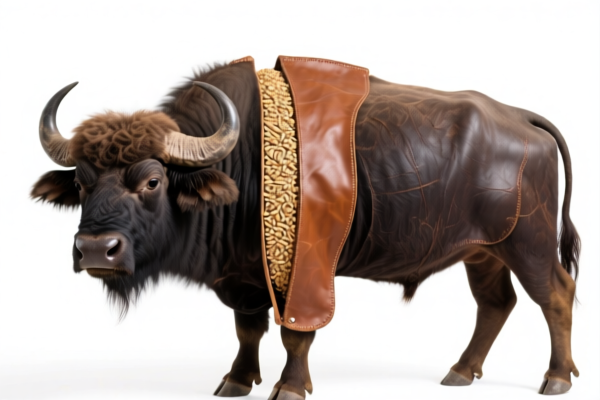

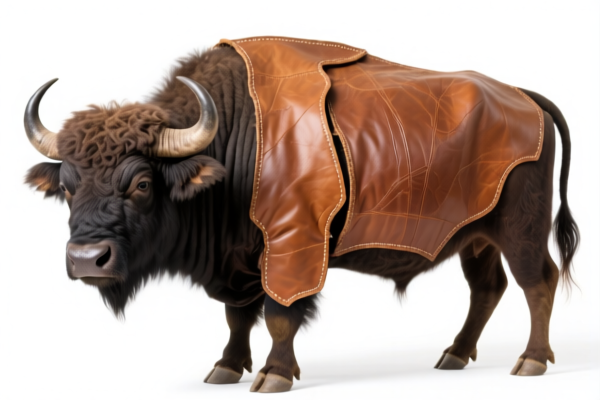
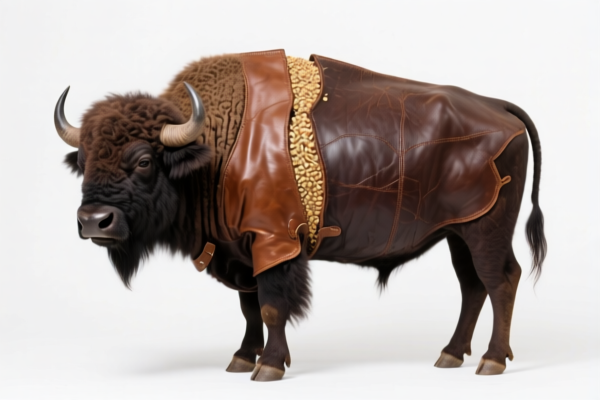
AI Analysis
🐃 Buffalo Leather Split Grain for Craft (Bovine/Equine, No Hair)
🌐 HS Code Reference & Customs Clearance Guide | 2026 Latest Tariff Analysis | Professional Compliance Strategy
📌 I. Product Definition & Classification: Do You Understand "Buffalo Leather Split"?
Buffalo Leather Split Grain refers to leather that has been tanned or crust-processed, specifically derived from bovine animals (including buffalo), with the hair removed, and where the "grain split" (the lower layer of the hide, split from the top grain) is exposed or used. It is distinct from whole hides/skins of higher headings and excludes parchment-dressed leather.
In international trade, this material is primarily classified under Heading 4107. The key distinction lies in whether the leather is "Whole Hides and Skins" (large, intact pieces) or "Other, including Sides" (sides or parts thereof).
⚠️ Critical Distinction:
- If the product consists of complete, whole hides or skins (full breadth/length without being cut into sides) → Go to 4107.12.40.00
- If the product consists of sides (half-hides split vertically) or other non-whole forms → Go to 4107.92.40.00
- Note: The description specifies "Buffalo" and "Grain Splits." Both codes target "Grain splits: Buffalo."
📦 II. HS Code Classification Details (2026 Latest Tariff Authority)
| HS Code | Product Description | Application Scenario | Key Identifier |
|---|---|---|---|
4107.12.40.00 |
Leather further prepared... of bovine (including buffalo)... without hair on... Whole hides and skins: Grain splits: Buffalo | Large, intact buffalo hides, split to expose grain, sold as full skins for heavy-duty crafts | ✅ Whole Hides/Skins |
4107.92.40.00 |
Leather further prepared... of bovine (including buffalo)... without hair on... Other, including sides: Grain splits: Buffalo | Buffalo leather sides (half-hides), cut pieces, or non-whole forms for upholstery/crafts | ✅ Sides/Other |
🔍 Important Reminder:
- Both codes apply to Buffalo leather specifically under the "Grain splits" sub-category.
- The leather must be without hair on (bucked or fleshed).
- If the leather is re-tanned or dyed after splitting, it still falls under 4107 as "further prepared after tanning or crusting."
💰 III. 2026 Latest Tariff Rate Detailed Explanation (Including Additional Duties)
✅ Applicable Country: United States (US)
✅ Country of Origin: China (CN)
✅ Effective Date: Ongoing (Current 2026 Tariff Structure)
🎯 1. 4107.12.40.00 — Buffalo Leather Split (Whole Hides/Skins)
| Item | Content |
|---|---|
| Base Tariff Rate | 0.0% (ad valorem) |
| Section 301 Additional Duty | 0.0% |
| Total Tariff Rate | 0.0% |
| Tax Calculation | CIF Value × 0% = $0 |
| De Minimis Eligibility | ❌ Not Applicable (Physical goods require formal entry; de minimis doesn't apply to high-volume trade but this code itself has 0% duty) |
| Legal Basis | HTSUS 4107.12.40.00 |
📌 Explanation:
- Base Rate: 0% is the standard Most Favored Nation (MFN) rate for this specific subheading.
- Additional Duties: Unlike electronics or steel, buffalo leather splits are NOT subject to the 25% Section 301 tariffs or additional IEEPA levies in the current scope.
- Total Cost Impact: Zero additional tariff burden for this specific HS code.
🎯 2. 4107.92.40.00 — Buffalo Leather Split (Sides/Other)
| Item | Content |
|---|---|
| Base Tariff Rate | 0.0% (ad valorem) |
| Section 301 Additional Duty | 0.0% |
| Total Tariff Rate | 0.0% |
| Tax Calculation | CIF Value × 0% = $0 |
| De Minimis Eligibility | ❌ Not Applicable (Standard trade entry required) |
| Legal Basis | HTSUS 4107.92.40.00 |
📌 Note:
- Identical tariff treatment to whole hides.
- Whether you import full buffalo skins or buffalo sides, the duty rate remains 0%.
- This makes buffalo leather splits highly competitive for cost-sensitive craft and upholstery industries.
🛠️ IV. Customs Clearance Practical Advice (Combat Pitfalls Guide)
✅ 1. Required Documentation Checklist (All or Nothing)
| Document | Must Provide | Description |
|---|---|---|
| ✅ Commercial Invoice | ✔️ | Must explicitly state: "Buffalo Leather, Split, Grain Side, No Hair, Tanned/Crust" |
| ✅ Packing List | ✔️ | Detail weight, dimensions, and count of hides/sides |
| ✅ Product Specification Sheet | ✔️ | Include tanning method (vegetable/chrome), thickness, and exact animal type (Buffalo/Bison) |
| ✅ Certificate of Origin | ✔️ | Essential for verifying MFN eligibility (0% rate) |
| ✅ Photos of Goods | ✔️ | Show the grain side and ensure no hair is visible |
| ✅ Bill of Lading/Air Waybill | ✔️ | Standard shipping docs |
✅ 2. Declaration Tips (Key Mantra)
🔥 “Specify ‘Buffalo’, ‘Split’, ‘No Hair’, and ‘Grain Side’ to Ensure 0% Duty!”
| Scenario | Correct Declaration Method | Wrong Practice |
|---|---|---|
| Full Buffalo Hides | 4107.12.40.00 |
Mislabel as "Sides" → Still 0%, but may trigger inspection for mismatch |
| Buffalo Sides | 4107.92.40.00 |
Mislabel as "Whole Hides" → Inspection risk if dimensions don't match whole hide size |
| Leather with Hair | ❌ Wrong Code | Do NOT use 4107 codes. Use Heading 4103 or 4104 if tanned differently, or 4114 if parchment. |
| Vegetable Tanned vs Chrome | Both fit 4107 | Ensure description matches tanning type if requested by customs, but duty rate is same. |
✅ 3. Special Circumstances Handling
| Scenario | Handling Advice |
|---|---|
| Mixed Shipment (Hides + Sides) | Declare separately. Use 4107.12.40.00 for wholes and 4107.92.40.00 for sides. Do not lump under one code to avoid valuation issues. |
| Buffalo vs. Cow Leather | Clearly state "Buffalo" or "Bison." If you ship cow leather but label it buffalo, you risk misclassification penalties. Cow leather may have different subheadings (e.g., 4107.11...). |
| Split vs. Full Grain | This code is for Grain Splits (the flesh side is often the grain side of the split). If you have full grain leather (top layer), it may fall under a different subheading. Ensure "Split" is in the description. |
| Re-tanned Leather | If further processed after splitting (e.g., dyed, embossed), it still qualifies as "further prepared," so 4107 remains correct. |
🌍 V. Global Main Market Customs Comparison (2026 Latest)
| Country/Region | Recommended HS Code | Tariff Rate | Certification Requirements | Remarks |
|---|---|---|---|---|
| 🇺🇸 United States | 4107.12.40.00 or 4107.92.40.00 |
0.0% | None specific | Highly Competitive! No Section 301 duty. |
| 🇨🇳 China | 4107.12 or 4107.92 | ~0-5% | N/A | Import duties vary slightly, but generally low. |
| 🇪🇺 European Union | 4107.12.40 or 4107.92.40 | 0.0% | REACH Compliance | EU has 0% duty for raw/semi-processed leather. |
| 🇬🇧 United Kingdom | 4107.12.40 or 4107.92.40 | 0.0% | REACH UK | Post-Brexit, still 0% for this category. |
| 🇦🇺 Australia | 4107.12.40 or 4107.92.40 | 0.0% | N/A | Free trade agreements often apply. |
📌 Conclusion:
- Buffalo Leather Splits are exceptionally tariff-friendly in major markets.
- The 0% rate in the US is a significant advantage compared to many manufactured goods.
- Focus on accurate classification (Hides vs. Sides) to avoid administrative delays rather than tariff concerns.
📌 VI. Common Mistakes & Pitfalls (Blood & Tears Lessons)
❌ Mistake 1: Labeling "Buffalo Leather" without specifying "Split" or "Grain"
👉 Consequence: Customs may classify as "Other Leather" (4107.99) or misidentify as cow leather, leading to incorrect duty assessment or detention.
❌ Mistake 2: Mixing Whole Hides and Sides in one line item
👉 Consequence: Valuation disputes. If the average weight/size doesn't match either code, customs may audit and apply highest possible duty or penalties.
❌ Mistake 3: Claiming "Raw Skin" instead of "Tanned Leather"
👉 Consequence: Raw skins fall under Heading 4101 or 4102. Misclassification can lead to back taxes and fines. Ensure the leather is tanned/crust.
✅ Correct Practice:
“Buffalo Leather, Grain Split, Chrome Tanned, No Hair, Whole Hides/Sides, for Craft Use, Model B-100”
🎯 VII. Conclusion: Professional Declaration, Save Time, Reduce Costs!
🎯 Remember the Mantra:
🔹 “Specify Buffalo, Specify Split, 0% Duty in US! Split vs. Side matters, keep it precise!”
🔹 “HS Code 4107 is your friend for Buffalo Splits, no extra taxes, just smooth shipments!”
📌 Pro Tip:
- Since the duty is 0%, the primary risk is misclassification leading to delays.
- Always provide photos and spec sheets to prove the material is Buffalo and Split.
- If you are a small buyer, ensure your supplier declares correctly. For large volumes, consider a Customs Ruling (Pre-classification) to lock in the 0% rate assurance.
📣 Immediate Action:
📞 Confirm with your supplier: "Are these Whole Hides or Sides?"
📋 Prepare a detailed commercial invoice with "Buffalo Leather, Split, No Hair"
🚀 Enjoy 0% Duty and seamless US/EU entry!
✨ Professional clearance starts with precise classification!
💼 Your cost savings are guaranteed at 0%!
Customer Reviews
About HS Code Classification
The Harmonized System (HS) is an internationally standardized nomenclature developed by the World Customs Organization (WCO) to classify traded products. Over 200 countries use the HS system as the basis for customs tariffs, trade statistics, and import/export regulations.
Each HS code follows a hierarchical structure:
- Chapter (2 digits) — Broad category of goods (e.g., Chapter 84: Machinery and Mechanical Appliances)
- Heading (4 digits) — More specific grouping within the chapter
- Subheading (6 digits) — Internationally standardized breakdown, used by all WCO member countries
- National subdivisions (8-10 digits) — Country-specific extensions for further classification, such as US HTSUS 10-digit codes
Correct HS code classification is essential for smooth customs clearance, accurate duty payment, and compliance with trade regulations. Misclassification can lead to customs delays, overpayment of duties, or penalties.
When importing from CN to US, the applicable tariff rates may include:
- Most-Favored-Nation (MFN) rate — The standard duty rate applied to WTO members
- General rate — Applied to countries without trade agreements
- Trade remedy duties — Additional tariffs such as Section 301 (anti-dumping), Section 232 (national security), or countervailing duties
The information provided on this page is for reference purposes only. For official classification, please consult with your local customs authority or a licensed customs broker.