Buffalo Leather Training Equipment
CN → US| HS Code | Tariff Rate | Origin | Destination | Doc |
|---|---|---|---|---|
| 4205001000 | 35.0% | CN | US | Official Doc |
| 9506992000 | 17.5% | CN | US | Official Doc |
| 4205008000 | 35.0% | CN | US | Official Doc |
Product Images
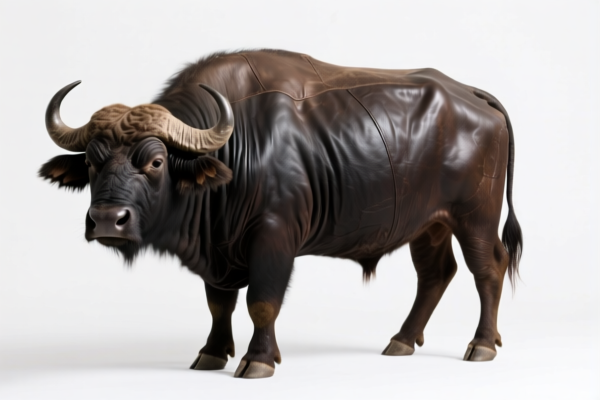



AI Analysis
🐃 Buffalo Leather Training Equipment: Classification, Taxation & Clearance Strategy
🌐 HS Code Reference & Customs Guide | 2026 Latest Tariff Analysis | Professional Clearance Strategy
📌 I. Product Definition & Classification: What Exactly is "Buffalo Leather Training Equipment"?
Buffalo leather training equipment typically refers to sports or fitness gear (such as punching bags, agility hurdles, or protective padding) manufactured using buffalo leather as the primary material. In international trade, the classification depends heavily on whether the item is defined by its material composition or its functional use.
⚠️ Key Distinction Point:
- If classified primarily by material (Leather) → Falls under Chapter 42 (Articles of Leather).
- If classified primarily by function (Sports Equipment) → Falls under Chapter 95 (Toys, Games, and Sports Equipment).Note: Customs authorities often scrutinize this overlap. If the item is a generic container or accessory made of leather, it may lean toward Chapter 42. If it is clearly a specific piece of sporting goods (like a ball or distinct training apparatus), it may lean toward Chapter 95.
📦 II. HS Code Classification Details (2026 Latest Tariff Authority Comparison)
Based on the provided data, there are three potential HS codes depending on how the product is described and the specific customs interpretation of "equipment."
| HS Code | Product Description | Application Scenario | Key Classification Logic |
|---|---|---|---|
4205.00.10.00 |
Other articles of leather (Specific to technical use) | Leather goods with specific technical applications (e.g., specialized leather harnesses, protective gear). | Matches Leather Material + Technical Use. |
9506.99.20.00 |
Other sports goods (Excluding balls) | Footballs, training aids, agility equipment, gym accessories. | Matches Training Equipment Purpose. |
4205.00.80.00 |
Other articles of leather (Non-specific form) | General leather articles that don't fit specific sub-categories (e.g., generic leather straps, bags, or unshaped leather goods). | Matches Leather Material + Non-specific Form. |
🔍 Critical Reminder:
- If the product is marketed as "Sports Equipment" (e.g., "Football Training Aid"), customs may prefer 9506.99.20.00.
- If the product is marketed as "Leather Goods" (e.g., "Leather Protective Pad"), customs may prefer 4205.00.10.00 or 4205.00.80.00.
- Do not mix classifications: Ensure your commercial invoice and description align with the chosen HS Code to avoid penalties.
💰 III. 2026 Latest Tariff Rate Breakdown (Including Additional Duties & Policy Surcharges)
✅ Applicable Country: United States (US)
✅ Origin: China (CN)
✅ Effective Date: 2025 November 10 onwards (including subsequent imports)
🎯 1. 4205.00.10.00 & 4205.00.80.00 —— Articles of Leather
| Item | Details |
|---|---|
| Base Tariff | 0.0% (ad valorem) |
| Section 301 Additional Tariff | +25.0% |
| Section 122 Tariff | +10.0% (Specific to certain leather/textile imports from China) |
| Total Tariff Rate | 35.0% |
| Tax Calculation | CIF Value × 35% |
| De Minimis Exemption | ❌ Not Available (High value items usually excluded) |
| Legal Basis Path | Base: 4205.00 → Section 301: 25% → Section 122: 10% |
📌 Explanation:
- "Section 301 Additional Tariff 25%": Applied under U.S. Trade Law Section 301 against Chinese goods.
- "Section 122 Tariff 10%": A specific surcharge applied to certain imports from China, often targeting trade deficit reduction measures.
- Total 35% is a significant cost burden for leather goods.
🎯 2. 9506.99.20.00 —— Other Sports Goods (Training Equipment)
| Item | Details |
|---|---|
| Base Tariff | 0.0% (ad valorem) |
| Section 301 Additional Tariff | +7.5% |
| Section 122 Tariff | +10.0% |
| Steel/Aluminum/Copper Tariff | +50% (⚠️ Only if the equipment contains significant steel, aluminum, or copper components) |
| Total Tariff Rate | 17.5% (Standard) 67.5% (If metal components trigger the +50% rule) |
| Tax Calculation | CIF Value × 17.5% (or 67.5% if applicable) |
| De Minimis Exemption | ❌ Not Available |
| Legal Basis Path | Base: 9506.99 → Section 301: 7.5% → Section 122: 10% |
📌 Warning:
- The base rate for sports equipment is lower (17.5%) compared to leather goods (35%).
- CRITICAL: If the training equipment includes metal parts (e.g., steel frames, aluminum weights, copper wiring), a +50% tariff applies to those metal components (or potentially the whole item if deemed primarily metal). This could skyrocket the total tax to 67.5%.
- Verify if the product is "primarily leather" or "primarily metal" to determine if the +50% rule triggers.
🛠️ IV. Customs Clearance Practical Advice (Pitfall Avoidance Guide)
✅ 1. Required Documentation Checklist (Mandatory)
| Document | Mandatory? | Explanation |
|---|---|---|
| ✅ Commercial Invoice | ✔️ | Must clearly state: "Buffalo Leather Training Equipment" and specify material composition. |
| ✅ Product Specification Sheet | ✔️ | Detail dimensions, weight, and material breakdown (e.g., 80% Buffalo Leather, 20% Steel Frame). |
| ✅ Product Photos | ✔️ | Clear images showing the leather texture, stitching, and any metal/plastic components. |
| ✅ Bill of Lading / Air Waybill | ✔️ | Standard shipping documents. |
| ✅ Certificate of Origin (CO) | ✔️ | Essential for proving Chinese origin and applying correct tariffs. |
✅ 2. Declaration Tips (Key Mnemonics)
🔥 "Material First, Function Second, Metal Check Mandatory!"
| Scenario | Correct Declaration | Error to Avoid |
|---|---|---|
| Pure Leather Gear (e.g., punching bag cover, leather straps) | Declare as Leather Article (4205.00.10.00 or 4205.00.80.00) |
Misdeclaring as sports equipment to save tax → Audit Risk |
| Sports Equipment with Minor Leather (e.g., leather grip on a metal bar) | Declare as Sports Equipment (9506.99.20.00) |
Over-declaring leather content → 35% Tax instead of 17.5% |
| Equipment with Metal Frames | Declare as Sports Equipment but HIGHLIGHT Metal Content | Ignoring metal components → +50% Surcharge if discovered |
✅ 3. Special Case Handling
| Scenario | Handling Advice |
|---|---|
| Mixed Material (Leather + Metal) | If >50% value is metal, consider if it falls under metal categories. However, for 9506.99.20.00, the +50% rule is a trap. Consult a customs broker to see if the metal parts are "accessories" and thus excluded from the +50% surcharge. |
| Sample/Prototype | Mark as "Non-Commercial Sample" if applicable, but still subject to duties. |
| OEM Branding | If branded for a US client, ensure the invoice lists the US consignee clearly to avoid valuation disputes. |
🌍 V. Global Market Clearance Comparison (2026 Latest)
| Country/Region | Recommended HS Code | Tariff (China Origin) | Certification Requirements | Notes |
|---|---|---|---|---|
| 🇺🇸 USA | 9506.99.20.00 (Sports) |
17.5% (Standard) 67.5% (If Metal) |
None specific | Highest Risk: Metal component surcharge. |
| 🇺🇸 USA | 4205.00.10.00 (Leather) |
35.0% | None specific | Safer if pure leather, but higher base tax. |
| 🇨🇳 China | 9506.99.20.00 |
0-5% | CCC (if applicable) | No Section 301/122 taxes. |
| 🇪🇺 EU | 9506.99.90 |
0-4.7% | CE Marking | No Section 122 equivalent. |
📌 Conclusion:
- The USA is the most complex market due to Section 301 and Section 122 tariffs.
- Sports Equipment (9506.99.20.00) is cheaper (17.5%) than Leather Goods (35%), BUT the metal component trap is severe.
- If your product has metal parts, carefully analyze if the +50% rule applies. If the metal value is low, argue for "accessories." If high, the cost may exceed the leather classification.
📌 VI. Common Errors & Pitfall Guide (Lessons Learned)
❌ Error 1: Declaring a leather-covered metal frame as pure Leather Goods (4205.00.10.00).
👉 Consequence: Customs may reclassify it as sports equipment, or worse, trigger the +50% metal tariff if they detect metal content in a "leather" declaration.
✅ Solution: Be transparent about material composition.
❌ Error 2: Ignoring the Section 122 10% surcharge.
👉 Consequence: Underpayment of duties → Penalties + Interest.
✅ Solution: Ensure all HS Codes include the +10% Section 122 in your cost calculation.
❌ Error 3: Assuming "Sports Equipment" is always cheap.
👉 Consequence: Missing the +50% metal surcharge for 9506.99.20.00.
✅ Solution: Check if your equipment has steel/aluminum/copper. If yes, calculate the total tax (17.5% + 50% = 67.5%).
🎯 VII. Conclusion: Professional Declaration Saves Money!
🎯 Remember the Mnemonic:
🔹 "Leather 35, Sports 17.5, Metal 50 Extra!"
🔹 "If it’s metal, check the rule, or you’ll pay double!"
🔹 "HS Code decides the cost, declare accurately, save thousands!"
📌 Pro Tip:
If your buffalo leather training equipment is mostly leather with minimal metal, declare it as 4205.00.10.00 (35% tax) to avoid the 50% metal surcharge on sports equipment.
If it is purely leather or non-metallic, declare as 4205.00.80.00 (35% tax).
If it is clearly sports gear with no metal, declare as 9506.99.20.00 (17.5% tax).
📞 Action Step:
Contact a customs broker to classify your specific product composition.
🚀 Clear customs smoothly, maximize profits, and avoid tariff traps!
✨ Professional clearance starts with accurate classification!
💼 Every percentage point matters in global trade!
Customer Reviews
About HS Code Classification
The Harmonized System (HS) is an internationally standardized nomenclature developed by the World Customs Organization (WCO) to classify traded products. Over 200 countries use the HS system as the basis for customs tariffs, trade statistics, and import/export regulations.
Each HS code follows a hierarchical structure:
- Chapter (2 digits) — Broad category of goods (e.g., Chapter 84: Machinery and Mechanical Appliances)
- Heading (4 digits) — More specific grouping within the chapter
- Subheading (6 digits) — Internationally standardized breakdown, used by all WCO member countries
- National subdivisions (8-10 digits) — Country-specific extensions for further classification, such as US HTSUS 10-digit codes
Correct HS code classification is essential for smooth customs clearance, accurate duty payment, and compliance with trade regulations. Misclassification can lead to customs delays, overpayment of duties, or penalties.
When importing from CN to US, the applicable tariff rates may include:
- Most-Favored-Nation (MFN) rate — The standard duty rate applied to WTO members
- General rate — Applied to countries without trade agreements
- Trade remedy duties — Additional tariffs such as Section 301 (anti-dumping), Section 232 (national security), or countervailing duties
The information provided on this page is for reference purposes only. For official classification, please consult with your local customs authority or a licensed customs broker.