Buffalo Leather Travel Bags
CN → US| HS Code | Tariff Rate | Origin | Destination | Doc |
|---|---|---|---|---|
| 4202110090 | 43.0% | CN | US | Official Doc |
| 4202110030 | 43.0% | CN | US | Official Doc |
| 4107117050 | 15.0% | CN | US | Official Doc |
| 4107127050 | 15.0% | CN | US | Official Doc |
| 4107124000 | 12.5% | CN | US | Official Doc |
Product Images
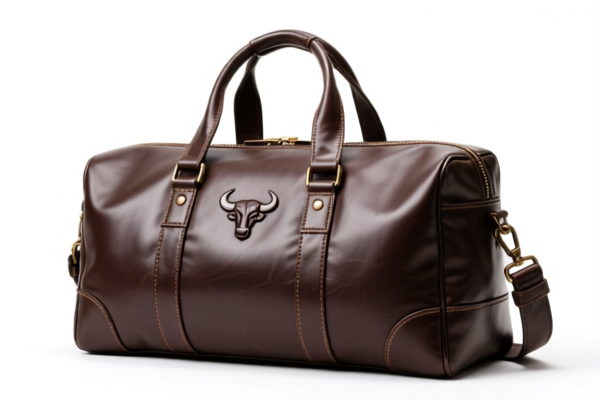
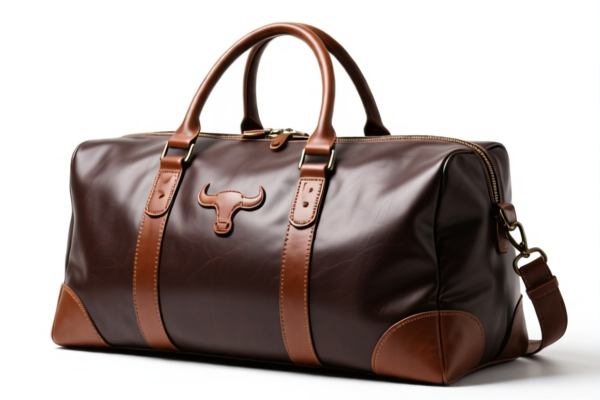
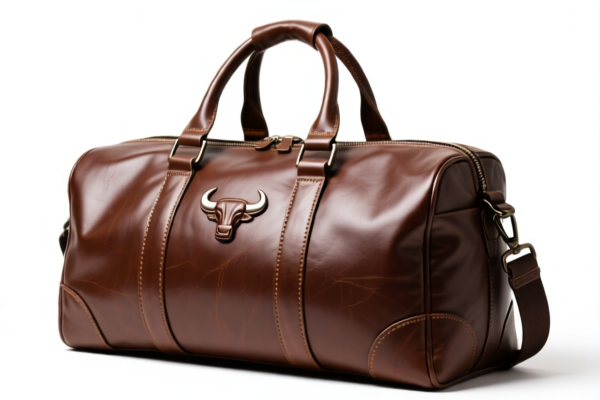
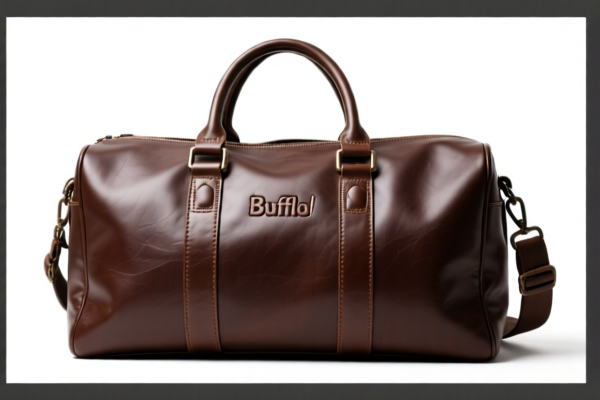
AI Analysis
🧳 Buffalo Leather Travel Bags
🌐 HS Code Reference & Customs Clearance Guide | 2026 Latest Tariff Analysis | Professional Compliance Strategy
📌 I. Product Definition & Classification: Understanding "Buffalo Leather Travel Bags"
Buffalo leather travel bags are durable, high-end luggage items made from buffalo hide. In international trade, they are classified based on their finished state and material composition. The distinction between finished bags and raw/semi-finished leather is critical for accurate HS Code assignment and tariff calculation.
Key Distinctions: * Finished Travel Bags (Chapter 42): Ready-to-use luggage, handbags, briefcases, or suitcases made from buffalo leather. These fall under HS Code 4202. * Buffalo Leather Raw/Semi-Finished (Chapter 41): Unfinished or partially processed buffalo hides (e.g., full-grain, chrome-tanned) intended for further manufacturing. These fall under HS Code 4107.
⚠️ Critical Identification Point:
- If the item is a finished bag with handles, zippers, lining, and structure →归入 4202
- If the item is leather hide/sheet without bag structure → 归入 4107
- Misclassification Risk: Declaring a finished bag as "leather hides" to avoid higher duties on finished goods will result in severe penalties.
📦 II. HS Code Classification Details (2026 Latest Tariff Authority Comparison)
Based on the provided data, here are the precise HS Codes for Buffalo Leather Travel Bags and related materials:
| HS Code | Product Description | Application Scenario | Material State | Duty Rate |
|---|---|---|---|---|
| 4202.11.00.90 | Buffalo Leather Travel Bags, material leather, use: bags | Finished travel bags, suitcases, general luggage | ✅ Finished Bag | 43.0% |
| 4202.11.00.30 | Buffalo Leather Travel Bags, material leather, use: handbags, briefcases, etc. | Finished handbags, briefcases, business bags | ✅ Finished Bag | 43.0% |
| 4107.11.70.50 | Buffalo Leather, material: full-grain buffalo leather, use: bags, boxes, belts, collars | Semi-finished/finished leather hides, not yet assembled into bags | ✅ Leather Hide | 15.0% |
| 4107.12.70.50 | Buffalo Leather, material: buffalo leather, use: bags and boxes | Semi-finished buffalo leather hides | ✅ Leather Hide | 15.0% |
| 4107.12.40.00 | Buffalo Leather, material: buffalo, form: leather | Raw/processed buffalo leather sheets | ✅ Leather Hide | 12.5% |
🔍 Key Insight:
- Finished Bags (4202) attract a 43% total duty due to combined tariffs.
- Leather Hides (4107) attract 12.5%–15% total duty.
- Never declare a finished bag as raw leather. Customs will inspect the item, and if it’s a finished bag, you’ll face reclassification, back-tariffs, and fines.
💰 III. 2026 Latest Tariff Rate Details (Including Additional Taxes & Policy Surcharges)
✅ Applicable Country: United States (US)
✅ Origin: China (CN)
✅ Effective Date: From November 10, 2025 (including subsequent imports)
🎯 1. 4202.11.00.90 & 4202.11.00.30 —— Finished Buffalo Leather Travel Bags
| Item | Content |
|---|---|
| Base Tariff | 8.0% (ad valorem) |
| USITC Additional Tariff | +25% (under Section 301) |
| 122 Clause Tariff | +10% (specific to certain Chinese goods) |
| Total Duty Rate | 43.0% |
| Tax Calculation | CIF Value × 43% |
| De Minimis Exemption | ❌ Not Applicable (deny_de_minimis) |
| Legal Authority Path | USITC:4202.11.00.90 → Section 301: 25% → 122 Clause: 10% |
📌 Explanation:
- The 8.0% is the standard MFN (Most Favored Nation) base tariff for leather goods.
- The 25% is the Section 301 tariff, applied to many Chinese-made finished goods.
- The 10% is the "122 Clause" tariff, a specific surcharge for certain leather products from China.
- Total 43% is extremely high. This makes finished buffalo leather travel bags very expensive to import into the US from China.
🎯 2. 4107.11.70.50 & 4107.12.70.50 —— Buffalo Leather Hides (Full-Grain/Processed)
| Item | Content |
|---|---|
| Base Tariff | 5.0% |
| USITC Additional Tariff | 0.0% |
| 122 Clause Tariff | +10% |
| Total Duty Rate | 15.0% |
| Tax Calculation | CIF Value × 15% |
| De Minimis Exemption | ❌ Not Applicable |
| Legal Authority Path | USITC:4107.11.70.50 → 122 Clause: 10% |
📌 Note:
- These codes apply to leather hides, not finished bags.
- The 122 Clause still applies (+10%), but Section 301 (25%) does not apply to raw/semi-finished leather in many cases.
- Total 15% is significantly lower than 43%.
- Important: You can only use these codes if you are importing leather hides, not finished bags.
🎯 3. 4107.12.40.00 —— Buffalo Leather (Other Forms)
| Item | Content |
|---|---|
| Base Tariff | 2.5% |
| USITC Additional Tariff | 0.0% |
| 122 Clause Tariff | +10% |
| Total Duty Rate | 12.5% |
| Tax Calculation | CIF Value × 12.5% |
| De Minimis Exemption | ❌ Not Applicable |
| Legal Authority Path | USITC:4107.12.40.00 → 122 Clause: 10% |
📌 Note:
- This is the lowest duty rate (12.5%) for buffalo leather products.
- Applies to specific forms of buffalo leather (e.g., split leather, suede, or non-full-grain).
- Again, only for leather materials, not finished bags.
🛠️ IV. Customs Clearance Practical Advice (Pitfall Avoidance Guide)
✅ 1. Required Documentation (All Mandatory)
| Document | Must Provide | Description |
|---|---|---|
| ✅ Product Specification Sheet | ✔️ | Includes dimensions, weight, material composition (100% buffalo leather), lining, hardware |
| ✅ Product Photos (Labeled) | ✔️ | Clear images showing the bag, labels, zippers, handles, and interior |
| ✅ Commercial Invoice | ✔️ | Must explicitly state: "Buffalo Leather Travel Bag" or "Buffalo Leather Hide" |
| ✅ Packing List | ✔️ | Details item-by-item weights and dimensions |
| ✅ Certificate of Origin (CO) | ✔️ | If claiming preferential rates (rare for US-China) |
| ✅ Third-Party Test Report | ✔️ | If applicable, for leather durability, chemical compliance (e.g., REACH, CPSIA) |
✅ 2. Declaration Tips (Key Mantras)
🔥 “Finished Bags = 4202 (43%) | Hides = 4107 (12.5–15%) | Never Mix!”
| Scenario | Correct Declaration | Wrong Practice |
|---|---|---|
| Finished Buffalo Leather Bag | 4202.11.00.90 or 4202.11.00.30 |
Declare as "leather hide" → Penalty + Back-Tariffs |
| Buffalo Leather Hide (Unfinished) | 4107.11.70.50 or 4107.12.70.50 |
Declare as "travel bag" → Incorrect Classification |
| Bag + Accessories (Straps, Locks) | Declare as Finished Bag | Split declaration → Higher Combined Duty |
| Partial Assembly (Bag Body Only) | Depends on state; if ready for final assembly, may still be 4202 | Avoid ambiguous descriptions |
✅ 3. Special Cases Handling
| Scenario | Handling Advice |
|---|---|
| OEM/Custom Bufflo Leather Bags | Provide design specs, factory invoices, and photos. Avoid vague terms like "leather goods." |
| Mixed Materials (Leather + Fabric) | If leather is the principal material, still classify under 4202. If fabric dominates, may change HS Code. |
| Buffalo Leather + Synthetic Lining | Still classified as leather bag under 4202. |
| Importing for Sample Testing | Even samples are subject to duty if value exceeds de minimis threshold. |
| Re-export After Minor Modification | If only minor adjustments (e.g., adding tags), remain under 4202. |
🌍 V. Global Market Comparison (2026 Latest)
| Country/Region | Recommended HS Code | Tariff (China Origin) | Certification | Remarks |
|---|---|---|---|---|
| 🇺🇸 USA | 4202.11.00.90 |
43.0% | None specific | High due to Section 301 + 122 Clause |
| 🇨🇳 China | 4202.11.00.90 |
8.0% | None | Base tariff only |
| 🇪🇺 EU | 4202.11.00.90 |
4.0–12% | REACH, CPSIA | No Section 301 equivalent |
| 🇬🇧 UK | 4202.11.00.90 |
4.0–12% | UKCA | Post-Brexit tariffs may vary |
| 🇦🇺 Australia | 4202.11.00.90 |
5.0% | None | Lower duty, no Section 301 |
| 🇯🇵 Japan | 4202.11.00.90 |
0–8% | JIS | Often 0% under JETAs |
📌 Conclusion:
- The US has the highest duty (43%) for finished buffalo leather travel bags from China.
- China, EU, UK, Australia, and Japan have significantly lower tariffs (0–12%).
- Strategy: If selling to the US, consider manufacturing in a third country (e.g., Vietnam, Mexico) to avoid Section 301 tariffs.
- Alternative: Import leather hides (4107) at 12.5–15% duty and assemble in the US (if feasible under local labor laws).
📌 VI. Common Mistakes & Pitfall Guide (Lessons from Experience)
❌ Mistake 1: Declaring a finished bag as "leather hides" (4107)
👉 Consequence: Customs inspects, finds it’s a bag, reclassifies to 4202, applies 43% duty + fines + delay.
❌ Mistake 2: Not providing product photos
👉 Consequence: Customs cannot verify if it’s a bag or hide → Hold for inspection → 7–14 day delay.
❌ Mistake 3: Using vague terms like "leather goods" or "bags"
👉 Consequence: Customs assigns random HS Code → Incorrect duty → Audit risk.
❌ Mistake 4: Assuming "122 Clause" applies to all leather
👉 Consequence: For raw hides (4107), 122 Clause still applies, but Section 301 does not. Know the difference!
✅ Correct Practice:
"Buffalo Leather Travel Bag, 24-inch, Full-Grain Buffalo Leather Exterior, Cotton Lining, Brass Zippers, Model XYZ, Made in China"
🎯 VII. Conclusion: Precise Classification Saves Money!
🎯 Remember the Mantras:
🔹 "Finished Bag = 4202 (43%) | Hide = 4107 (12.5–15%) | Don’t Mix!"
🔹 "HS Code Determines Duty, Wrong Code Costs Thousands!"
🔹 "Photos, Specs, and Accurate Descriptions Prevent Customs Hassles!"
📌 Pro Tip:
If your buffalo leather travel bags are originating from Vietnam, Mexico, Thailand, or Malaysia, you may qualify for IEEPA Exemptions or lower tariffs under FTAs.
Consider Advance Ruling (Pre-classification) from CBP (Customs and Border Protection) to confirm the correct HS Code before shipping.
📣 Take Action Now:
📞 Contact a licensed customs broker + Provide Product Photos + Apply for HS Code Advance Ruling
🚀 Ensure smooth customs clearance, minimize duties, and maximize profits!
✨ Professional Clearance Starts with Accurate Classification!
💼 Every cent of duty is worth calculating precisely!
Customer Reviews
About HS Code Classification
The Harmonized System (HS) is an internationally standardized nomenclature developed by the World Customs Organization (WCO) to classify traded products. Over 200 countries use the HS system as the basis for customs tariffs, trade statistics, and import/export regulations.
Each HS code follows a hierarchical structure:
- Chapter (2 digits) — Broad category of goods (e.g., Chapter 84: Machinery and Mechanical Appliances)
- Heading (4 digits) — More specific grouping within the chapter
- Subheading (6 digits) — Internationally standardized breakdown, used by all WCO member countries
- National subdivisions (8-10 digits) — Country-specific extensions for further classification, such as US HTSUS 10-digit codes
Correct HS code classification is essential for smooth customs clearance, accurate duty payment, and compliance with trade regulations. Misclassification can lead to customs delays, overpayment of duties, or penalties.
When importing from CN to US, the applicable tariff rates may include:
- Most-Favored-Nation (MFN) rate — The standard duty rate applied to WTO members
- General rate — Applied to countries without trade agreements
- Trade remedy duties — Additional tariffs such as Section 301 (anti-dumping), Section 232 (national security), or countervailing duties
The information provided on this page is for reference purposes only. For official classification, please consult with your local customs authority or a licensed customs broker.