Buffalo Leather Wrist Guards
CN → US| HS Code | Tariff Rate | Origin | Destination | Doc |
|---|---|---|---|---|
| 9506910030 | 22.1% | CN | US | Official Doc |
| 9506996080 | 21.5% | CN | US | Official Doc |
| 6117809570 | 32.1% | CN | US | Official Doc |
| 6117809520 | 24.6% | CN | US | Official Doc |
| 4203406000 | 35.0% | CN | US | Official Doc |
| 4203290800 | 49.0% | CN | US | Official Doc |
Product Images
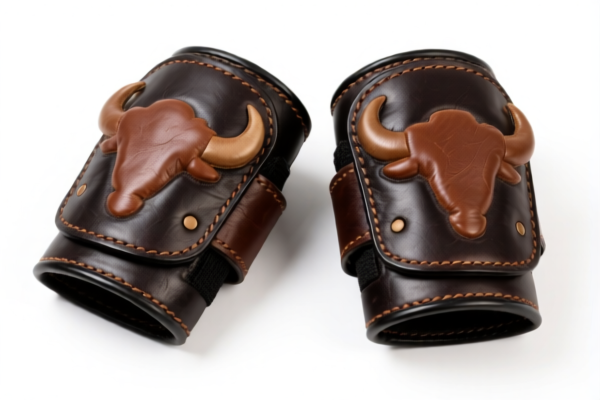
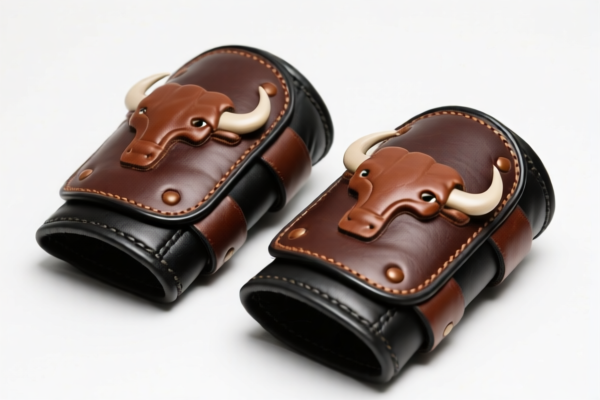
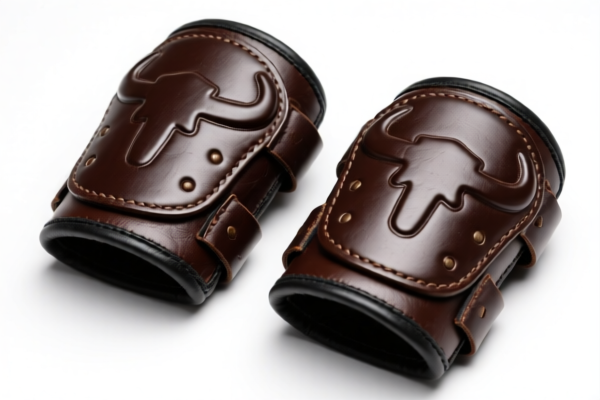
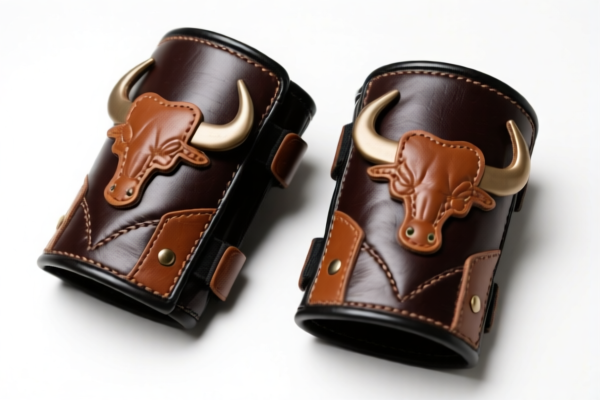
AI Analysis
🐃 Buffalo Leather Wrist Guards (Leather Apparel Accessories)
🌐 HS Code Reference & Customs Clearance Guide | 2026 Latest Tariff Analysis | Professional Strategy
📌 I. Product Definition & Classification: Are You Sure What "Wrist Guards" Are?
Buffalo Leather Wrist Guards are protective accessories worn on the wrists, typically used in sports (e.g., weightlifting, CrossFit), industrial work, or fashion. In international trade, their classification depends heavily on the material and the nature of the item:
- Knitted/Crocheted Textiles: If the wrist guard is made of knitted fabric (with leather patches), it falls under Chapter 61.
- Leather/Composition Leather Articles: If the primary material is buffalo leather (tanned, dressed, or worked leather), it falls under Chapter 42 as "Articles of apparel and clothing accessories, of leather or of composition leather."
⚠️ Key Distinction:
- If the item is primarily leather (buffalo leather is the main structural material) → It is a Leather Accessory.
- If it is knitted fabric with only minor leather trim → It is a Knitted Accessory.
- Note: "Buffalo Leather" explicitly points to Chapter 42.
📦 II. HS Code Classification Details (2026 Latest Tariff Authority)
Based on the provided <DATA>, here is the precise classification for Leather/Woven Apparel Accessories. Since "Buffalo Leather" is specified, the primary reference is Chapter 42.
| HS Code | Product Description | Application Scenario | Material Key |
|---|---|---|---|
4203.40.60.00 |
Articles of apparel and clothing accessories, of leather or of composition leather: Other clothing accessories: Other | Buffalo Leather Wrist Guards (Primary leather construction) | ✅ Leather |
6117.80.95.20 |
Other made up clothing accessories, knitted or crocheted: Other accessories: Other: Other Of wool or fine animal hair | Knitted wrist guards made of wool/fine hair | ✅ Knitted/Wool |
6117.80.95.70 |
Other made up clothing accessories, knitted or crocheted: Other accessories: Other: Other Other (859) | Knitted wrist guards made of synthetic/textile (non-wool) | ✅ Knitted/Other |
🔍 Critical Reminder:
- Buffalo Leather items must be classified under 4203.40.60.00.
- Do NOT classify leather wrist guards under6117(Knitted Textiles). Using6117for leather goods is a major classification error that leads to high penalties.
-6117is only for knitted/crocheted items. If your product is purely leather, ignore6117.
💰 III. 2026 Latest Tariff Rate Details (Including Additional Taxes)
✅ Applicable Country: United States (US)
✅ Country of Origin: China (CN)
✅ Effective Date: November 10, 2025 (and subsequent imports)
🎯 1. 4203.40.60.00 —— Leather Clothing Accessories (e.g., Buffalo Leather Wrist Guards)
| Item | Details |
|---|---|
| Base Tariff | 0.0% (Ad Valorem) |
| Retaliatory/Additional Tariff | +25.0% (Section 301 / USITC) |
| Total Tariff Rate | 25.0% |
| Tax Calculation | CIF Value × 25% |
| De Minimis Exemption | ❌ Not Eligible (Most Section 301 goods are excluded from de minimis relief) |
| Legal Basis Path | USITC:4203.40.60.00 → Footnote 9903.01.25 |
📌 Explanation:
- Although the base tariff for leather accessories is 0%, the Section 301 additional tariff of 25% applies to goods from China.
- Total Tax = 25%. This is a significant cost that must be factored into your pricing strategy.
- Why 25%? This is part of the US trade remedy measures against Chinese imports. It is not a base duty but an additional penalty tax.
🎯 2. Knitted/Crocheted Alternatives (For Comparison Only)
If your product is mistakenly classified as knitted (or if you offer a knitted version):
| HS Code | Base Tax | Additional Tax | Total Tax | Notes |
|---|---|---|---|---|
6117.80.95.20 (Wool) |
0.0% | 0.0% | 0.0% | No additional tax. |
6117.80.95.70 (Other) |
0.0% | 0.0% | 0.0% | No additional tax. |
⚠️ Strategic Insight:
- If you can structurally change the product to be knitted textile (even with leather accents), you might qualify for 0% total tax.
- However, if it is purely leather, you must pay 25%.
🛠️ IV. Customs Clearance Practical Advice (Battle-Tested Pitfall Guide)
✅ 1. Required Documentation Checklist (Non-Negotiable)
| Document | Mandatory? | Explanation |
|---|---|---|
| ✅ Product Composition Statement | ✔️ | Must explicitly state: "100% Buffalo Leather" or "Buffalo Leather Main Body, Knitted Cuff". Ambiguity leads to reclassification. |
| ✅ Material Safety Data Sheet (MSDS) | ✔️ | For tanning chemicals if requested. |
| ✅ Commercial Invoice | ✔️ | Must describe item as "Leather Wrist Guards, for Weightlifting, 100% Buffalo Leather". Do NOT use vague terms like "Sports Gear" or "Accessories." |
| ✅ Origin Certificate (CO) | ✔️ | If claiming non-China origin (e.g., Vietnam), but note: Section 301 applies to transshipment if substantial transformation did not occur. |
| ✅ Photos of Product | ✔️ | Show the leather grain, stitching, and brand label. Helps CBP verify it is indeed leather. |
✅ 2. Declaration Tips (Key Mantra)
🔥 “Leather Means Chapter 42, Knitted Means Chapter 61. Don’t Mix Them!”
| Scenario | Correct HS Code | Incorrect HS Code | Consequence |
|---|---|---|---|
| Pure Buffalo Leather Wrist Guards | 4203.40.60.00 |
6117.80.95.70 |
Penalty + 25% Tax + Retroactive Duties |
| Knitted Wrist Guards with Leather Trim | 6117.80.95.70 (if knit is main) |
4203.40.60.00 |
Overpayment of 25% (You can save money if correctly classified as knit!) |
| Leather Gloves (Not Wrist Guards) | 4203.29.08.00 |
4203.40.60.00 |
Misclassification (Gloves have different rules). |
📌 Pro Tip:
- If your wrist guards are knitted fabric with a leather patch for decoration, argue for Chapter 61 (6117.80.95.70) to avoid the 25% tariff.
- If the entire structure is leather, accept the 25% tariff and factor it into your COGS.
✅ 3. Special Cases
| Situation | Handling Advice |
|---|---|
| OEM Custom Branding | Provide the design blueprint to prove it is a "clothing accessory" and not a "tool" (which might fall under Chapter 82 or 95). |
| Hybrid Products (Leather + Foam Padding) | If the leather is the outermost layer and provides the essential character, it stays in Chapter 42. |
| Import from Vietnam | Ensure the tanning process occurred in Vietnam to avoid Section 301. Simple assembly (cutting leather from China, sewing in Vietnam) may still be subject to 25%. |
🌍 V. Global Market Comparison (2026 Latest)
| Country/Region | Recommended HS Code | Tariff (China Origin) | Certification Requirements | Notes |
|---|---|---|---|---|
| 🇺🇸 United States | 4203.40.60.00 |
25% (Total) | None specific for leather | High tariff risk. Consider knitted alternative. |
| 🇨🇳 China | 4203.40.60.00 |
5% - 10% | CCC (if applicable) | Lower tariff, but domestic competition is high. |
| 🇪🇺 European Union | 4203.29.00 or 4203.40 |
4.5% - 6.5% | REACH (Chemicals) | No Section 301 equivalent. More stable. |
| 🇬🇧 United Kingdom | 4203.40 |
4.5% | UKCA | Post-Brexit rules apply. |
| 🇯🇵 Japan | 4203.29 or 4203.40 |
6% - 15% | FSC (if chemical) | Higher base tariff than US. |
📌 Conclusion:
- The US market is the most expensive for leather accessories from China due to the 25% additional tariff.
- Europe and Japan have higher base tariffs but no punitive additional taxes, making them potentially more stable for long-term planning.
- Strategy: If targeting the US, consider knitted textile wrist guards (6117.80.95.70) to achieve 0% total tax.
📌 VI. Common Errors & Pitfall Guide (Lessons from Blood & Tears)
❌ Error 1: Classifying Leather Wrist Guards as 6117 (Knitted).
👉 Consequence: CBP will reclassify to 4203, charge 25% retroactively, plus interest and penalties.
👉 Fix: Always verify the primary material. If it’s leather, use 4203.
❌ Error 2: Describing the product as "Sports Protective Gear" (Generic).
👉 Consequence: CBP may assign a higher duty rate or require additional inspection.
👉 Fix: Use precise terms: "Leather Wrist Guard, for Weightlifting, 100% Buffalo Leather."
❌ Error 3: Ignoring the Section 301 Exclusions.
👉 Consequence: Assuming some leather goods are exempt.
👉 Fix: Check the latest USITC Exclusion List. Most leather accessories are NOT excluded.
✅ Correct Approach:
"Item: Buffalo Leather Wrist Guards. Material: 100% Tanned Buffalo Leather. Use: Weightlifting Support. HS Code: 4203.40.60.00. Tariff: 25%."
🎯 VII. Conclusion: Professional Classification, Cost Savings, Efficiency!
🎯 Remember the Mantra:
🔹 "Leather is 42, Knitted is 61. Don’t Mix Them!"
🔹 "US Tariff is 25% for Leather. Knitted is 0%. Choose Wisely!"
🔹 "Precise Description Prevents Retroactive Tax!"
📌 Pro Tip:
If you are selling in the US, evaluate if you can switch to Knitted Textile Wrist Guards (6117.80.95.70) to save 25% in tariffs.
If the product must be leather, factor the 25% cost into your margin or seek a Section 301 Exclusion (if applicable).
📣 Immediate Action:
📞 Consult a Customs Broker + Provide Product Photos + Request HS Code Ruling
🚀 Ensure your Invoice matches the HS Code description exactly.
💼 Your Profit Margin Depends on Precise Classification!
Customer Reviews
About HS Code Classification
The Harmonized System (HS) is an internationally standardized nomenclature developed by the World Customs Organization (WCO) to classify traded products. Over 200 countries use the HS system as the basis for customs tariffs, trade statistics, and import/export regulations.
Each HS code follows a hierarchical structure:
- Chapter (2 digits) — Broad category of goods (e.g., Chapter 84: Machinery and Mechanical Appliances)
- Heading (4 digits) — More specific grouping within the chapter
- Subheading (6 digits) — Internationally standardized breakdown, used by all WCO member countries
- National subdivisions (8-10 digits) — Country-specific extensions for further classification, such as US HTSUS 10-digit codes
Correct HS code classification is essential for smooth customs clearance, accurate duty payment, and compliance with trade regulations. Misclassification can lead to customs delays, overpayment of duties, or penalties.
When importing from CN to US, the applicable tariff rates may include:
- Most-Favored-Nation (MFN) rate — The standard duty rate applied to WTO members
- General rate — Applied to countries without trade agreements
- Trade remedy duties — Additional tariffs such as Section 301 (anti-dumping), Section 232 (national security), or countervailing duties
The information provided on this page is for reference purposes only. For official classification, please consult with your local customs authority or a licensed customs broker.