Buffalo Leather for Automotive Interiors
CN → US| HS Code | Tariff Rate | Origin | Destination | Doc |
|---|---|---|---|---|
| 9401991010 | 17.5% | CN | US | Official Doc |
| 8708295160 | 0.0% | CN | US | Official Doc |
| 8708998180 | 12.5% | CN | US | Official Doc |
| 4205001000 | 35.0% | CN | US | Official Doc |
| 4205008000 | 35.0% | CN | US | Official Doc |
Product Images
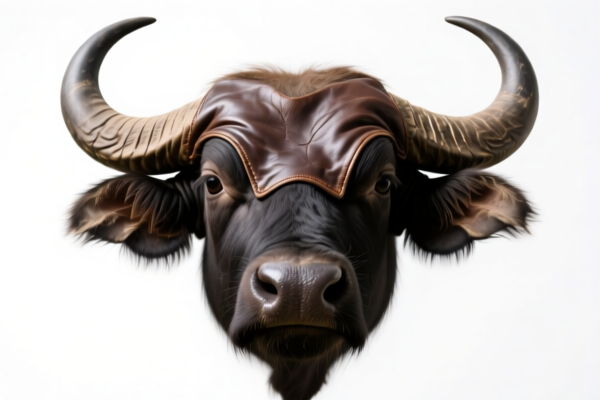
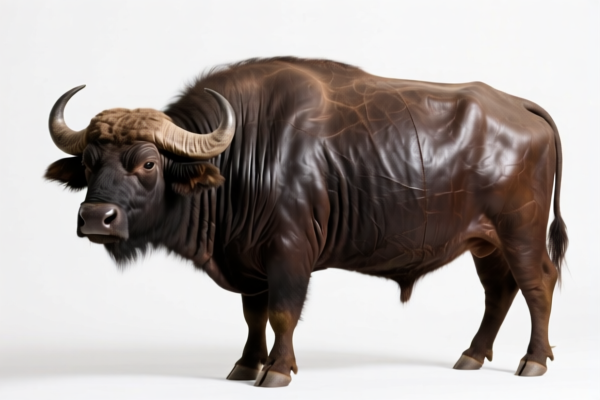


AI Analysis
🚗 Buffalo Leather for Automotive Interiors: The Ultimate 2026 HS Code & Duty Guide
🌐 Global Trade Compliance | 2026 Customs Classification & Tax Breakdown | Expert Clearing Strategy
📌 Part 1: Product Definition – What is "Buffalo Leather" in Auto Context?
Buffalo leather used for automotive interiors refers to high-grade, full-grain or top-grain leather derived from buffalo hides, specifically processed and tanned for use in car seats, door panels, dashboards, and steering wheels.
In international trade, this product sits at the intersection of two major classification worlds:
- Leather Goods (Chapter 42): When classified as a "leather article" or "other leather product."
- Automotive Parts (Chapter 87): When classified as a "part of motor vehicles," specifically interior trim or seat components.
⚠️ Key Distinction:
- If sold as finished leather articles (e.g., rolls, cuts, or pre-cut interior panels not yet installed) → Likely 4205.00.
- If sold as specific car interior parts (e.g., seat covers, door trim kits designed for 8708) → Likely 8708.29/8708.99 or 9401.99.
📦 Part 2: HS Code Classification Matrix (2026 Latest Tariff)
Based on the provided data, here are the four most relevant HS Codes for buffalo leather automotive interior products:
| HS Code | Product Description | Material & Usage Fit | Tax Rate |
|---|---|---|---|
| 9401.99.10.10 | Parts of motor vehicle seats or interior trim | ✅ Buffalo leather, ✅ Automotive interior use | 17.5% |
| 8708.29.51.60 | Other body parts, fittings, or accessories (leather) | ✅ Leather, ✅ Automotive part | 87.5% (2.5% + 25% + 50%) |
| 8708.99.81.80 | Other parts and accessories of motor vehicles | ✅ Leather (assumed), ✅ Automotive use | 12.5% |
| 4205.00.10.00 | Other leather articles for machinery/technical use | ✅ Leather, ✅ Auto interior | 35.0% |
| 4205.00.80.00 | Other leather articles (general) | ✅ Leather, ✅ Auto interior | 35.0% |
🔍 Critical Insight:
- The most favorable rate (12.5%) is under 8708.99.81.80, assuming the product is clearly defined as a "car part."
- The highest rate (87.5%) applies to 8708.29.51.60, likely due to specific "steel, aluminum, copper" or "alloy" add-ons mentioned in the tariff text.
- Leather-specific codes (4205.00) carry a 35% tax, which is high but predictable.
💰 Part 3: 2026 Tax Rate Breakdown (Detailed Duty Analysis)
✅ Applicable Country: United States (US)
✅ Origin: China (CN)
✅ Effective Date: November 10, 2025 (with potential updates in 2026)
🎯 1. 9401.99.10.10 – Auto Interior Parts (Leather)
| Item | Details |
|---|---|
| Base Duty | 0.0% |
| Section 301 Add-On | +7.5% |
| IEEPA (Section 122) | +10.0% |
| Total Duty | 17.5% |
| Tax Calculation | CIF Value × 17.5% |
| De Minimis Exemption | ❌ No (Deny De Minimis) |
| Legal Reference | IEEPA:9903.01.25 → Section 122:10% → 9401.99.10.10 |
📌 Explanation:
This is a cleanest and safest option for buffalo leather auto interior products. It avoids the "materials surcharge" (like copper/steel) and stays under 20%.
🎯 2. 8708.29.51.60 – Other Body Parts, Leather (High Risk)
| Item | Details |
|---|---|
| Base Duty | 2.5% |
| Section 301 Add-On | +25.0% |
| IEEPA (Section 122) | +10.0% |
| Material Surcharge | +50% (Steel, Aluminum, Copper) |
| Total Duty | 87.5% |
| Tax Calculation | CIF × 87.5% |
| De Minimis Exemption | ❌ No |
| Legal Reference | IEEPA:9903.01.24 → Section 122:10% → 8708.29.51.60 → Steel/Aluminum/Copper: 50% |
📌 Warning:
This code carries a massive 50% material surcharge, likely due to hidden metallic components (e.g., leather with metal studs, buckles, or reinforced frames). Avoid unless absolutely necessary.
🎯 3. 8708.99.81.80 – Other Auto Parts (Best Option)
| Item | Details |
|---|---|
| Base Duty | 2.5% |
| Section 301 Add-On | 0.0% |
| IEEPA (Section 122) | +10.0% |
| Total Duty | 12.5% |
| Tax Calculation | CIF × 12.5% |
| De Minimis Exemption | ❌ No |
| Legal Reference | IEEPA:9903.01.25 → Section 122:10% → 8708.99.81.80 |
📌 Advantage:
This is the lowest risk and lowest duty code for leather auto parts. Perfect for seat covers, door trim, steering wheel covers.
🎯 4 & 5. 4205.00.10.00 & 4205.00.80.00 – Leather Articles (High Cost)
| Item | Details |
|---|---|
| Base Duty | 0.0% |
| Section 301 Add-On | +25.0% |
| IEEPA (Section 122) | +10.0% |
| Total Duty | 35.0% |
| Tax Calculation | CIF × 35.0% |
| De Minimis Exemption | ❌ No |
| Legal Reference | IEEPA:9903.01.25 → Section 122:10% → 4205.00 |
📌 Caution:
These codes are for general leather goods, not auto-specific parts. Use only if the product is not clearly an auto part (e.g., raw leather sheets, fashion items repurposed).
🛠️ Part 4: Customs Clearing Recommendations (Pro Tips)
✅ 1. Documentation Checklist (Must-Have)
| Document | Required? | Notes |
|---|---|---|
| ✅ Product Specification Sheet | ✔️ | Detail material (buffalo leather), thickness, finish, intended use |
| ✅ Technical Drawing / CAD | ✔️ | Show how leather is used (seat cover, door panel, etc.) |
| ✅ Product Photos | ✔️ | Clear shots of stitching, texture, and any metal components |
| ✅ Material Certification | ✔️ | Proof of "Buffalo Leather" origin and tanning process |
| ✅ Commercial Invoice | ✔️ | Accurate description: "Buffalo Leather Interior Trim for Automotive Use" |
| ✅ Origin Certificate (CO) | ✔️ | If from non-China countries, check for tariff exemptions |
| ✅ Packing List | ✔️ | Separate parts from accessories to avoid misclassification |
✅ 2. Declaration Strategy (Golden Rules)
🔥 "Specify Use, Not Just Material!"
| Scenario | Correct Declaration | Wrong Declaration |
|---|---|---|
| Leather seat covers | "Buffalo Leather Seat Covers for Automotive Use" → 8708.99.81.80 |
"Buffalo Leather Sheets" → 4205.00 (35%) |
| Leather door trim | "Leather Door Panel Trim for Cars" → 8708.99.81.80 |
"Leather Articles" → 4205.00 (35%) |
| Leather with metal buckles | "Leather Automotive Trim with Metal Hardware" → Avoid 8708.29.51.60 | → Risk 87.5% |
| Raw leather rolls | "Buffalo Leather for Auto Upholstery" → 4205.00.80.00 |
✅ Acceptable if not yet formed |
✅ 3. Special Cases & Mitigation
| Case | Advice |
|---|---|
| Metal-reinforced leather parts | Avoid 8708.29.51.60 → Use 8708.99.81.80 if possible |
| Custom OEM leather parts | Provide customer order + design specs to prove automotive use |
| Leather with electronics | If integrated (e.g., heated seat), still 8708.99.81.80 |
| Leather for non-auto use | Use 4205.00 codes to avoid auto-specific surcharges |
🌍 Part 5: Global Trade Comparison (2026)
| Market | Recommended HS Code | Duty (China) | Certifications | Notes |
|---|---|---|---|---|
| 🇺🇸 USA | 8708.99.81.80 |
12.5% | FCC, RoHS, IEEPA | Avoid 8708.29.51.60 |
| 🇪🇺 EU | 8708.99 |
0–5% | CE, REACH | No Section 301 |
| 🇨🇳 China | 8708.99 |
2.5% | CCC | No IEEPA |
| 🇦🇺 Australia | 8708.99 |
5% | RCM | No Section 301 |
| 🇯🇵 Japan | 8708.99 |
0% | PSE | No Section 301 |
📌 Conclusion:
- USA is the most expensive market due to IEEPA and Section 301.
- EU, China, Australia, Japan offer lower or zero tariffs if not subject to US rules.
- Always declare "Automotive Use" to access the 12.5% rate, not 35%.
📌 Part 6: Common Mistakes & Avoidance
❌ Mistake 1: Declaring "Buffalo Leather" without specifying "Automotive Use"
👉 Result: Tax jumps from 12.5% → 35%
✅ Fix: Add "for automotive interiors" in description.
❌ Mistake 2: Including metal hardware in leather parts → 8708.29.51.60
👉 Result: 87.5% duty!
✅ Fix: Remove metal or use 8708.99.81.80 if possible.
❌ Mistake 3: Declaring raw leather as "auto parts"
👉 Result: Misclassification → Delay or penalty
✅ Fix: Use 4205.00 for raw material, 8708.99 for finished parts.
🎯 Part 7: Final Takeaway – Pro Clearing Strategy
🔹 "Specify Use, Not Just Material!"
🔹 "Avoid Metal Surcharge → 12.5% vs 87.5%!"
🔹 "Auto Use = 12.5%, Leather Articles = 35%!"
📌 Pro Tip:
If your buffalo leather product excludes metal components and is clearly for automotive use, apply for HS Code 8708.99.81.80 → 12.5% total duty.
This is your best legal and cost-effective option in 2026.
📣 Immediate Action:
📞 Contact a licensed customs broker + Submit product photos + specs + Request pre-classification ruling
🚀 Clear your buffalo leather auto parts faster, cheaper, and safer!
✨ Precision Classification = Maximum Profit, Minimum Risk!
💼 Every dollar saved starts with the right HS Code.
Customer Reviews
About HS Code Classification
The Harmonized System (HS) is an internationally standardized nomenclature developed by the World Customs Organization (WCO) to classify traded products. Over 200 countries use the HS system as the basis for customs tariffs, trade statistics, and import/export regulations.
Each HS code follows a hierarchical structure:
- Chapter (2 digits) — Broad category of goods (e.g., Chapter 84: Machinery and Mechanical Appliances)
- Heading (4 digits) — More specific grouping within the chapter
- Subheading (6 digits) — Internationally standardized breakdown, used by all WCO member countries
- National subdivisions (8-10 digits) — Country-specific extensions for further classification, such as US HTSUS 10-digit codes
Correct HS code classification is essential for smooth customs clearance, accurate duty payment, and compliance with trade regulations. Misclassification can lead to customs delays, overpayment of duties, or penalties.
When importing from CN to US, the applicable tariff rates may include:
- Most-Favored-Nation (MFN) rate — The standard duty rate applied to WTO members
- General rate — Applied to countries without trade agreements
- Trade remedy duties — Additional tariffs such as Section 301 (anti-dumping), Section 232 (national security), or countervailing duties
The information provided on this page is for reference purposes only. For official classification, please consult with your local customs authority or a licensed customs broker.