Buffalo Leather for Musical Instruments
CN → US| HS Code | Tariff Rate | Origin | Destination | Doc |
|---|---|---|---|---|
| 411410 | 0.0% | CN | US | Official Doc |
| 920599 | 0.0% | CN | US | Official Doc |
Product Images
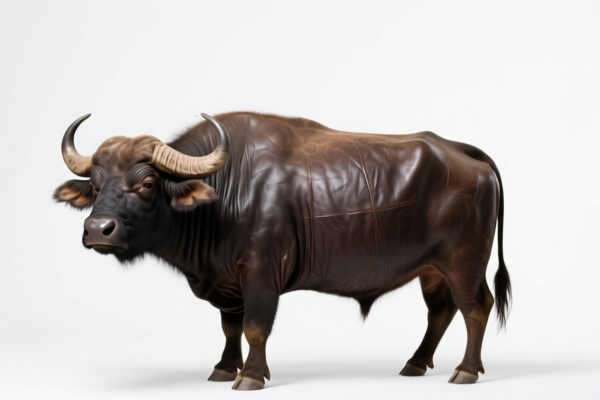
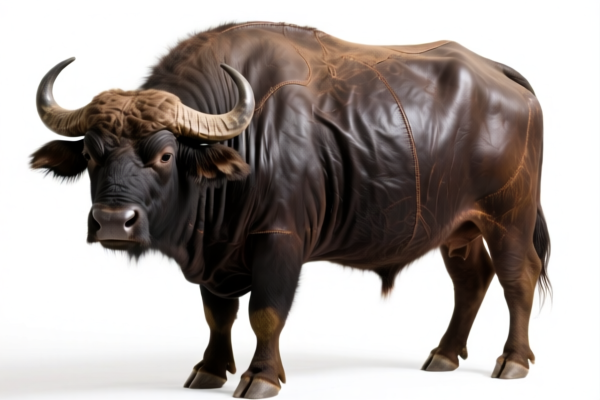


AI Analysis
🎻 Buffalo Leather for Musical Instruments (HS Code Classification & Clearance Guide)
🌐 HS Code Reference & Clearance Strategy | 2026 Harmonized System Analysis | Professional Compliance Strategy
📌 I. Product Definition & Classification: What Exactly is "Buffalo Leather for Musical Instruments"?
Buffalo leather (including water buffalo) is a durable, textured hide widely used in the manufacturing of musical instruments, particularly drums, percussion heads, guitar straps, and instrument cases. In international trade, the classification depends strictly on the form (raw vs. processed) and the specific end-use declared.
⚠️ Key Classification Distinction:
- If the leather is processed into upper leather (shoe upper type) but declared for instrument use → It falls under Chapter 41 (Leather) based on its physical processing.
- If it is simply tanned/processed buffalo hide without specific shaping for shoes → It may fall under different subheadings depending on whether it is "upper leather" or "other leather."
- Crucial Note: The term "for musical instruments" is often a usage description, but HS codes in Chapter 41 are primarily determined by material and processing state, not just end-use. However, customs authorities may scrutinize the "purpose" to ensure it’s not misclassified as a finished good (Chapter 92).
📦 II. HS Code Classification Details (2026 Official Tariff Reference)
Based on the provided data, here are the four potential HS Codes and their applicability:
| HS Code | Product Description | Applicability & Logic | Total Tax Rate |
|---|---|---|---|
| 4107.12.10.20 | Upper Leather of Bovine Animals, Full Grain/Corrected Grain | ✅ Match Successful. Material: Buffalo/Bovine. Form: Leather suitable for uppers. Use: Shoe upper leather is the standard definition. Even if used for instruments, if it meets the physical definition of "upper leather" (e.g., split leather, smooth finish), it归类 here. | 35.0% |
| 4107.11.10.20 | Full-Grain Leather of Bovine Animals | ✅ Match Based On. Material: Buffalo/Bovine. Form: Processed leather. Use: Matches the material and processing characteristics of 4107.11 (full-grain). Suitable if the leather is high-quality, full-grain buffalo hide. | 35.0% |
| 4104.11.10.20 | Tanned/Chrome-Tanned Bovine Leather, Upper/Inner Leather | ✅ Match Successful. Material: Buffalo/Bovine. Form: Leather material (fits basic upper/inner leather definition). Use: Inferred as shoe upper leather based on processing. Broad category for processed bovine leather. | 35.0% |
| 4104.11.40.10 | Other Tanned Bovine Leather, Upper Leather for Shoes | ✅ Match Based On. Material: "Buffalo" = "Cattle (including water buffalo)". Use: "Leather for instruments" may be interpreted as "Upper Leather for Shoes" if it meets the physical specs of shoe upper leather in classification explanations. | 15.0% |
🔍 Critical Observation:
- Three codes (4107.12, 4107.11, 4104.11) carry a 35% total tax rate due to Section 301 Tariffs (25%) + IEEPA (10%) on top of base rates.
- One code (4104.11.40.10) has a 15% total rate, with a 0% Section 301 surcharge (only 5% base + 10% IEEPA). This suggests it may be classified under a different subheading that is exempt from the 301 tariff or has a different trade treatment.
- "For Musical Instruments" is not a separate HS chapter in this context. If the leather is finished into a drumhead, it might fall under Chapter 92 (Musical Instruments). However, raw/processed leather for making drums is still Chapter 41.
💰 III. 2026 Latest Tariff Rate Breakdown (Including Surtaxes & Policy Surcharges)
✅ Applicable Country: United States (US)
✅ Country of Origin: China (CN)
✅ Effective Date: From November 10, 2025 (and onwards)
🎯 1. HS Codes: 4107.12.10.20, 4107.11.10.20, 4104.11.10.20
(Total Tax Rate: 35.0%)
| Item | Detail |
|---|---|
| Base Tariff | 0.0% (ad valorem) |
| USITC Surtax (Section 301) | +25.0% |
| IEEPA Surcharge | +10.0% (For China/HK products, effective Nov 10, 2025) |
| Total Tax Rate | 35.0% |
| Calculation | CIF Value × 35% |
| De Minimis Exemption | ❌ Not Eligible (deny_de_minimis) |
| Legal Basis Path | USITC:Footnote 9903.88.01 → IEEPA:9903.01.25 → HS Code: 4107/4104 |
📌 Explanation:
- The 25% surcharge is from the Section 301 Trade Act (USITC Footnote).
- The 10% surcharge is from the IEEPA (International Emergency Economic Powers Act).
- Total 35% is a high tariff for leather goods. Must be anticipated in cost planning.
🎯 2. HS Code: 4104.11.40.10
(Total Tax Rate: 15.0%)
| Item | Detail |
|---|---|
| Base Tariff | 5.0% (ad valorem) |
| USITC Surtax (Section 301) | 0.0% (Exempt or not applicable to this specific subheading in this dataset) |
| IEEPA Surcharge | +10.0% |
| Total Tax Rate | 15.0% |
| Calculation | CIF Value × 15% |
| De Minimis Exemption | ❌ Not Eligible (deny_de_minimis) |
| Legal Basis Path | IEEPA:9903.01.24 → USITC:4104.11.40.10 |
📌 Note:
- This code has a lower total rate (15%) because it appears to be exempt from the 25% Section 301 surcharge in this specific dataset configuration.
- This could be due to specific subheading exclusions or different trade policy treatment.
- Verification Required: Confirm with US Customs if4104.11.40.10is indeed exempt from Section 301 for this specific leather form.
🛠️ IV. Clearance Practical Advice (Real-World Pitfall Avoidance Guide)
✅ 1. Documentation Checklist (Essential)
| Document | Required | Purpose |
|---|---|---|
| ✅ Product Specification Sheet | ✔️ | Must clearly state: Material (Buffalo/Bovine), Tanning Method (Chrome/veg), Finish (Full-grain/Split), Intended Use (Instrument parts). |
| ✅ Photos of Leather | ✔️ | Show texture, grain, thickness, and any markings (e.g., "Split," "Corrected Grain"). |
| ✅ Commercial Invoice | ✔️ | Clearly describe as "Buffalo Leather for Musical Instrument Components" or "Processed Bovine Leather". Avoid vague terms like "Animal Hide." |
| ✅ Certificate of Origin | ✔️ | To verify Chinese origin and apply correct tariffs. |
| ✅ Packing List | ✔️ | Detail dimensions, weight, and quantity. |
✅ 2. Declaration Strategy (Key Tips)
🔥 "Declare Material First, Use Second!"
| Scenario | Recommended HS Code | Rationale |
|---|---|---|
| High-Quality Full-Grain Buffalo Hide | 4107.11.10.20 |
Matches "Full-Grain" definition. High durability, often used for premium instrument straps/cases. |
| Split or Corrected Grain Leather (Shoe-Leather Type) | 4107.12.10.20 or 4104.11.10.20 |
If it physically resembles shoe upper leather, customs may classify it here regardless of "instrument" use. |
| General Tanned Bovine Leather (Lower Grade) | 4104.11.40.10 |
Potentially Lower Tax (15%). If the leather does not meet "full-grain" specs, this may be the best option. |
⚠️ Critical Warning:
- Do not declare as "Finished Drumheads" (Chapter 92) unless they are fully formed with tension rods, hoops, etc.
- Raw/Processed Leather for drums must stay in Chapter 41. Misclassification can lead to audits and penalties.
✅ 3. Special Situations
| Situation | Handling Advice |
|---|---|
| Leather for Drumheads | Must be declared as "Processed Bovine Leather for Musical Instrument Manufacturing". If it’s already cut to shape, provide drawings. |
| OEM for Instrument Brands | Provide OEM contracts to prove end-use, but do not rely on end-use for classification in Chapter 41. |
| Mixed Shipments (Leather + Hardware) | Declare separately. Leather goes to HS 4107/4104; hardware (e.g., tuning pegs) goes to HS 9206/9209. |
🌍 V. Global Market Comparison (2026 Latest)
| Country/Region | Recommended HS Code | Tariff Rate (China Origin) | Certification Requirements | Notes |
|---|---|---|---|---|
| 🇺🇸 USA | 4104.11.40.10 |
15% (if exempt from 301) or 35% | None specific | 35% is common for 4107/4104.11.10.20. Verify 301 exemption for 4104.11.40.10. |
| 🇨🇳 China | 4107.11.10.20 |
5-10% | CCC (if finished goods) | Lower base rates. |
| 🇪🇺 EU | 4107.11 |
0-4% | REACH, RoHS (if treated chemicals) | No Section 301 surtax. |
| 🇬🇧 UK | 4107.11 |
0-6% | UKCA | Post-Brexit tariffs may differ. |
📌 Conclusion:
- USA is the most challenging market due to Section 301 and IEEPA surcharges.
- Cost Optimization: If possible, verify if4104.11.40.10is indeed exempt from the 25% surcharge. This can save 20% in tariffs.
📌 VI. Common Mistakes & Pitfalls (Lessons Learned)
❌ Mistake 1: Declaring "Buffalo Leather for Instruments" without specifying the processing level (full-grain vs. split).
👉 Consequence: Customs may assign the highest tariff code (4107.12) with 35% tax.
❌ Mistake 2: Claiming De Minimis Exemption ($800).
👉 Consequence: Denied. Leather goods from China are not eligible for de minimis clearance to the US.
❌ Mistake 3: Using vague descriptions like "Animal Skin" or "Drum Material."
👉 Consequence: Customs Hold. Requires additional documentation, leading to delays and storage fees.
✅ Correct Declaration:
"Processed Buffalo Leather (Bovine), Tanned, for Musical Instrument Components, Not Finished as Drumheads, HS 4104.11.40.10"
🎯 VII. Conclusion: Precise Classification Saves Money!
🎯 Remember the Golden Rule:
🔹 "Material & Form Dictate HS, Not Just End-Use."
🔹 "35% vs 15%: A 20% Difference Can Change Profit Margins."
🔹 "No De Minimis for Chinese Leather!"
📌 Pro Tip:
If your buffalo leather is originating from Vietnam, Indonesia, or Thailand, you may qualify for lower or zero tariffs due to trade agreements.
👉 Recommendation: Apply for an Advance Ruling with US Customs (CBP) to confirm the correct HS Code and tariff rate before shipment.
📣 Immediate Action:
📞 Consult a licensed customs broker.
📄 Prepare detailed product specs and photos.
🚀 Ensure accurate HS Code declaration to avoid 20-35% tariff shocks.
✨ Professional Clearance Starts with Accurate Classification!
💼 Every Percent of Tariff Counts!
Customer Reviews
About HS Code Classification
The Harmonized System (HS) is an internationally standardized nomenclature developed by the World Customs Organization (WCO) to classify traded products. Over 200 countries use the HS system as the basis for customs tariffs, trade statistics, and import/export regulations.
Each HS code follows a hierarchical structure:
- Chapter (2 digits) — Broad category of goods (e.g., Chapter 84: Machinery and Mechanical Appliances)
- Heading (4 digits) — More specific grouping within the chapter
- Subheading (6 digits) — Internationally standardized breakdown, used by all WCO member countries
- National subdivisions (8-10 digits) — Country-specific extensions for further classification, such as US HTSUS 10-digit codes
Correct HS code classification is essential for smooth customs clearance, accurate duty payment, and compliance with trade regulations. Misclassification can lead to customs delays, overpayment of duties, or penalties.
When importing from CN to US, the applicable tariff rates may include:
- Most-Favored-Nation (MFN) rate — The standard duty rate applied to WTO members
- General rate — Applied to countries without trade agreements
- Trade remedy duties — Additional tariffs such as Section 301 (anti-dumping), Section 232 (national security), or countervailing duties
The information provided on this page is for reference purposes only. For official classification, please consult with your local customs authority or a licensed customs broker.