Buffalo Leather/Marble Pattern Office Chair
CN → US| HS Code | Tariff Rate | Origin | Destination | Doc |
|---|---|---|---|---|
| 9402900020 | 10.0% | CN | US | Official Doc |
| 9401806028 | 35.0% | CN | US | Official Doc |
| 9401804046 | 35.0% | CN | US | Official Doc |
| 9402100000 | 10.0% | CN | US | Official Doc |
| 9401991010 | 17.5% | CN | US | Official Doc |
Product Images
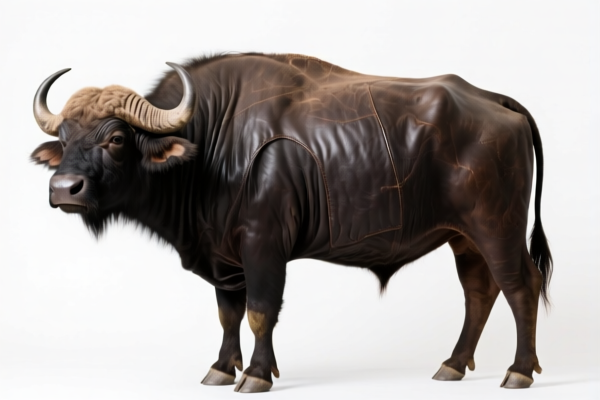
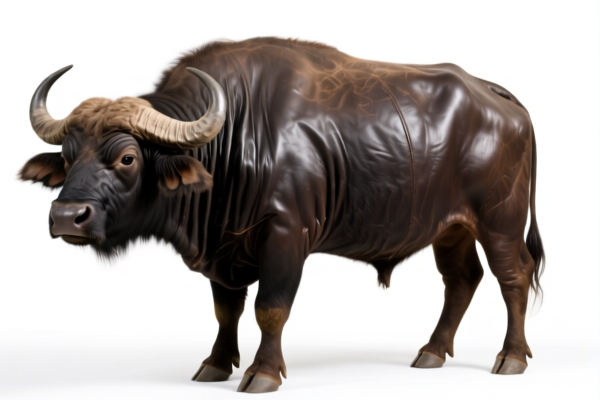

AI Analysis
💺 Buffalo Leather/Marble Pattern Office Chair
🌐 HS Code Reference & Customs Clearance Guide | 2026 Latest Tariff Analysis | Professional Level Strategy
📌 1. Product Definition & Classification: Do You Truly Understand “Office Chairs”?
The "Buffalo Leather/Marble Pattern Office Chair" is a classic piece of office furniture, designed for ergonomic support in home or corporate office settings. In international trade, it is primarily categorized under Chapter 94 (Furniture). The key determining factors for classification are: - Usage: Office seating (not medical, dental, or barber chairs). - Material: Upholstered in leather (or artificial leather/PU with a marble pattern). - Structure: Complete chair with frame, cushion, and upholstery.
⚠️ Key Distinction Point:
- If the product is described as a "Medical/Dental/Veterinary Chair" (e.g., salon-style), it falls under 9402.
- If it is a "General Office/Home Chair", it falls under 9401.
- The material "Buffalo Leather" implies natural or synthetic leather, which is crucial for determining the specific sub-heading within 9401 or 9402.
📦 2. HS Code Classification Details (2026 Latest Authorized Correspondence)
Based on the provided data, here are the potential HS Codes and the logical reasoning for each:
| HS Code | Product Description | Matching Basis | Total Tax Rate |
|---|---|---|---|
| 9402.90.00.20 | Parts/Accessories of Medical/Dental/Veterinary Furniture | Usage Match: The chair is used in settings similar to beauty salons or medical clinics. The material (leather) matches common attributes for such furniture. | 10.0% |
| 9401.80.60.28 | Other Seats (Household/General Use) | Usage Match: The name "Chair" indicates seating; "Office" confirms general/household use. Leather material does not conflict with "Other Seats." | 35.0% |
| 9401.80.40.46 | Seats with Plastic/Rubber Upholstery | Material Match: The chair is an office seat. Leather/Artificial leather is often classified under plastic/synthetic materials in broader categories, fitting "Rubber or Plastic Upholstered Seats." | 35.0% |
| 9402.10.00.00 | Chairs for Dental/Barber/Similar Use | Usage Match: The chair is an office chair but may be categorized under "Chairs for dental, barber or similar purposes" due to its design or material (leather) matching furniture forms. | 10.0% |
| 9401.99.10.10 | Parts/Accessories of Seats (Leather) | Material Match: The name explicitly contains "Leather." It is classified as a part/accessory or material category for seats, specifically leather-based. | 17.5% |
🔍 Key Reminder:
- 9402 Codes (10% Tax): Apply if the chair is deemed to be for medical, dental, or salon use (e.g., adjustable, hydraulic, specialized).
- 9401 Codes (17.5%-35% Tax): Apply if the chair is deemed a standard office/home seat. The higher rates (35%) often apply due to additional surtaxes on general office furniture imports from China.
💰 3. 2026 Latest Tariff Rate Details (Including Surtaxes)
✅ Applicable Country: United States (US)
✅ Origin: China (CN)
✅ Effective Date: November 10, 2025 (including subsequent imports)
🎯 1. 9402.90.00.20 & 9402.10.00.00 — Medical/Salon Chairs
| Item | Content |
|---|---|
| Basic Tariff | 0% (ad valorem) |
| USITC Surtax | 0% |
| IEEPA Surtax | +10% (针对中国产品) |
| Total Tax Rate | 10.0% |
| Tax Calculation | CIF Value × 10% |
| De Minimis Exemption | ❌ Not Applicable |
| Legal Basis | IEEPA: 9903.01.25 → 9402 HS Code |
📌 Explanation:
- These codes benefit from lower surtaxes because they are classified under Chapter 9402 (Medical/Dental Furniture), which often enjoys more favorable treatment compared to general office furniture (Chapter 9401).
- Total Rate: 10% is significantly lower than other office chair classifications.
🎯 2. 9401.80.60.28 & 9401.80.40.46 — General Office Chairs
| Item | Content |
|---|---|
| Basic Tariff | 0% |
| USITC Surtax | +25% (Section 301 Tariff) |
| IEEPA Surtax | +10% |
| Total Tax Rate | 35.0% |
| Tax Calculation | CIF Value × 35% |
| De Minimis Exemption | ❌ Not Applicable |
| Legal Basis | IEEPA: 9903.01.24 → 9401 HS Code → USITC Footnote |
📌 Note:
- These codes carry the highest tax burden (35%) because they are classified under general office seats (9401), which are heavily impacted by Section 301 tariffs.
- Even if the chair is made of leather, it does not automatically reduce the tariff if it is deemed a standard office product.
🎯 3. 9401.99.10.10 — Leather Seat Parts/Accessories
| Item | Content |
|---|---|
| Basic Tariff | 0% |
| USITC Surtax | +7.5% |
| IEEPA Surtax | +10% |
| Total Tax Rate | 17.5% |
| Tax Calculation | CIF Value × 17.5% |
| De Minimis Exemption | ❌ Not Applicable |
| Legal Basis | IEEPA: 9903.01.24 → 9401.99 HS Code |
📌 Caution:
- This code is for parts or accessories (e.g., leather covers, cushions), not the complete chair.
- If you import a complete chair, misdeclaring it as a "part" will lead to customs penalties.
- The rate (17.5%) is intermediate, but the risk of misclassification is high.
🛠️ 4. Customs Clearance Practical Advice (Pitfall Avoidance Guide)
✅ 1. Preparation Checklist (Essential Documents)
| Document | Required? | Notes |
|---|---|---|
| ✅ Product Specification Sheet | ✔️ | Include dimensions, weight, material composition (e.g., 100% Buffalo Leather, Metal Frame). |
| ✅ Product Photos | ✔️ | Clear images showing the chair’s structure, upholstery, and any labels. |
| ✅ Commercial Invoice | ✔️ | Must clearly state "Office Chair" or "Salon Chair" depending on the HS Code chosen. |
| ✅ Packing List | ✔️ | Detail the number of chairs per carton. |
| ✅ Origin Certificate | ✔️ | If available, to prove origin and apply for any potential exemptions (though limited for China). |
✅ 2. Declaration Strategy (Key Tips)
🔥 “Know Your Use, Know Your Tax!”
| Scenario | Correct HS Code | Incorrect Action |
|---|---|---|
| Chair for Office/Home Use | 9401.80.60.28 or 9401.80.40.46 |
Misdeclaring as "Medical Chair" to get 10% → Fraud Risk |
| Chair for Salon/Dental Use | 9402.90.00.20 or 9402.10.00.00 |
Misdeclaring as "Office Chair" → 35% Tax (Higher Cost) |
| Leather Covers Only (No Frame) | 9401.99.10.10 |
Declaring as "Complete Chair" → Wrong Classification |
📌 Critical Warning:
- If the chair is adjustable with hydraulic lift and used in a salon or clinic, use 9402 (10% tax).
- If it is a static or standard swivel office chair, use 9401 (17.5%-35% tax).
- Do not attempt to reclassify a standard office chair as a medical chair to save 25% in tariffs. Customs will scrutinize the product’s design and marketing.
🌍 5. Global Market Comparison (2026 Latest)
| Country/Region | Recommended HS Code | Tariff (China Origin) | Certification Requirements | Notes |
|---|---|---|---|---|
| 🇺🇸 USA | 9402.10.00.00 (if applicable) |
10% | FCC (if electronic), CPC (if for kids) | Best Option if classified as medical/salon. Otherwise, 35% for office chairs. |
| 🇺🇸 USA | 9401.80.60.28 (standard office) |
35% | CPC | High tariff due to Section 301. |
| 🇪🇺 EU | 9401.71.00 (office chairs) |
0% - 6% | CE (if applicable), REACH | No Section 301 equivalent; lower rates. |
| 🇨🇳 China | 9401.71.00 |
0% - 6% | CCC (if applicable) | Duty-free for domestic sales. |
📌 Conclusion:
- USA is the most challenging market due to high surtaxes on Chapter 9401 products.
- Strategy: If the chair can be legitimately classified under 9402 (medical/salon), it saves 25% in tariffs.
- Alternative: Consider sourcing from non-China countries (e.g., Vietnam, Mexico) to avoid IEEPA/301 tariffs, though material origin matters.
📌 6. Common Mistakes & Pitfall Guide (Lessons Learned)
❌ Mistake 1: Declaring an office chair as a medical chair to get 10% tax.
👉 Consequence: Customs audit → Back taxes + Penalties + Delay.
❌ Mistake 2: Ignoring the "Leather" attribute in documentation.
👉 Consequence: Customs may reclassify under a higher tariff line or demand additional duties.
❌ Mistake 3: Providing vague descriptions like "Chair."
👉 Consequence: Customs will assign the highest default rate (often 35%+).
✅ Correct Approach:
"Office Chair, Model XYZ, Upholstered in Buffalo Leather, Metal Base, Adjustable Height."
- If used in offices: HS9401.80.60.28(35% tax).
- If used in salons/clinics: HS9402.10.00.00(10% tax).
🎯 7. Conclusion: Professional Declaration, Cost Optimization!
🎯 Remember:
🔹 "Use Determines Code: Office = 35%, Medical/Salon = 10%."
🔹 "Leather Doesn't Lower Tariffs in 9401; Usage Does."
🔹 "Accurate Declaration Saves Thousands; Misclassification Costs More."
📌 Pro Tip:
- Get an Advance Ruling: If the chair’s use is ambiguous (e.g., used in both offices and salons), apply for a Customs Advance Ruling to confirm the correct HS Code before shipment.
- Document Your Use: Keep marketing materials, user manuals, and sales contracts that specify the chair’s intended use (e.g., "for dental clinics") to support a 9402 classification.
📣 Act Now:
📞 Contact a licensed customs broker + Provide product details + Apply for HS Code pre-classification
🚀 Ensure smooth customs clearance, optimize costs, and boost your profit margins!
✨ Professional Clearance Starts with Accurate Classification!
💼 Every Dollar of Tax is Earned; Save Every Penny You Can!
Customer Reviews
About HS Code Classification
The Harmonized System (HS) is an internationally standardized nomenclature developed by the World Customs Organization (WCO) to classify traded products. Over 200 countries use the HS system as the basis for customs tariffs, trade statistics, and import/export regulations.
Each HS code follows a hierarchical structure:
- Chapter (2 digits) — Broad category of goods (e.g., Chapter 84: Machinery and Mechanical Appliances)
- Heading (4 digits) — More specific grouping within the chapter
- Subheading (6 digits) — Internationally standardized breakdown, used by all WCO member countries
- National subdivisions (8-10 digits) — Country-specific extensions for further classification, such as US HTSUS 10-digit codes
Correct HS code classification is essential for smooth customs clearance, accurate duty payment, and compliance with trade regulations. Misclassification can lead to customs delays, overpayment of duties, or penalties.
When importing from CN to US, the applicable tariff rates may include:
- Most-Favored-Nation (MFN) rate — The standard duty rate applied to WTO members
- General rate — Applied to countries without trade agreements
- Trade remedy duties — Additional tariffs such as Section 301 (anti-dumping), Section 232 (national security), or countervailing duties
The information provided on this page is for reference purposes only. For official classification, please consult with your local customs authority or a licensed customs broker.