Buffalo Marble Leather Belt Material Non Patterned
CN → US| HS Code | Tariff Rate | Origin | Destination | Doc |
|---|---|---|---|---|
| 4107127030 | 15.0% | CN | US | Official Doc |
| 4107927030 | 15.0% | CN | US | Official Doc |
| 4205000500 | 37.9% | CN | US | Official Doc |
| 4205004000 | 36.8% | CN | US | Official Doc |
| 4114207000 | 36.6% | CN | US | Official Doc |
| 4114204000 | 38.6% | CN | US | Official Doc |
Product Images
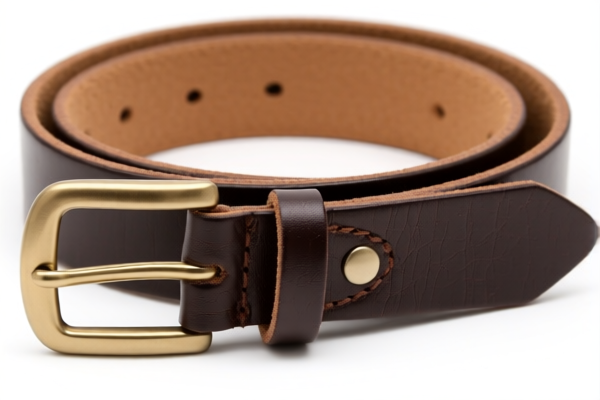
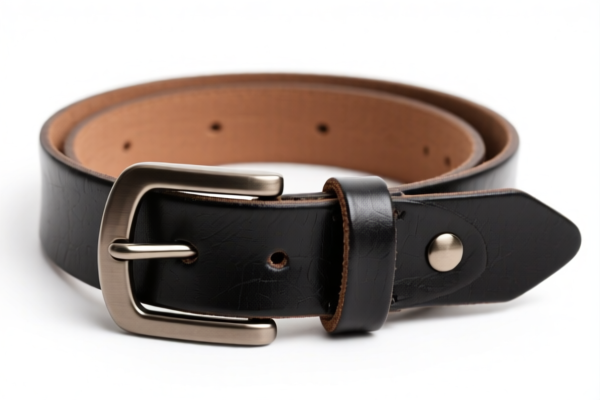
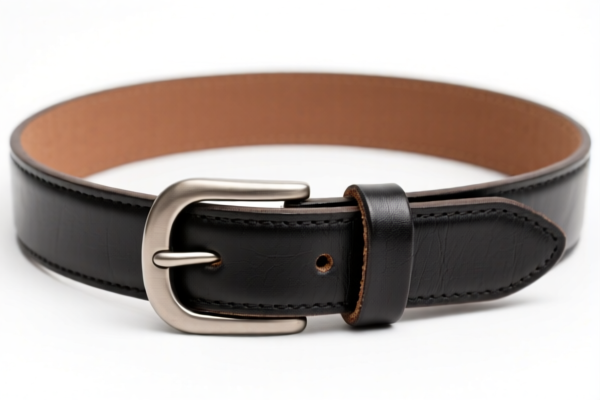
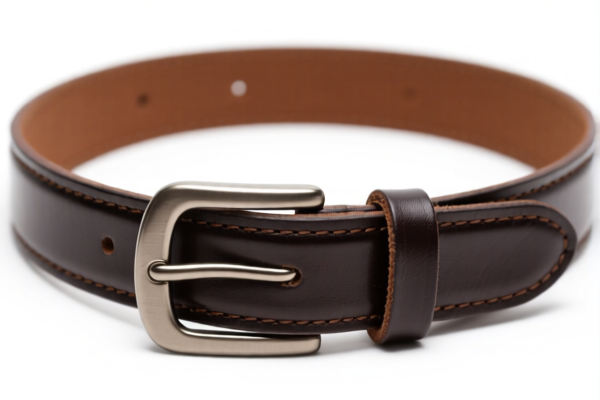
AI Analysis
🐂 Buffalo Marble Leather (Non-Patterned) – The "Technical Leather" Trap
🌐 HS Code Reference & Customs Clearance Guide | 2026 Latest Tariff Analysis | Professional Clearance Strategy
📌 I. Product Definition: Is It "Fashion" or "Industry"?
Buffalo Marble Leather (also known as Mottled or Natural Grain Leather) is a premium full-grain or split leather derived from buffalo hides. The "Marble" effect is a natural grain pattern, not an embossed pattern.
In international trade, the classification depends entirely on END USE, not just the material itself.
⚠️ Critical Distinction:
- If used for fashion accessories (belts, wallets, bags): It is likely Article of Leather (Ch 42).
- If used for industrial machinery (belting for conveyors, pumps, engines): It is classified as Leather for Technical Uses (Ch 41/42 specific subheadings).
The provided data focuses on Technical/Industrial Uses and Straps/Strops. This is crucial because "Belting Leather" often carries 0% tariffs if classified correctly, while fashion belts might face different duties.
📦 II. HS Code Classification Details (Based on Provided Data)
We will map your product, "Buffalo Marble Leather Belt Material," to the specific HS Codes in the based on its physical state and intended use.
| HS Code | Product Description | Application Scenario | Tax Rate (China Origin → US) |
|---|---|---|---|
4107.12.70.30 |
Raw/Prepared Hides: Grain Splits, Bovine/Equine, Not Fancy Belting | Large sheets of split leather, ready for cutting into machinery belting. "Not Fancy" means no decorative finishing. | 0.0% (Base: 0.0%, Add-on: 0.0%) |
4107.92.70.30 |
Raw/Prepared Hides: Other Sides, Grain Splits, Not Fancy Belting | Similar to above, but covers "Other" subcategories of bovine/equine splits. | 0.0% (Base: 0.0%, Add-on: 0.0%) |
4114.20.70.00 |
Patented/Metallized Leather: Patent Laminated/Metallized, Other | Note: Only applies if your "Marble" leather is specifically treated as "Patent Laminated" or "Metallized." Standard marble leather is NOT this. | 0.0% (Base: 0.0%, Add-on: 0.0%) |
4205.00.05.00 |
Other Articles of Leather: Belting Leather cut/manufactured into forms for machinery | High Probability: If the leather is already cut to specific widths/lengths for industrial conveyor belts. | 27.9% (Base: 2.9%, Add-on: 25.0%) |
4205.00.40.00 |
Other Articles of Leather: Straps and Strops | High Probability: If used for precision machinery straps, strops for sharpening, or tensioning straps. | 26.8% (Base: 1.8%, Add-on: 25.0%) |
4114.20.40.00 |
Patented Leather: Patent Laminated/Metallized, Calf and Kip | Unlikely: Buffalo is bovine but not "Calf or Kip." Usually excluded. | 28.6% (Base: 3.6%, Add-on: 25.0%) |
🔍 Key Insight:
- Raw/Prepared Hides (4107...): If you import large, uncut hides or sheets specifically intended for industrial belting, you may qualify for 0% duty (provided they are "Not Fancy Belting" and meet the technical definition).
- Finished Articles (4205...): If the leather is already cut, shaped, or marketed as "belting material" for technical use, the duty jumps to ~27%.
- Fashion vs. Technical: If this is for consumer fashion belts, it does NOT fit4205.00.05.00(which specifies "for machinery"). Fashion belts typically fall under 4203.21 (not in data), but must not be misclassified as technical belting to avoid fraud penalties.
💰 III. 2026 Tariff Rate Breakdown (Detailed Analysis)
✅ Applicable Country: United States (US)
✅ Origin: China (CN)
✅ Effective Date: Post-November 2025 (Section 301 Tariffs Apply)
🎯 1. 4107.12.70.30 & 4107.92.70.30 – Prepared Hides (Not Fancy Belting)
| Item | Detail |
|---|---|
| Base Duty | 0.0% |
| Section 301 Add-on | 0.0% |
| Total Duty | 0.0% |
| Legal Basis | HTSUS 4107; No Footnote 9903.88.01 applies to these specific "not fancy" prepared hides. |
📌 Explanation:
- These codes cover raw/prepared leather not yet finished for fashion.
- "Not Fancy Belting" means the leather is not dyed/pigmented for aesthetic appeal but for technical durability.
- Zero Duty Advantage: If your "Buffalo Marble Leather" is imported as split hides for industrial processing, you can legally pay 0%.
🎯 2. 4205.00.05.00 – Belting Leather (Technical)
| Item | Detail |
|---|---|
| Base Duty | 2.9% |
| Section 301 Add-on | +25.0% |
| Total Duty | 27.9% |
| Calculation | CIF Value × 27.9% |
| De Minimis Exemption | ❌ Not Eligible (Value > $800 triggers duty) |
| Legal Basis | USITC:4205.00.05.00 → Section 301 Footnote 9903.88.01 |
📌 Explanation:
- This code applies if the leather is cut/manufactured into shapes suitable for belting (e.g., pre-cut rolls for conveyor belts).
- The 25% Section 301 tariff is heavily enforced here.
- Risk: Misdeclaring fashion leather as "technical belting" to get 0% duty is customs fraud. The leather must be technically suitable for machinery (high tensile strength, specific thickness).
🎯 3. 4205.00.40.00 – Straps and Strops
| Item | Detail |
|---|---|
| Base Duty | 1.8% |
| Section 301 Add-on | +25.0% |
| Total Duty | 26.8% |
| Calculation | CIF Value × 26.8% |
| De Minimis Exemption | ❌ Not Eligible |
📌 Explanation:
- Used for strops (sharpening) or straps in mechanical appliances.
- If your "Buffalo Marble" is sold as a decorative strap for a bag, this code is WRONG. Use fashion codes (e.g., 4203.21).
🛠️ IV. Customs Clearance Practical Advice (Pitfall Avoidance)
✅ 1. Documentation Checklist (Must-Have)
| Document | Requirement | Why It Matters |
|---|---|---|
| Product Specification Sheet | Must state: Intended Use (Industrial vs. Fashion). | Determines if it’s 4107 (0%) or 4205 (27.9%). |
| Material Breakdown | 100% Buffalo Leather, Split/Full Grain? | Confirms Bovine classification (4107 vs. 4114). |
| Processing Description | "Prepared but not finished for consumer use" vs. "Cut into belt shapes." | Prevents misclassification as "Finished Articles." |
| Photos of Leather | Show grain texture ("Marble"), thickness, and edge. | Proves it’s natural marble grain, not embossed/patterned. |
| Letter of Intent | From end-user: "Leather intended for conveyor belt manufacturing." | Supports 0% duty claim under 4107.12.70.30. |
✅ 2. Classification Strategy (Key Decision Matrix)
| Scenario | Correct HS Code | Duty Rate | Action |
|---|---|---|---|
| Importing Large Hides/Sheets for industrial processing | 4107.12.70.30 |
0% | Declare as "Prepared Bovine Splits, Not Fancy Belting." |
| Pre-Cut Rolls for conveyor belts | 4205.00.05.00 |
27.9% | Declare as "Belting Leather for Technical Use." |
| Fashion Belts (Consumer Use) | Not in Data (Likely 4203.21) | Varies | DO NOT USE 4205.00.05.00. This is fraud. |
| Marble Leather is "Fancy" | 4205.00.05.00 |
27.9% | "Marble" is often considered "Fancy." If fancy, it’s NOT 4107 (0%). |
⚠️ CRITICAL WARNING:
- "Marble" Leather is often considered "Fancy" due to its aesthetic grain.
- Code4107.12.70.30explicitly says "Not Fancy Belting."
- If your leather is dyed/finished to enhance the marble look, it may NOT qualify for 0% under4107.
- Recommendation: If it’s "Fancy," expect 27.9% under4205.00.05.00. Do not try to claim 0% unless it’s purely technical and unadorned.
✅ 3. Clearance Tips
- Avoid "Patterned" Descriptions: Your prompt says "Non Patterned," but "Marble" is a natural pattern. Use terms like "Natural Grain Buffalo Split" or "Full Grain Buffalo Hide" to emphasize naturalness, not embossing.
- Technical Certification: If claiming 0% for
4107, provide a technical data sheet showing thickness, tensile strength, and suitability for machinery. - Pre-Ruling: Given the high penalty for misclassification (27.9% vs 0%), apply for a Binding Ruling from CBP if the volume is high.
🌍 V. Global Market Comparison (2026)
| Market | HS Code Recommendation | Duty Rate | Notes |
|---|---|---|---|
| 🇺🇸 US | 4107.12.70.30 (if not fancy) |
0% | Strict on "Fancy" vs. "Technical." |
| 🇺🇸 US | 4205.00.05.00 (if cut/fancy) |
27.9% | High tariff on finished technical leather. |
| 🇪🇺 EU | 4107 / 4205 | Varies | No Section 301, but standard duties apply. |
| 🇨🇳 China | 4107 / 4205 | Low | Import duties are lower, but this analysis is for US Export. |
📌 VI. Common Errors & Pitfalls
❌ Error 1: Calling "Marble Leather" "Non-Patterned" to get 0% duty.
👉 Result: CBP may reject as "Fancy" leather → Duty jumps to 27.9%.
✅ Fix: If it’s natural marble grain, it’s still "Fancy" if aesthetically enhanced. Be honest: "Natural Grain Buffalo Split."
❌ Error 2: Using 4205.00.05.00 for Fashion Belts.
👉 Result: Customs may flag for misclassification if the leather is clearly for consumer use.
✅ Fix: Use correct fashion codes (e.g., 4203.21.00.00) for consumer belts.
❌ Error 3: Ignoring the "Not Fancy" Clause in 4107.12.70.30.
👉 Result: Audit risk. "Marble" is often sold as premium/fancy.
✅ Fix: If the leather is dyed/finished for aesthetics, it’s NOT "Not Fancy." Expect 27.9%.
🎯 VII. Conclusion: Professional Clearance, Cost Efficiency
🎯 Key Takeaway:
🔹 If Raw/Unfinished + Technical Use → 0% Duty (
4107.12.70.30).
🔹 If Cut/Fashion/Aesthetic → 27.9% Duty (4205.00.05.00).
🔹 "Marble" is Risky: It’s often considered "Fancy." Default to 27.9% unless you can prove it’s purely technical and unadorned.
📌 Action Plan:
1. Verify Use: Is it for machinery or fashion?
2. Verify Finish: Is it "Not Fancy" (technical) or "Fancy" (aesthetic)?
3. Document Accordingly: Use precise terminology.
4. Consult CBP: For high-value shipments, get a pre-classification ruling.
📣 Final Advice:
📞 Contact a licensed customs broker to review your leather samples.
🚀 Accurate classification saves 27.9% on CIF value.
💼 Don’t gamble with "Marble" leather – it’s likely taxable.
✨ Professional Clearance Starts with Accurate Classification!
💼 Every % of duty impacts your bottom line!
Customer Reviews
About HS Code Classification
The Harmonized System (HS) is an internationally standardized nomenclature developed by the World Customs Organization (WCO) to classify traded products. Over 200 countries use the HS system as the basis for customs tariffs, trade statistics, and import/export regulations.
Each HS code follows a hierarchical structure:
- Chapter (2 digits) — Broad category of goods (e.g., Chapter 84: Machinery and Mechanical Appliances)
- Heading (4 digits) — More specific grouping within the chapter
- Subheading (6 digits) — Internationally standardized breakdown, used by all WCO member countries
- National subdivisions (8-10 digits) — Country-specific extensions for further classification, such as US HTSUS 10-digit codes
Correct HS code classification is essential for smooth customs clearance, accurate duty payment, and compliance with trade regulations. Misclassification can lead to customs delays, overpayment of duties, or penalties.
When importing from CN to US, the applicable tariff rates may include:
- Most-Favored-Nation (MFN) rate — The standard duty rate applied to WTO members
- General rate — Applied to countries without trade agreements
- Trade remedy duties — Additional tariffs such as Section 301 (anti-dumping), Section 232 (national security), or countervailing duties
The information provided on this page is for reference purposes only. For official classification, please consult with your local customs authority or a licensed customs broker.