Buffalo Pattern Car Interior Leather
CN → US| HS Code | Tariff Rate | Origin | Destination | Doc |
|---|---|---|---|---|
| 4113903000 | 38.3% | CN | US | Official Doc |
| 4106910000 | 38.3% | CN | US | Official Doc |
| 4113906000 | 36.6% | CN | US | Official Doc |
| 4104113060 | 12.4% | CN | US | Official Doc |
| 4113903000 | 38.3% | CN | US | Official Doc |
Product Images
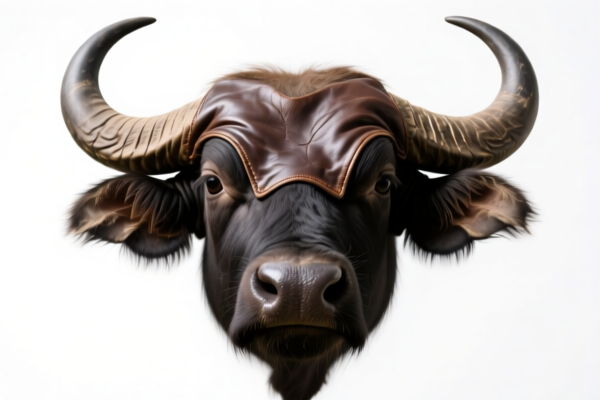
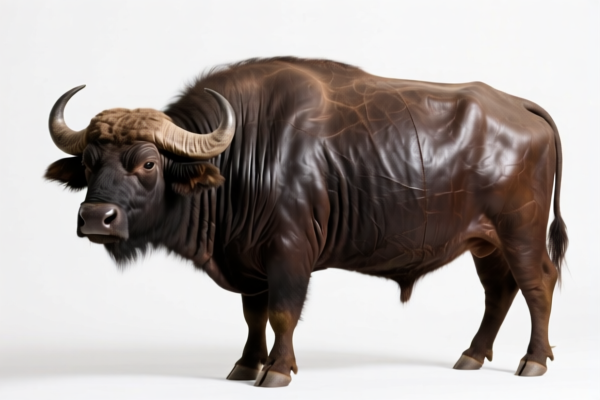
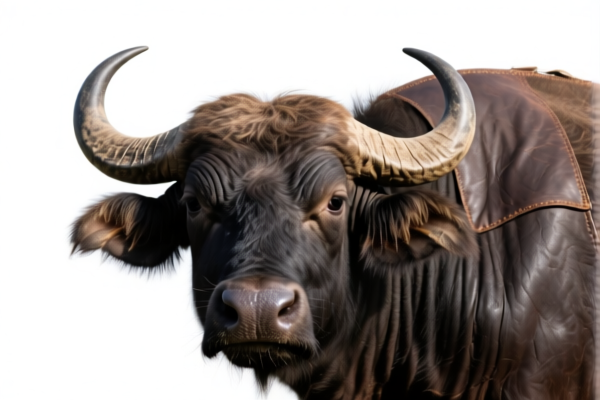
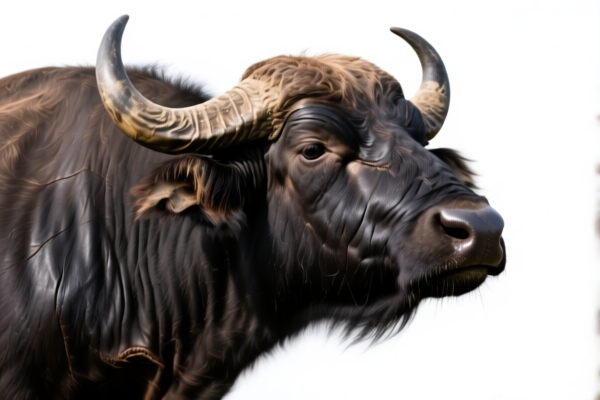
AI Analysis
🐃 Buffalo Pattern Car Interior Leather
🌐 HS Code Reference & Customs Clearance Guide | 2026 Latest Tariff Analysis | Professional-Level Clearance Strategy
📌 I. Product Definition & Classification: Do You Really Understand "Buffalo Pattern Car Interior Leather"?
Buffalo Pattern Car Interior Leather is a specialized automotive material used for vehicle upholstery (seats, door panels, dashboards). In international trade, it is classified based on its material composition (animal leather) and processing state (tanned, split, or further processed).
The critical distinction lies in whether the leather is "raw/tanned" (Chapter 41) or "further processed into automotive parts" (Chapter 39/87 or 63/41 depending on finish). Based on the provided data, we are focusing on the leather material itself (tanned or further processed animal hide).
⚠️ Key Distinction Points:
- If the leather is "wet blue" (partially tanned, ready for further processing) → Likely falls under 4106.
- If the leather is "fully tanned/dried" and potentially "split" (layered) → Likely falls under 4113.
- "Pattern" implies a specific surface finish (embossed/textured), but does not change the fundamental classification of animal leather unless it is converted into a finished automotive part (which is not the case here).
📦 II. HS Code Classification Details (2026 Latest Tariff Authority Comparison)
| HS Code | Product Description | Applicable Scenario | Processing State | Total Tax Rate (US/China) |
|---|---|---|---|---|
4106.91.00.00 |
Other tanned or half-tanned leather of bovine, including buffalo | Raw leather, split bovine leather, wet blue, partially tanned | ✅ Tanned/Half-Tanned | 38.3% |
4104.11.30.60 |
Other full-grain or split buffalo leather (unspecified further processing) | Basic buffalo hide, minimal processing, standard split | ✅ Minimal Processing | 12.4% |
4113.90.30.00 |
Other leather, further processed | Split leather, finished, dyed, embossed for interior use | ✅ Further Processed | 38.3% |
4113.90.60.00 |
Other leather, further processed (different category) | Specific finish, possibly花式 (patterned) or special treatment | ✅ Further Processed | 36.6% |
🔍 Critical Reminder:
- 4104.11.30.60 has the lowest tax rate (12.4%). It is applicable if the leather is simply "buffalo hide" without significant "further processing" (like deep embossing or complex finishing).
- 4113 codes (90.30 and 90.60) and 4106.91.00.00 have high tax rates (36.6% - 38.3%). They apply when the leather is significantly processed (tanned, split, dyed, or textured) for interior applications.
- "Pattern" in the name suggests finishing, which often pushes it into 4113 (further processed), increasing the tax burden.
💰 III. 2026 Latest Tariff Rate Details (Including Surcharges, Policy Add-ons)
✅ Applicable Country: United States (US)
✅ Origin: China (CN)
✅ Effective Date: From November 10, 2025 (and subsequent imports)
🎯 1. 4104.11.30.60 —— Buffalo Leather (Basic Split/Full Grain)
| Item | Content |
|---|---|
| Base Tariff | 2.4% (ad valorem) |
| USITC Surcharge | 0.0% (No 301 Section surcharge for this specific subheading in this dataset) |
| IEEPA Surcharge | 10% (Targeting China/HK products, from Nov 10, 2025) |
| Total Tax Rate | 12.4% |
| Tax Calculation | CIF Value × 12.4% |
| De Minimis Eligibility | ❌ Not Eligible (deny_de_minimis) |
| Legal Basis Path | IEEPA:9903.01.25 → IEEPA:9903.01.24 → USITC:4104.11.30.60 |
📌 Explanation:
- This is the most cost-effective option if the leather qualifies as "basic buffalo leather" with minimal processing.
- Note: If customs inspectors determine the leather is "further processed" (due to "pattern" or "car interior" use), they may reclassify it to 4113, jumping the tax to ~38%.
🎯 2. 4106.91.00.00 —— Tanned/Partially Tanned Buffalo Leather
| Item | Content |
|---|---|
| Base Tariff | 3.3% (ad valorem) |
| USITC Surcharge | 25.0% (Section 301) |
| IEEPA Surcharge | 10% (Targeting China/HK products) |
| Total Tax Rate | 38.3% |
| Tax Calculation | CIF Value × 38.3% |
| De Minimis Eligibility | ❌ Not Eligible |
| Legal Basis Path | IEEPA:9903.01.25 → USITC:4106.91.00.00 → FOOTNOTE:9903.88.01 |
📌 Note:
- Applies to wet blue or partially tanned leather.
- High tax due to Section 301 surcharge.
🎯 3. 4113.90.30.00 —— Further Processed Animal Leather (Other)
| Item | Content |
|---|---|
| Base Tariff | 3.3% (ad valorem) |
| USITC Surcharge | 25.0% (Section 301) |
| IEEPA Surcharge | 10% (Targeting China/HK products) |
| Total Tax Rate | 38.3% |
| Tax Calculation | CIF Value × 38.3% |
| De Minimis Eligibility | ❌ Not Eligible |
| Legal Basis Path | IEEPA:9903.01.25 → USITC:4113.90.30.00 |
📌 Explanation:
- Applies to split leather that is fully tanned and finished.
- Risk: High. If the "pattern" is considered "embossing" or "finishing," this classification is likely.
🎯 4. 4113.90.60.00 —— Further Processed Animal Leather (Other)
| Item | Content |
|---|---|
| Base Tariff | 1.6% (ad valorem) |
| USITC Surcharge | 25.0% (Section 301) |
| IEEPA Surcharge | 10% (Targeting China/HK products) |
| Total Tax Rate | 36.6% |
| Tax Calculation | CIF Value × 36.6% |
| De Minimis Eligibility | ❌ Not Eligible |
| Legal Basis Path | IEEPA:9903.01.25 → USITC:4113.90.60.00 |
📌 Note:
- Slightly lower base rate than 4113.90.30.00, but still high total tax.
- Applies to other types of further processed leather.
🛠️ IV. Customs Clearance Practical Advice (Real-World Pitfall Avoidance Guide)
✅ 1. Required Documentation List (Missing Items = Delay)
| Document | Mandatory | Description |
|---|---|---|
| ✅ Product Specification Sheet | ✔️ | Detail material (Buffalo), processing (tanned/split), finish (pattern/embossed) |
| ✅ Product Photos | ✔️ | Clear images of texture, backside (split vs. full grain), and any labels |
| ✅ Commercial Invoice | ✔️ | Describe as "Buffalo Leather, Tanned, For Automotive Use" |
| ✅ Packing List | ✔️ | Weight, dimensions, package count |
| ✅ Third-Party Test Report | ✔️ | If applicable, test for leather composition |
✅ 2. Declaration Tips (Key Mantra)
🔥 "Be Precise About Processing: 'Split' vs. 'Finished' Dictates the Tax!"
| Scenario | Correct Declaration | Incorrect Practice |
|---|---|---|
| Basic Buffalo Hide (Minimal processing) | 4104.11.30.60 (12.4%) |
Misdeclaring as "Finished Leather" → 38.3% |
| Tanned/Partially Tanned (Wet blue) | 4106.91.00.00 (38.3%) |
Misdeclaring as "Raw Skin" → Higher scrutiny |
| Fully Finished/Embossed (Car interior grade) | 4113.90.30.00 or 90.60 (36.6-38.3%) |
Claiming it's "Raw" to save tax → Audit Risk + Penalties |
| Auto Parts (Seats) | Not Leather Code (Chapter 87/39) | Declaring finished seats as "Leather" → Wrong Chapter |
📌 Crucial Point:
- The term "Pattern" often implies embossing or finishing, which customs may classify under 4113 (Further Processed).
- To qualify for the 12.4% rate (4104.11.30.60), the leather must be unprocessed or minimally processed split/full grain. If it has a specific "car interior pattern" embossed into it, it likely falls under 4113, triggering the 38.3% tax.
✅ 3. Special Case Handling
| Situation | Handling Advice |
|---|---|
| OEM Custom Pattern | Provide design files to prove it's a specific finish → Likely 4113. |
| Split Leather with Surface Coating | Declare as "Further Processed" → 4113. |
| Mixed Materials | If backing or synthetic, declare accurately → May fall under different chapters. |
| Small Sample Shipments | Still subject to 10% IEEPA tax → No de minimis exemption. |
🌍 V. Global Market Clearance Comparison (2026 Latest)
| Country/Region | Recommended HS Code | Tariff | Certification Requirement | Note |
|---|---|---|---|---|
| 🇺🇸 USA | 4104.11.30.60 |
12.4% (Low) | None | High Risk of Re-classification to 4113 (38.3%) |
| 🇺🇸 USA | 4113.90.30.00 |
38.3% (High) | None | Safe if "further processed" |
| 🇨🇳 China | 4104.11.30.60 |
5-10% | CCC (if final product) | Lower base tax |
| 🇪🇺 EU | 4113.90 |
6.5% | REACH | No US-style Section 301 tax |
📌 Conclusion:
- USA is the most challenging market due to the 10% IEEPA + 25% Section 301 surcharges on processed leather.
- China-origin leather has a significant tax burden in the US.
- Recommendation: If possible, ensure the product description emphasizes "minimally processed" if claiming4104.11.30.60, but be prepared for customs verification.
📌 VI. Common Errors & Pitfall Avoidance Guide (Blood Lessons)
❌ Mistake 1: Declaring "Patterned Car Interior Leather" as 4104.11.30.60 (12.4%)
👉 Consequence: Customs determines it is "further processed" → Reclassification to 4113 → Back taxes + Penalties (~26% difference!).
❌ Mistake 2: Omitting "Buffalo" in the description
👉 Consequence: Customs may classify under generic bovine leather codes → Higher scrutiny or incorrect tax.
❌ Mistake 3: Not specifying "Split" vs. "Full Grain"
👉 Consequence: Ambiguity leads to manual valuation and delayed clearance.
❌ Mistake 4: Assuming "Car Interior" means it's an auto part
👉 Consequence: If declared as an auto part (e.g., seat), it falls under Chapter 87 or 39, not leather. If it's just the leather material, it must be declared as leather.
✅ Correct Practice:
"Buffalo Leather, Tanned, Split, For Automotive Interior Use, Model XYZ"
(Ensure the processing level matches the HS Code selected)
🎯 VII. Conclusion: Professional Declaration, Save Time, Reduce Costs!
🎯 Remember the Mantra:
🔹 "Basic Hide = 12.4%, Finished Leather = 38.3%"
🔹 "Pattern often means Finished. Declare accurately to avoid audits!"
🔹 "No De Minimis for Leather. Always pay the 10% IEEPA!"
📌 Pro Tip:
If your leather originates from Vietnam, Mexico, Thailand, or Malaysia, you may be eligible for IEEPA exemptions (lowering the 10% surcharge).
Recommendation: Apply for an Advance Ruling (Pre-classification) before shipping high-value batches to mitigate tax risk.
📣 Immediate Action:
📞 Contact a professional customs broker + Provide product photos + Apply for HS Code Advance Ruling
🚀 Let your leather clear smoothly, efficiently, and maximize your profit margins!
✨ Professional Clearance Starts with Accurate Classification!
💼 Every cent of cost deserves precise calculation!
Customer Reviews
About HS Code Classification
The Harmonized System (HS) is an internationally standardized nomenclature developed by the World Customs Organization (WCO) to classify traded products. Over 200 countries use the HS system as the basis for customs tariffs, trade statistics, and import/export regulations.
Each HS code follows a hierarchical structure:
- Chapter (2 digits) — Broad category of goods (e.g., Chapter 84: Machinery and Mechanical Appliances)
- Heading (4 digits) — More specific grouping within the chapter
- Subheading (6 digits) — Internationally standardized breakdown, used by all WCO member countries
- National subdivisions (8-10 digits) — Country-specific extensions for further classification, such as US HTSUS 10-digit codes
Correct HS code classification is essential for smooth customs clearance, accurate duty payment, and compliance with trade regulations. Misclassification can lead to customs delays, overpayment of duties, or penalties.
When importing from CN to US, the applicable tariff rates may include:
- Most-Favored-Nation (MFN) rate — The standard duty rate applied to WTO members
- General rate — Applied to countries without trade agreements
- Trade remedy duties — Additional tariffs such as Section 301 (anti-dumping), Section 232 (national security), or countervailing duties
The information provided on this page is for reference purposes only. For official classification, please consult with your local customs authority or a licensed customs broker.