Buffalo Pattern Split Leather Sofa
CN → US| HS Code | Tariff Rate | Origin | Destination | Doc |
|---|---|---|---|---|
| 4107924000 | 12.5% | CN | US | Official Doc |
| 9401991010 | 17.5% | CN | US | Official Doc |
| 4107125000 | 12.8% | CN | US | Official Doc |
Product Images
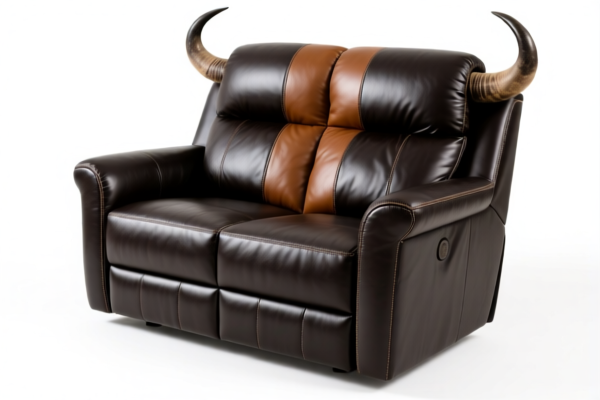
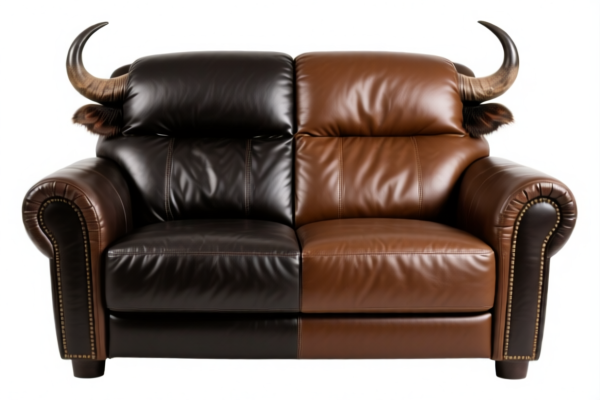


AI Analysis
🛋️ Buffalo Pattern Split Leather for Sofas
🌐 HS Code Reference & Customs Clearance Guide | 2026 Latest Tariff Analysis | Professional Clearance Strategy
📌 I. Product Definition & Classification: Do You Really Understand "Buffalo Pattern Split Leather"?
"Buffalo Pattern Split Leather for Sofas" is a specific type of processed leather material used in the furniture industry. In international trade, it is classified based on its material composition, physical form, and end-use.
Split Leather (Split Suede/Grain): This is the lower layer of the hide, split from the top grain. It has a fibrous surface, often embossed with patterns (like buffalo grain) to mimic top grain leather.
End-Use: Specifically designated for sofas (seating furniture).
⚠️ Key Distinction Point:
- If the leather is classified primarily by its material nature (bovine skin, split, finished) regardless of immediate assembly → It falls under Chapter 41 (Leather).
- If the item is considered a part/accessory specifically identifiable as a part of a sofa (though rare for loose leather rolls/panels, some jurisdictions might view finished upholstered components differently) → It might be scrutinized under Chapter 94 (Furniture).
- Note: In the provided data, we see a split decision between Chapter 41 (Material) and Chapter 94 (Furniture Part). This reflects different interpretive approaches or specific duty optimization strategies.
📦 II. HS Code Classification Details (2026 Latest Authoritative Comparison)
Based on the provided <DATA>, there are three potential classification paths. The choice depends on how the customs authority interprets the "part of furniture" vs. "material" aspect.
| HS Code | Product Description | Application Scenario | Primary Basis |
|--------|--------------------------|--------------------------|
| 4107.92.40.00 | Buffalo Pattern Split Leather, for Sofa Use | Material classification; matches buffalo hide material and split leather form | Material & Form |
| 9401.99.10.10 | Parts of Sofas (Leather) | Functional classification; considered a component part of seating furniture | End-Use (Part of Furniture) |
| 4107.12.50.00 | Buffalo Pattern Split Leather, Decorative Use | Alternative material classification; emphasizes decorative nature and split form | Material & Decorative Use |
🔍 Key Insight:
- The Chapter 41 codes (4107...) treat the product as raw/processed leather material.
- The Chapter 94 code (9401...) treats the product as a finished component of a sofa.
- Customs authorities often prefer the Material classification (Ch 41) for loose leather panels unless they are pre-cut/pre-shaped specifically for a single sofa model.
💰 III. 2026 Latest Tariff Rate Detailed Breakdown (Including Surcharges & Policy Add-ons)
✅ Applicable Country: United States (US)
✅ Origin: China (CN)
✅ Effective Date: Current trade policies (2025-2026 context)
🎯 1. 4107.92.40.00 — Buffalo Pattern Split Leather (Material Classification)
| Item | Content |
|---|---|
| Base Tariff | 2.5% (ad valorem) |
| Section 301 Surcharge | 0.0% |
| Section 122 Tariff | 10% (Specific statutory surcharge) |
| Total Tax Rate | 12.5% |
| Tax Calculation | CIF Value × 12.5% |
| De Minimis Exemption | ❌ Not Applicable (High value good) |
| Legal Basis | USITC:4107.92.40.00 → Statutory Surcharge: Section 122 (10%) |
📌 Explanation:
- This classification yields the lowest total tax burden among the options provided.
- Section 122 (often related to specific trade remedies or legacy statutes) adds 10%.
- No Section 301 tariff is applied in this specific scenario provided in the data.
🎯 2. 9401.99.10.10 — Parts of Sofas (Furniture Component Classification)
| Item | Content |
|---|---|
| Base Tariff | 0.0% |
| Section 301 Surcharge | 7.5% |
| Section 122 Tariff | 10% |
| Total Tax Rate | 17.5% |
| Tax Calculation | CIF Value × 17.5% |
| De Minimis Exemption | ❌ Not Applicable |
| Legal Basis | IEEPA:9903.01.25 → USITC:9401.99.10.10 → FOOTNOTE:301 + Section 122 |
📌 Explanation:
- Although the base tariff is 0%, the Section 301 surcharge (7.5%) kicks in because it is classified as a furniture part.
- Combined with the 10% Section 122, the total rate jumps to 17.5%.
- This is significantly more expensive than the material classification.
🎯 3. 4107.12.50.00 — Buffalo Pattern Split Leather (Alternative Material Classification)
| Item | Content |
|---|---|
| Base Tariff | 2.8% |
| Section 301 Surcharge | 0.0% |
| Section 122 Tariff | 10% |
| Total Tax Rate | 12.8% |
| Tax Calculation | CIF Value × 12.8% |
| De Minimis Exemption | ❌ Not Applicable |
| Legal Basis | USITC:4107.12.50.00 → Statutory Surcharge: Section 122 (10%) |
📌 Explanation:
- Slightly higher than4107.92.40.00due to a higher base rate (2.8% vs 2.5%).
- Same Section 122 surcharge applies.
- Use this only if4107.92.40.00is rejected due to specific material coding nuances.
🛠️ IV. Customs Clearance Practical Advice (Battle-Tested Pitfall Guide)
✅ 1. Document Checklist (Non-Negotiable)
| Document | Required | Explanation |
|---|---|---|
| ✅ Product Specification Sheet | ✔️ | Must clearly state: "Buffalo Pattern," "Split Leather," "100% Bovine," "For Sofa Use." |
| ✅ Photos of the Leather | ✔️ | Show the grain pattern (buffalo), the split side (if visible), and the finish. |
| ✅ Commercial Invoice | ✔️ | Describe as "Buffalo Pattern Split Leather Panels" NOT "Sofa Parts" to support Ch 41 classification. |
| ✅ Packing List | ✔️ | Weight, dimensions, number of hides/panels. |
| ✅ Origin Certificate | ✔️ | Essential for proving CN origin to apply correct surcharges. |
✅ 2. Declaration Strategy (Key Mantra)
🔥 "Call it Leather, Not Sofa; Ch 41 Wins, Ch 94 Burns!"
| Scenario | Correct Declaration | Wrong Declaration | Consequence |
|---|---|---|---|
| Loose Leather Panels | "Buffalo Pattern Split Leather, for Upholstery" | "Sofa Leather Parts" | Risk of being reassigned to Ch 94 (17.5%) |
| Pre-cut Pieces | "Cut-to-size Leather Panels" | "Sofa Cushion Covers" | Risk of Ch 94 classification |
| Material Focus | Emphasize Material Composition | Emphasize End-Use | Lower duty (12.5%) vs Higher (17.5%) |
📌 Critical Tip:
- Avoid words like "Sofa Parts" or "Furniture Components" in the product name if possible.
- Use "Leather for Upholstery" or "Leather Panels" instead.
- Customs looks at the essential character at the time of import. If it's just leather, it's Ch 41. If it's sewn into a seat, it's Ch 94.
✅ 3. Special Circumstances Handling
| Situation | Handling Advice |
|---|---|
| Mixed Shipments | If importing leather AND pre-upholstered cushions, declare separately. Do not mix Ch 41 and Ch 94 in one line item. |
| Section 122 Applicability | Verify if the specific Section 122 rule still applies to your commodity. It adds 10% regardless of HS Code in this dataset. |
| Origin Verification | Ensure the buffalo skin origin is declared correctly. Mislabeling origin can trigger anti-dumping duties or higher surcharges. |
🌍 V. Global Market Clearance Comparison (2026 Latest)
| Country/Region | Recommended HS Code | Total Tariff (China Origin) | Notes |
|---|---|---|---|
| 🇺🇸 USA | 4107.92.40.00 |
12.5% | Lowest rate under provided data. Avoid Ch 94 (17.5%). |
| 🇨🇳 China | 4107.92.40.00 |
~5-8% (Est.) | Import duties for raw leather are generally lower. |
| 🇪🇺 EU | 4107.12.50 |
~4-6% | No Section 301 or 122. Standard EU tariff applies. |
| 🇬🇧 UK | 4107.92.40 |
~4-6% | Post-Brexit tariff schedule similar to EU. |
📌 Conclusion:
- For US Imports, choosing4107.92.40.00saves 5% compared to9401.99.10.10.
- On a $100,000 shipment, this is a $5,000 savings.
📌 VI. Common Errors & Pitfall Guide (Lessons Learned)
❌ Mistake 1: Describing the item as "Sofa Leather Parts"
👉 Consequence: Customs may classify it under 9401.99.10.10 → 17.5% tax instead of 12.5%.
👉 Fix: Rename to "Buffalo Pattern Split Leather for Upholstery."
❌ Mistake 2: Ignoring Section 122 Tariff
👉 Consequence: Underestimating total landed cost.
👉 Fix: Always budget for the 10% Section 122 surcharge in addition to the base duty.
❌ Mistake 3: Confusing "Split Leather" with "Top Grain"
👉 Consequence: Wrong HS Code subheading.
👉 Fix: Ensure specs clearly state "Split" (fibrous surface) vs "Full Grain."
❌ Mistake 4: Splitting Declarations Improperly
👉 Consequence: If you ship leather and sofas together, and declare as one unit, risk of full container audit.
👉 Fix: Separate Line Items. Leather on one line, Finished Sofas on another.
✅ Correct Practice:
"Buffalo Pattern Split Leather Panels, 100% Bovine, Finished, For Sofa Upholstery, Not Yet Cut to Final Sofa Shape."
🎯 VII. Conclusion: Professional Declaration, Save Costs!
🎯 Remember the Mantra:
🔹 "Leather is Material (Ch 41), Sofa is Furniture (Ch 94)."
🔹 "Ch 41: 12.5% Total. Ch 94: 17.5% Total. Choose Wisely."
🔹 "Section 122 Adds 10% Everywhere in This Dataset."
📌 Pro Tip:
If your leather is pre-shaped specifically for one sofa model, customs might argue for Ch 94.
If it is rolled, in panels, or general cut pieces, argue strongly for Ch 41.
Always provide photos showing the material nature, not just the end-use.
📣 Immediate Action:
📞 Contact your customs broker to confirm if
4107.92.40.00is accepted for your specific shipment structure.
📝 Update your invoice description to avoid the word "Parts" if possible.
🚀 Optimize your landed cost by $5,000 per $100k shipped!
✨ Professional Clearance Starts with Precise Classification!
💼 Every percentage point counts in international trade!
Customer Reviews
About HS Code Classification
The Harmonized System (HS) is an internationally standardized nomenclature developed by the World Customs Organization (WCO) to classify traded products. Over 200 countries use the HS system as the basis for customs tariffs, trade statistics, and import/export regulations.
Each HS code follows a hierarchical structure:
- Chapter (2 digits) — Broad category of goods (e.g., Chapter 84: Machinery and Mechanical Appliances)
- Heading (4 digits) — More specific grouping within the chapter
- Subheading (6 digits) — Internationally standardized breakdown, used by all WCO member countries
- National subdivisions (8-10 digits) — Country-specific extensions for further classification, such as US HTSUS 10-digit codes
Correct HS code classification is essential for smooth customs clearance, accurate duty payment, and compliance with trade regulations. Misclassification can lead to customs delays, overpayment of duties, or penalties.
When importing from CN to US, the applicable tariff rates may include:
- Most-Favored-Nation (MFN) rate — The standard duty rate applied to WTO members
- General rate — Applied to countries without trade agreements
- Trade remedy duties — Additional tariffs such as Section 301 (anti-dumping), Section 232 (national security), or countervailing duties
The information provided on this page is for reference purposes only. For official classification, please consult with your local customs authority or a licensed customs broker.