Buffalo Upper Leather
CN → US| HS Code | Tariff Rate | Origin | Destination | Doc |
|---|---|---|---|---|
| 4104493060 | 12.4% | CN | US | Official Doc |
| 4107124000 | 12.5% | CN | US | Official Doc |
| 4107194000 | 12.5% | CN | US | Official Doc |
| 4101503500 | 19.9% | CN | US | Official Doc |
| 4101203500 | 19.9% | CN | US | Official Doc |
| 4104413060 | 12.4% | CN | US | Official Doc |
Product Images
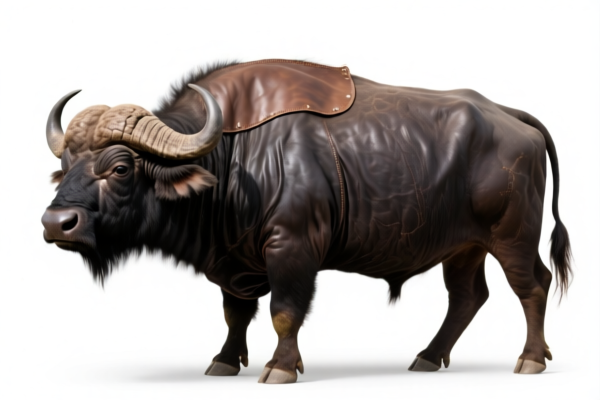
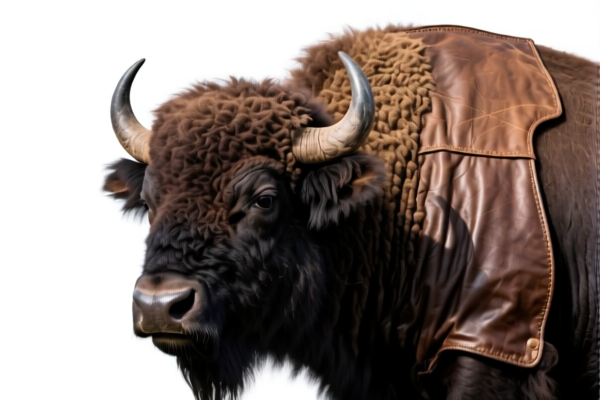
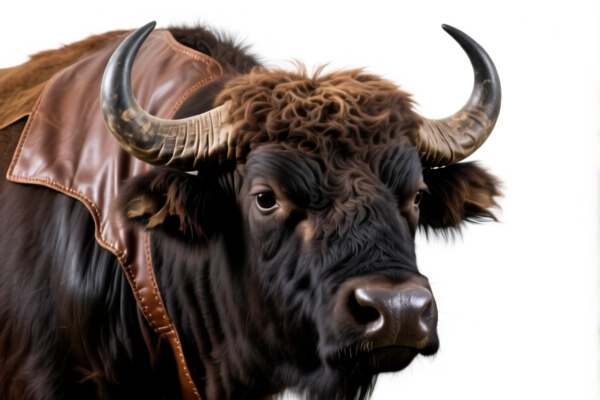

AI Analysis
🐃 Buffalo Upper Leather: The Ultimate Guide to HS Classification, Tariff Strategy & Customs Clearance
🌐 HS Code Reference & Customs Strategy | 2026 Latest Tariff Analysis | Professional Clearance Guidelines
📌 I. Product Definition & Classification: What is "Buffalo Upper Leather"?
Buffalo Upper Leather refers to tanned or crust leather derived from buffalo hides, specifically processed for use as the upper material in footwear, bags, or leather goods. In international trade, the classification hinges on two critical factors:
1. Processing State: Is it a raw hide (salted/dried/unprocessed) or tanned/crust leather (processed)?
2. Form: Is it in plates, sheets, or similar shapes (suitable for upper leather)?
⚠️ Key Distinction Point:
- If the product is tanned, crust, or finished leather prepared for upper use → Classify under 4107.12.40.00 or 4107.19.40.00.
- If the product is raw/salted buffalo hide (not yet tanned) → Classify under 4101.20.35.00 or 4101.50.35.00.
- If the product is dry, split, or corrected grain buffalo leather (often confused with upper leather) → Classify under 4104.41.30.60 or 4104.49.30.60.
📦 II. HS Code Classification Matrix (2026 Latest Tariff Authority Mapping)
| HS Code | Product Description | Processing State | Typical Use Case |
|---|---|---|---|
4107.12.40.00 |
Tanned/Crust Buffalo Leather, Full Grain | Tanned | High-end shoes, luxury bags, premium accessories |
4107.19.40.00 |
Tanned/Crust Buffalo Leather, Other (e.g., split, corrected) | Tanned | Mid-range footwear, industrial leather goods |
4101.20.35.00 |
Raw Buffalo Hides, Single Weight ≤7 kg | Raw/Salted | Tanneries importing for further processing |
4101.50.35.00 |
Raw Buffalo Hides, Single Weight >7 kg | Raw/Salted | Bulk raw material for heavy-duty leather production |
4104.41.30.60 |
Dry Buffalo Leather, Split or Corrected Grain | Dry/Finished | Budget footwear, upholstery, non-premium goods |
4104.49.30.60 |
Dry Buffalo Leather, Other | Dry/Finished | General-purpose dry leather goods |
🔍 Critical Note:
- "Upper Leather" typically implies tanned leather (HS 4107). However, if suppliers mislabel raw hides as "upper leather," customs may reclassify them under HS 4101, leading to higher tariffs.
- Dry leather (HS 4104) is often lower quality and may attract different scrutiny.
💰 III. 2026 Latest Tariff Rate Breakdown (Including Surtaxes & Policy Add-ons)
✅ Applicable Country: United States (US)
✅ Origin: China (CN)
✅ Effective Date: 2025-11-10 (and subsequent imports)
🎯 1. Tanned Buffalo Leather (HS 4107.12.40.00 / 4107.19.40.00)
| Item | Details |
|---|---|
| Base Rate | 2.5% (ad valorem) |
| Section 301 Surtax | +0.0% (No additional 301 surtax for this subheading) |
| Section 122 Tariff | +10% (Specific to certain leather categories) |
| Total Effective Rate | 12.5% |
| Tax Calculation | CIF Value × 12.5% |
| De Minimis Exemption | ❌ Not Eligible |
| Legal Authority Path | USITC:4107.12.40.00 → FOOTNOTE:122 |
📌 Explanation:
- The 2.5% base rate is the standard MFN (Most Favored Nation) rate for tanned leather.
- Section 122 Tariff (10%) applies specifically to this leather subheading under recent trade policy adjustments.
- No Section 301 surtax applies here, making it significantly cheaper than raw hides or other leather categories.
🎯 2. Dry Buffalo Leather (HS 4104.41.30.60 / 4104.49.30.60)
| Item | Details |
|---|---|
| Base Rate | 2.4% (ad valorem) |
| Section 301 Surtax | +0.0% |
| Section 122 Tariff | +10% |
| Total Effective Rate | 12.4% |
| Tax Calculation | CIF Value × 12.4% |
| De Minimis Exemption | ❌ Not Eligible |
| Legal Authority Path | USITC:4104.41.30.60 → FOOTNOTE:122 |
📌 Explanation:
- Slightly lower base rate (2.4%) compared to tanned leather.
- Same Section 122 surtax (10%) applies.
- Total rate: 12.4%, nearly identical to tanned leather.
🎯 3. Raw Buffalo Hides (HS 4101.20.35.00 / 4101.50.35.00)
| Item | Details |
|---|---|
| Base Rate | 2.4% (ad valorem) |
| Section 301 Surtax | +7.5% |
| Section 122 Tariff | +10% |
| Total Effective Rate | 19.9% |
| Tax Calculation | CIF Value × 19.9% |
| De Minimis Exemption | ❌ Not Eligible |
| Legal Authority Path | USITC:4101.20.35.00 → SECTION301:9903.01.25 → FOOTNOTE:122 |
📌 Critical Warning:
- Raw hides attract a 7.5% Section 301 surtax, bringing the total to 19.9%.
- Misclassification Risk: If you declare raw hides as "tanned leather" to save costs, customs audits will result in back taxes, penalties, and potential seizure.
- Always provide tanning certificates for HS 4107 classifications to justify the lower rate.
🛠️ IV. Customs Clearance Practical Advice (Proven Pitfall Avoidance)
✅ 1. Documentation Checklist (Non-Negotiable)
| Document | Mandatory? | Purpose |
|---|---|---|
| ✅ Commercial Invoice | ✔️ | Must clearly state "Buffalo Upper Leather" or "Buffalo Hide" |
| ✅ Packing List | ✔️ | Detail quantity, weight, and dimensions |
| ✅ Tanning Certificate | ✔️ | Essential for HS 4107 to prove tanning process |
| ✅ Product Photos | ✔️ | Show texture, grain, and finish to distinguish from raw hides |
| ✅ Material Composition Declaration | ✔️ | Confirm 100% buffalo leather (no synthetic blends) |
| ✅ HS Code Pre-Ruling | ✔️ | Recommended to avoid disputes |
📌 Pro Tip:
- For HS 4107 (Tanned), always include a tanning process description (e.g., "Vegetably Tanned," "Chrome Tanned").
- For HS 4101 (Raw), specify "Salted" or "Fresh" to justify the higher tax burden.
✅ 2. Declaration Best Practices (Key Mantra)
🔥 "Tanned is 12.5%, Raw is 19.9%, Dry is 12.4%! Don't mix them up!"
| Scenario | Correct Declaration | Wrong Declaration | Consequence |
|---|---|---|---|
| Tanned Upper Leather | 4107.12.40.00 |
Misdeclared as Raw Hide | Underpayment of tax → Penalties + Back Taxes |
| Raw Hides | 4101.20.35.00 |
Misdeclared as Tanned Leather | Overpayment of tax → Lost Profit |
| Dry Split Leather | 4104.41.30.60 |
Misdeclared as Tanned | Potential Rejection by Customs |
✅ 3. Special Cases & Mitigation
| Situation | Strategy |
|---|---|
| OEM Custom Leather | Provide customer specs + tanning process details to justify HS 4107 |
| Mixed Batches (Tanned + Raw) | Separate shipments to avoid complex audits |
| Leather with Synthetic Backing | Not classified as leather; may fall under 39.01–39.14 (Plastics) with different rates |
| Leather Used for Footwear | Still classified as 4107 (Leather), not footwear (HS 64) until cut/sewn |
🌍 V. Global Market Comparison (2026 Latest)
| Country/Region | Recommended HS Code | Tariff Rate | Certification Required | Notes |
|---|---|---|---|---|
| 🇺🇸 United States | 4107.12.40.00 |
12.5% | No special certs | Highest scrutiny on raw hides |
| 🇨🇳 China (Export) | 4107.12.40.00 |
0% (Export Duty) | REACH (if EU-bound) | No export duty for leather |
| 🇪🇺 European Union | 4107.12.40.00 |
0% (if REACH compliant) | REACH, LFGB | Strict chemical compliance |
| 🇬🇧 United Kingdom | 4107.12.40.00 |
0% | UKCA | Post-Brexit alignment with EU |
| 🇯🇵 Japan | 4107.12.40.00 |
0% | JIS Standards | No anti-dumping duties |
📌 Conclusion:
- US tariffs are the highest globally due to Section 122 surtaxes.
- EU/UK/Japan offer lower or zero tariffs, but REACH/LFGB compliance is critical.
- China exports are duty-free, but destination tariffs apply.
📌 VI. Common Errors & Pitfalls (Lessons Learned)
❌ Error 1: Declaring raw hides as tanned leather to save 7.4%
👉 Consequence: Customs audit → Back taxes + 20% penalty + shipment hold
❌ Error 2: Misclassifying dry split leather as tanned upper leather
👉 Consequence: Rejection by US Customs → Return to Origin
❌ Error 3: Failing to provide tanning certificates for HS 4107
👉 Consequence: Customs defaults to HS 4101 (Raw) → Higher tax + delays
❌ Error 4: Using vague descriptions like "Leather" without specifying buffalo or processing state
👉 Consequence: Customs assigns worst-case tariff → Unnecessary cost
✅ Correct Approach:
"Buffalo Upper Leather, Chrome Tanned, Full Grain, 2.5mm thickness, 100 sq meters, HS 4107.12.40.00"
🎯 VII. Final Recommendations: Smart Clearance, Cost Savings
🎯 Remember This Mantra:
🔹 "Tanned is 12.5%, Raw is 19.9%, Dry is 12.4%! Certificates are Key!"
🔹 "HS Code Decides Tariff, Mistakes Cost Thousands!"
📌 Pro Tip:
- If your leather is sourced from Vietnam, India, or Bangladesh, check for FTZ (Free Trade Zone) benefits or anti-dumping exemptions.
- Apply for Pre-Rulings from US Customs and Border Protection (CBP) to secure your HS classification before shipment.
📣 Take Action Now:
📞 Contact a Certified Customs Broker + Provide Tanning Certificates + Request HS Pre-Ruling
🚀 Ensure your Buffalo Upper Leather clears smoothly, saves costs, and meets global standards!
✨ Professional Clearance Starts with Precise Classification!
💼 Every Dollar Saved on Tariffs is Pure Profit!
Customer Reviews
About HS Code Classification
The Harmonized System (HS) is an internationally standardized nomenclature developed by the World Customs Organization (WCO) to classify traded products. Over 200 countries use the HS system as the basis for customs tariffs, trade statistics, and import/export regulations.
Each HS code follows a hierarchical structure:
- Chapter (2 digits) — Broad category of goods (e.g., Chapter 84: Machinery and Mechanical Appliances)
- Heading (4 digits) — More specific grouping within the chapter
- Subheading (6 digits) — Internationally standardized breakdown, used by all WCO member countries
- National subdivisions (8-10 digits) — Country-specific extensions for further classification, such as US HTSUS 10-digit codes
Correct HS code classification is essential for smooth customs clearance, accurate duty payment, and compliance with trade regulations. Misclassification can lead to customs delays, overpayment of duties, or penalties.
When importing from CN to US, the applicable tariff rates may include:
- Most-Favored-Nation (MFN) rate — The standard duty rate applied to WTO members
- General rate — Applied to countries without trade agreements
- Trade remedy duties — Additional tariffs such as Section 301 (anti-dumping), Section 232 (national security), or countervailing duties
The information provided on this page is for reference purposes only. For official classification, please consult with your local customs authority or a licensed customs broker.