Buffalo grain splits for marine interiors
CN → US| HS Code | Tariff Rate | Origin | Destination | Doc |
|---|---|---|---|---|
| 9401806030 | 35.0% | CN | US | Official Doc |
| 4205008000 | 35.0% | CN | US | Official Doc |
| 4205001000 | 35.0% | CN | US | Official Doc |
| 4107915000 | 12.8% | CN | US | Official Doc |
Product Images
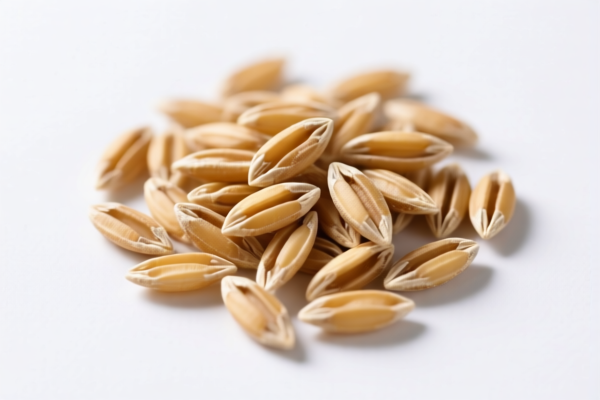
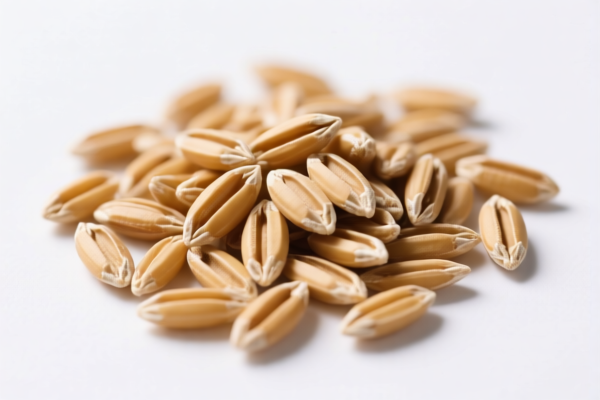
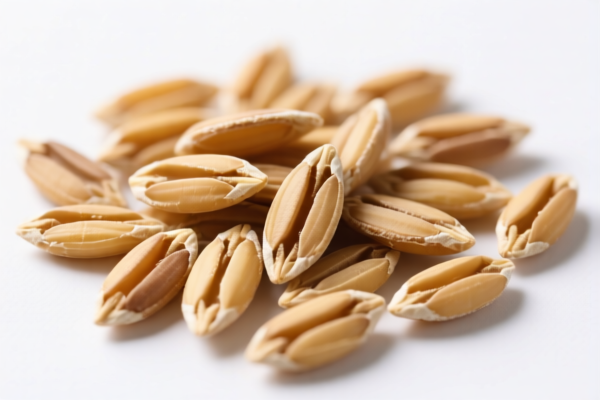
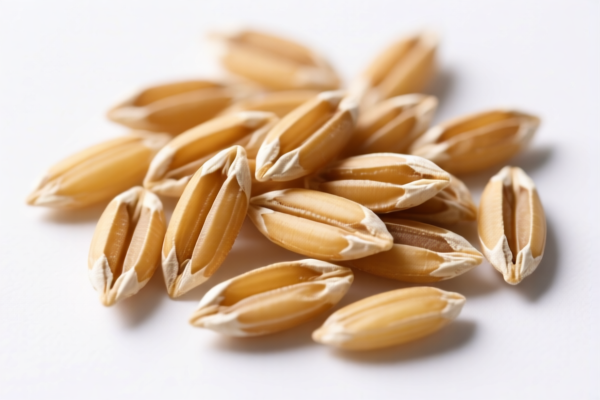
AI Analysis
🛥️ Buffalo/Marine Leather for Yacht Interiors: HS Code & Duty Breakdown (2026)
🌐 HS Code Reference & Customs Clearance Guide | 2026 Latest Tariff Analysis | Professional Clearance Strategy
📌 I. Product Definition: What is "Buffalo Grain Splits for Marine Interiors"?
This product refers to processed leather (specifically split leather from buffalo or horse hides) characterized by a "grain" texture, intended for use as interior trim or upholstery in yachts and marine vessels.
In international trade, the classification depends heavily on whether the item is considered: 1. Raw Material: Tanned leather used to make the upholstery (Classified under Ch. 41 or 42). 2. Finished Component: Upholstery parts or decorative trim already shaped for installation (Classified under Ch. 94 or Ch. 42).
⚠️ Critical Distinction Point:
- If the product is raw tanned leather sheets intended for further manufacturing →归入 4107.91.50.00
- If the product is finished leather goods/trims (e.g., pre-cut panels, decorative covers) →归入 4205.00.80.00 or 4205.00.10.00
- If the product is explicitly sold as a seat component or upholstery assembly →归入 9401.80.60.30
📦 II. HS Code Classification Details (2026 Latest Tariff Authority Comparison)
| HS Code | Product Description | Applicable Scenario | Material/Form Conflict? |
|---|---|---|---|
9401.80.60.30 |
Buffalo/Horse Skin Yacht Interior (Other Seats) | Upholstery parts, decorative trim for seats, compatible with "Other Seats" material requirements | ❌ Compatible with Ch. 94 (Furniture) as a component/decoration |
4205.00.80.00 |
Other Leather Articles (Non-Specific) | Finished leather goods/trims; "Leather" material requirement met; no conflict with "Other Leather Articles" catch-all | ✅ No Conflict with Ch. 42 (Leather Goods) |
4205.00.10.00 |
Other Leather Articles (Specific Subheading) | Tanned leather (Buffalo/Horse); used for yacht interiors as non-specific leather goods | ✅ No Conflict with Ch. 42 |
4107.91.50.00 |
Tanned Leather (Upholstery Leather) | Raw tanned leather (full-grain characteristics) intended for upholstery; "Upholstery Leather" use inferred | ✅ Compatible with Ch. 41 (Raw Tanned Leather) |
🔍 Key Reminder:
- Ch. 41 (4107) applies if it is raw tanned leather (even if split) meant for further processing.
- Ch. 42 (4205) applies if it is a finished article (e.g., ready-to-use trim, covers).
- Ch. 94 (9401) applies if it is classified as a seat component or integral part of furniture/upholstery.
💰 III. 2026 Latest Tariff Rate Breakdown (Including Additional Duties & Policy Surcharges)
✅ Applicable Country: United States (US)
✅ Origin: China (CN)
✅ Effective Date: From November 10, 2025 (inclusive)
🎯 1. 9401.80.60.30 — Buffalo/Horse Skin Yacht Interior (Seat Component)
| Item | Content |
|---|---|
| Base Rate | 0.0% (ad valorem) |
| USITC Surcharge | +25.0% (from USITC Footnote 9903.88.01) |
| IEEPA Surcharge | +10.0% (Targeting China/HK products, effective Nov 10, 2025) |
| Total Rate | 35.0% |
| Tax Calculation | CIF Value × 35% |
| De Minimis Eligibility | ❌ Not Eligible (deny_de_minimis) |
| Legal Basis Path | IEEPA:9903.01.25 → IEEPA:9903.01.24 → USITC:9401.80.60.30 → FOOTNOTE:9903.88.01 |
📌 Explanation:
- The "25% USITC Surcharge" is from Section 301 tariffs;
- The "10% IEEPA Surcharge" is from the International Emergency Economic Powers Act;
- Total 35% is a high tariff tier, requiring prior cost assessment!
🎯 2. 4205.00.80.00 — Other Leather Articles (Finished Trim/Goods)
| Item | Content |
|---|---|
| Base Rate | 0.0% (ad valorem) |
| USITC Surcharge | +25.0% |
| IEEPA Surcharge | +10.0% |
| Total Rate | 35.0% |
| Tax Calculation | CIF Value × 35% |
| De Minimis Eligibility | ❌ Not Eligible |
| Legal Basis Path | IEEPA:9903.01.25 → IEEPA:9903.01.24 → USITC:4205.00.80.00 → FOOTNOTE:9903.88.01 |
📌 Note:
- Same tax rate as seat components if classified as "finished leather articles";
- Whether it's "boat interior panels" or "leather trim strips," as long as it's a finished leather product, it falls under this category.
🎯 3. 4205.00.10.00 — Other Leather Articles (Specific Subheading)
| Item | Content |
|---|---|
| Base Rate | 0.0% (ad valorem) |
| USITC Surcharge | +25.0% |
| IEEPA Surcharge | +10.0% |
| Total Rate | 35.0% |
| Tax Calculation | CIF Value × 35% |
| De Minimis Eligibility | ❌ Not Eligible |
| Legal Basis Path | IEEPA:9903.01.25 → IEEPA:9903.01.24 → USITC:4205.00.10.00 → FOOTNOTE:9903.88.01 |
📌 Note:
- Also applies to tanned leather goods (non-specific use);
- If the product is sold as "leather interior decor" rather than "raw material," this classification is appropriate.
🎯 4. 4107.91.50.00 — Tanned Leather (Upholstery Leather)
| Item | Content |
|---|---|
| Base Rate | 2.8% (ad valorem) |
| USITC Surcharge | 0.0% |
| IEEPA Surcharge | +10.0% |
| Total Rate | 12.8% |
| Tax Calculation | CIF Value × 12.8% |
| De Minimis Eligibility | ❌ Not Eligible |
| Legal Basis Path | IEEPA:9903.01.25 → USITC:4107.91.50.00 |
📌 Important:
- Significantly lower tariff (12.8%) compared to finished leather articles (35%);
- Applies only if the product is raw tanned leather (e.g., split leather sheets) not yet made into finished articles;
- Must prove it is "Upholstery Leather" (full-grain characteristics, intended for further manufacturing);
- Risk: If customs deems it a "finished good," it will be reclassified to Ch. 42 (35%) + penalties.
🛠️ IV. Customs Clearance Practical Advice (Avoiding Pitfalls)
✅ 1. Documentation Checklist (Mandatory)
| Document | Required | Description |
|---|---|---|
| ✅ Product Spec Sheet | ✔️ | Must specify: Material (Buffalo/Horse Split), Finish (Grain), Usage (Marine Interior) |
| ✅ Photos (Clear Labeling) | ✔️ | Show texture, thickness, and any markings indicating "Upholstery Leather" or "Interior Trim" |
| ✅ Commercial Invoice | ✔️ | Critical: Must clearly state "Tanned Leather for Upholstery" OR "Leather Interior Trim" to match HS Code |
| ✅ Packing List | ✔️ | Detail if items are rolls (raw) or cut pieces (finished) |
| ✅ Third-Party Test Report | ✔️ | Optional: Proof of "Upholstery" suitability (e.g., abrasion resistance, salt-spray resistance) |
✅ 2. Declaration Tips (Key Mnemonic)
🔥 "Raw Leather Low, Finished High, Seat Part High, Misdeclare High!"
| Scenario | Correct Declaration | Wrong Declaration |
|---|---|---|
| Raw Tanned Leather Rolls | 4107.91.50.00 (12.8%) |
Declare as "Interior Trim" → 35% + Penalty |
| Finished Leather Panels | 4205.00.80.00 (35%) |
Declare as "Raw Leather" → Rejection + Fine |
| Seat Upholstery Components | 9401.80.60.30 (35%) |
Declare as "Leather Goods" → Minor discrepancy, but consistent rate |
| Mixed Shipment (Raw + Finished) | Split Declaration | Combined Declaration → Risk of full audit |
✅ 3. Special Case Handling
| Case | Handling Advice |
|---|---|
| OEM Custom Leather | Provide client order + design drawings to prove "Finished Article" status |
| Leather with Marine Coating | If coating is integral, still classified under Ch. 41/42; do not claim "Chemical Product" exemption |
| Small Samples | Not eligible for De Minimis ($800) due to IEEPA restrictions; declare properly |
| Pre-Cut Pieces | If pre-cut to fit seats, lean toward 4205 or 9401, not 4107 |
🌍 V. Global Market Clearance Comparison (2026 Latest)
| Country/Region | Recommended HS Code | Duty Rate | Certification Required | Notes |
|---|---|---|---|---|
| 🇺🇸 USA | 4107.91.50.00 (Raw) / 4205 (Finished) |
12.8% (Raw) / 35% (Finished) | None (Standard) | High tariff risk for finished goods |
| 🇨🇳 China | 4107.91.50.00 / 4205.00.00 |
2.8% (Raw) / 0% (Finished) | None | Lower duty base, but export controls may apply |
| 🇪🇺 EU | 4107.91.50.00 / 4205.00.00 |
4.0% (Raw) / 4.0% (Finished) | CE (if applicable) | No Section 301 equivalent |
| 🇦🇺 Australia | 4107.91.50.00 / 4205.00.00 |
5.0% (Raw/Finished) | None | Moderate duty |
| 🇯🇵 Japan | 4107.91.50.00 / 4205.00.00 |
3.0% (Raw) / 5.0% (Finished) | None | Low duty |
📌 Conclusion:
- USA is the highest-cost market for finished leather interior goods (35%);
- Raw leather has a significant advantage (12.8%) in the US compared to finished articles;
- Consider shipping as raw materials if feasible, and finishing locally in the US to save 22.2% in duties.
📌 VI. Common Errors & Pitfall Guide (Lessons Learned)
❌ Error 1: Declaring finished leather trims as raw leather (4107)
👉 Consequence: Customs reclassifies to 4205 (35%) + penalties + interest
👉 Avoid: Ensure the product is truly raw/tanned sheets, not cut/sewn panels.
❌ Error 2: Declaring seat components as general leather goods (4205)
👉 Consequence: No major duty difference (both 35%), but inconsistent description may trigger audit
👉 Avoid: Be specific: "Yacht Interior Seat Upholstery"
❌ Error 3: Ignoring IEEPA 10% Surcharge
👉 Consequence: Underpayment of duties, leading to hold/release delays
👉 Avoid: Always calculate Total Rate = Base + USITC + IEEPA
❌ Error 4: Using vague terms like "Leather Material" on Invoice
👉 Consequence: Customs cannot determine if it's Ch. 41 or 42 → Delay
👉 Avoid: Use precise terms: "Tanned Buffalo Split Leather for Upholstery" or "Finished Leather Interior Trim"
✅ Correct Declaration Example:
"Tanned Buffalo Split Leather, Grain Finish, Roll Form, Intended for Marine Interior Upholstery, Model BL-2026, No Finish/Coating Applied" →
4107.91.50.00
vs.
"Pre-Cut Buffalo Leather Interior Panels for Yacht Seats, Finished, Model YC-2026" →4205.00.80.00
🎯 VII. Conclusion: Professional Declaration, Save Time & Cost!
🎯 Remember the Mnemonic:
🔹 "Raw Leather 12.8%, Finished 35%, Seat Part 35%, Misdeclare Penalty!"
🔹 "HS Code Determines Life or Death, 22% Duty Difference, One Step Wrong, Thousands Lost!"
📌 Pro Tip:
If your product is split leather (not full-grain), ensure the invoice specifies "Split" to avoid disputes over "Upholstery Leather" standards.
Consider applying for an Advance Ruling from CBP to confirm whether your specific product is 4107 (12.8%) or 4205 (35%) before shipment.
📣 Immediate Action:
📞 Contact a professional customs broker + Provide Product Photos + Apply for HS Code Advance Ruling
🚀 Let your leather interiors clear customs smoothly, efficiently, and profitably!
✨ Professional Clearance Starts with Precise Classification!
💼 Every Cent of Cost is Worth Precise Calculation!
Customer Reviews
About HS Code Classification
The Harmonized System (HS) is an internationally standardized nomenclature developed by the World Customs Organization (WCO) to classify traded products. Over 200 countries use the HS system as the basis for customs tariffs, trade statistics, and import/export regulations.
Each HS code follows a hierarchical structure:
- Chapter (2 digits) — Broad category of goods (e.g., Chapter 84: Machinery and Mechanical Appliances)
- Heading (4 digits) — More specific grouping within the chapter
- Subheading (6 digits) — Internationally standardized breakdown, used by all WCO member countries
- National subdivisions (8-10 digits) — Country-specific extensions for further classification, such as US HTSUS 10-digit codes
Correct HS code classification is essential for smooth customs clearance, accurate duty payment, and compliance with trade regulations. Misclassification can lead to customs delays, overpayment of duties, or penalties.
When importing from CN to US, the applicable tariff rates may include:
- Most-Favored-Nation (MFN) rate — The standard duty rate applied to WTO members
- General rate — Applied to countries without trade agreements
- Trade remedy duties — Additional tariffs such as Section 301 (anti-dumping), Section 232 (national security), or countervailing duties
The information provided on this page is for reference purposes only. For official classification, please consult with your local customs authority or a licensed customs broker.