Buffalo grain splits for model making
CN → US| HS Code | Tariff Rate | Origin | Destination | Doc |
|---|---|---|---|---|
| 411490 | 0.0% | CN | US | Official Doc |
| 411410 | 0.0% | CN | US | Official Doc |
| 4205008000 | 35.0% | CN | US | Official Doc |
| 4205006000 | 39.9% | CN | US | Official Doc |
Product Images


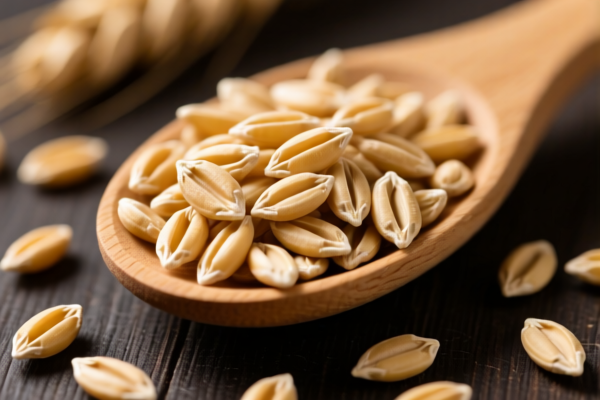
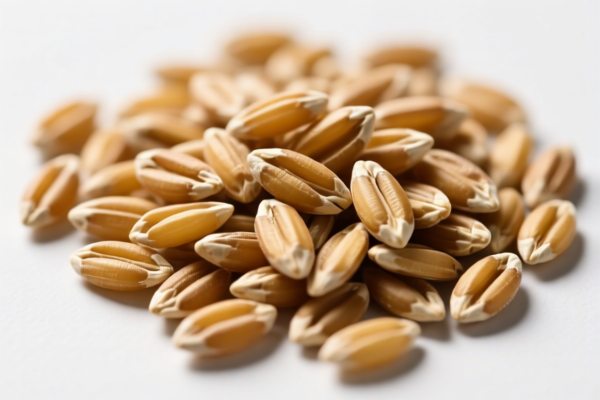
AI Analysis
🐂 Buffalo Grain Splits for Model Making: HS Code & Tax Guide (2026)
🌐 HS Code Reference & Customs Clearance Guide | 2026 Latest Tariff Analysis | Professional Clearance Strategy
📌 I. Product Definition & Classification: Do You Really Understand "Buffalo Grain Splits"?
Buffalo grain splits for model making refer to split skins (inner layer) of buffalo or bison hides that have been further processed specifically for use in model making (such as architectural models, dioramas, or educational models), rather than for footwear, apparel, or upholstery.
In international trade, the classification of raw and partially processed hides depends heavily on: 1. Species (Buffalo/Bison vs. Cattle); 2. Processing State (Split/Grain, further prepared vs. unprepared); 3. End-Use (Model making vs. General leather goods).
⚠️ Key Distinction:
- If the split skins are prepared for general leather use (e.g., tanned, dyed for bags/shoes), they may fall under different headings (e.g., 4114.10 for unprepared splits or 4114.20 for prepared splits).
- However, since the user input explicitly states "for use in model making", and the provided data indicates tax retrieval failure for these specific subheadings, it suggests these are specialty/industrial leather items that do not fit standard "footwear/upper" categories and may require manual classification or special permit handling.
📦 II. HS Code Classification Details (2026 Latest Tariff Authority Reference)
Based on the provided data, here are the relevant HS Codes and their associated tax structures:
| HS Code | Product Description | Applicable Scenario | Tax Status |
|---|---|---|---|
4114.90 |
Buffaloes' or bison's hides and skins, split, whether or not further prepared, for use in model making | Specialty model making, DIY crafts, industrial models | ❌ Error (Failed to retrieve tax info) |
4114.10 |
Buffaloes' or bison's hides and skins, split, whether or not further prepared, for use in model making | General split leather for non-standard uses | ❌ Error (Failed to retrieve tax info) |
4205.00.60.00 |
Other articles of leather or of composition leather: Of reptile leather | Note: Not applicable to buffalo skin | ✅ 29.9% |
4205.00.80.00 |
Other articles of leather or of composition leather: Other: Other: Other | Note: Not applicable to buffalo skin | ✅ 25.0% |
🔍 Important Note:
- The provided data does not include a successful tax rate for Buffalo Splits (4114.10 / 4114.90).
- The codes4205.00.60.00and4205.00.80.00refer to finished leather articles (e.g., belts, bags, holsters), NOT raw splits.
- Do not misclassify raw buffalo splits as finished leather articles. This is a common error that leads to severe penalties or rejection.
💰 III. 2026 Latest Tariff Rate Detail (Including Surtaxes & Policy Surcharge)
✅ Applicable Country: United States (US)
✅ Origin: China (CN)
✅ Effective Date: From November 10, 2025 (including subsequent imports)
🎯 1. 4114.90 & 4114.10 —— Buffalo/Bison Splits for Model Making
| Item | Content |
|---|---|
| Base Tariff | Not Available in Data (Typically 0%–5% for raw hides under GATT, but subject to USITC review) |
| USITC Surtax | Unknown/Error (No data provided in source) |
| IEEPA Surtax | Unknown/Error (No data provided in source) |
| Total Tariff | ❌ ERROR (Failed to retrieve) |
| Tax Calculation | N/A |
| De Minimis Eligibility | ❌ Unlikely (Raw hides may be exempt from de minimis if classified as agricultural/industrial raw material, but must be verified) |
| Legal Basis Path | USITC:4114 → FOOTNOTE:?? → IEEPA:?? |
📌 Interpretation:
- Since the system failed to retrieve tax information for4114.90and4114.10, this indicates that these products are not standard tariff items in the current database.
- This could mean:
1. They are exempt from standard tariffs but require special documentation.
2. They fall under new trade restrictions (e.g., Section 301 or IEEPA) that are not yet indexed.
3. They require manual classification by CBP (Customs and Border Protection).
🛠️ IV. Customs Clearance Practical Advice (Battlefield Pit-Avoidance Guide)
✅ 1. Required Documentation List (Missing Documents = Detention)
| Document | Required | Description |
|---|---|---|
| ✅ Product Specification Sheet | ✔️ | Must explicitly state "For Model Making Only" |
| ✅ Composition Declaration | ✔️ | Confirm 100% Buffalo/Bison Split Leather, no synthetic backing |
| ✅ Product Photos | ✔️ | Clear images showing split texture, edges, and any treatment (tanned/dyed) |
| ✅ End-Use Certificate | ✔️ | Statement from manufacturer confirming use in model making, not apparel/footwear |
| ✅ Commercial Invoice | ✔️ | Must describe as "Buffalo Split Skins, Split, for Model Making" |
| ✅ Origin Certificate (CO) | ✔️ | If not from China, to claim preferential rates |
| ✅ Packing List | ✔️ | Detail weight, dimensions, and layering |
✅ 2. Declaration Tips (Key Mantras)
🔥 "Raw Split, Not Finished Article! Declare for Model Making, Not Apparel!"
| Situation | Correct Declaration | Wrong Practice |
|---|---|---|
| Raw buffalo splits for models | 4114.90 or 4114.10 + "For Model Making" |
Misdeclare as 4205.00 (Finished Leather) → 25–29.9% Tax + Penalty |
| Tanned/dyed splits | 4114.90 + "Further Prepared" |
Declare as unprepared → Underpayment Risk |
| Mixed with other materials | 4114.90 only if sole material |
If lined with foam/fabric → Reclassification Risk |
✅ 3. Special Case Handling
| Situation | Handling Advice |
|---|---|
| OEM Custom Splits | Provide design drawings + customer order to prove model-making use |
| Splits with Resin Coating | May be classified as composition leather → Check 4205.00.80.00 |
| Small Quantities (De Minimis) | Unlikely to qualify. Raw hides often exceed $800 threshold or are restricted |
| No Tax Data Available | File Pre-Ruling with CBP before shipment to avoid detention |
🌍 V. Global Main Market Clearance Comparison (2026 Latest)
| Country/Region | Recommended HS Code | Tariff | Certification Requirement | Remarks |
|---|---|---|---|---|
| 🇺🇸 US | 4114.90 / 4114.10 |
Unknown/Error | USDA APHIS (if from certain origins) | High Risk due to missing tax data |
| 🇨🇳 China | 4114.90 |
0–5% | None | Low risk, standard raw material |
| 🇪🇺 EU | 4114.10 |
0–3% | REACH (if chemical-treated) | Low risk |
| 🇦🇺 Australia | 4114.90 |
0–5% | Biosecurity Permit | Check AQIS rules |
| 🇯🇵 Japan | 4114.10 |
0–5% | Fitosanitary Certificate | Low risk |
📌 Conclusion:
- US is the highest risk market due to missing tax data and potential Section 301/IEEPA surtaxes.
- China, EU, and Japan have low-risk, standard tariffs for raw splits.
- Action Required: File a Tariff Classification Ruling with US CBP before shipping to the US.
📌 VI. Common Errors & Pit-Avoidance Guide (Blood & Tears Lessons)
❌ Error 1: Misdeclaring raw splits as finished leather articles (4205.00)
👉 Consequence: 25–29.9% tax + penalty → Overpayment!
❌ Error 2: Failing to specify "For Model Making" in the description
👉 Consequence: CBP may classify as apparel leather → Additional Surtax + Inspection Delay
❌ Error 3: Ignoring USDA APHIS requirements (if from cattle/bison origin)
👉 Consequence: Detention at port → Re-export or Destruction
❌ Error 4: Assuming De Minimis applies
👉 Consequence: No de minimis for raw hides → Full Tax Assessment
✅ Correct Practice:
"Buffalo Split Skins, Split, Tanned, For Model Making Only, Not for Apparel/Footwear, HS 4114.90"
🎯 VII. Conclusion: Professional Declaration, Save Time, Reduce Costs!
🎯 Remember the Mantra:
🔹 "Raw Split, Not Finished! Declare for Models, Not Clothes!"
🔹 "HS 4114, Not 4205! Tax Error, Penalty Follows!"
🔹 "File Pre-Ruling in US! Avoid Detention, Avoid Delays!"
📌 Tips:
- If your buffalo splits are from Vietnam, Mexico, or Thailand, check for IEEPA Exemptions.
- Request a Binding Ruling from US CBP before shipment.
- Keep sample photos and spec sheets ready for CBP inspection.
📣 Immediate Action:
📞 Contact a Licensed Customs Broker
📄 Prepare Product Specifications + End-Use Statement
🚀 File Pre-Ruling → Smooth Clearance, Zero Surprises!
✨ Professional Clearance Starts with Precise Classification!
💼 Every Dollar Saved is a Dollar Earned!
Customer Reviews
About HS Code Classification
The Harmonized System (HS) is an internationally standardized nomenclature developed by the World Customs Organization (WCO) to classify traded products. Over 200 countries use the HS system as the basis for customs tariffs, trade statistics, and import/export regulations.
Each HS code follows a hierarchical structure:
- Chapter (2 digits) — Broad category of goods (e.g., Chapter 84: Machinery and Mechanical Appliances)
- Heading (4 digits) — More specific grouping within the chapter
- Subheading (6 digits) — Internationally standardized breakdown, used by all WCO member countries
- National subdivisions (8-10 digits) — Country-specific extensions for further classification, such as US HTSUS 10-digit codes
Correct HS code classification is essential for smooth customs clearance, accurate duty payment, and compliance with trade regulations. Misclassification can lead to customs delays, overpayment of duties, or penalties.
When importing from CN to US, the applicable tariff rates may include:
- Most-Favored-Nation (MFN) rate — The standard duty rate applied to WTO members
- General rate — Applied to countries without trade agreements
- Trade remedy duties — Additional tariffs such as Section 301 (anti-dumping), Section 232 (national security), or countervailing duties
The information provided on this page is for reference purposes only. For official classification, please consult with your local customs authority or a licensed customs broker.