Buffalo pattern sheet for electronic product housing
CN → US| HS Code | Tariff Rate | Origin | Destination | Doc |
|---|---|---|---|---|
| 7116205000 | 17.5% | CN | US | Official Doc |
| 7116204000 | 28.0% | CN | US | Official Doc |
| 9601908000 | 21.2% | CN | US | Official Doc |
| 9601906000 | 17.5% | CN | US | Official Doc |
Product Images

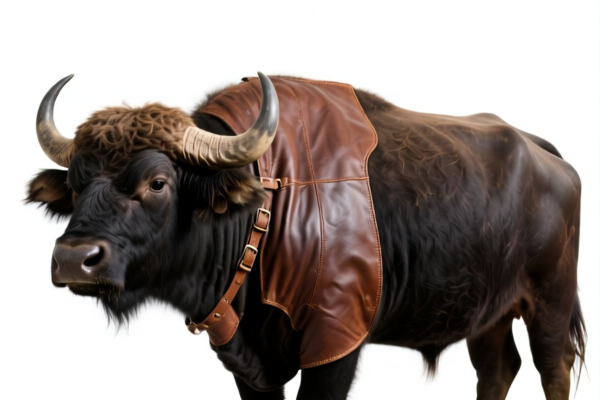
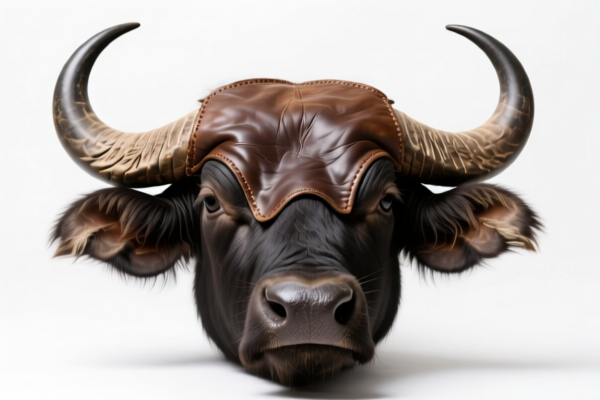
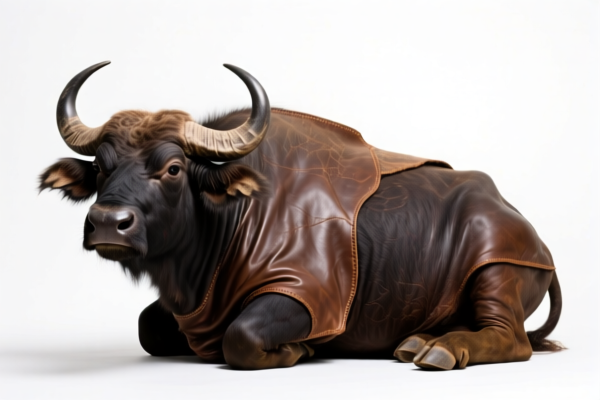
AI Analysis
🐂 Buffalo Pattern Sheet for Electronic Product Housing
🌐 HS Code Reference & Customs Clearance Guide | 2026 Latest Tariff Analysis | Professional Classification Strategy
📌 Part 1: Product Definition & Classification – What is a "Buffalo Pattern Sheet"?
The "Buffalo Pattern Sheet" refers to processed sheets or plates featuring a texture resembling buffalo horn or animal skin, used primarily as decorative housing components for consumer electronics (e.g., phone cases, laptop lids, speaker enclosures, tablet backs).
In international trade, its classification depends entirely on the material composition and function:
- Synthetic/Imitation Material: If made from resin, polymer, or synthetic materials designed to mimic the look of horn/stone → Classified under Chapter 71 (Imitation Jewelry/Articles) or Chapter 96 (Other Articles).
- Natural Material: If made from actual animal horn, hoof, or genuine stone/semi-precious stone → Classified under Chapter 71 (Natural Pearls/Stones) or Chapter 96 (Worked Horn/Ivory).
⚠️ Critical Distinction Point:
- If the material is synthetic but visually mimics horn/stone → Often falls under 7116.20 (Imitation jewelry/ornaments) if considered decorative, or 9601.90 (Worked horn/other materials) if considered a component.
- If the material is natural semi-precious stone with texture → Falls under 7116.20 (Other articles of natural pearls/stones).
- If the material is processed animal horn/hoof → Falls under 9601.90 (Worked bone/horn/hoof).
📦 Part 2: HS Code Classification Details (Based on Provided Data)
| HS Code | Product Description | Material Inference | Function/Use | Tax Detail Breakdown |
|--------|--------------------------|--------------------|--------------------------|
| 7116.20.50.00 | Imitation Horn/Stone Sheet | Synthetic material mimicking horn or textured gem/semi-precious stone | Electronic product housing component | Total Tax: 17.5%
• Base Tariff: 0.0%
• Additional Tariff: 7.5%
• Section 301 (122 Clause): 10% |
| 7116.20.40.00 | Natural Semi-Precious Stone Sheet | Natural stone with inherent texture, sheet shape | Electronic product housing component/spare part | Total Tax: 28.0%
• Base Tariff: 10.5%
• Additional Tariff: 7.5%
• Section 301 (122 Clause): 10% |
| 9601.90.80.00 | Other Worked Animal Horn/Hoof Sheet | Animal horn material, processed into sheet form | General "catch-all" for other articles of worked horn/bone | Total Tax: 21.2%
• Base Tariff: 3.7%
• Additional Tariff: 7.5%
• Section 301 (122 Clause): 10% |
| 9601.90.60.00 | Worked Bone/Horn/Hoof Crafts | Biomaterial (horn/hoof), processed sheet | Handicrafts or other articles of bone/horn/hoof | Total Tax: 17.5%
• Base Tariff: 0.0%
• Additional Tariff: 7.5%
• Section 301 (122 Clause): 10% |
🔍 Key Insight:
- The Total Tax varies significantly based on material origin (Synthetic vs. Natural Stone vs. Animal Horn).
- Section 301 Tariffs (10%) and Additional Tariffs (7.5%) apply to all options for goods originating from China to the US, as indicated by the data.
- Base Tariffs range from 0% to 10.5%, depending on the specific subheading.
💰 Part 3: 2026 Tariff Rate Breakdown (US Market)
✅ Applicable Country: United States (US)
✅ Origin: China (CN)
✅ Effective Date: Current rates apply (Section 301 tariffs are active)
🎯 1. 7116.20.50.00 – Imitation Horn/Stone Sheet (Synthetic)
| Item | Content |
|---|---|
| Base Tariff | 0% (ad valorem) |
| Additional Tariff (Section 301) | +7.5% |
| Section 301 Clause 122 | +10% |
| Total Tariff Rate | 17.5% |
| Tax Calculation | CIF Value × 17.5% |
| De Minimis Exemption | ❌ Not Eligible (Section 301 tariffs generally negate de minimis benefits for direct imports from China) |
| Legal Basis | HTSUS:7116.20.50 → USITC:7116.20.50 → Section 301:122 |
📌 Explanation:
- This code assumes the product is a synthetic imitation of horn or stone.
- Lowest base tariff (0%), but still subject to 17.5% total duties.
- Best option if you want to minimize base duty, but you must prove it is not natural stone.
🎯 2. 7116.20.40.00 – Natural Semi-Precious Stone Sheet
| Item | Content |
|---|---|
| Base Tariff | 10.5% |
| Additional Tariff (Section 301) | +7.5% |
| Section 301 Clause 122 | +10% |
| Total Tariff Rate | 28.0% |
| Tax Calculation | CIF Value × 28.0% |
| De Minimis Exemption | ❌ Not Eligible |
| Legal Basis | HTSUS:7116.20.40 → USITC:7116.20.40 → Section 301:122 |
📌 Explanation:
- This code applies if the product contains natural stone (e.g., agate, jasper, or other textured stones).
- Highest base tariff (10.5%), leading to the highest total tax (28.0%).
- Avoid this code unless the product is genuinely made of natural stone. Misclassification can lead to audits and penalties.
🎯 3. 9601.90.80.00 – Other Worked Animal Horn/Hoof Sheet
| Item | Content |
|---|---|
| Base Tariff | 3.7% |
| Additional Tariff (Section 301) | +7.5% |
| Section 301 Clause 122 | +10% |
| Total Tariff Rate | 21.2% |
| Tax Calculation | CIF Value × 21.2% |
| De Minimis Exemption | ❌ Not Eligible |
| Legal Basis | HTSUS:9601.90.80 → USITC:9601.90.80 → Section 301:122 |
📌 Explanation:
- This is a "catch-all" for worked animal materials (horn, hoof, bone) that don’t fit specific descriptions.
- Moderate total tax (21.2%).
- Use if the product is genuinely made of animal horn but doesn’t fit the "crafts" description.
🎯 4. 9601.90.60.00 – Worked Bone/Horn/Hoof Crafts
| Item | Content |
|---|---|
| Base Tariff | 0.0% |
| Additional Tariff (Section 301) | +7.5% |
| Section 301 Clause 122 | +10% |
| Total Tariff Rate | 17.5% |
| Tax Calculation | CIF Value × 17.5% |
| De Minimis Exemption | ❌ Not Eligible |
| Legal Basis | HTSUS:9601.90.60 → USITC:9601.90.60 → Section 301:122 |
📌 Explanation:
- This code applies if the product is considered a handicraft or decorative item made of animal horn/hoof/bone.
- Lowest total tax (17.5%) tied with7116.20.50.00.
- Key Requirement: Must be classified as a "craft" or "other article" rather than a mere electronic component.
🛠️ Part 4: Customs Clearance Practical Advice (Pitfall Avoidance)
✅ 1. Documentation Checklist (Mandatory)
| Document | Required? | Notes |
|---|---|---|
| ✅ Product Specification Sheet | ✔️ | Must clearly state material composition (e.g., "Polymer resin with buffalo texture" vs. "Natural Agate Sheet") |
| ✅ Product Photos | ✔️ | High-res images showing texture, thickness, and any logos/branding |
| ✅ Commercial Invoice | ✔️ | Describe as "Buffalo Pattern Decorative Sheet for Electronics Housing" – avoid vague terms like "Plastic Sheet" |
| ✅ Material Test Report | ✔️ | Crucial: Provide lab test results proving material is synthetic (for 7116.20.50) or natural (for 7116.20.40). This determines HS Code. |
| ✅ Packing List | ✔️ | Detail dimensions, weight, and packaging type |
✅ 2. Classification Strategy (Key Rules)
🔥 "Material Defines Code, Not Just Appearance!"
| Scenario | Recommended HS Code | Reason |
|---|---|---|
| Synthetic Resin/Plastic with buffalo texture | 7116.20.50.00 |
Lowest tax (17.5%), classified as imitation article |
| Natural Stone (e.g., Agate, Onyx) | 7116.20.40.00 |
Highest tax (28.0%), classified as natural stone |
| Animal Horn/Hoof (Craft/Decorative) | 9601.90.60.00 |
Low tax (17.5%), but must prove it's a "craft" or "other article" |
| Animal Horn/Hoof (General Component) | 9601.90.80.00 |
Moderate tax (21.2%), if not considered a craft |
📌 Warning:
- Do not misclassify synthetic materials as natural stone to avoid higher taxes. US Customs (CBP) frequently audits misclassified goods.
- Do not describe the product as "plastic" if it is intended to be classified under Chapter 71. Use terms like "imitation horn" or "textured decorative sheet."
✅ 3. Special Cases
| Situation | Handling Advice |
|---|---|
| Hybrid Material (e.g., plastic core with stone veneer) | Classify based on essential character. If stone veneer is dominant, may fall under 7116.20.40.00. Consult a customs broker. |
| OEM Custom Parts | Provide end-use documentation (e.g., "Used in iPhone 15 Pro Max Housing") to support classification as a component. However, Chapter 71/96 are often used for decorative sheets regardless of end-use. |
| Samples vs. Commercial Goods | Tariffs apply to all imports. Samples from China to the US still incur duties unless shipped via courier with de minimis (but Section 301 may negate this). |
🌍 Part 5: Global Market Comparison (2026)
| Country/Region | Recommended HS Code | Estimated Tariff | Key Certification | Note |
|---|---|---|---|---|
| 🇺🇸 USA | 7116.20.50.00 / 9601.90.60.00 |
17.5% | None specific | High Section 301 tariffs apply |
| 🇪🇺 EU | 3926.90 / 9601.00 |
0-6.5% | CE (if electronic) | Lower base tariffs, no Section 301 |
| 🇬🇧 UK | 3926.90 / 9601.00 |
0-6.5% | UKCA | Post-Brexit tariffs may vary |
| 🇨🇳 China | 3926.90 / 9601.00 |
0-10% | CCC (if electronic) | Import duties may apply |
📌 Conclusion:
- USA remains the most expensive market due to Section 301 tariffs.
- EU/UK offer more favorable rates, but compliance with CE/UKCA for electronic components is stricter.
📌 Part 6: Common Mistakes & Pitfalls
❌ Mistake 1: Classifying synthetic sheets as 7116.20.40.00 (Natural Stone)
👉 Consequence: Overpayment of tax (28% vs 17.5%), plus potential fraud penalties.
❌ Mistake 2: Using "Plastic Sheet" as the product description
👉 Consequence: CBP may reclassify under Chapter 39 (3926.90), leading to different duty rates and delays.
❌ Mistake 3: Ignoring Section 301 Clause 122
👉 Consequence: Underpayment by 10%. CBP will assess back taxes + interest.
✅ Correct Approach:
"Buffalo Pattern Decorative Sheet, Material: Synthetic Polymer, for Electronics Housing, Model XYZ"
🎯 Part 7: Conclusion – Smart Classification, Cost Optimization!
🎯 Remember the Golden Rules:
🔹 "Material First, Then Function" – Synthetic vs. Natural changes everything.
🔹 "17.5% is the Sweet Spot" – Both7116.20.50.00and9601.90.60.00offer 17.5% total tax. Choose based on actual material.
🔹 "Avoid 28.0%" – Natural stone classification (7116.20.40.00) is the most expensive.🔹 "Section 301 is Unavoidable for China Origin" – Factor in the 17.5% minimum cost.
📌 Pro Tip:
If your product is made of biomaterials (e.g., plant-based resins), consult a customs broker to see if it qualifies for Chapter 39 or Chapter 46, which may have different duty structures.
Always request a Binding Ruling from US CBP if the value is high, to ensure classification accuracy.
📣 Immediate Action:
📞 Contact a licensed customs broker.
📄 Provide material test reports.
🚀 Optimize your supply chain to minimize duty impact.
✨ Precise Classification, Seamless Customs, Maximum Profit!
💼 Every cent counts in global trade!
Customer Reviews
About HS Code Classification
The Harmonized System (HS) is an internationally standardized nomenclature developed by the World Customs Organization (WCO) to classify traded products. Over 200 countries use the HS system as the basis for customs tariffs, trade statistics, and import/export regulations.
Each HS code follows a hierarchical structure:
- Chapter (2 digits) — Broad category of goods (e.g., Chapter 84: Machinery and Mechanical Appliances)
- Heading (4 digits) — More specific grouping within the chapter
- Subheading (6 digits) — Internationally standardized breakdown, used by all WCO member countries
- National subdivisions (8-10 digits) — Country-specific extensions for further classification, such as US HTSUS 10-digit codes
Correct HS code classification is essential for smooth customs clearance, accurate duty payment, and compliance with trade regulations. Misclassification can lead to customs delays, overpayment of duties, or penalties.
When importing from CN to US, the applicable tariff rates may include:
- Most-Favored-Nation (MFN) rate — The standard duty rate applied to WTO members
- General rate — Applied to countries without trade agreements
- Trade remedy duties — Additional tariffs such as Section 301 (anti-dumping), Section 232 (national security), or countervailing duties
The information provided on this page is for reference purposes only. For official classification, please consult with your local customs authority or a licensed customs broker.