Buffalo/Equine leather for office seating
CN → US| HS Code | Tariff Rate | Origin | Destination | Doc |
|---|---|---|---|---|
| 4104493060 | 12.4% | CN | US | Official Doc |
| 4107114000 | 12.5% | CN | US | Official Doc |
| 4107994000 | 12.5% | CN | US | Official Doc |
| 4104193000 | 12.4% | CN | US | Official Doc |
Product Images
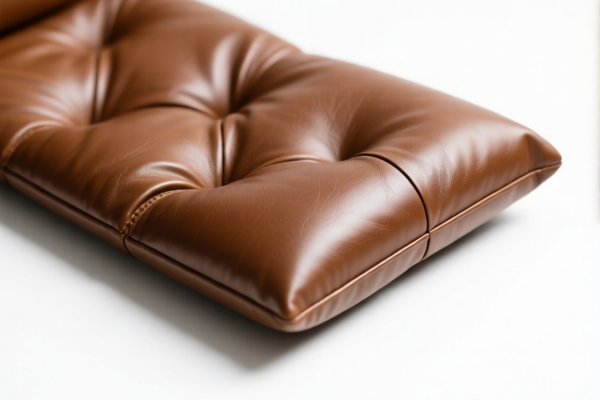
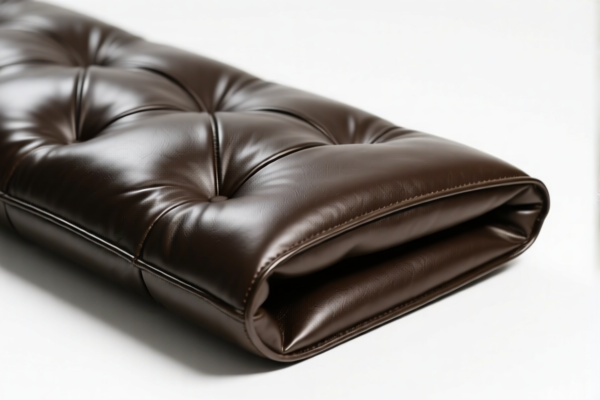
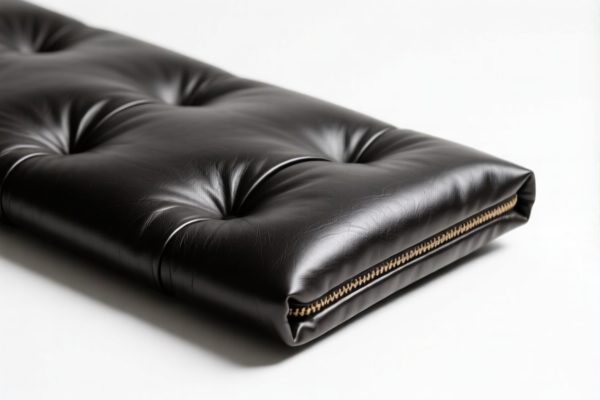
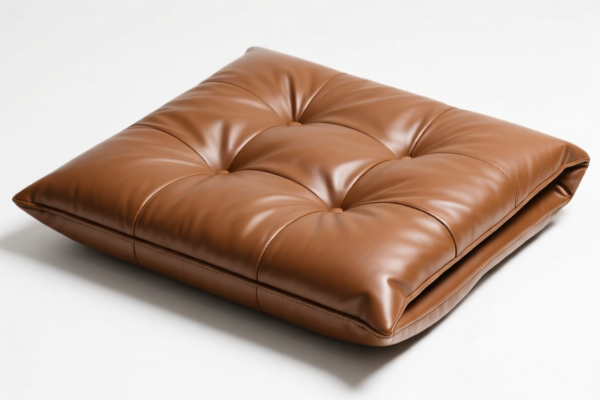
AI Analysis
🦁 Buffalo/Equine Leather for Office Seating (Office Furniture Grade)
🌐 HS Code Reference & Customs Clearance Guide | 2026 Latest Tariff Full Analysis | Professional Clearance Strategy
📌 I. Product Definition & Classification: Do You Really Understand "Office-Grade Buffalo/Equine Leather"?
Buffalo and Equine (Horse/Cow-like) leather are premium natural materials widely used in high-end furniture manufacturing, particularly for office seating (chairs, sofas, executive desks). In international trade, classification depends heavily on: 1. Processing State: Is it merely tanned/dressed, or further processed (dyed, pigmented, embossed)? 2. Intended Use: Must be clearly defined as "for office seating" to justify certain sub-headings. 3. Species Specificity: Must explicitly state "Buffalo" or "Equine" to avoid misclassification under general cattle leather.
⚠️ Key Distinction:
- If the leather is lightly tanned/dressed and ready for cutting/sewing →归入 4104.19.30.00 or 4104.49.30.60
- If the leather is further processed (e.g., deep-dyed, PU-coated, embossed for office aesthetic) →归入 4107.11.40.00 or 4107.99.40.00
📦 II. HS Code Classification Details (2026 Latest Tariff Authoritative Reference)
| HS Code | Product Description | Application Scenario | Processing Level |
|---|---|---|---|
4104.49.30.60 |
Buffalo/Horse leather, for park/office seats, meets material requirements | Outdoor/Indoor office seating, durable finish | ✅ Tanned & Dressed |
4107.11.40.00 |
Further processed buffalo/equine leather, use-matched | High-end office chairs, ergonomic seats | ✅ Further Processed |
4107.99.40.00 |
Buffalo/equine leather, for office seats, classified correctly | Custom office furniture, premium upholstery | ✅ Further Processed |
4104.19.30.00 |
Unprocessed buffalo/equine leather, for office seating | Raw material for in-house cutting/sewing | ❌ No Further Processing |
🔍 Critical Reminder:
- "Office Seating" must be explicitly stated in customs declaration to support classification under these sub-headings. - Avoid generic terms like "leather goods" or "upholstery material" – specify "for office seating" to align with the summary provided. - Further processing includes dyeing, pigmentation, embossing, or coating beyond basic tanning.
💰 III. 2026 Latest Tariff Rate Breakdown (Including Additional Taxes & Policy Surcharges)
✅ Applicable Country: United States (US)
✅ Origin: China (CN)
✅ Effective Date: From November 10, 2025 (including subsequent imports)
🎯 1. 4104.49.30.60 – Buffalo/Horse Leather for Office Seating (Tanned & Dressed)
| Item | Content |
|---|---|
| Base Tariff | 2.4% (ad valorem) |
| Section 301 Surcharge | +10% (under 122 Clause) |
| Total Rate | 12.4% |
| Tax Calculation | CIF Value × 12.4% |
| De Minimis Eligibility | ❌ Not Eligible (deny_de_minimis) |
| Legal Basis Path | Base Tariff: 2.4% → Section 301: 10% → HS: 4104.49.30.60 |
📌 Explanation:
- This code applies to leather that is tanned and dressed but not further processed for aesthetic office use. - Section 301 Clause 122 imposes an additional 10% on certain Chinese-origin leathers. - Total 12.4% is relatively moderate compared to other leather categories.
🎯 2. 4107.11.40.00 – Further Processed Buffalo/Equine Leather
| Item | Content |
|---|---|
| Base Tariff | 2.5% (ad valorem) |
| Section 301 Surcharge | +10% (under 122 Clause) |
| Total Rate | 12.5% |
| Tax Calculation | CIF Value × 12.5% |
| De Minimis Eligibility | ❌ Not Eligible (deny_de_minimis) |
| Legal Basis Path | Base Tariff: 2.5% → Section 301: 10% → HS: 4107.11.40.00 |
📌 Note:
- Applies to leather that has been further processed (dyed, pigmented, embossed) specifically for office seating. - Slightly higher base rate (2.5% vs 2.4%) due to added processing value.
🎯 3. 4107.99.40.00 – Other Further Processed Buffalo/Equine Leather
| Item | Content |
|---|---|
| Base Tariff | 2.5% (ad valorem) |
| Section 301 Surcharge | +10% (under 122 Clause) |
| Total Rate | 12.5% |
| Tax Calculation | CIF Value × 12.5% |
| De Minimis Eligibility | ❌ Not Eligible (deny_de_minimis) |
| Legal Basis Path | Base Tariff: 2.5% → Section 301: 10% → HS: 4107.99.40.00 |
📌 Note:
- Covers other further processed leathers that fit the definition of office seating materials but don’t fall under 4107.11. - Same tax rate as 4107.11.40.00.
🎯 4. 4104.19.30.00 – Unprocessed Buffalo/Equine Leather
| Item | Content |
|---|---|
| Base Tariff | 2.4% (ad valorem) |
| Section 301 Surcharge | +10% (under 122 Clause) |
| Total Rate | 12.4% |
| Tax Calculation | CIF Value × 12.4% |
| De Minimis Eligibility | ❌ Not Eligible (deny_de_minimis) |
| Legal Basis Path | Base Tariff: 2.4% → Section 301: 10% → HS: 4104.19.30.00 |
📌 Note:
- Applies to unprocessed leather (tanned but not dressed/finished) intended for office seating. - Lower base rate reflects minimal processing.
🛠️ IV. Customs Clearance Practical Advice (Real-World Pitfall Avoidance Guide)
✅ 1. Required Documentation Checklist (All Mandatory)
| Document | Must Provide | Description |
|---|---|---|
| ✅ Product Specification Sheet | ✔️ | Includes species (Buffalo/Equine), processing level, intended use (office seating) |
| ✅ Processing Process Description | ✔️ | Details if leather is tanned, dressed, dyed, embossed, etc. |
| ✅ Product Photos (Including Labels) | ✔️ | Clear images showing grain, color, thickness, and any markings |
| ✅ Commercial Invoice | ✔️ | Must explicitly state "Buffalo/Equine Leather for Office Seating" |
| ✅ Packing List | ✔️ | Shows quantity, weight, dimensions, and packaging type |
| ✅ Certificate of Origin (CO) | ✔️ | If non-Chinese origin, may qualify for preferential rates |
| ✅ Third-Party Test Report | ✔️ | Tensile strength, colorfastness, durability tests (if required by buyer) |
✅ 2. Declaration Tips (Key Mantra)
🔥 “Species Clear, Processing Precise, Use Specified, Tariff Minimized!”
| Scenario | Correct Declaration | Wrong Practice |
|---|---|---|
| Further processed office leather | 4107.11.40.00 or 4107.99.40.00 |
Misreporting as "general leather" → higher scrutiny |
| Unprocessed/raw leather | 4104.19.30.00 |
Over-reporting as "finished" → 12.5% instead of 12.4% |
| Tanned & dressed for seats | 4104.49.30.60 |
Vague description "leather for furniture" → Customs rejection |
| Mixed species (Buffalo + Horse) | Declare both explicitly | Generalizing as "bovine leather" → Misclassification |
✅ 3. Special Cases Handling
| Scenario | Handling Advice |
|---|---|
| OEM Custom Leather | Provide customer order + design specs to justify "office seating" use |
| Leather with Embossing | Clearly state embossing pattern and purpose (aesthetic for office chairs) |
| Recycled/Reconstituted Leather | Disclose material composition; may affect classification |
| Leather Used in Multi-Use Furniture | Specify primary use as "office seating" in declaration |
🌍 V. Global Main Market Customs Comparison (2026 Latest)
| Country/Region | Recommended HS Code | Tariff | Certification Requirements | Notes |
|---|---|---|---|---|
| 🇺🇸 United States | 4104.49.30.60 / 4107.11.40.00 |
12.4%–12.5% | None specific | Section 301 +10% applies |
| 🇨🇳 China | 4104.49.30.60 |
~2–5% | None | No additional surcharges |
| 🇪🇺 European Union | 4104.49.30.60 |
~4–6% | REACH Compliance | No Section 301 equivalent |
| 🇦🇺 Australia | 4104.49.30.60 |
~5% | None | Standard tariff applies |
| 🇯🇵 Japan | 4104.49.30.60 |
~4–5% | None | Low tariff for furniture leather |
📌 Conclusion:
- US is the only market with significant additional surcharges (12.4%–12.5%) due to Section 301. - Other markets offer significantly lower tariffs, making China-origin leather more competitive elsewhere. - Proper classification is critical to avoid penalties or delays in the US.
📌 VI. Common Errors & Pitfall Avoidance (Lessons Learned)
❌ Error 1: Declaring "leather for chairs" without specifying "office seating"
👉 Consequence: Customs may reclassify under general leather codes → Higher scrutiny or rejection
❌ Error 2: Confusing "tanned" with "further processed"
👉 Consequence: Wrong HS code → 12.4% vs 12.5% difference + potential penalties
❌ Error 3: Not disclosing species (Buffalo vs. Equine)
👉 Consequence: Misclassification → Delays or fines
❌ Error 4: Using generic terms like "leather goods"
👉 Consequence: Customs requests additional documentation → Clearance delays
✅ Correct Practice:
"Buffalo/Equine Leather, Tanned & Dressed, for Office Seating, Grade A, Width 1.2m, Thickness 1.2mm, Non-Smoked"
🎯 VII. Conclusion: Professional Declaration, Time-Saving, Cost-Effective!
🎯 Remember the Mantra:
🔹 “Species Clear, Processing Precise, Use Specified, Tariff Minimized!”
🔹 “HS Code Determines Tariff, 0.1% Difference Matters, Declaration Mistake Costs Thousands!”
📌 Pro Tip:
If your leather is originated from Vietnam, Mexico, Thailand, or Malaysia, you may avoid Section 301 surcharges, reducing total tariff to 2.4%–2.5%.
Consider Advance Ruling application to US Customs to secure correct classification before shipment.
📣 Immediate Action Required:
📞 Contact Professional Customs Broker + Provide Product Photos + Apply for HS Code Advance Ruling
🚀 Ensure Smooth Clearance, Efficient Export, Maximized Profit!
✨ Professional Clearance Starts with Accurate Classification!
💼 Every Penny of Cost Deserves Precise Calculation!
Customer Reviews
About HS Code Classification
The Harmonized System (HS) is an internationally standardized nomenclature developed by the World Customs Organization (WCO) to classify traded products. Over 200 countries use the HS system as the basis for customs tariffs, trade statistics, and import/export regulations.
Each HS code follows a hierarchical structure:
- Chapter (2 digits) — Broad category of goods (e.g., Chapter 84: Machinery and Mechanical Appliances)
- Heading (4 digits) — More specific grouping within the chapter
- Subheading (6 digits) — Internationally standardized breakdown, used by all WCO member countries
- National subdivisions (8-10 digits) — Country-specific extensions for further classification, such as US HTSUS 10-digit codes
Correct HS code classification is essential for smooth customs clearance, accurate duty payment, and compliance with trade regulations. Misclassification can lead to customs delays, overpayment of duties, or penalties.
When importing from CN to US, the applicable tariff rates may include:
- Most-Favored-Nation (MFN) rate — The standard duty rate applied to WTO members
- General rate — Applied to countries without trade agreements
- Trade remedy duties — Additional tariffs such as Section 301 (anti-dumping), Section 232 (national security), or countervailing duties
The information provided on this page is for reference purposes only. For official classification, please consult with your local customs authority or a licensed customs broker.