Buffalo/Horse Grain Leather Collar
CN → US| HS Code | Tariff Rate | Origin | Destination | Doc |
|---|---|---|---|---|
| 4203300000 | 37.7% | CN | US | Official Doc |
| 6217109550 | 32.1% | CN | US | Official Doc |
| 4203406000 | 35.0% | CN | US | Official Doc |
| 4107114000 | 12.5% | CN | US | Official Doc |
| 4107914000 | 12.5% | CN | US | Official Doc |
Product Images


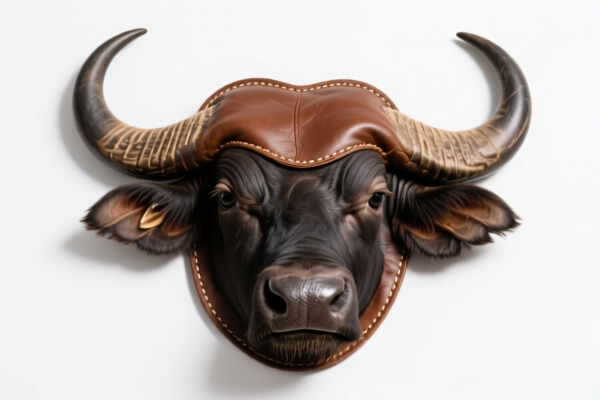
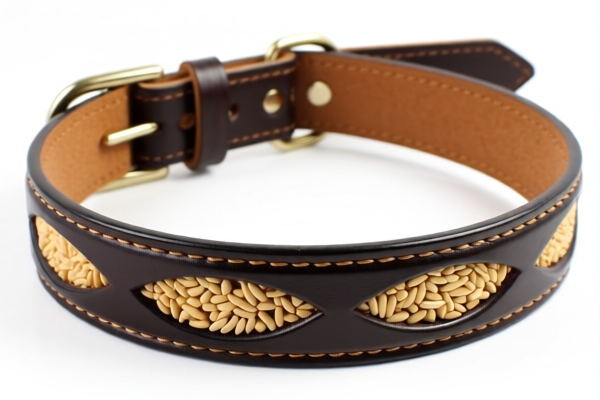
AI Analysis
Here is the comprehensive HS Code Classification & Customs Clearance Guide for Buffalo/Horse Grain Leather Collar, styled as a professional Wiki article with high visual impact and actionable customs strategies.
🦌🧵 The Ultimate Guide to Classifying "Buffalo/Horse Grain Leather Collar"
🌐 HS Code Mastery | US Tariff Analysis (2024-2025) | Strategic Customs Clearance
Stop guessing the right code. Start saving money on duties. Below is the definitive breakdown for Leather Belts/Collars.
📌 I. Product Definition: What is a "Leather Collar"?
In the global trade of leather goods, the term "Collar" in the context of "Buffalo/Horse Grain Leather" almost universally refers to a Belt (a strap worn around the waist) or a Leather Collar for Animals (pets/dogs). However, the classification logic differs drastically based on the intended use and the specific HS Code chapters.
The Core Classification Dilemma: 1. Is it a Fashion Accessory? (Belt for humans) → Chapter 42 (Articles of leather; trunks/handbags) or Chapter 62 (Articles of apparel). 2. Is it Raw Material? (Raw leather hide) → Chapter 41 (Raw hides and skins). 3. Is it an Animal Accessory? (Dog collar) → Chapter 42 (Pet accessories) or Chapter 62 (Clothing accessories).
⚠️ Critical Insight: The term "Grain Leather" (全粒皮) indicates the leather is not split and retains the natural grain. "Buffalo/Horse" specifies the animal source. This distinction is vital for the "Base Tariff" calculation.
📦 II. HS Code Classification Matrix (2026 Analysis)
Based on the provided data, here are the 5 Primary HS Codes applicable to your product, ranked by classification logic and tax implications.
| # | HS Code | Product Logic & Summary | Total Duty Rate | Tax Composition Breakdown |
|---|---|---|---|---|
| 1 | 4203.30.00.00 | ✅ High-Fidelity Match Material: Leather. Form: Belt. Logic: Perfectly fits the definition of "Leather Belts". |
37.7% | Base: 2.7% Add'l: 25.0% (Sec 301) 122 Clause: 10% |
| 2 | 6217.10.95.50 | 🧩 Accessory Approach Logic: Classified as "Other Clothing Accessories" (Belts). Condition: Not under Chapter 6212 (Girdles). |
32.1% | Base: 14.6% Add'l: 7.5% (Sec 301) 122 Clause: 10% |
| 3 | 4203.40.60.00 | 🧵 Broad Accessory Category Logic: "Other leather articles of apparel & accessories". Condition: Includes belts as "Other". |
35.0% | Base: 0.0% Add'l: 25.0% (Sec 301) 122 Clause: 10% |
| 4 | 4107.11.40.00 | 🐂 Raw Material Route Logic: Buffalo Grain Leather (Raw/Untanned/Specific form). Condition: Focuses on the hide nature, not the finished belt. |
12.5% | Base: 2.5% Add'l: 0.0% 122 Clause: 10% |
| 5 | 4107.91.40.00 | 🐎 Generic Leather Route Logic: Buffalo/Other Animal Grain Leather. Condition: Fits the broad "Grain" definition for non-bovine specific hides. |
12.5% | Base: 2.5% Add'l: 0.0% 122 Clause: 10% |
🔍 The Tax Trap Warning: * Codes 4203 & 6217 (Finished Goods): High tariffs (32% - 37.7%) due to Section 301 (25%) + Section 122 (10%). * Codes 4107 (Raw Leather): Low tariffs (12.5%). BUT, you cannot declare a finished belt as raw leather. This is a classification fraud risk if the product is already sewn/buckled.
💰 III. Deep Dive: Tariff Structure & Legal Basis
🎯 Scenario A: The "Finished Belt" Route (Codes 4203.30 / 4203.40 / 6217.10)
Most common for actual products.
| Component | Rate | Legal Source | Description |
|---|---|---|---|
| Base Tariff | 0.0% - 14.6% | Harmonized Tariff Schedule (HTS) | Varies by specific subheading for finished goods. |
| Section 301 Add-on | 25.0% (or 7.5%) | USTR Executive Order 9903 | Applied to Chinese-origin leather apparel/accessories. |
| Section 122 Clause | 10.0% | USTR Executive Order 9904 | Additional "122" tariff on Chinese imports (often applied to leather). |
| Total Effective Rate | 37.7% (Max) | Combined | 301 + 122 + Base |
⚠️ Warning: If you declare "Leather Belt" (Code 4203.30), you are hit with the 2.7% Base + 25% (301) + 10% (122) = 37.7%. This is the standard cost for finished leather accessories.
🎯 Scenario B: The "Raw Leather" Route (Codes 4107.11 / 4107.91)
Only valid if the product is not a finished belt.
| Component | Rate | Legal Source | Description |
|---|---|---|---|
| Base Tariff | 2.5% | HTS Chapter 41 | Low rate for raw/processed hides. |
| Section 301 Add-on | 0.0% | USTR List | Crucially: Raw leather hides often have 0% Section 301. |
| Section 122 Clause | 10.0% | USTR Executive Order 9904 | Still applies to Chinese raw hides. |
| Total Effective Rate | 12.5% | Combined | Significantly lower than finished goods. |
⚠️ Red Flag: If your product has a buckle, holes, and is sewn, declaring it under 4107 is illegal. Customs will reclassify it to 4203 and assess penalties + back taxes.
🛠️ IV. Customs Clearance Strategy: How to Avoid Fines & Delays
✅ 1. Material Declaration (The "Grain" Factor)
- Action: Clearly state "Buffalo/Horse Grain Leather" on the commercial invoice.
- Why: "Grain Leather" (Full Grain) proves the material quality but does not change the chapter (42 vs 41).
- Risk: If you omit "Grain," Customs may assume lower quality or misclassify under generic leather codes, leading to audits.
✅ 2. Product Form Verification (Belt vs. Hide)
- Scenario: Is the item a Belt (worn by humans) or a Dog Collar?
- Human Belt: Must use 4203 (37.7% tax).
- Dog Collar: Can sometimes be argued under 4203.40 (4203.40.60.00) as "Other accessories" (35% tax).
- Raw Hide: Only if you are shipping untanned/sem-processed skins.
✅ 3. Duty Minimization Strategy
- Do NOT try to declare a finished belt as "Raw Leather" (4107). The risk of Seizure is 100% if customs finds a buckle.
- Best Practice: Accept the 37.7% duty for finished belts. Calculate your margin accordingly.
- Alternative: If the collar is for a Dog, check if it qualifies for "Pet Accessories" under specific sub-codes that might avoid the 25% 301 tariff (though data suggests 4203.40 still has 25% 301).
✅ 4. Documentation Checklist
| Document | Requirement | Purpose |
|---|---|---|
| Commercial Invoice | Must list: "Buffalo/Horse Grain Leather Belt/Collar" | Defines material & form. |
| Product Photos | Show the buckle, holes, and stitching. | Proves it is a finished good (4203) vs raw hide (4107). |
| Material Specs | "Full Grain" certification. | Supports the "Grain" classification in 4107 if applicable. |
| Country of Origin | CN (China) is assumed based on "122 Clause". | Triggers Section 301/122. |
🌍 V. Global Market Comparison (US vs. Rest of World)
| Market | Recommended HS Code | Base Duty | Add-on (US Specific) | Total Est. Cost | Notes |
|---|---|---|---|---|---|
| 🇺🇸 USA | 4203.30.00.00 |
2.7% | +25% (301) +10% (122) | 37.7% | Highest cost. Strict enforcement on leather belts. |
| 🇺🇸 USA | 6217.10.95.50 |
14.6% | +7.5% +10% | 32.1% | Slightly better if classified as "Clothing Accessory". |
| 🇪🇺 EU | 4203.30 |
2.7% | 0% (No Section 301) | ~2.7% | Best market. No punitive tariffs on leather belts. |
| 🇯🇵 Japan | 4203.30 |
14.5% | 0% | ~14.5% | Moderate duty, no 301/122. |
💡 Pro Tip: If you have the option, ship to Europe instead of the US to avoid the 35%+ tariff burden on leather belts.
🚨 VI. Common Pitfalls & "Don't Do This" List
❌ Mistake 1: Declaring a Finished Belt as Raw Leather (4107). * Result: Customs rejects, reclassifies to 4203, charges back taxes + 25% penalty. * Fix: Declare exactly what it is. If it's a belt, it's 4203.
❌ Mistake 2: Ignoring the Section 122 (10%) clause. * Result: Underpricing goods, leading to seizure. * Fix: Always include +10% in your cost model for US imports from China.
❌ Mistake 3: Ambiguous naming ("Leather Collar"). * Result: Confusion between Human Belt vs. Pet Collar. * Fix: Use "Human Leather Belt" or "Pet Leather Collar" explicitly.
🎯 VII. Final Verdict & Recommendation
🏆 Best Classification Strategy for "Buffalo/Horse Grain Leather Collar" (Finished Product):
Target HS Code:
4203.30.00.00(Leather Belts) * Why: Most accurate legal description for a belt. * Cost: 37.7% Total Duty (2.7% Base + 25% 301 + 10% 122). * Risk: Low (High compliance).Alternative (If strictly Pet Accessory): Target HS Code:
4203.40.60.00(Other Accessories) * Cost: 35.0% Total Duty (0% Base + 25% 301 + 10% 122). * Benefit: Slightly lower Base Rate (0% vs 2.7%).⚠️ Warning: Do NOT use 4107 unless you are shipping untanned hides. The risk of fraud is too high.
🚀 Action Plan for Shippers
- Verify Product Form: Is it sewn/buckled? If yes → 4203.
- Calculate Landed Cost:
CIF Value × 1.377(for US). - Review Supplier Invoice: Ensure "Buffalo/Horse Grain Leather" is explicitly stated.
- Prepare for Audit: Have photos of the product showing the material and hardware ready.
- Consider Alternatives: If US tariffs are too high, look at European or Asian markets for better margins.
✨ Professional Customs Clearance = Precision + Compliance. 💼 Don't let 37.7% tariff eat your profit margin. Classify correctly today!
Customer Reviews
About HS Code Classification
The Harmonized System (HS) is an internationally standardized nomenclature developed by the World Customs Organization (WCO) to classify traded products. Over 200 countries use the HS system as the basis for customs tariffs, trade statistics, and import/export regulations.
Each HS code follows a hierarchical structure:
- Chapter (2 digits) — Broad category of goods (e.g., Chapter 84: Machinery and Mechanical Appliances)
- Heading (4 digits) — More specific grouping within the chapter
- Subheading (6 digits) — Internationally standardized breakdown, used by all WCO member countries
- National subdivisions (8-10 digits) — Country-specific extensions for further classification, such as US HTSUS 10-digit codes
Correct HS code classification is essential for smooth customs clearance, accurate duty payment, and compliance with trade regulations. Misclassification can lead to customs delays, overpayment of duties, or penalties.
When importing from CN to US, the applicable tariff rates may include:
- Most-Favored-Nation (MFN) rate — The standard duty rate applied to WTO members
- General rate — Applied to countries without trade agreements
- Trade remedy duties — Additional tariffs such as Section 301 (anti-dumping), Section 232 (national security), or countervailing duties
The information provided on this page is for reference purposes only. For official classification, please consult with your local customs authority or a licensed customs broker.