Buffalo/Horse Hairless Leather
CN → US| HS Code | Tariff Rate | Origin | Destination | Doc |
|---|---|---|---|---|
| 4113906000 | 36.6% | CN | US | Official Doc |
| 4106920000 | 38.3% | CN | US | Official Doc |
| 4106910000 | 38.3% | CN | US | Official Doc |
| 4113903000 | 38.3% | CN | US | Official Doc |
| 4107994000 | 12.5% | CN | US | Official Doc |
| 4107924000 | 12.5% | CN | US | Official Doc |
Product Images
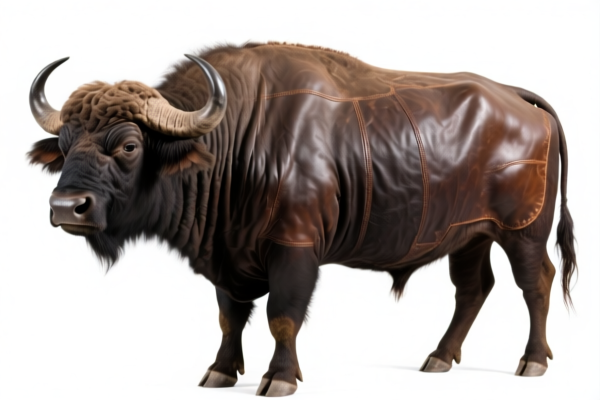
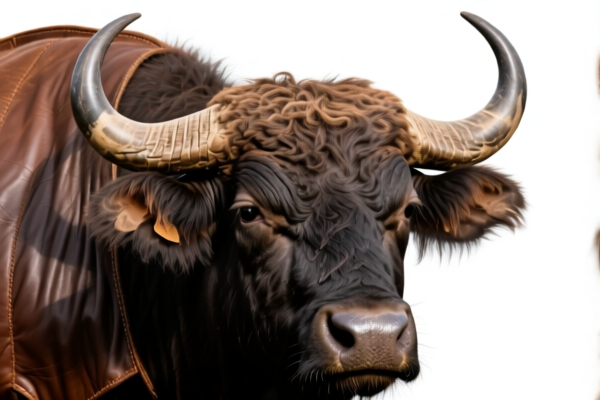
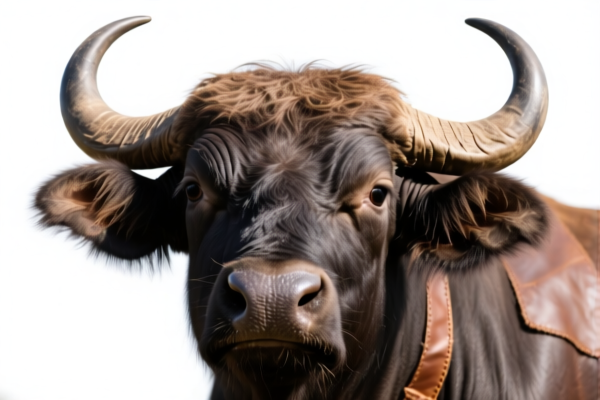
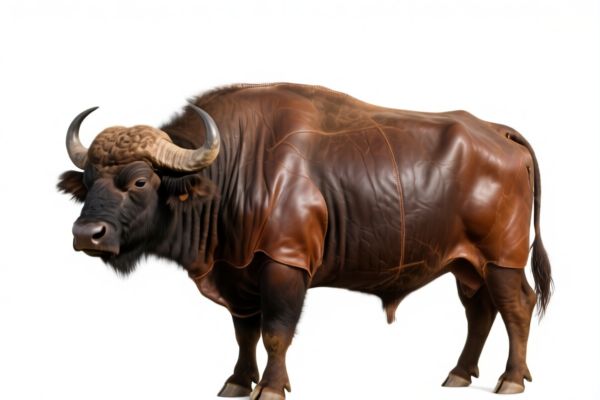
AI Analysis
🐃💨 Buffalo & Horse Hairless Leather (Tanned)
🌐 HS Code Reference & Customs Clearance Guide | 2026 Latest Tariff Analysis | Professional Strategy for US Imports
📌 I. Product Definition & Classification: Decoding "Hairless Leather"
Buffalo and Horse leather, specifically hairless (chrome-tanned or vegetable-tanned without hair), falls under Chapter 41 of the Harmonized Tariff Schedule (HTS). The key distinction lies in the processing state and specific animal origin, which drastically affects the tariff burden, especially under current US trade policies (Section 301 and Section 122/IEEPA).
⚠️ Critical Distinction:
- Hairless/Chrome Tanned (4107 series): Generally lower base duty (2.5%), but still subject to significant US trade tariffs.
- Other Animal Skins/Leather (4106/4113 series): Includes specific classifications for buffalo/horse that may be treated as "other" if not meeting specific 4107 criteria, resulting in higher base duties (3.3%).
📦 II. HS Code Classification Details (2026 Latest Tariff Alignment)
| HS Code | Product Description | Applicable Scenario | Base Duty | Total Tax Rate (US/CN) | Key Constraint |
|---|---|---|---|---|---|
4107.99.40.00 |
Other leather (buffalo/horse), hairless, fully meeting material/form criteria | Chrome-tanned, finished, no hair | 2.5% | 12.5% | Must be clearly defined as "other leather" under 4107 |
4107.92.40.00 |
Buffalo/Horse leather, hairless, no wool/fur | Specifically for buffalo/horse, hairless | 2.5% | 12.5% | Specific subheading for horse/buffalo in 4107 |
4113.90.60.00 |
Buffalo/Horse leather (no hair), other animal leather, surface no hair | Classified under "other" animal leather | 1.6% | 36.6% | Higher additional tariffs due to classification |
4106.92.00.00 |
Buffalo/Horse leather (no hair), other animal (non-wool), hairless | Non-sheep/goat, hairless | 3.3% | 38.3% | Higher base duty for "other" animals |
4106.91.00.00 |
Buffalo/Horse leather (no hair), no wool or hair | Specific exclusion of wool/hair | 3.3% | 38.3% | Same as above |
4113.90.30.00 |
Buffalo/Horse leather (no hair), processed other animal leather | Processed leather under Chapter 41 | 3.3% | 38.3% | Same as above |
🔍 Key Insight:
- 4107.99.40.00 & 4107.92.40.00 offer the lowest total tax rate (12.5%) among all options.
- 4106/4113 series incur much higher tariffs (36.6%-38.3%) due to higher base duties (3.3% vs 2.5%) and additional trade measures.
- Classification Accuracy is Critical: Misclassifying buffalo/horse leather into 4106/4113 instead of 4107 can result in ~26% extra tax per unit.
💰 III. 2026 Latest Tariff Rate Breakdown (Including Additional Duties & Policy Surcharges)
✅ Applicable Country: United States (US)
✅ Country of Origin: China (CN)
✅ Effective Time: 2025-11-10 onwards (including subsequent imports)
🎯 1. 4107.99.40.00 & 4107.92.40.00 — Buffalo/Horse Leather, Hairless
| Item | Content |
|---|---|
| Base Duty Rate | 2.5% (ad valorem) |
| USITC Additional Duty (Section 301) | +0.0% (Exempt from 25% Section 301 tariff for these specific subheadings) |
| IEEPA Additional Duty (Section 122/Other Measures) | +10% |
| Total Tax Rate | 12.5% |
| Tax Calculation | CIF Value × 12.5% |
| De Minimis Exemption | ❌ Not Applicable (High risk of audit) |
| Legal Basis Path | IEEPA:9903.01.25 → USITC:4107.99.40.00 → FOOTNOTE:IEEPA_122 |
📌 Explanation:
- The base duty is only 2.5%, significantly lower than other leather categories.
- No 25% Section 301 tariff applies to these specific 4107 subheadings, which is a huge advantage.
- However, a 10% IEEPA/Section 122 tariff is still applied, bringing the total to 12.5%.
- This is the most cost-effective classification for buffalo/horse hairless leather.
🎯 2. 4113.90.60.00 — Buffalo/Horse Leather (No Hair), Other Animal Leather
| Item | Content |
|---|---|
| Base Duty Rate | 1.6% (ad valorem) |
| USITC Additional Duty (Section 301) | +25% |
| IEEPA Additional Duty | +10% |
| Total Tax Rate | 36.6% |
| Tax Calculation | CIF Value × 36.6% |
| De Minimis Exemption | ❌ Not Applicable |
| Legal Basis Path | IEEPA:9903.01.25 → USITC:4113.90.60.00 → FOOTNOTE:301 |
📌 Explanation:
- Although the base duty is low (1.6%), the 25% Section 301 tariff drastically increases the cost.
- Total tax is 36.6%, which is almost 3x higher than the 4107 classification.
- Avoid this classification unless specifically required by customs rulings.
🎯 3. 4106.92.00.00, 4106.91.00.00, 4113.90.30.00 — Other Animal Leather (Buffalo/Horse)
| Item | Content |
|---|---|
| Base Duty Rate | 3.3% (ad valorem) |
| USITC Additional Duty (Section 301) | +25% |
| IEEPA Additional Duty | +10% |
| Total Tax Rate | 38.3% |
| Tax Calculation | CIF Value × 38.3% |
| De Minimis Exemption | ❌ Not Applicable |
| Legal Basis Path | IEEPA:9903.01.25 → USITC:4106.x.x → FOOTNOTE:301 |
📌 Explanation:
- These codes carry the highest tax burden (38.3%).
- They are used when leather does not fit the precise definition of 4107.
- High risk of misclassification penalties if incorrectly declared.
🛠️ IV. Customs Clearance Practical Advice (Real-World Pitfall Guide)
✅ 1. Documentation Checklist (Essential)
| Document | Mandatory? | Notes |
|---|---|---|
| ✅ Product Specification Sheet | ✔️ | Must specify: Animal type (Buffalo/Horse), Tanning method (Chrome/Vegetable), Hairless status, Finish type |
| ✅ Physical Sample | ✔️ | For customs inspection to verify "hairless" condition |
| ✅ Commercial Invoice | ✔️ | Clearly state: "Buffalo/Horse Leather, Hairless, Chrome Tanned" |
| ✅ Packing List | ✔️ | Include dimensions, weight, and packaging type |
| ✅ Tanning Certificate | ✔️ | Proof of tanning process (critical for 4107 vs 4106 distinction) |
| ✅ Origin Certificate | ✔️ | For US origin proof; critical for tariff eligibility |
✅ 2. Declaration Tips (Key Mnemonics)
🔥 "Be Specific, Avoid 'Other', 4107 is King!"
| Scenario | Correct Declaration | Incorrect Declaration | Risk |
|---|---|---|---|
| Chrome-tanned, hairless buffalo/horse | 4107.92.40.00 or 4107.99.40.00 |
"Other Leather" or 4106 |
Tax jumps from 12.5% to 38.3% |
| Raw, unprocessed skin | Not 4107 (may be 4101/4102) | 4107 |
Misclassification, delay |
| Buffalo/Horse with hair intact | Not hairless (may be 4101) | 4107 |
Rejection, fines |
| Mixed animal leather | Declare each type separately | "Mixed Leather" | Audit risk, penalty |
✅ 3. Special Cases Handling
| Scenario | Handling Advice |
|---|---|
| OEM Custom Leather | Provide client orders + design specs to justify classification |
| Leather for Footwear | Still classified under 4107 if hairless; footwear HS is separate |
| Leather for Automotive Interiors | Same as above; ensure "hairless" is clearly stated |
| Leather for Luxury Goods | High scrutiny; ensure documentation is impeccable |
🌍 V. Global Market Comparison (2026 Latest)
| Country/Region | Recommended HS Code | Tariff (China Origin) | Certification Required | Notes |
|---|---|---|---|---|
| 🇺🇸 USA | 4107.92.40.00 / 4107.99.40.00 |
12.5% | No specific cert | Avoid 4106/4113 (38.3%) |
| 🇨🇳 China | 4107.92.40.00 |
5% | None | Low duty, high volume |
| 🇪🇺 EU | 4107.92.40 |
0-2% | CE/RoHS (if applicable) | No additional trade tariffs |
| 🇬🇧 UK | 4107.92.40 |
0-2% | UKCA (if applicable) | Post-Brexit rules apply |
| 🇯🇵 Japan | 4107.92.40 |
0% | JIS (if applicable) | No additional tariffs |
📌 Conclusion:
- USA is the only major market with significant additional tariffs, but 4107 classification mitigates this to 12.5%.
- EU/UK/Japan have negligible or zero tariffs, making them easier markets for leather imports.
- China domestic market has low duties (5%) but high competition.
📌 VI. Common Mistakes & Pitfall Avoidance (Blood Lessons)
❌ Mistake 1: Classifying hairless buffalo/horse leather as "Other Leather" (4106)
👉 Result: Tax increases from 12.5% to 38.3% → Extra $26 per $100 value!
❌ Mistake 2: Declaring "Leather" without specifying "Hairless"
👉 Result: Customs may classify as raw skin or hair-on leather → Delay, audit, penalty
❌ Mistake 3: Not providing tanning certificates
👉 Result: Customs cannot verify 4107 eligibility → Deemed "other" leather → Higher tax
❌ Mistake 4: Using vague terms like "Animal Leather"
👉 Result: Misclassification → Rejection, fines, shipment hold
✅ Correct Approach:
"Buffalo/Horse Leather, Hairless, Chrome Tanned, Finished, HS Code 4107.92.40.00, CIF $10,000"
🎯 VII. Conclusion: Precision Classification Saves Thousands!
🎯 Remember the Mnemonic:
🔹 "4107 is King, 12.5% is the Thing!"
🔹 "4106/4113 is Death, 38% is the Breath!"
🔹 "Be Specific, Avoid 'Other', Save the Tax, Keep the Money!"
📌 Pro Tip:
If your leather is originating from Vietnam, Mexico, or Thailand, you may be eligible for IEEPA exemptions, reducing the total tariff to 0%-5%.
Always apply for an Advance Ruling from US Customs to lock in the 12.5% rate.
📣 Immediate Action:
📞 Contact a professional customs broker + Provide product photos + Apply for HS Code Advance Ruling
🚀 Ensure your buffalo/horse hairless leather passes customs smoothly, efficiently, and profitably!
✨ Professional clearance starts with precise classification!
💼 Every cent of tax you save is pure profit!
Customer Reviews
About HS Code Classification
The Harmonized System (HS) is an internationally standardized nomenclature developed by the World Customs Organization (WCO) to classify traded products. Over 200 countries use the HS system as the basis for customs tariffs, trade statistics, and import/export regulations.
Each HS code follows a hierarchical structure:
- Chapter (2 digits) — Broad category of goods (e.g., Chapter 84: Machinery and Mechanical Appliances)
- Heading (4 digits) — More specific grouping within the chapter
- Subheading (6 digits) — Internationally standardized breakdown, used by all WCO member countries
- National subdivisions (8-10 digits) — Country-specific extensions for further classification, such as US HTSUS 10-digit codes
Correct HS code classification is essential for smooth customs clearance, accurate duty payment, and compliance with trade regulations. Misclassification can lead to customs delays, overpayment of duties, or penalties.
When importing from CN to US, the applicable tariff rates may include:
- Most-Favored-Nation (MFN) rate — The standard duty rate applied to WTO members
- General rate — Applied to countries without trade agreements
- Trade remedy duties — Additional tariffs such as Section 301 (anti-dumping), Section 232 (national security), or countervailing duties
The information provided on this page is for reference purposes only. For official classification, please consult with your local customs authority or a licensed customs broker.