Buffalo/Horse Leather Boat Interior
CN → US| HS Code | Tariff Rate | Origin | Destination | Doc |
|---|---|---|---|---|
| 4205001000 | 35.0% | CN | US | Official Doc |
| 4205008000 | 35.0% | CN | US | Official Doc |
| 9403608093 | 35.0% | CN | US | Official Doc |
| 9403200090 | 85.0% | CN | US | Official Doc |
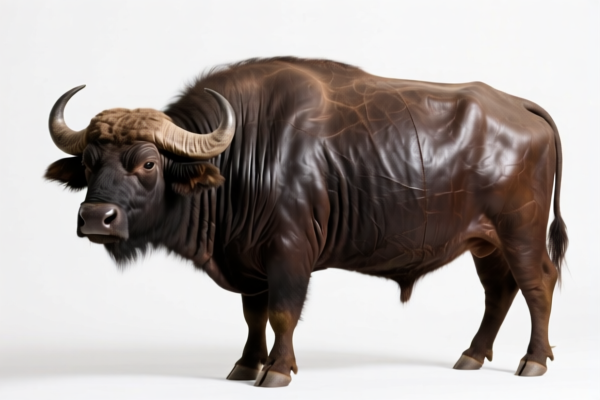
Product Images



AI Analysis
🛥️ Buffalo/Horse Leather Boat Interior (Leather Yacht Components)
🌐 HS Code Reference & Customs Clearance Guide | 2026 Latest Tariff Analysis | Professional Level Strategy
📌 I. Product Definition & Classification: Do You Truly Understand "Yacht Interior Leather"?
Buffalo/Horse Leather Boat Interior refers to decorative leather components (such as wall panels, ceiling linings, seat covers, or trim) used in the interior decoration of yachts or boats. In international trade, these items are primarily classified based on material (Leather) and application (Furniture/Decorative Items).
Key Distinction:
- Leather Goods (Chapter 42): If the product is considered a general "leather article" without being a specific part of a larger mechanical assembly, it falls under HS 4205.
- Furniture Parts (Chapter 94): If the leather is applied as a panel or covering for boat furniture/interior structures, it may be classified under HS 9403 (Other Furniture).
⚠️ Critical Classification Logic:
- HS 4205: Focuses on the material itself (Leather) and general utility. Suitable for loose leather panels, trim strips, or generic "leather articles."
- HS 9403: Focuses on the functional application (Furniture/Interior Decor). Suitable for fitted leather panels, seat backs, or structural interior components that form part of the yacht's "furniture" or fixed interior fittings.
📦 II. HS Code Classification Details (2026 Latest Tariff Authority对照)
| HS Code | Product Description | Application Scenario | Material Conflict? |
|---|---|---|---|
4205.00.10.00 |
Other leather articles (General Category) | Loose leather panels, decorative trims, generic yacht interior leather goods | ❌ No conflict. 'Leather' matches material; 'Yacht Interior' fits 'other articles'. |
4205.00.80.00 |
Other leather articles (Catch-all Category) | Buffalo/Horse leather items that do not fit specific sub-categories | ❌ No conflict. Material (Buffalo/Horse Leather) clearly matches "Leather"; fits "Other articles." |
9403.60.80.93 |
Other wooden furniture parts / Other furniture parts | Leather-covered interior panels or fittings; treated as "furniture parts" or decorative interior components | ⚠️ Implicit. While not explicitly "wooden," it is inferred as "other furniture parts" if it serves a decorative/structural interior role. No material conflict for "other" category. |
9403.20.00.90 |
Other furniture (Finished/semi-finished) | Completed leather interior units or seat assemblies for yachts | ❌ No conflict. Leather is a valid material for furniture; application (Yacht Interior) fits furniture usage. |
🔍 Key Reminder:
- HS 4205 is often preferred for loose components or generic leather goods used in yachts.
- HS 9403 is preferred for fitted installations, seat covers, or paneling that functions as part of the yacht's furniture or fixed interior decor.
- Both codes share similar high tariff structures due to trade policies.
💰 III. 2026 Latest Tariff Rate Details (Including Surcharges & Policy Add-ons)
✅ Applicable Country: United States (US)
✅ Origin: China (CN)
✅ Effective Time: From November 10, 2025 (including subsequent imports)
🎯 1. HS Code 4205.00.10.00 & 4205.00.80.00 — Other Leather Articles
| Item | Content |
|---|---|
| Base Duty Rate | 0% (ad valorem) |
| USITC Surcharge | +25% (Under Section 301 of the Trade Act) |
| IEEPA Surcharge | +10% (For China/HK products, effective Nov 10, 2025) |
| Total Rate | 35.0% |
| Tax Calculation | CIF Value × 35% |
| De Minimis Eligibility | ❌ Not Allowed (deny_de_minimis) |
| Legal Basis Path | IEEPA:9903.01.25 → IEEPA:9903.01.24 → USITC:4205.00.10.00 / 4205.00.80.00 → FOOTNOTE:9903.88.01 |
📌 Explanation:
- "USITC Surcharge 25%": Additional tariff under USITC Footnote 9903.88.01 for certain leather articles.
- "IEEPA 10%": Additional tariff under the International Emergency Economic Powers Act for Chinese goods.
- Total 35%: A very high tariff rate. Pre-calculation is essential for cost control.
🎯 2. HS Code 9403.60.80.93 — Other Furniture Parts
| Item | Content |
|---|---|
| Base Duty Rate | 0% |
| USITC Surcharge | +25% |
| IEEPA Surcharge | +10% |
| Total Rate | 35.0% |
| Tax Calculation | CIF Value × 35% |
| De Minimis Eligibility | ❌ Not Allowed |
| Legal Basis Path | Similar to above, referencing 9403.60.80.93 |
📌 Note:
- If the leather component is classified as a "furniture part" (e.g., a fitted dashboard panel or seat frame cover), it falls under this code.
- The tariff rate is identical to HS 4205.
🎯 3. HS Code 9403.20.00.90 — Other Furniture
| Item | Content |
|---|---|
| Base Duty Rate | 0% |
| USITC Surcharge | +25% |
| IEEPA Surcharge | +10% |
| Steel/Aluminum/Copper Surcharge | +50% (If applicable) |
| Total Rate | 85.0% |
| Tax Calculation | CIF Value × 85% |
| De Minimis Eligibility | ❌ Not Allowed |
| Legal Basis Path | IEEPA:9903.01.25 → IEEPA:9903.01.24 → USITC:9403.20.00.90 → Steel/Aluminum/Copper Surcharge: 50% |
📌 Critical Warning:
- If the product is classified under HS 9403.20.00.90, it is subject to an additional 50% tariff for steel, aluminum, or copper products.
- Why 85%? 0% (Base) + 25% (301) + 10% (IEEPA) + 50% (Steel/Aluminum/Copper Surcharge).
- Risk: Even if the main material is leather, if the classification triggers the metal surcharge rule (e.g., if there are metal fasteners/frames and the code is interpreted broadly), the rate skyrockets.
- Recommendation: Avoid this code unless absolutely necessary. Prefer HS 4205 or HS 9403.60 to stay at 35%.
🛠️ IV. Customs Clearance Practical Advice (Pitfall Avoidance Guide)
✅ 1. Required Documentation List (Must-Haves)
| Document | Mandatory | Explanation |
|---|---|---|
| ✅ Product Specification Sheet | ✔️ | Details: Material (Buffalo/Horse Leather), Dimensions, Use (Yacht Interior), Thickness |
| ✅ Product Photos | ✔️ | Clear images showing leather texture, stitching, and installation context |
| ✅ Commercial Invoice | ✔️ | Explicitly state "Leather Interior Panel for Yacht" or "Leather Trim," avoid vague terms like "Accessory" |
| ✅ Packing List | ✔️ | List items clearly as "Leather Parts" or "Furniture Components" |
| ✅ Origin Certificate (CO) | ✔️ | To prove Chinese origin (triggering tariffs) or other origin (if applicable for exemptions) |
| ✅ Third-Party Test Report | ✔️ | If applicable (e.g., flammability for marine interiors, REACH/RoHS for compliance) |
✅ 2. Declaration Tips (Key Mantra)
🔥 “Material First, Function Second, Avoid Metal Surcharges!”
| Scenario | Correct Declaration | Wrong Practice |
|---|---|---|
| Loose leather panels/trims | 4205.00.10.00 or 4205.00.80.00 |
Declaring as "Furniture" → Risk of 85% |
| Fitted interior panels (no metal) | 9403.60.80.93 |
Declaring as "Metal Furniture Part" → 85% |
| Leather seat covers/units | 9403.20.00.90 (Careful!) |
Ignoring potential metal surcharge → 85% Tax |
| Any product with significant metal parts | Verify code carefully | Assuming all furniture parts are 35% |
✅ 3. Special Situation Handling
| Situation | Handling Advice |
|---|---|
| Mixed Materials (Leather + Metal Frame) | If metal content is significant, the product may trigger the 50% surcharge. Try to classify as leather goods (HS 4205) if possible, or ensure the metal part is negligible. |
| Marine Compliance | Yacht interiors often require IMO/FAR flammability standards. Ensure test reports are included to avoid customs delays. |
| OEM Custom Parts | Provide design drawings showing the leather application. This helps prove the item is a "leather article" or "furniture part" rather than a mechanical component. |
| Value Declaration | Ensure the CIF value is accurate. High tariffs (35%-85%) mean even small value errors lead to large tax discrepancies. |
🌍 V. Global Market Clearance Comparison (2026 Latest)
| Country/Region | Recommended HS Code | Tariff | Certification | Remarks |
|---|---|---|---|---|
| 🇺🇸 USA | 4205.00.10.00 / 9403.60.80.93 |
35% (China Origin) | FCC (if electronic), IMO/FAR (if marine) | Avoid 9403.20 to prevent 85% |
| 🇨🇳 China | 4205.00.10.00 |
~10-13% | CCC (if applicable) | Lower base tariff |
| 🇪🇺 EU | 4205.00.10.00 |
~4-10% | CE (if applicable) | No additional surcharges |
| 🇬🇧 UK | 4205.00.10.00 |
~4-10% | UKCA | Post-Brexit rules apply |
| 🇦🇺 Australia | 4205.00.10.00 |
~5% | RCM | No major surcharges |
📌 Conclusion:
- USA has the highest risk due to Section 301 and IEEPA tariffs, plus the potential metal surcharge.
- Target Rate: Aim for HS 4205 or HS 9403.60 to keep tariffs at 35%.
- Avoid HS 9403.20 unless necessary, as it carries an 85% total rate.
📌 VI. Common Errors & Pitfall Guide (Lessons Learned)
❌ Error 1: Classifying leather interior panels as "General Furniture" (HS 9403.20)
👉 Consequence: Triggers 50% metal surcharge → Total 85% tariff.
👉 Solution: Use HS 9403.60 (Parts) or HS 4205 (Leather Articles) to stay at 35%.
❌ Error 2: Vague declaration "Boat Accessory"
👉 Consequence: Customs may misclassify → Higher duty or delay.
👉 Solution: Specify "Leather Interior Panel" or "Leather Trim."
❌ Error 3: Ignoring IEEPA 10% Surcharge
👉 Consequence: Underestimating landed cost by 10%.
👉 Solution: Include IEEPA 10% in all cost calculations.
❌ Error 4: Mixing Metal and Leather without Proper Declaration
👉 Consequence: If classified as furniture with metal parts, surcharge applies.
👉 Solution: Highlight the primary material (Leather) in documentation.
✅ Correct Practice:
"Buffalo Leather Interior Panel for Yacht, Non-Metallic Frame, Flammability Certified, Model XYZ"
🎯 VII. Conclusion: Precise Classification Saves Money!
🎯 Remember the Mantra:
🔹 "Leather First, Function Second, Avoid Metal Surcharge!"
🔹 "HS 4205/9403.60 = 35%, HS 9403.20 = 85%!"
📌 Pro Tip:
If your product has any significant metal components (frames, brackets), consult a customs broker to ensure it doesn't trigger the 50% steel/aluminum/copper surcharge. Consider classifying as HS 4205 (Leather Goods) if the metal is minor/negligible.
📣 Immediate Action:
📞 Contact a professional customs broker + Provide Product Photos + Apply for Advance Ruling (if eligible)
🚀 Ensure smooth clearance, optimize costs, and protect your margins!
✨ Professional Clearance Starts with Accurate Classification!
💼 Every Cent Counts in Global Trade!
Customer Reviews
About HS Code Classification
The Harmonized System (HS) is an internationally standardized nomenclature developed by the World Customs Organization (WCO) to classify traded products. Over 200 countries use the HS system as the basis for customs tariffs, trade statistics, and import/export regulations.
Each HS code follows a hierarchical structure:
- Chapter (2 digits) — Broad category of goods (e.g., Chapter 84: Machinery and Mechanical Appliances)
- Heading (4 digits) — More specific grouping within the chapter
- Subheading (6 digits) — Internationally standardized breakdown, used by all WCO member countries
- National subdivisions (8-10 digits) — Country-specific extensions for further classification, such as US HTSUS 10-digit codes
Correct HS code classification is essential for smooth customs clearance, accurate duty payment, and compliance with trade regulations. Misclassification can lead to customs delays, overpayment of duties, or penalties.
When importing from CN to US, the applicable tariff rates may include:
- Most-Favored-Nation (MFN) rate — The standard duty rate applied to WTO members
- General rate — Applied to countries without trade agreements
- Trade remedy duties — Additional tariffs such as Section 301 (anti-dumping), Section 232 (national security), or countervailing duties
The information provided on this page is for reference purposes only. For official classification, please consult with your local customs authority or a licensed customs broker.