Buffalo/Horse Pattern Leather Belt
CN → US| HS Code | Tariff Rate | Origin | Destination | Doc |
|---|---|---|---|---|
| 6217109550 | 32.1% | CN | US | Official Doc |
| 6217109520 | 32.1% | CN | US | Official Doc |
| 4203300000 | 37.7% | CN | US | Official Doc |
| 4203406000 | 35.0% | CN | US | Official Doc |
| 3926905900 | 37.4% | CN | US | Official Doc |
| 3926906090 | 39.2% | CN | US | Official Doc |
Product Images
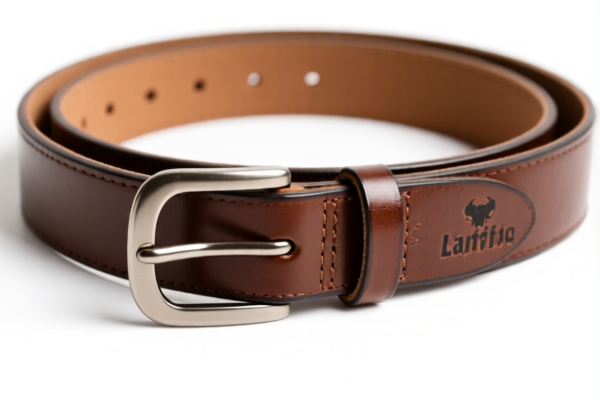
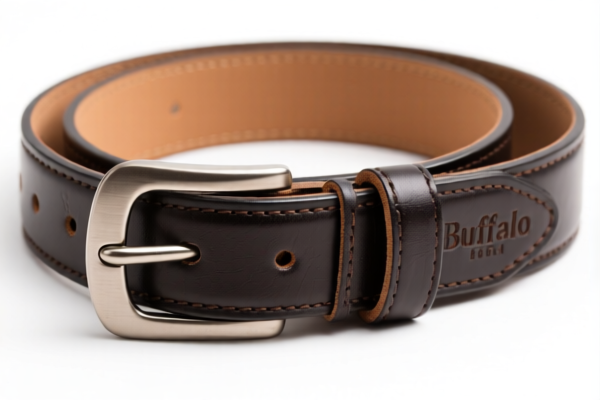
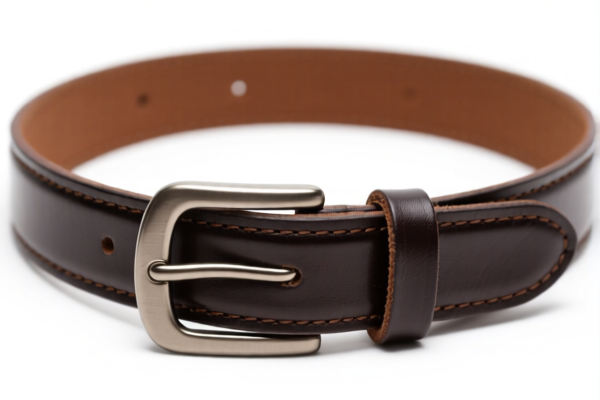

AI Analysis
🐃 Buffalo/Horse Pattern Leather Belt
🌐 HS Code Classification & Duty Strategy | 2026 Customs Clearance Guide | Professional Tariff Analysis
📌 I. Product Identity: What Exactly Are We Importing?
A Buffalo/Horse Pattern Leather Belt is a fashion accessory made primarily of leather, featuring distinctive embossed, dyed, or printed patterns mimicking buffalo or horse skin textures.
In international trade, these belts fall under "Leather Belts" or "Other Leather Apparel Accessories", depending on the exact construction, strap width, and attachment method.
⚠️ Critical Distinction:
- If the belt has a simple leather strap with a buckle → Usually 4203.30.00.00 (Leather Belts)
- If it's a fashion accessory with complex hardware, multiple layers, or non-buckle attachments → Can fall under 4203.40.60.00 or 6217.10.95.50
- If the product is non-leather but looks like leather (e.g., synthetic), different HS codes apply (not covered here)
📦 II. HS Code Classification Details (2026 Tariff Reference)
| HS Code | Product Description | Material | Key Features | Total Duty |
|---|---|---|---|---|
| 4203.40.60.00 | Other leather apparel accessories (not belts) | Leather | Fashion straps, non-standard buckles, decorative | 35.0% |
| 4203.30.00.00 | Leather Belts | Leather | Standard strap + buckle, formal/casual wear | 37.7% |
| 6217.10.95.50 | Other made-up clothing accessories | Leather | Belt-like, but classified as general clothing accessory | 32.1% |
🔍 Classification Logic:
- 4203.30.00.00 is the default for standard leather belts with buckles.
- 4203.40.60.00 applies if the item is not a traditional belt but an accessory (e.g., wide fashion strap, decorative harness, non-functional).
- 6217.10.95.50 is used when the item is clothing-related but not strictly a belt under Chapter 42 (e.g., part of a garment set, or designed as a fashion component).
💰 III. 2026 Customs Duty Breakdown (China → US Import)
✅ Origin: China (CN)
✅ Destination: United States (US)
✅ Effective From: Nov 10, 2025 (including all current 2026 imports)
🎯 1. 4203.40.60.00 – Other Leather Apparel Accessories
| Item | Detail |
|---|---|
| Base Tariff | 0.0% |
| Section 301 Additional Duty | +25.0% |
| 122-Clause Tariff (China-specific) | +10.0% |
| Total Duty | 35.0% |
| Calculation Basis | CIF × 35% |
| De Minimis Exemption | ❌ Not eligible |
| Legal Reference Path | 301:4203.40.60.00 → 122:China → Base:0% |
📌 Explanation:
- This code is not a standard belt, so base duty is 0%, but still subject to Section 301 + 122-Clause penalties.
- Total 35% is high, but lower than standard belts (37.7%) due to lower base rate.
🎯 2. 4203.30.00.00 – Leather Belts
| Item | Detail |
|---|---|
| Base Tariff | 2.7% |
| Section 301 Additional Duty | +25.0% |
| 122-Clause Tariff (China-specific) | +10.0% |
| Total Duty | 37.7% |
| Calculation Basis | CIF × 37.7% |
| De Minimis Exemption | ❌ Not eligible |
| Legal Reference Path | 301:4203.30.00.00 → 122:China → Base:2.7% |
📌 Explanation:
- This is the standard classification for traditional leather belts.
- Higher total duty due to non-zero base rate (2.7%).
- Most common for Buffalo/Horse pattern belts with buckles.
🎯 3. 6217.10.95.50 – Other Made-Up Clothing Accessories (Leather)
| Item | Detail |
|---|---|
| Base Tariff | 14.6% |
| Section 301 Additional Duty | +7.5% |
| 122-Clause Tariff (China-specific) | +10.0% |
| Total Duty | 32.1% |
| Calculation Basis | CIF × 32.1% |
| De Minimis Exemption | ❌ Not eligible |
| Legal Reference Path | 301:6217.10.95.50 → 122:China → Base:14.6% |
📌 Explanation:
- Used if the item is not strictly a belt but a clothing accessory (e.g., part of a set, decorative strap).
- Lowest total duty (32.1%), but requires strong justification to avoid misclassification.
- High base rate, but lower Section 301 compared to leather belts.
🛠️ IV. Customs Clearance Strategy (Practical Tips)
✅ 1. Documentation Checklist (Mandatory)
| Document | Required | Purpose |
|---|---|---|
| Product Spec Sheet | ✔️ | Confirms material, dimensions, pattern type |
| Product Photos | ✔️ | Shows Buffalo/Horse pattern, buckle, construction |
| Commercial Invoice | ✔️ | Clear description: "Leather Belt with Buffalo Pattern" |
| Packing List | ✔️ | Prevents misclassification via weight/quantity |
| Certificate of Origin (CO) | ✔️ | For potential tariff exemptions (if applicable) |
| Material Test Report | ✔️ | Proves genuine leather (not faux) |
✅ 2. Classification Strategy (Key Rules)
🔥 "Belt or Accessory? Buckle Matters!"
| Scenario | Recommended HS Code | Reason |
|---|---|---|
| Standard leather belt with buckle | 4203.30.00.00 | Most accurate for functional belts |
| Fashion strap with decorative buckle | 4203.40.60.00 | Not a traditional belt |
| Part of a garment set | 6217.10.95.50 | Classified as clothing accessory |
| Non-leather belt (PU/Synthetic) | 6217.10.95.50 or 6217.90.00.00 | Not leather, different code |
✅ 3. Special Cases & Warnings
| Case | Handling Advice |
|---|---|
| OEM Custom Belt | Provide design files, client PO, and material certification |
| Buffalo Pattern on Synthetic Leather | Use non-leather codes (6217.10.95.50) – misclassification risk high |
| Multi-Purpose Strap (Belt + Decor) | Use 4203.40.60.00 if not primarily functional as a belt |
| High-Value Designer Belt | Ensure Brand, Model, and Material are clearly stated to avoid suspicion |
🌍 V. Global Market Comparison (2026)
| Country | HS Code | Base Duty | Section 301 | 122-Clause | Total | Notes |
|---|---|---|---|---|---|---|
| 🇺🇸 USA | 4203.30.00.00 | 2.7% | 25% | 10% | 37.7% | Highest total duty |
| 🇪🇺 EU | 4203.30.00.00 | 2.4% | 0% | 0% | 2.4% | No Section 301 |
| 🇯🇵 Japan | 4203.30.00.00 | 1.8% | 0% | 0% | 1.8% | No penalties |
| 🇨🇦 Canada | 4203.30.00.00 | 2.0% | 0% | 0% | 2.0% | Low duty |
| 🇦🇺 Australia | 4203.30.00.00 | 5.0% | 0% | 0% | 5.0% | Moderate duty |
📌 Key Takeaway:
- USA imposes Section 301 + 122-Clause penalties, making it the most expensive market for Chinese leather belts.
- EU, Japan, Canada, Australia have no penalties, making them more favorable for exports.
📌 VI. Common Mistakes & How to Avoid Them
❌ Mistake 1: Calling it "Belt" when it's a fashion strap
👉 Fix: Use 4203.40.60.00 if it's not a traditional belt
❌ Mistake 2: Using 6217.10.95.50 for a standard belt
👉 Fix: Use 4203.30.00.00 for functional belts
❌ Mistake 3: Misrepresenting leather type (e.g., calling PU "leather")
👉 Fix: Provide material test reports and accurate descriptions
❌ Mistake 4: Ignoring Section 301 and 122-Clause in duty calculation
👉 Fix: Always include 35%, 37.7%, or 32.1% in cost analysis
✅ Best Practice:
"Genuine Leather Belt with Buffalo Pattern, 3.5cm Width, Brass Buckle, Model XYZ, Made in China, FOB $15/unit"
🎯 VII. Conclusion: Smart Classification, Lower Duty, Faster Clearance
🎯 Remember:
🔹 "Belt or Accessory? Check the Buckle!"
🔹 "Leather or Fake? Prove It!"
🔹 "USA Duty = Base + 25% + 10% = High Cost!"
📌 Pro Tip:
If your belt is produced in Vietnam, Mexico, or Thailand, you may qualify for Section 301 exemption, reducing total duty to 0%~5%.
Always apply for Pre-Ruling (Advance Ruling) to avoid customs disputes.
📣 Take Action Now:
📞 Contact a licensed customs broker + Provide photos + spec sheet + Apply for HS Code Pre-Ruling
🚀 Your leather belts can clear customs faster, save money, and boost profits!
✨ Precision Classification = Lower Duty + Smoother Clearance
💼 Every dollar saved on duty is pure profit!
Customer Reviews
About HS Code Classification
The Harmonized System (HS) is an internationally standardized nomenclature developed by the World Customs Organization (WCO) to classify traded products. Over 200 countries use the HS system as the basis for customs tariffs, trade statistics, and import/export regulations.
Each HS code follows a hierarchical structure:
- Chapter (2 digits) — Broad category of goods (e.g., Chapter 84: Machinery and Mechanical Appliances)
- Heading (4 digits) — More specific grouping within the chapter
- Subheading (6 digits) — Internationally standardized breakdown, used by all WCO member countries
- National subdivisions (8-10 digits) — Country-specific extensions for further classification, such as US HTSUS 10-digit codes
Correct HS code classification is essential for smooth customs clearance, accurate duty payment, and compliance with trade regulations. Misclassification can lead to customs delays, overpayment of duties, or penalties.
When importing from CN to US, the applicable tariff rates may include:
- Most-Favored-Nation (MFN) rate — The standard duty rate applied to WTO members
- General rate — Applied to countries without trade agreements
- Trade remedy duties — Additional tariffs such as Section 301 (anti-dumping), Section 232 (national security), or countervailing duties
The information provided on this page is for reference purposes only. For official classification, please consult with your local customs authority or a licensed customs broker.