Buffalo/Marble Leather Office Chair
CN → US| HS Code | Tariff Rate | Origin | Destination | Doc |
|---|---|---|---|---|
| 9402900020 | 10.0% | CN | US | Official Doc |
| 9401806028 | 35.0% | CN | US | Official Doc |
| 9401804046 | 35.0% | CN | US | Official Doc |
| 9402100000 | 10.0% | CN | US | Official Doc |
| 4115100000 | 35.0% | CN | US | Official Doc |
Product Images
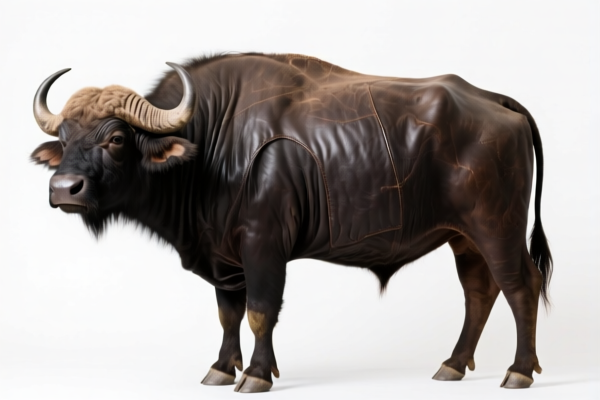

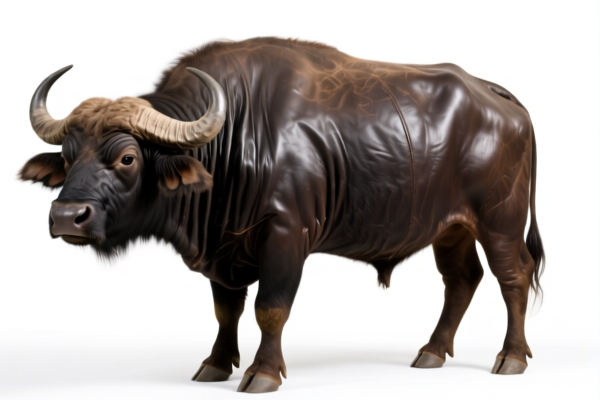

AI Analysis
🪑 Buffalo/Marble Leather Office Chair
🌐 HS Code Reference & Customs Clearance Guide | 2026 Latest Tariff Analysis | Professional Clearance Strategy
📌 I. Product Definition & Classification: Is It Furniture or Material?
The "Buffalo/Marble Leather Office Chair" is a specialized seating product. In international trade, the classification hinges on two critical factors: 1. Function: Is it a functional piece of furniture (seat) or a raw material/component? 2. Material: Is the primary structure wood/metal/plastic, or is it purely leather?
Key Distinction: * If the item is a finished chair with a frame (wood, metal, or plastic) and upholstery → It belongs to Chapter 94 (Furniture). * If the item is leather sheets/panels used for upholstery → It belongs to Chapter 41 (Leather).
⚠️ Critical Warning:
- Misclassifying a finished chair as "leather material" can lead to massive tax discrepancies (10% vs. 35%).
- Misclassifying a medical-style chair as "office furniture" may trigger audits if the design is explicitly for dental/medical use.
📦 II. HS Code Classification Details (Based on Provided Data)
Below is the breakdown of the 5 potential HS Codes from your data, explaining why each was matched and the associated tax implications.
| HS Code | Product Description | Match Logic (Why it fits) | Total Tax Rate |
|---|---|---|---|
| 9402.90.00.20 | Parts of Medical/Dental/Veterinary Furniture | Logic: The chair is identified as similar to a salon/beauty chair or medical stool. The leather material matches the common upholstery for such functional medical-adjacent furniture. | 10.0% |
| 9401.80.60.28 | Other Wooden Seats, Household Type | Logic: The name "Office Chair" implies a home/office use rather than industrial. "Chair" = Seat; "Leather" = No conflict with "Other Seats". | 35.0% |
| 9401.80.40.46 | Other Seats with Rubber/Plastic Supports | Logic: The chair is an office seat. The internal frame/support is inferred to be rubber/plastic-based (common in modern ergonomic chairs). Leather upholstery does not conflict. | 35.0% |
| 9402.10.00.00 | Dentists', Barbers', Similar Chairs | Logic: The chair's design matches the functional category of salon/esthetic chairs (like barber chairs). Leather is the standard upholstery. | 10.0% |
| 4115.10.00.00 | Leather/Composite Leather Panels | Logic: This classification ignores the "chair" aspect and focuses solely on the material. It views the product as decorative leather panels/sheets used for furniture. | 35.0% |
💰 III. 2026 Latest Tariff Rate Breakdown (Detailed Tax Clauses)
✅ Applicable Country: United States (US)
✅ Origin: China (CN)
✅ Effective Date: Post-November 2025 (Including 122 Clause)
🎯 1. The "Low Tax" Group: Medical/Salon Chairs (10% Total)
HS Codes: 9402.90.00.20 & 9402.10.00.00
Best For: Chairs designed for beauty salons, barbershops, dental clinics, or medical use.
| Tax Component | Rate | Legal Basis | Explanation |
|---|---|---|---|
| Basic Tariff | 0.0% | HTSUS General | Standard duty for this furniture category. |
| Section 301 / Additional | 0.0% | USITC Footnote | Zero additional punitive tariff for this specific subheading. |
| 122 Clause Tariff | 10.0% | IEEPA / Customs | New 10% surcharge applied to specific Chinese-origin goods under recent administrative orders. |
| TOTAL TAX | 10.0% | Lowest Risk/Cost Option if product qualifies. |
📌 Strategic Insight:
- If your "Office Chair" has reclining features, footrests, or aesthetic designs similar to salon chairs, you should aggressively argue for 9402 classification.
- Benefit: Saves 25% compared to standard office chairs.
🎯 2. The "High Tax" Group: Standard Office/Residential Seats (35% Total)
HS Codes: 9401.80.60.28, 9401.80.40.46, 4115.10.00.00
Best For: Standard ergonomic office chairs, home office seats, or classified as raw material.
| Tax Component | Rate | Legal Basis | Explanation |
|---|---|---|---|
| Basic Tariff | 0.0% | HTSUS General | Standard duty for "Other Seats" or "Leather Panels". |
| Section 301 / Additional | 25.0% | USITC Footnote 9903 | Standard 301 Tariff for Chinese-made furniture/leather goods. |
| 122 Clause Tariff | 10.0% | IEEPA / Customs | Additional 10% surcharge under new trade measures. |
| TOTAL TAX | 35.0% | High Cost Option. |
📌 Strategic Insight:
-9401is the default for "Office Chairs."
-4115is a risky fallback if the chair is disassembled, but still incurs 35% tax.
- Cost Impact: For a $1,000 chair, the tax is $350 vs. $100 for the 9402 classification.
🛠️ IV. Customs Clearance Practical Advice (Avoiding Pitfalls)
✅ 1. Preparation Checklist (Must-Haves)
| Document | Requirement | Purpose |
|---|---|---|
| Product Photos | ✔️ Front, Side, Rear | To prove structure (e.g., hydraulic pump, recliner) suggesting medical/salon use. |
| Technical Spec Sheet | ✔️ Dimensions, Weight | To confirm it is a complete chair, not just leather panels. |
| Commercial Invoice | ✔️ Detailed Description | Use terms like "Ergonomic Salon Chair" or "Medical-Grade Office Stool" if aiming for 9402. |
| Material Declaration | ✔️ Buffalo Leather | Confirm no prohibited animal parts; specify "Buffalo" vs. "Genuine" clearly. |
✅ 2. Classification Strategy (The "How-To")
| Scenario | Recommended HS Code | Why? | Tax Impact |
|---|---|---|---|
| Chair has hydraulic lift, recliner, armrests | 9402.10.00.00 or 9402.90.00.20 |
Matches "Dentists/Barbers/Salon" functionality. | 10% 💰 |
| Standard swivel office chair | 9401.80.60.28 or 9401.80.40.46 |
Standard "Other Seats." No medical features. | 35% 💸 |
| Chairs shipped as disassembled kits | 9401.80.xxxx |
Still furniture, but harder to classify as "parts of medical furniture." | 35% 💸 |
| Only Leather Panels (No Frame) | 4115.10.00.00 |
Classified as material, not furniture. | 35% 💸 |
🔥 Golden Rule:
"If it looks like a salon chair, declare it as 9402. If it looks like a typical office chair, expect 35%."
Note: The 25% difference in tax is significant. Ensure your product design (e.g., leather type, stitching, base structure) supports the "Medical/Salon" narrative if you claim the lower rate.
✅ 3. Special Clause Explanation: "122 Clause"
- What is it? A recent administrative tariff add-on (often referred to in customs software as "122 Clause") applying a 10% surcharge on many Chinese-origin goods.
- Impact: It applies to ALL HS codes in your data (both 9402 and 9401).
- Calculation:
- For 9402: 0% Base + 0% Section 301 + 10% Clause = 10%
- For 9401: 0% Base + 25% Section 301 + 10% Clause = 35%
- For 4115: 0% Base + 25% Section 301 + 10% Clause = 35%
🌍 V. Global Market Comparison (2026 Context)
| Market | Recommended HS Code | Est. Total Tax (China Origin) | Notes |
|---|---|---|---|
| 🇺🇸 USA | 9402.10.00.00 |
10% | Best rate if classified as Salon/Medical Chair. |
| 🇺🇸 USA | 9401.80.60.28 |
35% | Standard Office Chair rate. |
| 🇪🇺 EU | 9401.80.60.28 |
~0-4% | No Section 301/122 Clause; standard MFN applies. |
| 🇨🇳 China | 9401.80.60.28 |
5-10% | Import duty for foreign furniture into China. |
📌 Conclusion:
The US market is unique due to the 301 Tariff (25%) and 122 Clause (10%).
For the US, classification is everything. A $1,000 chair costs $350 in tax if misclassified as a standard office chair, but only $100 if correctly classified as a salon/medical chair.
📌 VI. Common Errors & Pitfalls (Blood & Tears Lessons)
❌ Error 1: Describing a salon chair simply as "Office Chair"
👉 Result: Customs may classify it as 9401 (35% tax) because "Office" implies standard furniture.
👉 Fix: Use keywords: "Salon Chair," "Barber Stool," "Dental Chair," "Hydraulic Lift Chair."
❌ Error 2: Assuming "Leather" means 4115
👉 Result: If the chair is assembled, declaring it as "Leather Panels" is fraud/misdeclaration.
👉 Fix: Declare as "Furniture Upholstered with Leather" under Chapter 94.
❌ Error 3: Ignoring the "122 Clause"
👉 Result: Unexpected 10% surprise tax at the border.
👉 Fix: Always budget for Total Tax = Base + 301 + 122.
✅ Correct Declaration Example:
"Hydraulic Reclining Salon Chair, Upholstered in Buffalo Leather, with Footrest, Model XYZ"
➡️ Target HS:9402.10.00.00(10% Tax)
🎯 VII. Conclusion: Professional Clearance, Profit Maximization
🎯 Remember the Tax Gap:
🔹 Salon/Medical Chair (9402) = 10% Tax
🔹 Standard Office Chair (9401) = 35% Tax
🔹 Difference = 25% Savings!
📌 Action Plan:
1. Audit Product Design: Does your chair have features typical of salon/medical chairs (hydraulic base, specific upholstery style)?
2. Adjust Documentation: Align invoice descriptions with the lower-tax HS code if applicable.
3. Pre-Ruling: Consider applying for a Binding Ruling from US Customs if the product is borderline between "Office" and "Salon" use.
📣 Immediate Action:
📞 Contact your freight forwarder to confirm if your specific chair design qualifies for 9402.
🚀 Optimize your HS Code to save 25% in tariffs.
✨ Precision in Classification is Profit in Your Pocket!
💼 Don't let "Office Chair" cost you an extra $250 per unit!
Customer Reviews
About HS Code Classification
The Harmonized System (HS) is an internationally standardized nomenclature developed by the World Customs Organization (WCO) to classify traded products. Over 200 countries use the HS system as the basis for customs tariffs, trade statistics, and import/export regulations.
Each HS code follows a hierarchical structure:
- Chapter (2 digits) — Broad category of goods (e.g., Chapter 84: Machinery and Mechanical Appliances)
- Heading (4 digits) — More specific grouping within the chapter
- Subheading (6 digits) — Internationally standardized breakdown, used by all WCO member countries
- National subdivisions (8-10 digits) — Country-specific extensions for further classification, such as US HTSUS 10-digit codes
Correct HS code classification is essential for smooth customs clearance, accurate duty payment, and compliance with trade regulations. Misclassification can lead to customs delays, overpayment of duties, or penalties.
When importing from CN to US, the applicable tariff rates may include:
- Most-Favored-Nation (MFN) rate — The standard duty rate applied to WTO members
- General rate — Applied to countries without trade agreements
- Trade remedy duties — Additional tariffs such as Section 301 (anti-dumping), Section 232 (national security), or countervailing duties
The information provided on this page is for reference purposes only. For official classification, please consult with your local customs authority or a licensed customs broker.