Buffalo/Marsh Leather Belt Material (Semi finished)
CN → US| HS Code | Tariff Rate | Origin | Destination | Doc |
|---|---|---|---|---|
| 4104413060 | 12.4% | CN | US | Official Doc |
| 4115200000 | 17.5% | CN | US | Official Doc |
| 4115100000 | 35.0% | CN | US | Official Doc |
| 4104113060 | 12.4% | CN | US | Official Doc |
Product Images

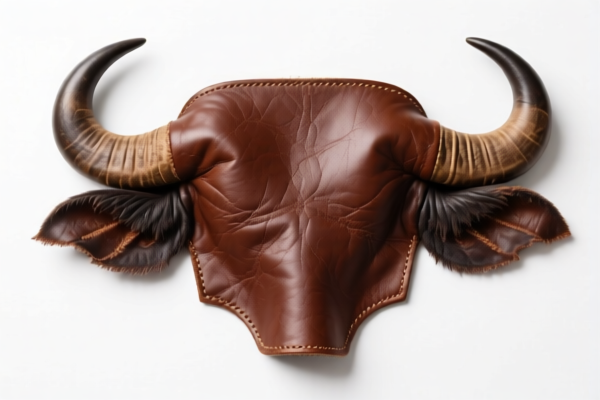
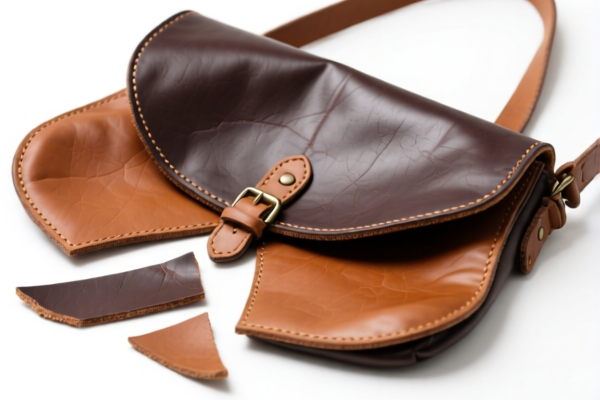
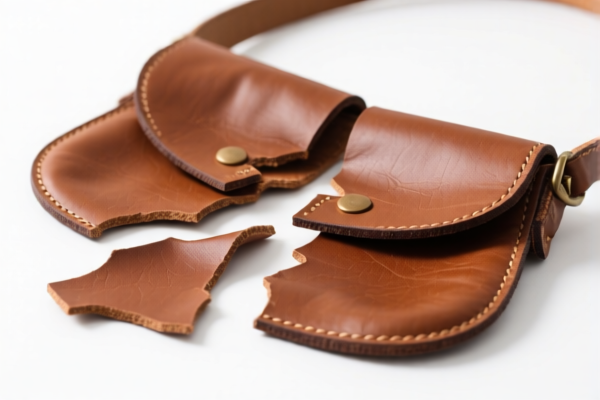
AI Analysis
🐃 Buffalo/Marsh Leather Belt Material (Semi-finished)
🌐 HS Code Reference & Customs Clearance Guide | 2026 Updated Tariff Analysis | Pro-Level Import Strategy
📌 One, Product Definition & Classification: What Exactly Is "Belt Material" in Leather?
Buffalo/Marsh leather semi-finished belt material refers to partially processed leather derived from water buffalo or swamp cattle, specifically intended for belt manufacturing. It is not yet a finished product but has undergone key processing steps such as tanning, splitting, and surface treatment—making it suitable for cutting and stitching into belts.
⚠️ Critical Distinction:
- If the leather is used exclusively for belts and matches the processing state described → 4107.92.70.30
- If it’s not intended for belts but still semi-finished → may fall under other categories (e.g., 4104.11.30.60)
- If it’s off-cuts or waste → 4115.20.00.00
📦 Two, HS Code Classification Details (2026 Official Tariff Match)
| HS Code | Product Description | Target Use Case | Processing Status | Tax Rate |
|---|---|---|---|---|
4107.92.70.30 |
Semi-finished buffalo/marsh cattle leather, specifically for belt material | Belts, fashion accessories, leather straps | Tanned, split, partially finished | 15.0% |
4115.10.00.00 |
Semi-finished buffalo/marsh leather, composite leather-like characteristics | Composite leather, bonded leather, industrial uses | Composite structure, layered | 35.0% |
4115.20.00.00 |
Leather semi-finished, classified as trimmings or waste | Scrap, reprocessing, low-value materials | Off-cuts, trimmings, production waste | 17.5% |
4104.41.30.60 |
Semi-finished buffalo leather, specific processing state | General leather goods (non-shoe, non-belt) | Tanned, split, not for belts | 12.4% |
4104.11.30.60 |
Semi-finished buffalo leather, non-shoe upper leather | Wallets, bags, upholstery, non-footwear uses | Not for shoes or belts | 12.4% |
4107.92.40.00 |
Semi-finished buffalo leather, suitable for further processing | Custom leather products, industrial manufacturing | Ready for further cutting or dyeing | 12.5% |
🔍 Key Insight:
- Only4107.92.70.30applies to belt-specific material — any misclassification leads to higher tariffs or penalties. - Even slight differences in intended use, processing stage, or physical form can shift the HS code.
💰 Three, 2026 Updated Tariff Breakdown (With附加 Taxes Explained)
✅ Applicable Country: United States (US)
✅ Origin: China (CN)
✅ Effective Date: November 10, 2025 (and ongoing)
🎯 1. 4107.92.70.30 — Buffalo/Marsh Leather Belt Material (Semi-finished)
| Item | Detail |
|---|---|
| Base Duty | 5.0% (ad valorem) |
| Section 301 (USITC) Additional Duty | +0.0% (no 301 tariff applied) |
| Section 122 (IEEPA) Emergency Economic Powers Duty | +10.0% (applies to China-origin goods) |
| Total Effective Duty | 15.0% |
| Tax Calculation | CIF Value × 15.0% |
| De Minimis Threshold | ❌ Not applicable (denied under US law) |
| Legal Basis Path | IEEPA:9903.01.24 → IEEPA:9903.01.25 → 4107.92.70.30 |
📌 Explanation:
- No 301 (Section 301) tariff applies here — this item is exempt from the 25% USITC penalty. - IEEPA 10% is mandatory for all Chinese-origin leather goods under the International Emergency Economic Powers Act (IEEPA). - Base 5% + 10% = 15% total — lower than composite or waste categories.
🎯 2. 4115.10.00.00 — Composite Buffalo/Marsh Leather (Semi-finished)
| Item | Detail |
|---|---|
| Base Duty | 0.0% |
| Section 301 (USITC) Additional Duty | +25.0% |
| Section 122 (IEEPA) Emergency Economic Powers Duty | +10.0% |
| Total Effective Duty | 35.0% |
| Tax Calculation | CIF Value × 35.0% |
| De Minimis Threshold | ❌ Not applicable |
| Legal Basis Path | IEEPA:9903.01.24 → USITC:9903.88.01 → 4115.10.00.00 |
📌 Why So High?
- Composite leather is treated as "synthetic" or "bonded" material under U.S. law. - 25% USITC tariff applies due to trade dispute status. - 10% IEEPA applies to all China-origin goods. - Total: 35% — one of the highest tariffs in the leather category.
🎯 3. 4115.20.00.00 — Leather Trimmings / Waste (Semi-finished)
| Item | Detail |
|---|---|
| Base Duty | 0.0% |
| Section 301 (USITC) Additional Duty | +7.5% |
| Section 122 (IEEPA) Emergency Economic Powers Duty | +10.0% |
| Total Effective Duty | 17.5% |
| Tax Calculation | CIF Value × 17.5% |
| De Minimis Threshold | ❌ Not applicable |
| Legal Basis Path | IEEPA:9903.01.24 → USITC:9903.88.01 → 4115.20.00.00 |
📌 Important Note:
- "Trimmed" or "waste" materials are not considered full leather. - 7.5% USITC is lower than 25% because they’re not "finished" products. - Still subject to 10% IEEPA — total 17.5%.
🎯 4. 4104.41.30.60 — Semi-finished Buffalo Leather (General Use)
| Item | Detail |
|---|---|
| Base Duty | 2.4% |
| Section 301 (USITC) Additional Duty | +0.0% |
| Section 122 (IEEPA) Emergency Economic Powers Duty | +10.0% |
| Total Effective Duty | 12.4% |
| Tax Calculation | CIF Value × 12.4% |
| De Minimis Threshold | ❌ Not applicable |
| Legal Basis Path | IEEPA:9903.01.24 → 4104.41.30.60 |
📌 Why Lower?
- No USITC 301 tariff — this item is not subject to the 25% penalty. - Base 2.4% + 10% IEEPA = 12.4% — cheaper than belt material.
🎯 5. 4104.11.30.60 — Non-Shoe Buffalo Leather (General Use)
| Item | Detail |
|---|---|
| Base Duty | 2.4% |
| Section 301 (USITC) Additional Duty | +0.0% |
| Section 122 (IEEPA) Emergency Economic Powers Duty | +10.0% |
| Total Effective Duty | 12.4% |
| Tax Calculation | CIF Value × 12.4% |
| De Minimis Threshold | ❌ Not applicable |
| Legal Basis Path | IEEPA:9903.01.24 → 4104.11.30.60 |
📌 Same as above — no 301 tariff, only 10% IEEPA, total 12.4%.
🎯 6. 4107.92.40.00 — Semi-finished Buffalo Leather (Further Processing)
| Item | Detail |
|---|---|
| Base Duty | 2.5% |
| Section 301 (USITC) Additional Duty | +0.0% |
| Section 122 (IEEPA) Emergency Economic Powers Duty | +10.0% |
| Total Effective Duty | 12.5% |
| Tax Calculation | CIF Value × 12.5% |
| De Minimis Threshold | ❌ Not applicable |
| Legal Basis Path | IEEPA:9903.01.24 → 4107.92.40.00 |
📌 Slight Premium — higher base duty than
4104.41.30.60, but still no 301 tariff.
🛠️ Four, Customs Clearance Best Practices (Pro Tips to Avoid Penalties)
✅ 1. Essential Documentation (MUST Provide)
| Document | Required? | Purpose |
|---|---|---|
| ✅ Product Specification Sheet | ✔️ | Confirm intended use (belt vs. other) |
| ✅ Processing Flow Diagram | ✔️ | Prove semi-finished state, not composite |
| ✅ High-Res Product Photos | ✔️ | Show surface texture, thickness, grain |
| ✅ Commercial Invoice | ✔️ | Accurately state “Semi-finished buffalo leather for belt manufacturing” |
| ✅ Certificate of Origin (CO) | ✔️ | Prove China origin → triggers IEEPA |
| ✅ Packing List | ✔️ | Show weight, quantity, packaging |
| ✅ Third-Party Test Report | ✔️ | If needed (e.g., REACH, RoHS for chemicals) |
✅ 2.申报技巧 (Pro申报 Strategy)
🔥 “Use Case Defines Code, Not Form!”
| Scenario | Correct HS Code | Wrong Code | Risk |
|---|---|---|---|
| Leather intended for belts, tanned, split, ready to cut | 4107.92.70.30 |
4104.41.30.60 |
Higher tariff |
| Leather not for belts, general use | 4104.41.30.60 |
4107.92.70.30 |
Higher tariff |
| Composite leather (bonded layers) | 4115.10.00.00 |
4107.92.70.30 |
35% vs 15% → 20% extra tax |
| Trim waste | 4115.20.00.00 |
4107.92.70.30 |
17.5% vs 15% → minor loss |
| Full leather, not for shoes | 4104.11.30.60 |
4107.92.70.30 |
12.4% vs 15% → better to use correct code |
✅ 3. Special Cases Handling
| Situation | Recommendation |
|---|---|
| Custom belt leather with logo or pattern | Still qualify for 4107.92.70.30 — as long as intended for belts |
| Leather shipped in bulk for third-party belt makers | Use 4107.92.70.30 — intent matters |
| Leather reprocessed from waste | If it meets belt material specs → 4107.92.70.30 |
| Leather with synthetic backing | Likely 4115.10.00.00 → 35% tariff → avoid if possible |
🌍 Five, Global Market Comparison (2026 Update)
| Country/Region | Recommended HS Code | Tariff | Certification | Notes |
|---|---|---|---|---|
| 🇺🇸 USA | 4107.92.70.30 |
15.0% | None (IEEPA applies) | No 301 tariff |
| 🇨🇳 China | 4107.92.70.30 |
5.0% | CCC, RoHS | No extra duties |
| 🇪🇺 EU | 4107.92.70.30 |
0% (if CE) | CE, REACH | No IEEPA |
| 🇦🇺 Australia | 4107.92.70.30 |
5.0% | RCM | No extra |
| 🇯🇵 Japan | 4107.92.70.30 |
0% | PSE | No extra |
📌 Insight:
- USA is the only market with 10% IEEPA on China-origin leather. - No 301 tariff on belt material → big win. - Best to use4107.92.70.30for belt-specific leather — lowest possible tariff in US.
📌 Six, Common Mistakes & How to Avoid Them (Real-World Pitfalls)
❌ Mistake 1: Classifying belt leather as 4104.41.30.60 (general use)
👉 Result: Underpaid duty → penalties, audits, back taxes
❌ Mistake 2: Claiming 4107.92.70.30 for composite leather
👉 Result: 35% tariff instead of 15% → huge cost overrun
❌ Mistake 3: Not stating "intended for belts" on invoice
👉 Result: Customs may reclassify → delayed clearance, extra fees
❌ Mistake 4: Using "leather trimmings" for belt production
👉 Result: 4115.20.00.00 → 17.5% vs 15% → small but avoidable
✅ Correct Declaration Phrase:
"Semi-finished buffalo/marsh cattle leather, intended exclusively for belt manufacturing, tanned, split, and ready for cutting. Not composite, not waste. HS Code: 4107.92.70.30"
🎯 Seven, Final Verdict: Precision Pays Off!
🎯 Golden Rule:
🔹 "If it’s for belts, use
4107.92.70.30— it’s the only code with 15% and no 301 tariff!"
🔹 "Don’t confuse form with function — intent determines the code!"
📌 Pro Tip:
If your leather is originated in Vietnam, Thailand, or Mexico, you may qualify for IEEPA exemption → 0% tariff on
4107.92.70.30!
✅ Apply for Advance Ruling (Pre-approval) to lock in the correct HS code and avoid surprises.
📣 Act Now!
📞 Contact a licensed U.S. Customs Broker + provide product photos + request HS Code Pre-Ruling
🚀 Get your buffalo belt leather cleared fast, legally, and at the lowest possible cost!
✨ Smart Classification = Smart Savings!
💼 Your next shipment could save you thousands — if you get the code right!
Customer Reviews
About HS Code Classification
The Harmonized System (HS) is an internationally standardized nomenclature developed by the World Customs Organization (WCO) to classify traded products. Over 200 countries use the HS system as the basis for customs tariffs, trade statistics, and import/export regulations.
Each HS code follows a hierarchical structure:
- Chapter (2 digits) — Broad category of goods (e.g., Chapter 84: Machinery and Mechanical Appliances)
- Heading (4 digits) — More specific grouping within the chapter
- Subheading (6 digits) — Internationally standardized breakdown, used by all WCO member countries
- National subdivisions (8-10 digits) — Country-specific extensions for further classification, such as US HTSUS 10-digit codes
Correct HS code classification is essential for smooth customs clearance, accurate duty payment, and compliance with trade regulations. Misclassification can lead to customs delays, overpayment of duties, or penalties.
When importing from CN to US, the applicable tariff rates may include:
- Most-Favored-Nation (MFN) rate — The standard duty rate applied to WTO members
- General rate — Applied to countries without trade agreements
- Trade remedy duties — Additional tariffs such as Section 301 (anti-dumping), Section 232 (national security), or countervailing duties
The information provided on this page is for reference purposes only. For official classification, please consult with your local customs authority or a licensed customs broker.