Buffer Safety Device
CN → US| HS Code | Tariff Rate | Origin | Destination | Doc |
|---|---|---|---|---|
| 8301406060 | 23.2% | CN | US | Official Doc |
| 8479899565 | 37.5% | CN | US | Official Doc |
| 8483608000 | 37.8% | CN | US | Official Doc |
| 8479899595 | 37.5% | CN | US | Official Doc |
| 8483908040 | 37.8% | CN | US | Official Doc |
Product Images
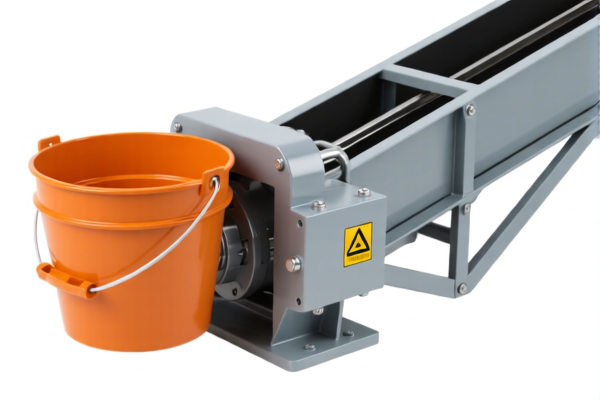
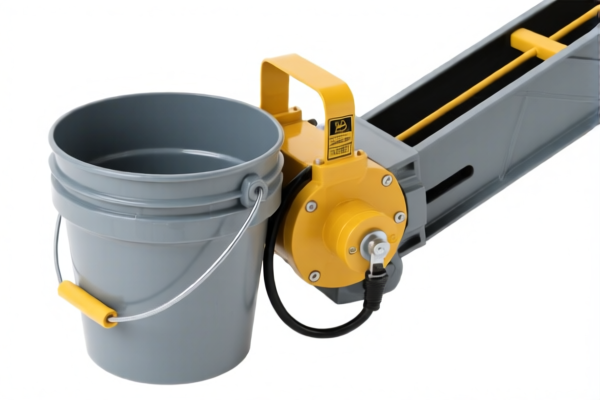
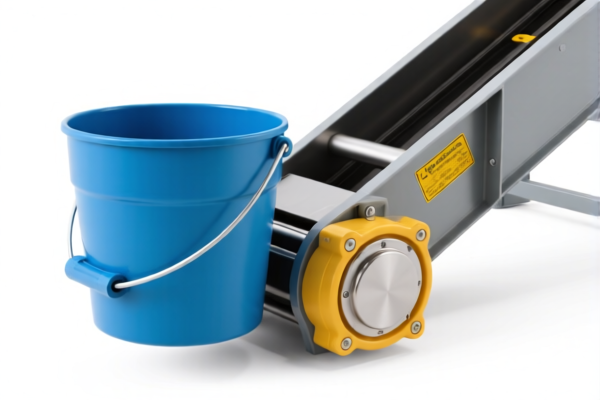
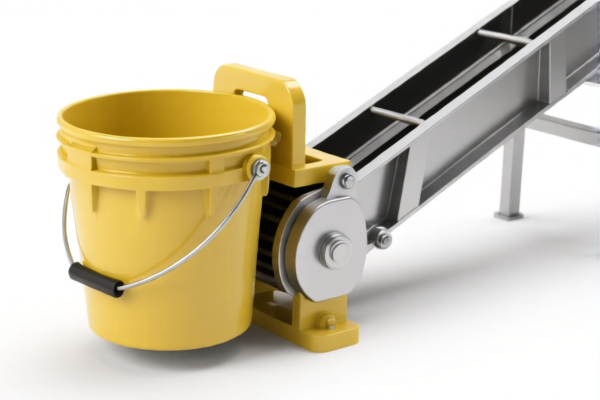
AI Analysis
🛡️ Buffer Safety Device (缓冲安全装置)
🌐 HS Code Reference & Customs Clearance Guide | 2026 Latest Tariff Analysis | Professional Clearance Strategy
📌 I. Product Definition & Classification: What Exactly is a "Buffer Safety Device"?
A Buffer Safety Device is a generic term used in industrial machinery to describe components designed to absorb energy, dampen shock, prevent collisions, or manage pressure fluctuations within mechanical systems. Because this is a functional description rather than a specific structural one, its HS Code classification depends entirely on how it is used and what it is made of.
In international trade, these devices typically fall into two main logic paths: 1. Mechanical Transmission/Protection Parts: If the device is used to protect shafts, couplings, or transmission systems from overload or shock. 2. Hydraulic/Pneumatic or General Mechanical Parts: If the device functions as a pressure accumulator, shock absorber, or general industrial machine component.
⚠️ Key Distinction Point:
- If it is a metal lock/latch mechanism used for safety interlocks → Look at Chapter 83.
- If it is a hydraulic/pneumatic accumulator or general machine part absorbing impact → Look at Chapter 84.
- If it is part of a transmission system (shaft/coupling protection) → Look at Chapter 84 (Heading 8483).
📦 II. HS Code Classification Details (Based on Provided Data)
Based on the provided data, the "Buffer Safety Device" can be classified into five potential HS Codes depending on its specific material and functional application.
| HS Code | Summary of Logic | Total Tax Rate | Tax Breakdown (China Origin → US) |
|---|---|---|---|
8301.40.60.60 |
Material Inference: Metal-made safety devices often fall under "Other Locks" (兜底类目). This assumes the device functions as a metal locking/interlocking safety mechanism. | 23.2% | Base: 5.7% + Section 301: 7.5% + 122 Clause: 10% |
8479.89.95.65 |
Usage Inference (Hydraulic/General): Buffer devices that absorb energy/pressure fluctuations match the logic of Hydraulic Accumulators. Classified under "Other machines" (industrial vibration/shock absorption). | 37.5% | Base: 2.5% + Section 301: 25.0% + 122 Clause: 10% |
8483.60.80.00 |
Usage Matching (Transmission): Buffer safety devices in mechanical transmission are seen as Protection/Coupling functions. No conflict with shaft couplings and universal joints. | 37.8% | Base: 2.8% + Section 301: 25.0% + 122 Clause: 10% |
8479.89.95.95 |
Usage Inference (Industrial Aux): Classified as Industrial Mechanical Auxiliary/Protection. No logical conflict with industrial vibrators (independent functional machines). | 37.5% | Base: 2.5% + Section 301: 25.0% + 122 Clause: 10% |
8483.90.80.40 |
Part Classification: Belongs to Transmission Device Parts. As a protective/safety component for transmission systems, it is a reasonable inference for parts. | 37.8% | Base: 2.8% + Section 301: 25.0% + 122 Clause: 10% |
🔍 Analysis of the Data:
- Lowest Tax Option:8301.40.60.60(23.2%). This requires proving the device is structurally a "lock" or "interlock" mechanism made of metal.
- Highest Tax Options:8483.60.80.00and8483.90.80.40(37.8%). These assume the device is a functional part of a transmission system or general industrial machine.
- Common Theme: All non-lock codes (84xx) incur a 25% Section 301 tariff plus a 122 Clause tariff, resulting in high total tax burdens.
💰 III. 2026 Latest Tariff Rate Details (Detailed Tax Clause Explanation)
✅ Applicable Market: United States (US)
✅ Origin: China (CN)
✅ Note: The "122 Clause" refers to specific US trade provisions often associated with additional tariffs on Chinese goods.
🎯 1. 8301.40.60.60 —— Other Locks (Metal Safety Device)
| Item | Detail |
|---|---|
| Base Tariff | 5.7% (Ad Valorem) |
| Section 301 Tariff | +7.5% |
| 122 Clause Tariff | +10% |
| Total Tax Rate | 23.2% |
| Tax Calculation | CIF Value × 23.2% |
| Legal Basis | Specific to metal locking mechanisms/safety latches |
📌 Explanation:
- This is the most cost-effective classification among the provided options.
- Critical Requirement: You must prove the device is functionally a "lock" or "interlock" (e.g., a metal latch that prevents machine access when open) rather than a simple shock absorber.
- If customs determines it is not a "lock," this classification may be rejected, leading to reclassification into the higher 37%+ brackets.
🎯 2. 8479.89.95.65 & 8479.89.95.95 —— Other Industrial Machines/Parts
| Item | Detail |
|---|---|
| Base Tariff | 2.5% |
| Section 301 Tariff | +25.0% |
| 122 Clause Tariff | +10% |
| Total Tax Rate | 37.5% |
| Tax Calculation | CIF Value × 37.5% |
| Legal Basis | Chapter 84, Heading 8479 (Machines with individual functions not elsewhere specified) |
📌 Explanation:
- Applies if the buffer is seen as a general industrial machine component (e.g., hydraulic shock absorber, vibration damper).
- The 25% Section 301 tariff is the major cost driver here.
- Differentiation between.65(Hydraulic/Accumulator logic) and.95(General Auxiliary logic) is subtle and depends on technical specs.
🎯 3. 8483.60.80.00 & 8483.90.80.40 —— Transmission Parts/Couplings
| Item | Detail |
|---|---|
| Base Tariff | 2.8% |
| Section 301 Tariff | +25.0% |
| 122 Clause Tariff | +10% |
| Total Tax Rate | 37.8% |
| Tax Calculation | CIF Value × 37.8% |
| Legal Basis | Chapter 84, Heading 8483 (Shafts, cranks, bearing housings, couplings, etc.) |
📌 Explanation:
- Applies if the buffer is explicitly part of a power transmission system (e.g., a torsion bar buffer, coupling protector, or universal joint safety device).
- This is the highest tax rate in the list.
- Justification: The device must be integral to the transmission of torque or rotation, not just general shock absorption.
🛠️ IV. Customs Clearance Practical Advice (Avoid Pitfalls)
✅ 1. Preparation Checklist (Essential Documents)
| Document | Required? | Purpose |
|---|---|---|
| Technical Specification Sheet | ✅ Yes | Must clearly state the function: Is it a "Lock/Interlock" (for 8301) or a "Shock Absorber/Accumulator" (for 84xx)? |
| Structural Diagrams | ✅ Yes | Show if it contains hydraulic/pneumatic elements (supports 8479) or mechanical linkage (supports 8301/8483). |
| Product Photos | ✅ Yes | Clear images of mounting points, branding, and material (metal vs. rubber/hydraulic). |
| Commercial Invoice | ✅ Yes | Description must match the HS Code logic (e.g., "Metal Safety Lock" vs. "Hydraulic Buffer"). |
| Origin Certificate | ✅ Yes | To confirm China origin and apply correct Section 301/122 rates. |
✅ 2. Classification Strategy (Key Mnemonics)
🔥 "Function Determines Code: Lock = 8301, Transmission = 8483, General Machine = 8479"
| Scenario | Recommended HS Code | Why? | Risk if Misclassified |
|---|---|---|---|
| Metal Interlock/Latch | 8301.40.60.60 |
It acts as a safety lock. | If forced into 84xx, tax jumps to 37.5%+. |
| Hydraulic Shock Absorber | 8479.89.95.65 |
Absorbs pressure/energy like an accumulator. | High tax (37.5%). |
| Transmission Coupling Protector | 8483.60.80.00 |
Part of shaft/coupling system. | Highest tax (37.8%). |
| General Industrial Vibration Damper | 8479.89.95.95 |
Independent function, not tied to transmission. | High tax (37.5%). |
✅ 3. Special Cases & Handling
| Situation | Advice |
|---|---|
| Device has both Locking & Buffering Functions | Prioritize 8301 if the locking function is primary. It saves 14%+ in taxes. |
| Hydraulic vs. Mechanical | Hydraulic buffers lean towards 8479. Mechanical torsion buffers lean towards 8483. |
| Customs Inquiry | If customs questions the 8301 classification, provide proof that it is not a "machine part" but a "locking device." |
| 122 Clause Impact | All codes carry a 10% 122 Clause tariff. This is non-negotiable for Chinese origin. Plan for this in cost modeling. |
🌍 V. Global Clearance Comparison (2026 Update)
| Market | Recommended HS Code | Estimated Duty (China Origin) | Notes |
|---|---|---|---|
| 🇺🇸 USA | 8301.40.60.60 |
23.2% | Best option if classified as a lock. |
| 🇺🇸 USA | 8479.89.95.65 |
37.5% | High cost due to Section 301 + 122. |
| 🇨🇳 China | 8301.40.60.60 |
~5-10% | Lower base duties, but check latest Chinese tariff schedule. |
| 🇪🇺 EU | Varies (Likely 8483 or 8479) | ~2.5-5% | EU tariffs are generally lower than US, but check CN code vs. TARIC. |
| 🇬🇧 UK | Varies | ~2.5-5% | Post-Brexit UK customs may follow similar logic to EU. |
📌 Conclusion:
- The US market is the most challenging due to the combination of Section 301 (25%) and 122 Clause (10%) tariffs on most mechanical/hydraulic parts.
- Strategy: If your product can be legally defined as a "Metal Lock/Interlock," aggressively pursue8301.40.60.60to reduce tax from ~37.5% to 23.2%.
📌 VI. Common Errors & Pitfalls (Lessons Learned)
❌ Error 1: Calling it a "Buffer" and classifying it as 8483 (Transmission Part).
👉 Result: 37.8% Tax.
💡 Fix: If it’s a safety interlock, call it a "Lock" or "Interlock Device" and use 8301.
❌ Error 2: Not distinguishing between Hydraulic and Mechanical.
👉 Result: Misclassification between 8479 (Hydraulic) and 8483 (Transmission).
💡 Fix: Check if it uses fluid/pressure (8479) or rotational torque (8483).
❌ Error 3: Ignoring the 122 Clause.
👉 Result: Unexpected customs holds or underpayment.
💡 Fix: The 122 Clause (10%) applies to almost all Chinese-manufactured industrial parts in the US. Factor it into your CIF cost.
✅ Correct Declaration Example:
"Metal Safety Interlock Lock with Buffering Mechanism, Model XYZ, for Industrial Machinery, Made in China" →
8301.40.60.60
(Avoids the higher Section 301 burden if structurally a lock)
🎯 VII. Conclusion: Professional Declaration, Cost Optimization!
🎯 Remember the Key Strategy:
🔹 "Function First: Lock = 23.2%, Machine Part = 37.5%+"
🔹 "If it Latches, Classify as Lock. If it Transmits, Classify as 8483."
🔹 "The 122 Clause is Unavoidable (10%) for Chinese Goods in the US."
📌 Pro Tip:
If your device can be demonstrated as a safety lock/interlock, use 8301.40.60.60 to save ~14% in duties compared to other mechanical classifications.
Request an Advance Ruling from US Customs (CBP) if the product has complex dual functions (Lock + Buffer) to ensure the lower tax rate is upheld.
📣 Immediate Action:
📞 Consult a Customs Broker
📄 Provide Technical Drawings showing the Locking Mechanism (if applicable)
🚀 Clearance Success: Minimize Tax, Maximize Profit!
✨ Professional Classification Starts with Precise Definition!
💼 Every Percent in Duty is Money in Your Pocket!
Customer Reviews
About HS Code Classification
The Harmonized System (HS) is an internationally standardized nomenclature developed by the World Customs Organization (WCO) to classify traded products. Over 200 countries use the HS system as the basis for customs tariffs, trade statistics, and import/export regulations.
Each HS code follows a hierarchical structure:
- Chapter (2 digits) — Broad category of goods (e.g., Chapter 84: Machinery and Mechanical Appliances)
- Heading (4 digits) — More specific grouping within the chapter
- Subheading (6 digits) — Internationally standardized breakdown, used by all WCO member countries
- National subdivisions (8-10 digits) — Country-specific extensions for further classification, such as US HTSUS 10-digit codes
Correct HS code classification is essential for smooth customs clearance, accurate duty payment, and compliance with trade regulations. Misclassification can lead to customs delays, overpayment of duties, or penalties.
When importing from CN to US, the applicable tariff rates may include:
- Most-Favored-Nation (MFN) rate — The standard duty rate applied to WTO members
- General rate — Applied to countries without trade agreements
- Trade remedy duties — Additional tariffs such as Section 301 (anti-dumping), Section 232 (national security), or countervailing duties
The information provided on this page is for reference purposes only. For official classification, please consult with your local customs authority or a licensed customs broker.