Buffer Separator Pad
CN → US| HS Code | Tariff Rate | Origin | Destination | Doc |
|---|---|---|---|---|
| 3926904590 | 38.5% | CN | US | Official Doc |
| 3926909989 | 22.8% | CN | US | Official Doc |
| 4016996050 | 37.5% | CN | US | Official Doc |
| 4016995500 | 37.5% | CN | US | Official Doc |
| 4016996050 | 37.5% | CN | US | Official Doc |
Product Images
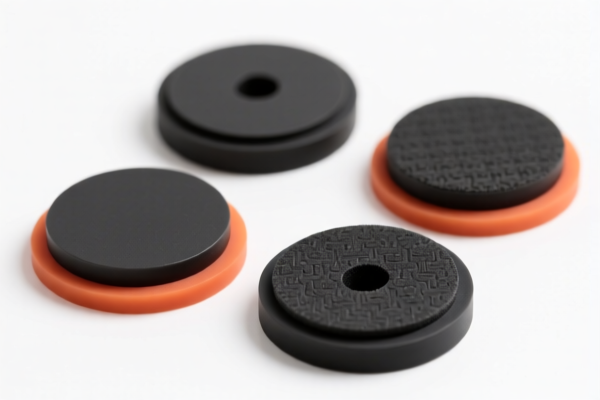
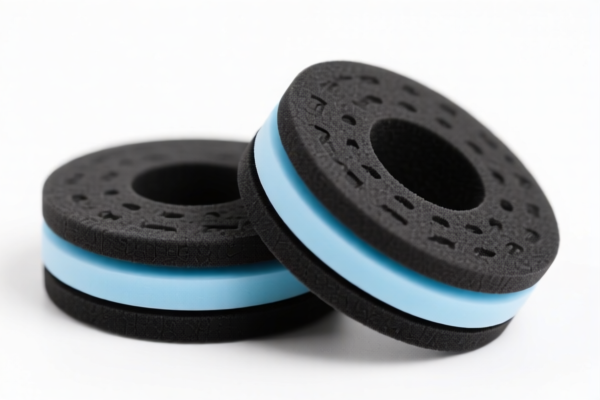
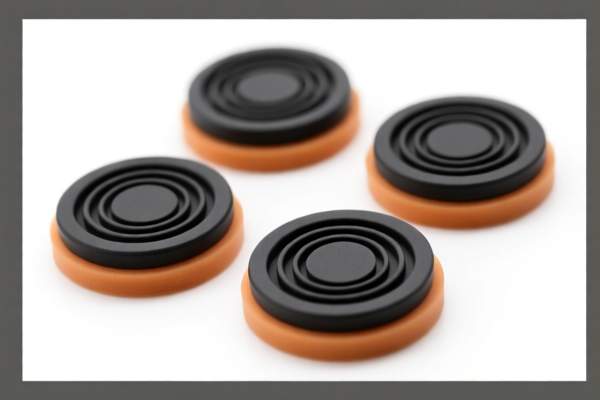
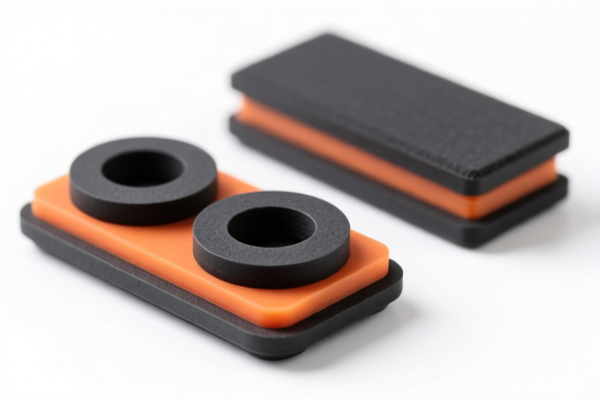
AI Analysis
🛡️ Buffer Separator Pad (Cushioning/Shock Absorption Components)
🌐 HS Code Reference & Clearance Guide | 2026 Latest Tariff Analysis | Professional Customs Strategy
📌 Part 1: Product Definition & Classification Logic
Buffer Separator Pads are critical components used for shock absorption, vibration damping, noise reduction, and spacing/separation in machinery, electronics, construction, and automotive applications. In international trade, their classification depends strictly on material composition (Plastic vs. Rubber) and specific function.
⚠️ Key Distinction Point:
- If made of Plastic/Synthetic Polymers (e.g., PE, PP, PVC foam, Silicone resin): Classified under Chapter 39.
- If made of Vulcanized Rubber (e.g., Natural Rubber, SBR, Nitrile): Classified under Chapter 40.
📦 Part 2: HS Code Classification Matrix (Based on Provided Data)
| HS Code | Material Basis | Summary / Logic from Data | Total Tax Rate |
|---|---|---|---|
| 3926.90.45.90 | Plastic | "Buffer pad belongs to gaskets/seals category; inferred as plastic/rubber-like product, classified under other plastic products." | 38.5% |
| 3926.90.99.89 | Plastic/Synthetic | "Based on usage and common sense, inferred material is plastic, rubber, or synthetic material; fits 'other articles of plastic and other materials'." | 22.8% |
| 4016.99.60.50 | Vulcanized Rubber | "Buffer pad belongs to rubber products; inferred material is vulcanized rubber; fits 'other vulcanized rubber articles' (catch-all)." | 37.5% |
| 4016.99.55.00 | Vulcanized Rubber | "Usage fits vibration control definition; inferred material is rubber-based; classified under other vulcanized rubber articles." | 37.5% |
| 4016.99.60.50 | Silicone (Vulcanized) | "Silicone buffer pad material is silicone (a type of vulcanized rubber); form is buffer pad; fits 'other vulcanized rubber articles'." | 37.5% |
🔍 Critical Insight:
- Plastic Pads (Ch. 39): Generally considered "other plastic articles." The key is proving the material is not primarily rubber.
- Rubber Pads (Ch. 40): Includes both general rubber pads and Silicone (which US Customs treats as vulcanized rubber for Chapter 40 purposes).
- Tax Discrepancy: Note the significant tax difference between HS3926.90.99.89(22.8%) and3926.90.45.90(38.5%). Material proof is crucial.
💰 Part 3: 2026 Latest Tariff Rate Breakdown (Including Additional Duties)
✅ Applicable Country: United States (US)
✅ Origin: China (CN)
✅ Effective Date: Post-2025/2026 Trade Policy Context (Section 301 & IEEPA)
🎯 1. Plastic-Based Buffer Pads (Chapter 39)
Option A: HS 3926.90.45.90
- Logical Basis: Classified specifically under "Other plastic articles, n.e.s. in 3926" with a focus on gaskets/seals.
- Tax Detail:
- Base Duty: 3.5%
- Section 301 Additional Duty: 25.0%
- IEEPA 122-Clause Duty: 10.0%
- Total Effective Rate: 38.5%
- ⚠️ Warning: This is a high-cost classification. Requires strict proof that the item is not primarily rubber.
Option B: HS 3926.90.99.89
- Logical Basis: A broader "Other" category for plastic articles. Often used if the specific "45.90" description doesn't perfectly fit the product's industrial use.
- Tax Detail:
- Base Duty: 5.3%
- Section 301 Additional Duty: 7.5%
- IEEPA 122-Clause Duty: 10.0%
- Total Effective Rate: 22.8%
- 💡 Strategy: This rate is significantly lower (15.7% savings). However, Customs may challenge this if the product is explicitly a "gasket." You must argue it is a general "buffer/shock absorber," not a fluid-tight seal.
🎯 2. Rubber & Silicone-Based Buffer Pads (Chapter 40)
Options C/D/E: HS 4016.99.55.00 / 4016.99.60.50
- Logical Basis: Includes general vulcanized rubber pads and Silicone pads (Silicone is chemically distinct but often grouped with rubber in Chapter 40 for duty purposes if vulcanized).
- Tax Detail:
- Base Duty: 2.5%
- Section 301 Additional Duty: 25.0%
- IEEPA 122-Clause Duty: 10.0%
- Total Effective Rate: 37.5%
- Note: Whether classified as "vibration control" (55.00) or "other articles" (60.50), the total tax rate is identical (37.5%). The difference is only in the internal HS subheading description.
🛠️ Part 4: Customs Clearance Practical Advice
✅ 1. Documentation Checklist (Must-Haves)
| Document | Requirement | Why It Matters |
|---|---|---|
| Material Spec Sheet | ✔️ Critical | Must explicitly state: "100% Silicone," "Vulcanized Nitrile Rubber," or "Expanded Polyethylene (EPE)." Ambiguity leads to misclassification. |
| Product Photos | ✔️ Critical | Show texture, flexibility, and any labeling. Rubber looks different from plastic foam. |
| Technical Data Sheet (TDS) | ✔️ | Demonstrates properties (durometer, temperature resistance). High durometer (>60 Shore A) often points to Rubber (Ch 40); low durometer/foam points to Plastic (Ch 39). |
| Commercial Invoice | ✔️ | Must match HS Code description. Do NOT just write "Pad." Write "Rubber Shock Absorber Pad" or "Plastic Buffer Separator." |
| Declaration of Origin | ✔️ | Essential for calculating Section 301/IEEPA duties. |
✅ 2. Strategic Classification Advice
🟢 Strategy 1: Aim for HS 3926.90.99.89 (22.8% Tax)
- When to use: If the pad is Plastic/Polymer (e.g., PE, PP, EVA foam, UHMWPE) and NOT primarily used as a fluid-tight gasket.
- Argument: "This is a general-purpose buffer/shock absorber for machinery alignment, not a dynamic seal for fluids. It does not meet the strict definition of 'gasket' under 3926.90.45."
- Risk: CBP may reject this if the product is explicitly marketed as a "gasket" or "seal."
🟡 Strategy 2: Use HS 4016.99.xxxx (37.5% Tax) for Rubber/Silicone
- When to use: If the pad is Silicone or Vulcanized Rubber.
- Argument: Silicone is frequently classified under Chapter 40. Ensure your TDS states "Vulcanized" or "Cross-linked."
- Risk: Low. This is the standard classification for rubber/silicone buffers. No significant tax savings vs. Plastic Ch 39 "High" rate.
🔴 Strategy 3: Avoid HS 3926.90.45.90 (38.5% Tax)
- Why: It carries the highest Section 301 duty (25%) and is narrowly defined. Only use if forced by CBP, otherwise, try to move to 3926.90.99.89 (if plastic) or Ch 40 (if rubber).
✅ 3. Common Pitfalls & Avoidance
| Mistake | Consequence | Solution |
|---|---|---|
| Calling all pads "Rubber" | If they are Plastic/EVA, you might be flagged for misdeclaration, but more importantly, you might miss the chance to argue for the lower-tax "Other Plastic" category. | Be precise: Use "Thermoplastic Elastomer (TPE)" if it's borderline, but understand TPEs can be Ch 39 or 40 depending on composition. |
| Calling all pads "Plastic" | If they are Silicone, CBP will classify under Ch 40 (37.5%) and may penalize for incorrect description. | If it's Silicone, declare as "Silicone Rubber Pad" under Ch 40. |
| Ignoring IEEPA 10% | All listed HS codes above include a 10% IEEPA surcharge for Chinese goods. | Factor this into your Landed Cost calculation. It is unavoidable for CN origin. |
| Missing "Vulcanization" Proof | For Rubber/Ch 40, non-vulcanized materials might fall under different chapters (e.g., Ch 35 or 39). | Provide lab tests showing vulcanization/cross-linking. |
🌍 Part 5: Global Comparison (Quick Reference)
| Market | Recommended HS Code | Est. Total Duty (CN Origin) | Note |
|---|---|---|---|
| 🇺🇸 USA | 3926.90.99.89 |
22.8% | Best for Plastic Buffers. |
| 🇺🇸 USA | 4016.99.60.50 |
37.5% | Standard for Rubber/Silicone. |
| 🇺🇸 USA | 3926.90.45.90 |
38.5% | Avoid if possible (Gasket classification). |
| 🇪🇺 EU | 3926.90 / 4016.99 | Varies (0-5%) | No Section 301/IEEPA. Check EU-specific rules. |
| 🇨🇳 China | 3926.90 / 4016.99 | ~5-7% | Import duty only. No US-style tariffs. |
📌 Conclusion:
- For Plastic buffer pads, fight for 3926.90.99.89 to save ~15% vs. the gasket classification.
- For Rubber/Silicone, accept 4016.99.60.50 at 37.5%.
- Always include IEEPA 10% in your cost model for China-origin goods.
📌 Part 6: Final Recommendations for Importers
- Get a Pre-Ruling: If your product is borderline (e.g., TPE, Silicone-Plastic blends), request a CBP Binding Ruling before shipment.
- Label Accurately: On the commercial invoice, use the HS-specific description.
- Good: "Plastic Buffer Separator Pad, Model XYZ, Made of PE Foam"
- Bad: "Padding" or "Rubber Pad" (if it's plastic).
- Check Material Composition: If you can switch from a "Gasket" application to a "General Shock Absorber" application, you may qualify for the lower-tax HS 3926.90.99.89.
✨ Professional clearance starts with precise classification!
💼 Your margin depends on these percentage points!
Customer Reviews
About HS Code Classification
The Harmonized System (HS) is an internationally standardized nomenclature developed by the World Customs Organization (WCO) to classify traded products. Over 200 countries use the HS system as the basis for customs tariffs, trade statistics, and import/export regulations.
Each HS code follows a hierarchical structure:
- Chapter (2 digits) — Broad category of goods (e.g., Chapter 84: Machinery and Mechanical Appliances)
- Heading (4 digits) — More specific grouping within the chapter
- Subheading (6 digits) — Internationally standardized breakdown, used by all WCO member countries
- National subdivisions (8-10 digits) — Country-specific extensions for further classification, such as US HTSUS 10-digit codes
Correct HS code classification is essential for smooth customs clearance, accurate duty payment, and compliance with trade regulations. Misclassification can lead to customs delays, overpayment of duties, or penalties.
When importing from CN to US, the applicable tariff rates may include:
- Most-Favored-Nation (MFN) rate — The standard duty rate applied to WTO members
- General rate — Applied to countries without trade agreements
- Trade remedy duties — Additional tariffs such as Section 301 (anti-dumping), Section 232 (national security), or countervailing duties
The information provided on this page is for reference purposes only. For official classification, please consult with your local customs authority or a licensed customs broker.