Building Composite Panel
CN → US| HS Code | Tariff Rate | Origin | Destination | Doc |
|---|---|---|---|---|
| 3920992000 | 39.2% | CN | US | Official Doc |
| 3921905050 | 39.8% | CN | US | Official Doc |
| 3921904090 | 39.2% | CN | US | Official Doc |
| 4823902000 | 35.0% | CN | US | Official Doc |
| 4823908680 | 35.0% | CN | US | Official Doc |
Product Images
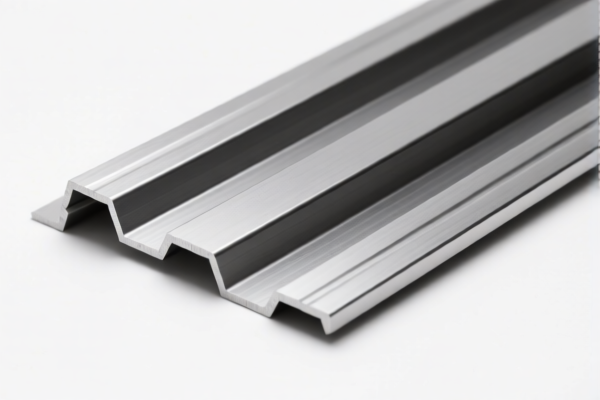
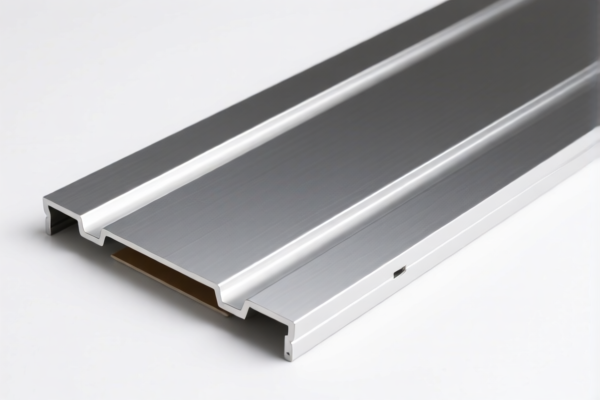
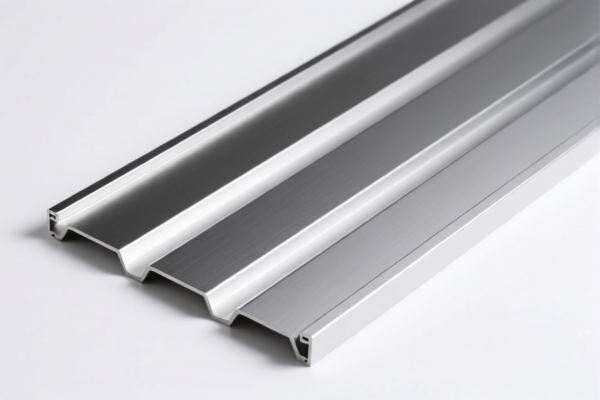
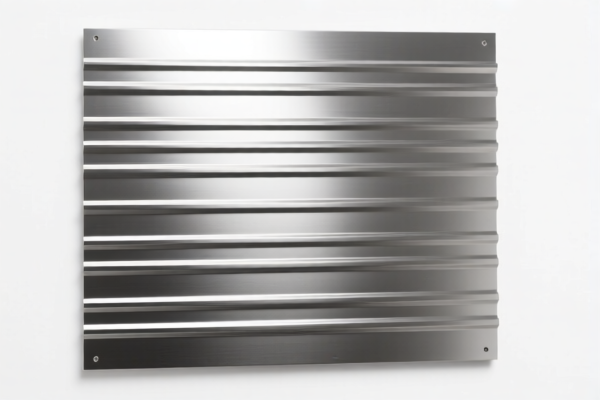
AI Analysis
🏗️ Building Composite Panel (Construction Boards)
🌐 HS Code Reference & Customs Clearance Guide | 2026 Latest Tariff Analysis | Professional Clearance Strategy
📌 I. Product Definition and Classification: What Exactly is a "Building Composite Panel"?
In international trade, "Building Composite Panel" is a broad term that often leads to misclassification. It generally refers to flat materials made from multiple layers of different substances (plastic, paper, wood fiber) bonded together. The key to correct classification lies in the primary material and the form.
Plastic-Based Panels: Composite boards where the primary constituent is plastic (polymer), often laminated with other layers. These fall under Chapter 39.
Paper/Wood-Based Panels: Composite boards where the base is paper, pulp, or wood fibers (e.g., fiberboard, particleboard, laminated paperboard). These fall under Chapter 48.
⚠️ Critical Distinction:
- If the panel is primarily plastic (even if coated or layered with paper/metal), it belongs to Chapter 39.
- If the panel is primarily paper or wood fiber (even if coated with plastic or other materials for industrial use), it belongs to Chapter 48.
- Do not guess based on the final use (e.g., "for building"). Use the material composition.
📦 II. HS Code Classification Details (2026 Latest Tariff Authority Mapping)
| HS Code | Product Description | Primary Material | Form/Type | Typical Application |
|---|---|---|---|---|
3920.99.20.00 |
Plastic composite panels, laminated or composite | Plastic | Laminated/Composite Board | Decorative boards, industrial plastics, non-wood building materials |
3921.90.50.50 |
Plastic boards | Plastic | Solid Board | Industrial plastic sheets, insulation boards, general plastic boards |
3921.90.40.90 |
Plastic boards (Other) | Plastic | Solid Board (Other Category) | Specialty plastic boards not specified elsewhere |
4823.90.20.00 |
Agricultural/Cellulose Composite Board | Paper/Wood Fiber | Board | Agricultural packaging, paper-based insulation, compostable boards |
4823.90.86.80 |
Industrial Composite Paperboard | Paper/Cardboard | Industrial Product | Heavy-duty cardboard, industrial liners, corrugated fiberboard |
🔍 Key Clarification:
-3920vs3921:3920covers plates, sheets, film, foil, and strip of plastics, non-cellular and not in rolls.3921covers other plates, sheets, etc. The distinction is often subtle and depends on specific manufacturing processes and exact composition.
-4823: Covers paper and paperboard cut to size, surface-worked, etc. "Composite" here refers to multi-layer paper/cardboard products.
💰 III. 2026 Latest Tariff Rate Breakdown (Including Surtaxes & Policy Additions)
✅ Applicable Country: USA (US)
✅ Country of Origin: China (CN)
✅ Effective Date: November 10, 2025 onwards (including subsequent imports)
🎯 1. 3920.99.20.00 – Plastic Composite Panels (Laminated)
| Item | Details |
|---|---|
| Base Tariff | 4.2% (ad valorem) |
| Section 301 Surcharge | +25.0% (USITC Footnote 9903.88.01) |
| Section 122 / IEEPA Surcharge | +10.0% (China-specific, effective Nov 10, 2025) |
| Total Tariff Rate | 39.2% |
| Tax Calculation | CIF Value × 39.2% |
| De Minimis Exemption | ❌ Not Eligible (deny_de_minimis) |
| Legal Basis Chain | IEEPA:9903.01.25 → IEEPA:9903.01.24 → USITC:3920.99.20.00 → FOOTNOTE:9903.88.01 |
📌 Explanation:
- The 25% is the standard Section 301 tariff for most Chinese plastic goods.
- The 10% is the additional "122 Clause" tariff targeting specific Chinese imports under the International Emergency Economic Powers Act (IEEPA).
- Total: 39.2%. This is a high-cost item for US importers.
🎯 2. 3921.90.50.50 – Plastic Boards
| Item | Details |
|---|---|
| Base Tariff | 4.8% (ad valorem) |
| Section 301 Surcharge | +25.0% |
| Section 122 / IEEPA Surcharge | +10.0% |
| Total Tariff Rate | 39.8% |
| Tax Calculation | CIF Value × 39.8% |
| De Minimis Exemption | ❌ Not Eligible |
| Legal Basis Chain | IEEPA:9903.01.25 → IEEPA:9903.01.24 → USITC:3921.90.50.50 → FOOTNOTE:9903.88.01 |
📌 Note:
- Slightly higher base rate (4.8%) than3920.99.20.00(4.2%), leading to a 39.8% total.
- Applies to solid plastic boards that are not strictly "composite" in the laminated sense but are still plastic-based.
🎯 3. 3921.90.40.90 – Plastic Boards (Other)
| Item | Details |
|---|---|
| Base Tariff | 4.2% (ad valorem) |
| Section 301 Surcharge | +25.0% |
| Section 122 / IEEPA Surcharge | +10.0% |
| Total Tariff Rate | 39.2% |
| Tax Calculation | CIF Value × 39.2% |
| De Minimis Exemption | ❌ Not Eligible |
| Legal Basis Chain | IEEPA:9903.01.25 → IEEPA:9903.01.24 → USITC:3921.90.40.90 → FOOTNOTE:9903.88.01 |
📌 Note:
- Falls under "Other" plastic boards. Same total rate as3920.99.20.00.
- Often used for specialty plastics not fitting other specific subheadings.
🎯 4. 4823.90.20.00 – Agricultural/Cellulose Composite Board
| Item | Details |
|---|---|
| Base Tariff | 0.0% (ad valorem) |
| Section 301 Surcharge | +25.0% |
| Section 122 / IEEPA Surcharge | +10.0% |
| Total Tariff Rate | 35.0% |
| Tax Calculation | CIF Value × 35.0% |
| De Minimis Exemption | ❌ Not Eligible |
| Legal Basis Chain | IEEPA:9903.01.25 → IEEPA:9903.01.24 → USITC:4823.90.20.00 → FOOTNOTE:9903.88.01 |
📌 Explanation:
- Base rate is 0% because it is paper/wood-based. However, the 35% total is still significant due to surcharges.
- "Agricultural" here refers to cellulose/pulp-based boards, not necessarily for farming use, but for general composite paper products.
🎯 5. 4823.90.86.80 – Industrial Composite Paperboard
| Item | Details |
|---|---|
| Base Tariff | 0.0% (ad valorem) |
| Section 301 Surcharge | +25.0% |
| Section 122 / IEEPA Surcharge | +10.0% |
| Total Tariff Rate | 35.0% |
| Tax Calculation | CIF Value × 35.0% |
| De Minimis Exemption | ❌ Not Eligible |
| Legal Basis Chain | IEEPA:9903.01.25 → IEEPA:9903.01.24 → USITC:4823.90.86.80 → FOOTNOTE:9903.88.01 |
📌 Note:
- Applies to heavy-duty paper/cardboard composites for industrial use.
- Same total rate as4823.90.20.00(35%).
🛠️ IV. Customs Clearance Practical Advice (Battle-Tested Pitfall Guide)
✅ 1. Documentation Checklist (Non-Negotiable)
| Document | Required | Description |
|---|---|---|
| ✅ Product Specification Sheet | ✔️ | Must clearly state material composition (e.g., "80% PE, 20% Aluminum") for plastic boards; or "Wood Fiber + Resin" for paper boards. |
| ✅ Material Safety Data Sheet (MSDS) | ✔️ | For chemical composition verification, especially for plastic resins. |
| ✅ Product Photos (with Labels) | ✔️ | Show the cross-section of the board to prove layering/compositing. |
| ✅ Commercial Invoice | ✔️ | Must use precise HS Code and description (e.g., "Plastic Composite Panel, HS 3920.99.20.00"). |
| ✅ Packing List | ✔️ | Detail weight, dimensions, and quantity. |
| ✅ Certificate of Origin (CO) | ✔️ | Essential for proving Chinese origin and applying correct surcharges. |
✅ 2. Declaration Tactics (Key Mantras)
🔥 “Material Dictates Code, Not Use! Don’t Guess, Prove!”
| Scenario | Correct Declaration | Wrong Practice |
|---|---|---|
| Plastic Core with Paper Coating | 3920.99.20.00 or 3921.xxxx (Plastic Chapter) |
Misdeclare as 4823 (Paper Chapter) → Penalty + Back Taxes |
| Paper Core with Plastic Coating | 4823.90.86.80 (Paper Chapter) |
Misdeclare as 3920 (Plastic Chapter) → Incorrect Tax Base |
| Solid Plastic Board | 3921.90.50.50 |
Use vague term "Building Board" → Customs Detention |
| Agricultural/Pulp Board | 4823.90.20.00 |
Use "Composite Panel" without material detail → Delay |
✅ 3. Special Circumstances Handling
| Situation | Handling Advice |
|---|---|
| Multi-Layer Panels | Provide a layer-by-layer breakdown in the spec sheet. Customs will classify based on the principal material. |
| Mixed Shipments | Never mix plastic and paper panels in one HS Code line. Declare separately to avoid audit flags. |
| OEM/Custom Orders | Provide customer drawings and material contracts to prove the intended use and composition. |
| Small Samples (< $800) | Do NOT rely on De Minimis. These items are not eligible for de minimis exemption due to Section 301/122 clauses. Declare properly. |
🌍 V. Global Market Comparison (2026 Latest)
| Country/Region | Recommended HS Code | Total Tariff (China Origin) | Certification | Note |
|---|---|---|---|---|
| 🇺🇸 USA | 3920.99.20.00 / 4823.90.20.00 |
39.2% (Plastic) / 35.0% (Paper) | None Specific | Highest Cost. Surcharges apply. |
| 🇨🇳 China | 3920.99.20.00 / 4823.90.20.00 |
0% - 5% | CCC (if applicable) | No surcharges. |
| 🇪🇺 EU | 3920.99.20.00 / 4823.90.20.00 |
6.5% (Plastic) / 0% (Paper) | CE, REACH | No surcharges. |
| 🇬🇧 UK | 3920.99.20.00 / 4823.90.20.00 |
6.5% (Plastic) / 0% (Paper) | UKCA | No surcharges. |
| 🇦🇺 Australia | 3920.99.20.00 / 4823.90.20.00 |
5% (Plastic) / 5% (Paper) | RCM | No surcharges. |
📌 Conclusion:
- USA is the only market with punitive surcharges (35-40% total).
- Paper-based panels (4823) are cheaper to import into the US than plastic ones (3920) by 4-5%, due to 0% base tariff.
- EU/UK/AU are significantly cheaper alternatives if supply chain allows.
📌 VI. Common Errors & Pitfalls (Blood Lessons)
❌ Error 1: Assuming "Building Panel" = Low Tariff
👉 Result: Customs reclassifies based on material, leading to 39.2% tax instead of expected lower rate.
❌ Error 2: Mixing Plastic and Paper Panels in One HS Code
👉 Result: Customs Audit, delayed clearance, potential fines for misdeclaration.
❌ Error 3: Claiming De Minimis for <$800 Shipments
👉 Result: Seizure or Back Taxes. These HS Codes are explicitly excluded from de minimis.
❌ Error 4: Vague Description "Composite Board"
👉 Result: Customs Detention for missing material data. Always specify "Plastic" or "Paper/Wood Fiber".
✅ Correct Practice:
"Plastic Composite Panel, 2mm Thickness, PE Core, HS 3920.99.20.00"
OR
"Industrial Composite Paperboard, Wood Fiber Base, HS 4823.90.86.80"
🎯 VII. Conclusion: Precision Saves Money!
🎯 Remember the Mantra:
🔹 “Plastic Pays More, Paper Pays Less. Surcharges Hit Hard!”
🔹 “HS Code is King, Material is Truth. Declare Accurately, Save Thousands!”
📌 Pro Tip:
If your panels are originating from Vietnam, Mexico, Thailand, or Malaysia, you may qualify for IEEPA Exemptions or lower tariffs.
Recommendation: Apply for a Binding Ruling from US CBP before shipping to confirm the correct HS Code and tariff liability.
📣 Action Now:
📞 Contact a Customs Broker + Provide Material Specs + Apply for Pre-Ruling
🚀 Ensure your Building Composite Panels clear smoothly, avoid penalties, and maximize profit!
✨ Professional Clearance Starts with Accurate Classification!
💼 Every Percentage Point Matters in International Trade!
Customer Reviews
About HS Code Classification
The Harmonized System (HS) is an internationally standardized nomenclature developed by the World Customs Organization (WCO) to classify traded products. Over 200 countries use the HS system as the basis for customs tariffs, trade statistics, and import/export regulations.
Each HS code follows a hierarchical structure:
- Chapter (2 digits) — Broad category of goods (e.g., Chapter 84: Machinery and Mechanical Appliances)
- Heading (4 digits) — More specific grouping within the chapter
- Subheading (6 digits) — Internationally standardized breakdown, used by all WCO member countries
- National subdivisions (8-10 digits) — Country-specific extensions for further classification, such as US HTSUS 10-digit codes
Correct HS code classification is essential for smooth customs clearance, accurate duty payment, and compliance with trade regulations. Misclassification can lead to customs delays, overpayment of duties, or penalties.
When importing from CN to US, the applicable tariff rates may include:
- Most-Favored-Nation (MFN) rate — The standard duty rate applied to WTO members
- General rate — Applied to countries without trade agreements
- Trade remedy duties — Additional tariffs such as Section 301 (anti-dumping), Section 232 (national security), or countervailing duties
The information provided on this page is for reference purposes only. For official classification, please consult with your local customs authority or a licensed customs broker.