Building Composite Panels
CN → US| HS Code | Tariff Rate | Origin | Destination | Doc |
|---|---|---|---|---|
| 3921905010 | 39.8% | CN | US | Official Doc |
| 4823902000 | 35.0% | CN | US | Official Doc |
| 3921904010 | 39.2% | CN | US | Official Doc |
| 4823908000 | 35.0% | CN | US | Official Doc |
| 7210901000 | 35.0% | CN | US | Official Doc |
Product Images


AI Analysis
🏗️ Building Composite Panels (Construction Composites)
🌐 HS Code Reference & Customs Clearance Guide | 2026 Latest Tariff Analysis | Professional Customs Strategy
📌 I. Product Definition & Classification: What Exactly Are "Building Composite Panels"?
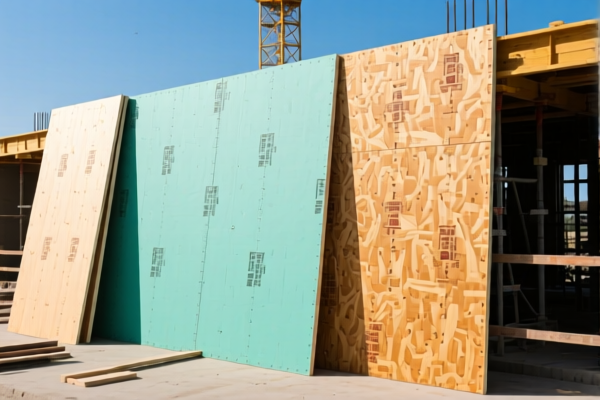
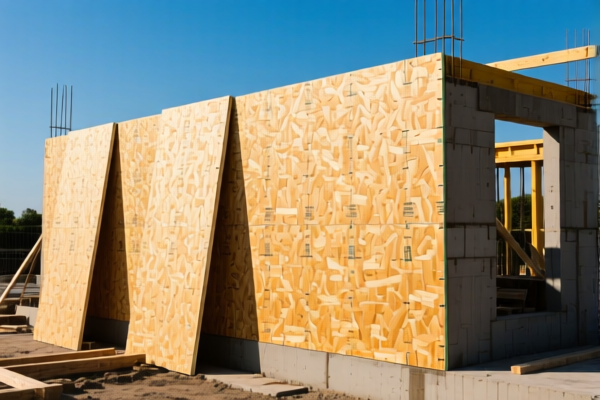
Building Composite Panels are versatile construction materials used for walls, roofs, facades, and interiors. They typically consist of two or more layers of materials bonded together to create a rigid, insulated, or decorative sheet. In international trade, they are classified based on their primary material and structure.
Key Classification Distinctions:
* Plastic-Enhanced/Plastic-Based Composites: Panels where plastic (polymer) is the primary binder or reinforcement.
* Classification Logic: Falls under Chapter 39 (Plastics).
* Paper/Fiber-Based Composites: Panels where paper, cardboard, or cellulose fiber is the base material.
* Classification Logic: Falls under Chapter 48 (Paper/Paperboard).
* Metal-Enhanced/Steel-Based Composites: Panels where steel or non-alloy metal is the primary structural component.
* Classification Logic: Falls under Chapter 72 (Iron/Steel).
⚠️ Critical Differentiator:
- If the panel is plastic-dominated (e.g., PVC composite, FRP with plastic resin) → Chapter 39
- If the panel is paper-dominated (e.g., honeycomb paper core with plastic/metal foil) → Chapter 48
- If the panel is metal-dominated (e.g., steel-core composite, insulated steel sandwich panels) → Chapter 72
📦 II. HS Code Classification Details (2026 Latest Tariff Authority Comparison)
Based on the provided data, here are the four potential HS Codes for "Building Composite Panels" depending on the inferred material composition.
| HS Code | Product Description | Application Scenario | Material Inference |
|---|---|---|---|
3921.90.50.10 |
Plates, sheets, film, foil, and strip, of plastics: Other | Plastic-reinforced or plastic-containing composite boards | ✅ Plastic-dominant |
4823.90.20.00 |
Other articles of paper pulp, paper, or paperboard | Paper-fiber based composite boards (e.g., honeycomb cores) | ✅ Paper/Fiber-dominant |
3921.90.40.10 |
Plates, sheets, film, foil, and strip, of plastics: Other | General plastic composite boards (no specific reinforcement conflict) | ✅ Plastic-dominant |
7210.90.10.00 |
Flat-rolled products of iron or non-alloy steel, of a width ≥600mm | Steel-based composite panels (e.g., insulated steel walls) | ✅ Metal-dominant |
🔍 Key Reminder:
- The term "Composite" is generic. Customs requires material specification to determine the correct chapter. - Misclassification Risk: Declaring a steel core panel as "Plastic" (3921) or vice versa can lead to significant duty discrepancies and customs penalties. - "Other" Categories: Codes like3921.90and4823.90are catch-alls for materials not explicitly listed elsewhere. Ensure no more specific material code applies.
💰 III. 2026 Latest Tariff Rate Breakdown (Including Surtaxes, Policy Add-ons)
✅ Applicable Country: United States (US)
✅ Country of Origin: China (CN)
✅ Effective Date: November 10, 2025 (and subsequent imports)
🎯 1. 3921.90.50.10 —— Plastic Composite Panels (Plastic-Reinforced)
| Item | Content |
|---|---|
| Base Duty | 4.8% (ad valorem) |
| Section 301 Surtax | +25.0% |
| IEEPA Surcharge | +10.0% (China/HK origin, effective Nov 2025) |
| Total Duty | 39.8% |
| Tax Calculation | CIF Value × 39.8% |
| De Minimis Eligibility | ❌ No (deny_de_minimis) |
| Legal Basis Path | IEEPA:9903.01.25 → USITC:3921.90.50.10 → FOOTNOTE:301 |
📌 Explanation:
- Plastic panels face 4.8% base duty. - 301 Surtax (25%) applies to Chinese plastic products. - IEEPA (10%) is the additional对华 tariff. - Total: 39.8% – High cost. Consider origin diversification.
🎯 2. 4823.90.20.00 —— Paper/Fiber Composite Panels
| Item | Content |
|---|---|
| Base Duty | 0.0% |
| Section 301 Surtax | +25.0% |
| IEEPA Surcharge | +10.0% |
| Total Duty | 35.0% |
| Tax Calculation | CIF Value × 35.0% |
| De Minimis Eligibility | ❌ No |
| Legal Basis Path | IEEPA:9903.01.24 → USITC:4823.90.20.00 → FOOTNOTE:301 |
📌 Note:
- Paper-based composites have 0% base duty, making them 5% cheaper than plastic-based ones. - Ideal for non-structural, lightweight applications (e.g., interior partitioning, honeycomb cores).
🎯 3. 3921.90.40.10 —— General Plastic Composite Panels
| Item | Content |
|---|---|
| Base Duty | 4.2% |
| Section 301 Surtax | +25.0% |
| IEEPA Surcharge | +10.0% |
| Total Duty | 39.2% |
| Tax Calculation | CIF Value × 39.2% |
| De Minimis Eligibility | ❌ No |
| Legal Basis Path | IEEPA:9903.01.24 → USITC:3921.90.40.10 → FOOTNOTE:301 |
📌 Comparison:
- Slightly lower base duty (4.2% vs 4.8%) than3921.90.50.10. - Use this code if the panel is plastic-based but doesn't fit the "reinforced" description of50.10.
🎯 4. 7210.90.10.00 —— Steel/Metal Composite Panels
| Item | Content |
|---|---|
| Base Duty | 0.0% |
| Section 301 Surtax | +25.0% |
| IEEPA Surcharge | +10.0% |
| Total Duty | 35.0% |
| Tax Calculation | CIF Value × 35.0% |
| De Minimis Eligibility | ❌ No |
| Legal Basis Path | IEEPA:9903.01.24 → USITC:7210.90.10.00 → FOOTNOTE:301 |
📌 Note:
- Steel-core panels also enjoy 0% base duty. - Crucial for structural building facades, insulated wall panels, and roofing. - Do not confuse with aluminum or other metals – this code is specific to Iron/Non-Alloy Steel.
🛠️ IV. Customs Clearance Operational Advice (Practical Pitfall Guide)
✅ 1. Required Documentation Checklist (Mandatory)
| Document | Must Provide | Explanation |
|---|---|---|
| ✅ Product Specification Sheet | ✔️ | Must clearly state material composition (e.g., "Polypropylene Core + Aluminum Foil") |
| ✅ Material Safety Data Sheet (MSDS) | ✔️ | Proves chemical composition for plastic/fiber panels |
| ✅ Product Photos (with Labels) | ✔️ | Show cross-section to identify layers (e.g., steel face vs. paper core) |
| ✅ Commercial Invoice | ✔️ | Clearly describe as "Building Composite Panel – [Material] Core" |
| ✅ Packing List | ✔️ | Detail dimensions, weight, and quantity |
| ✅ Origin Certificate (CO) | ✔️ | Critical for proving China origin (triggers 35-39.8% duties) |
✅ 2. Declaration Tips (Key Mnemonic)
🔥 "Material First, Layer Second, Name Accurate, Duty Minimized!"
| Scenario | Correct Declaration | Wrong Practice |
|---|---|---|
| Steel-Core Sandwich Panel | 7210.90.10.00 |
Misdeclare as "Plastic Panel" → Audit Risk + Back Taxes |
| Honeycomb Paper Panel | 4823.90.20.00 |
Misdeclare as "Plastic" → Overpayment of 4.8% |
| PVC Exterior Cladding | 3921.90.50.10 |
Generic "Composite Board" → Customs Rejection |
| Mixed Material Panel | Primary Material Determines Code | Split declaration without justification → Delay |
✅ 3. Special Cases Handling
| Case | Handling Advice |
|---|---|
| OEM Custom Panels | Provide design drawings showing layer structure (e.g., Steel-Insulation-Steel) |
| Pre-Finished Panels | Include coating details. Painted steel still falls under 7210. |
| Small Samples | No De Minimis Exemption (10% IEEPA still applies). Value must be declared. |
| Origin Transshipment | If goods are shipped from Vietnam/Malaysia but originate in China, Country of Origin remains China → Duties still apply. |
🌍 V. Global Market Clearance Comparison (2026 Latest)
| Country/Region | Recommended HS Code | Duty (China Origin) | Certification | Notes |
|---|---|---|---|---|
| 🇺🇸 USA | 7210.90.10.00 / 3921.90 |
35% - 39.8% | FCC (if electronic), UL (if electrical) | Highest Duty Market |
| 🇨🇳 China | 7210.90.10.00 |
0% - 5% | CCC (if applicable) | Low duty, but domestic competition |
| 🇪🇺 EU | 7210.90 / 3921 |
0% - 6% | CE Marking | No 301/IEEPA surcharges |
| 🇨🇦 Canada | 7210.90.10.00 |
5% - 10% | CSA Certification | NAFTA/USMCA may reduce duty if Canadian origin |
📌 Conclusion:
- USA is the most expensive market for building composites due to Section 301 + IEEPA surcharges. - Steel and Paper cores have a 5% advantage over Plastic cores (0% base vs 4.2-4.8% base). - EU & Canada offer significantly lower total duty burdens.
📌 VI. Common Mistakes & Pitfall Guide (Lessons Learned)
❌ Mistake 1: Declaring a Steel-Core Panel as "Plastic Composite" (3921)
👉 Consequence: Customs may detect metal content → Reclassification + Penalties + Back Taxes
❌ Mistake 2: Failing to specify Material Layers in the Invoice
👉 Consequence: Customs cannot determine the correct Chapter → Held at Port + Storage Fees
❌ Mistake 3: Assuming "Composite" means "Exempt from Duties"
👉 Consequence: No exemptions apply to Chinese-origin building composites under current 2026 rules.
❌ Mistake 4: Using generic terms like "Board" or "Sheet" without material context
👉 Consequence: High risk of misclassification → Delays in Clearance
✅ Correct Approach:
"Insulated Building Panel, Steel Outer Layer, Polyurethane Core, Steel Inner Layer, Model XYZ, UL Certified"
🎯 VII. Conclusion: Professional Declaration, Save Time, Reduce Cost!
🎯 Remember the Mnemonic:
🔹 "Steel/Paper at 35%, Plastic at 39%, Material Matters, Don't Play Smart!"
🔹 "HS Code decides duty, 5% difference is huge, wrong declaration costs thousands!"
📌 Pro Tip:
If your panels are shrink-wrapped, packaged for retail, or include mounting hardware, ensure the primary function is declared as "Building Material," not "Furniture" or "Apparel," to avoid incorrect classification.
📞 Immediate Action:
📞 Contact a licensed Customs Broker + Provide Product Cross-Section Diagrams + Apply for HS Code Advance Ruling
🚀 Ensure your Building Composite Panels, Clear Customs Smoothly, Efficiently Go Global, Profit Maximized!
✨ Professional Clearance Starts with Accurate Classification!
💼 Every Dollar of Cost Deserves to Be Calculated Precisely!
Customer Reviews
About HS Code Classification
The Harmonized System (HS) is an internationally standardized nomenclature developed by the World Customs Organization (WCO) to classify traded products. Over 200 countries use the HS system as the basis for customs tariffs, trade statistics, and import/export regulations.
Each HS code follows a hierarchical structure:
- Chapter (2 digits) — Broad category of goods (e.g., Chapter 84: Machinery and Mechanical Appliances)
- Heading (4 digits) — More specific grouping within the chapter
- Subheading (6 digits) — Internationally standardized breakdown, used by all WCO member countries
- National subdivisions (8-10 digits) — Country-specific extensions for further classification, such as US HTSUS 10-digit codes
Correct HS code classification is essential for smooth customs clearance, accurate duty payment, and compliance with trade regulations. Misclassification can lead to customs delays, overpayment of duties, or penalties.
When importing from CN to US, the applicable tariff rates may include:
- Most-Favored-Nation (MFN) rate — The standard duty rate applied to WTO members
- General rate — Applied to countries without trade agreements
- Trade remedy duties — Additional tariffs such as Section 301 (anti-dumping), Section 232 (national security), or countervailing duties
The information provided on this page is for reference purposes only. For official classification, please consult with your local customs authority or a licensed customs broker.