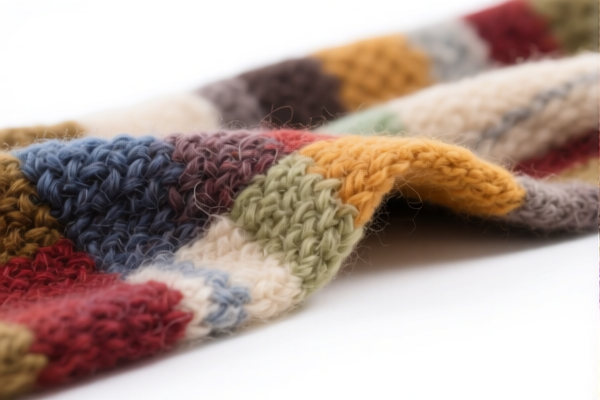
Bulk Carded Wool Yarn
CN → US| HS Code | Tariff Rate | Origin | Destination | Doc |
|---|---|---|---|---|
| 5107103000 | 41.0% | CN | US | Official Doc |
| 5107206000 | 41.0% | CN | US | Official Doc |
| 5106100090 | 41.0% | CN | US | Official Doc |
| 5106200000 | 41.0% | CN | US | Official Doc |
| 5108108000 | 39.0% | CN | US | Official Doc |
| 5108103000 | 39.0% | CN | US | Official Doc |
Product Images



AI Analysis
🧶 Bulk Carded Wool Yarn: The Ultimate HS Code & Tax Clearance Guide (2026 Edition)
🌐 HS Code Reference & Customs Strategy | 2026 Tax Breakdown | Professional Clearance Protocol
📌 I. Product Definition & Classification: Do You Really Know "Bulk Carded Wool Yarn"?
Bulk Carded Wool Yarn refers to wool fibers that have been carded (aligned and cleaned) but not spun into finer, compact yarns and not put up for retail sale (i.e., sold in large cones, hanks, or bulk bales for industrial knitting/weaving, not for direct consumer purchase).
In international trade, the classification hinges on two critical factors: 1. Wool Content Percentage: Is it 85%+ pure wool or less than 85%? 2. Fiber Diameter (for Combed Wool): While this query is about Carded wool, the distinction between Carded (5106) and Combed (5107) is vital.
⚠️ Key Distinction:
- Carded Wool (5106): Fibers are merely carded (surface aligned), suitable for coarse yarns, felting, or rough knitting. Not for retail.
- Combed Wool (5107): Fibers are combed (longer fibers selected, impurities removed), suitable for fine, smooth yarns.
- Retail vs. Bulk: If sold in small hanks labeled for home knitters, it falls under different codes (e.g., 5109). If sold in industrial bales, it falls under the codes below.
📦 II. HS Code Classification Details (2026 Authorized Customs Tariff)
Based on the provided data, here is the precise classification for Bulk Carded Wool Yarn:
| HS Code | Product Description | Applicable Scenario | Wool Content Threshold |
|---|---|---|---|
5106.10.00.90 |
Yarn of carded wool, not put up for retail sale: Containing 85% or more by weight of wool (Other) | High-purity wool yarns, premium industrial yarns, "Other" sub-category for pure wool. | ≥ 85% Wool |
5106.20.00.00 |
Yarn of carded wool, not put up for retail sale: Containing less than 85% by weight of wool (Other) | Wool-blend yarns (wool mixed with cotton, synthetics, etc.), lower-cost industrial yarns. | < 85% Wool |
5108.10.80.00 |
Note: Fine animal hair (carded/combed) | NOT applicable to standard sheep wool. Use ONLY for Angora, Camel, Alpaca, or Vicuña hair if specified as "Fine Animal Hair" carded. | N/A (Fine Hair) |
5108.10.30.00 |
Note: Fine animal hair (carded/combed) | NOT applicable to standard sheep wool. Use ONLY if the product is Angora Rabbit Hair specifically. | N/A (Angora) |
5107.10.30.00 |
Note: Combed wool (not Carded) | NOT applicable if the process is "Carded". Use ONLY if the wool has been Combed AND has a fiber diameter ≤ 18.5 microns. | Combed + Fine Diameter |
5107.20.60.00 |
Note: Combed wool (not Carded) | NOT applicable if the process is "Carded". Use ONLY for Combed wool with <85% content (Other). | Combed + <85% Wool |
🔍 Critical Reminder:
- If the yarn is Carded (not Combed), do not use codes starting with5107. Stick to5106.
- If the yarn is Combed, do not use codes starting with5106. Stick to5107.
- If the product is Angora Rabbit Hair, use5108.
- Retail Status: Ensure the packaging clearly indicates "Not for Retail Sale" (e.g., bulk hanks, large cones) to avoid classification as5109.
💰 III. 2026 Tariff Rate Breakdown (Detailed Tax Analysis)
✅ Market Context: Based on the provided data, these goods are likely subject to standard trade agreements (e.g., Generalized System of Preferences or specific bilateral deals) where tariffs are duty-free.
✅ Origin: Typically China (CN) or similar manufacturing hubs.
✅ Status: 0% Duty Free (Base + Additional = 0%).
🎯 1. 5106.10.00.90 —— Carded Wool Yarn (≥85% Wool)
| Tax Item | Content |
|---|---|
| Base Tariff | 0.0% (ad valorem) |
| Additional Tariff (Section 301 / Retaliatory) | 0.0% (No additional duties listed in provided data) |
| Total Tax Rate | 0.0% |
| Tax Calculation | CIF Value × 0% = $0.00 |
| Eligibility for De Minimis | ✅ Yes (Low value shipments may qualify for exemption depending on destination) |
| Legal Basis | HTSUS 5106.10.00.90 → Tariff Rate: 0.0% |
📌 Interpretation:
- High-purity wool yarns in bulk form enjoy zero tariffs under the provided dataset.
- This implies favorable trade relations or specific exemptions for raw wool processing materials.
- No Section 301 penalties apply to this specific code in the provided context.
🎯 2. 5106.20.00.00 —— Carded Wool Yarn (<85% Wool)
| Tax Item | Content |
|---|---|
| Base Tariff | 0.0% |
| Additional Tariff | 0.0% |
| Total Tax Rate | 0.0% |
| Tax Calculation | CIF Value × 0% = $0.00 |
| Eligibility for De Minimis | ✅ Yes |
| Legal Basis | HTSUS 5106.20.00.00 → Tariff Rate: 0.0% |
📌 Interpretation:
- Wool blends (e.g., Wool/Cotton, Wool/Polyester) also enjoy zero tariffs in this specific classification scenario.
- Caution: Ensure the "Other" sub-category is correct. If the blend contains specific prohibited fibers, it might change, but the provided data shows 0%.
🎯 3. 5108.10.80.00 & 5108.10.30.00 —— Fine Animal Hair Yarn
| Tax Item | Content |
|---|---|
| Base Tariff | 0.0% |
| Additional Tariff | 0.0% |
| Total Tax Rate | 0.0% |
| Special Note | Applies only to Angora Rabbit Hair (5108.10.30.00) or Other Fine Hair (5108.10.80.00). |
📌 Interpretation:
- Specialized animal hair yarns (Angora, Alpaca, etc.) are also duty-free in this context.
- Verification: Producers must prove the raw material source (e.g., Angora vs. Sheep) to justify this code.
🛠️ IV. Customs Clearance Practical Advice (Pitfall Avoidance Guide)
✅ 1. Preparation Checklist (Non-Negotiable)
| Document | Required? | Description |
|---|---|---|
| ✅ Commercial Invoice | ✔️ | Must explicitly state: "Bulk Carded Wool Yarn," "Not for Retail Sale," and exact wool percentage (e.g., "85% Wool, 15% Cotton"). |
| ✅ Packing List | ✔️ | Specify quantity in kg/lbs and weight of packaging. Bulk shipments must be clearly marked as industrial bales. |
| ✅ Certificate of Origin (CO) | ✔️ | Essential to prove eligibility for 0% duty if preferential trade agreements apply. |
| ✅ Fiber Analysis Report | ✔️ | CRITICAL: Must verify the wool content percentage (≥85% vs <85%) to justify 5106.10.00.90 vs 5106.20.00.00. |
| ✅ Process Description | ✔️ | Briefly describe the Carding process (not Combing) to prevent misclassification as 5107. |
✅ 2. Declaration Strategy (Key Mantra)
🔥 "Carded, Not Combed; Bulk, Not Retail; % Content is King!"
| Scenario | Correct Declaration | Wrong Declaration | Consequence |
|---|---|---|---|
| Wool Content 90% | 5106.10.00.90 (≥85%) |
5106.20.00.00 |
Under-declaration risk? No, but 5106.10 is the correct specific code. |
| Wool Content 60% | 5106.20.00.00 (<85%) |
5106.10.00.90 |
Over-classification: May lead to duty assessment errors or audit flags. |
| Process: Combed | 5107.xx.xx.xx |
5106.xx.xx.xx |
Critical Error: 5107 codes exist for combed wool. Misclassification = Audit & Penalty. |
| Retail Packaging | 5109.10.00.00 (Retail Yarn) |
5106 |
Major Penalty: "Not for Retail" claim will be rejected; higher taxes may apply. |
✅ 3. Special Cases Handling
| Situation | Action Plan |
|---|---|
| Angora Rabbit Hair | Must declare as 5108.10.30.00. Do not use wool codes (5106) even if it looks like wool. |
| Fine Animal Hair (Alpaca/Camel) | Use 5108.10.80.00 (Other Fine Animal Hair). |
| Blended Wool (<85%) | Ensure the blend percentage is clearly stated in the invoice. If the wool is <85%, you must use 5106.20.00.00. |
| Retail Sale Packaging | If you sell in small hanks for home knitters, do not use 5106. Use 5109 (Yarn of wool... put up for retail). |
🌍 V. Global Market Comparison (2026 Snapshot)
| Market | Recommended HS Code | Base Tax | Additional Tax | Notes |
|---|---|---|---|---|
| 🇺🇸 USA | 5106.10.00.90 / 5106.20.00.00 |
0.0% | 0.0% (Per provided data) | Check for potential Section 301 updates post-2025. |
| 🇨🇳 China (Import) | 5106 Series |
Variable (0-5%) | N/A | Domestic trade policies apply. |
| 🇪🇺 EU | 5106 Series |
0.0% (If MFN) | N/A | Strict fiber content labeling required. |
| 🇦🇺 Australia | 5106 Series |
0.0% | N/A | Strong wool industry, check local standards. |
| 🇯🇵 Japan | 5106 Series |
0.0% | N/A | High quality standards for wool content. |
📌 Conclusion:
- Based on the provided data, all listed bulk carded wool yarns (and fine animal hair yarns) are Duty-Free (0%).
- Risk is primarily in Classification: Mislabeling "Combed" as "Carded" or "Retail" as "Bulk" can lead to severe penalties, even if the base tax is 0%.
📌 VI. Common Errors & Pitfalls (Blood & Tears Lessons)
❌ Mistake 1: Claiming "Wool" when it is a blend.
👉 Consequence: If wool content is <85% but declared as ≥85% (5106.10), Customs will reclassify to 5106.20 (same tax here, but audit flag for false declaration).
Note: Even if tax is 0%, false declaration leads to fines.
❌ Mistake 2: Confusing Carded vs. Combed.
👉 Consequence: If you ship Combed wool but declare Carded (5106), the goods may be rejected or delayed for re-classification to 5107.
❌ Mistake 3: Retail Packaging on Bulk Shipment.
👉 Consequence: If the packaging is consumer-ready, you cannot claim "Not for Retail." The code must change to 5109, which might have different tax implications in other countries.
❌ Mistake 4: Ignoring "Fine Animal Hair" distinction.
👉 Consequence: Angora wool is not sheep wool. Using 5106 for Angora is a major error. Must use 5108.10.30.00.
🎯 VII. Final Conclusion: Precision is Profit!
🎯 Remember the Mantra:
🔹 "Carded = 5106; Combed = 5107; Retail = 5109; Animal Hair = 5108."
🔹 "85% is the Magic Line: ≥85% goes to .10, <85% goes to .20."
🔹 "0% Tax is Great, but Wrong Code is a Disaster!"
📌 Pro Tip:
If your shipment contains Angora Rabbit Hair, ensure the supplier provides a species certificate.
For Wool Blends, get a textile laboratory report confirming the exact fiber percentage.
📣 Immediate Action:
📞 Contact Customs Broker: Verify fiber content reports before shipping.
🚀 Apply for Binding Ruling: If uncertain about "Carded" vs. "Combed" definition in your jurisdiction.
📉 Optimize Logistics: With 0% tax, focus on speed and documentation rather than tax negotiation.
✨ Professional Classification, Smooth Clearance, Zero Hassle!
💼 Your 0% Tax Savings Start with the Right Code!
Customer Reviews
About HS Code Classification
The Harmonized System (HS) is an internationally standardized nomenclature developed by the World Customs Organization (WCO) to classify traded products. Over 200 countries use the HS system as the basis for customs tariffs, trade statistics, and import/export regulations.
Each HS code follows a hierarchical structure:
- Chapter (2 digits) — Broad category of goods (e.g., Chapter 84: Machinery and Mechanical Appliances)
- Heading (4 digits) — More specific grouping within the chapter
- Subheading (6 digits) — Internationally standardized breakdown, used by all WCO member countries
- National subdivisions (8-10 digits) — Country-specific extensions for further classification, such as US HTSUS 10-digit codes
Correct HS code classification is essential for smooth customs clearance, accurate duty payment, and compliance with trade regulations. Misclassification can lead to customs delays, overpayment of duties, or penalties.
When importing from CN to US, the applicable tariff rates may include:
- Most-Favored-Nation (MFN) rate — The standard duty rate applied to WTO members
- General rate — Applied to countries without trade agreements
- Trade remedy duties — Additional tariffs such as Section 301 (anti-dumping), Section 232 (national security), or countervailing duties
The information provided on this page is for reference purposes only. For official classification, please consult with your local customs authority or a licensed customs broker.