Bulk Packaging
CN → US| HS Code | Tariff Rate | Origin | Destination | Doc |
|---|---|---|---|---|
| 4819400040 | 35.0% | CN | US | Official Doc |
| 4819300040 | 35.0% | CN | US | Official Doc |
| 3923102000 | 35.0% | CN | US | Official Doc |
| 3923109000 | 38.0% | CN | US | Official Doc |
| 7310100015 | 85.0% | CN | US | Official Doc |
| 7310100090 | 85.0% | CN | US | Official Doc |
Product Images


AI Analysis
📦 Bulk Packaging: The Ultimate Guide to Plastic, Paper, and Steel Containers
🌐 HS Code Reference & Customs Clearance Guide | 2026 Latest Tariff Analysis | Professional Clearance Strategy
📌 I. Product Definition & Classification: What is "Bulk Packaging"?
Bulk Packaging refers to large-scale containers used for the conveyance, storage, or packing of goods in bulk quantities. In international trade, these items are primarily categorized by their material composition:
- Plastic Containers: Includes boxes, cases, crates, and specifically shaped fittings for high-tech goods (like semiconductor wafers).
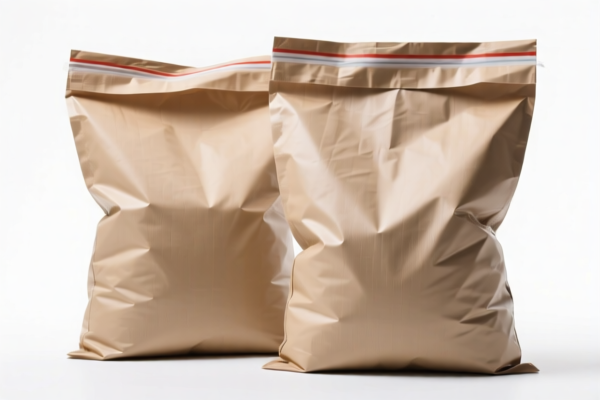
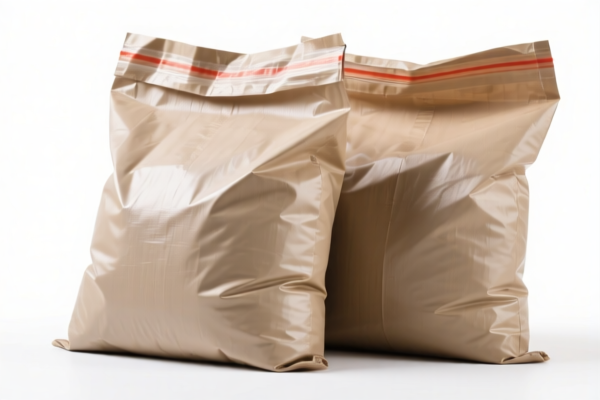
- Paper/Paperboard Containers: Includes sacks, bags, cones, and box files.
- Iron/Steel Containers: Includes tanks, casks, drums, and cans (under 300 liters).
⚠️ Key Distinction Point:
- If it is Plastic and Specially Shaped for semiconductors/masks → 3923.10.20.00
- If it is Plastic but General Use → 3923.10.90.00
- If it is Paper/Paperboard (Sacks/Bags) → 4819.30.00.40 or 4819.40.00.40
- If it is Iron/Steel Drums (>50 Liters) → 7310.10.00.15 or 7310.10.00.90
📦 II. HS Code Classification Details (2026 Latest Tariff Authority Cross-Reference)
| HS Code | Product Description | Material Type | Key Criteria |
|---|---|---|---|
3923.10.20.00 |
Specially shaped/fitted for semiconductor wafers, masks, or reticles | Plastic | Must be specially designed for subheadings 3923.10 or 8486.90 |
3923.10.90.00 |
Other boxes, cases, crates, and similar articles | Plastic | General purpose plastic packaging; not specially shaped for semiconductors |
4819.40.00.40 |
Other sacks and bags (including cones); box files, letter trays | Paper/Paperboard | General paper sacks/bags not meeting width/capacity specific criteria below |
4819.30.00.40 |
Sacks and bags with a base width of |
Paper/Paperboard | Large base paper sacks/bags |
7310.10.00.15 |
Empty steel drums and barrels (Capacity 50 liters or more) | Iron/Steel | Empty, capacity ≥ 50L, < 300L |
7310.10.00.90 |
Other tanks, casks, drums, cans (Capacity 50 liters or more) | Iron/Steel | Non-empty or other steel containers ≥ 50L, < 300L |
🔍 Crucial Reminder:
- Plastic Semiconductors: Only3923.10.20.00applies if the plastic box is specially shaped/fitted for wafers/masks. General plastic crates fall under3923.10.90.00. - Steel Drums: The distinction between.15(Empty) and.90(Other) is critical. Empty steel drums often face different administrative handling, but tax rates are similar in this dataset. - Paper Bags: Width of the base (>40cm) determines if it falls into specific sack categories, though in this dataset, both have similar tax structures.
💰 III. 2026 Latest Tariff Rate Details (Including Additional Taxes & Policy Add-ons)
✅ Applicable Country: United States (US)
✅ Origin: China (CN)
✅ Effective Time: Current rates apply (2025-2026)
🎯 1. 3923.10.20.00 —— Plastic Boxes for Semiconductors/Masks
| Item | Content |
|---|---|
| Base Tariff | 0% (ad valorem) |
| Additional Tariff | 25.0% (Section 301 / USITC) |
| Total Tax Rate | 25.0% |
| Tax Calculation | CIF Value × 25% |
| Legal Basis | HS 3923.10.20.00 |
📌 Explanation:
- Although the base tariff is 0%, the 25% additional duty for Chinese-origin plastics significantly increases costs. - This category is highly specific; misclassification as "general plastic" leads to higher base duties (see below).
🎯 2. 3923.10.90.00 —— Other Plastic Boxes/Crates
| Item | Content |
|---|---|
| Base Tariff | 3.0% (ad valorem) |
| Additional Tariff | 25.0% (Section 301 / USITC) |
| Total Tax Rate | 28.0% |
| Tax Calculation | CIF Value × 28% |
| Legal Basis | HS 3923.10.90.00 |
📌 Note:
- The 3% base tariff adds to the 25% surcharge, making this 3% more expensive than semiconductor-specific plastics. - Ensure your plastic packaging is genuinely "specially shaped" for semiconductors to qualify for the 0% base rate under3923.10.20.00.
🎯 3. 4819.40.00.40 & 4819.30.00.40 —— Paper/Paperboard Sacks & Bags
| Item | Content |
|---|---|
| Base Tariff | 0.0% (ad valorem) |
| Additional Tariff | 25.0% (Section 301 / USITC) |
| Total Tax Rate | 25.0% |
| Tax Calculation | CIF Value × 25% |
| Legal Basis | HS 4819.40.00.40 / 4819.30.00.40 |
📌 Note:
- Paper-based bulk packaging benefits from a 0% base tariff, but still faces the 25% additional duty for Chinese imports. - Distinguish between sack types (base width) for accurate classification, but tax impact is identical here.
🎯 4. 7310.10.00.15 & 7310.10.00.90 —— Iron/Steel Drums & Cans (< 300L)
| Item | Content |
|---|---|
| Base Tariff | 0.0% (ad valorem) |
| Additional Tariff (Sec 301) | 25.0% |
| Additional Tariff (Steel/Alu/Cu) | 50.0% |
| Total Tax Rate | 75.0% |
| Tax Calculation | CIF Value × 75% |
| Legal Basis | HS 7310.10.00.15 / 7310.10.00.90 |
📌 ⚠️ CRITICAL WARNING:
- Steel products face the highest burden. In addition to the standard 25% Section 301 duty, there is an additional 50% duty specifically for Steel, Aluminum, and Copper articles. - Total Tax = 75%. This is a massive cost driver. - Applies to Iron/Steel containers under 300 liters. - No distinction in tax rate between "Empty" (.15) and "Other" (.90) in this dataset; both incur the full 75%.
🛠️ IV. Customs Clearance Practical Advice (Battle-Tested Pitfall Guide)
✅ 1. Preparation Checklist (All Documents Required)
| Document | Mandatory? | Explanation |
|---|---|---|
| ✅ Product Specification Sheet | ✔️ | Must detail material (Plastic/Paper/Steel), capacity, and specific use (e.g., "For Semiconductor Wafers"). |
| ✅ Commercial Invoice | ✔️ | Clearly state "Bulk Packaging Container," not just "Box." |
| ✅ Packing List | ✔️ | Show unit vs. pallet configuration. |
| ✅ Certificate of Origin (CO) | ✔️ | Essential for verifying Chinese origin and applying additional duties. |
| ✅ Photographs | ✔️ | Show product shape, labeling, and material texture to prove classification. |
✅ 2. Classification Strategy (Key Mnemonic)
🔥 “Plastic Semi-25, General Plast-28, Paper Bag-25, Steel Drum-75!”
| Scenario | Correct HS Code | Tax Rate | Common Mistake |
|---|---|---|---|
| Plastic box for Wafers/Masks | 3923.10.20.00 |
25% | Misclassifying as general plastic → 28% (Overpayment) |
| Plastic box for General Goods | 3923.10.90.00 |
28% | Claiming "specially shaped" without proof → Penalty/Reclassification |
| Paper Sack (Base > 40cm) | 4819.30.00.40 |
25% | Confusing with smaller bags (check width) |
| Steel Drum (>50L, <300L) | 7310.10.00.15/.90 |
75% | HUGE RISK |
✅ 3. Special Handling for High-Tax Items
| Scenario | Handling Advice |
|---|---|
| Steel Drums | Budget for 75% duty. Consider if non-steel alternatives (plastic/lined) are feasible for cost saving, if product compatibility allows. |
| Plastic Semiconductors | Provide engineering drawings proving the box is "specially shaped" for wafers/masks. Generic plastic bins will be downgraded to 3923.10.90.00 (28%). |
| Paper Sacks | Ensure base width is measured correctly. If < 40cm, check if a different subheading applies (not listed here, but critical for accuracy). |
🌍 V. Global Market Clearance Comparison (2026 Latest)
| Country/Region | Recommended HS Code | Base Tariff | US Additional Duty | Total (China Origin) | Notes |
|---|---|---|---|---|---|
| 🇺🇸 USA | See above | 0-3% | 25% or 75% | 25% - 75% | Highest duty burden due to steel/plastic tariffs. |
| 🇨🇳 China | Same HS | 5-10% | None | 5-10% | No additional retaliatory tariffs for these categories. |
| 🇪🇺 EU | Similar HS | 0-4.5% | None | 0-4.5% | Generally low duties; EORI number required. |
| 🇬🇧 UK | Similar HS | 0-5% | None | 0-5% | Post-Brexit rules apply; no US-style surcharges. |
📌 Conclusion:
- USA is the most expensive market for bulk packaging due to Section 301 and Steel/Copper surcharges. - Steel drums (75%) are particularly sensitive. Consider supply chain diversification or material substitution if possible.
📌 VI. Common Errors & Pitfall Guide (Lessons from the Field)
❌ Error 1: Calling a "Steel Drum" a "Container" to avoid classification.
👉 Consequence: Customs flags mismatched description vs. HS code → Delay + 75% Duty Audit.
❌ Error 2: Claiming "Specially Shaped" for standard plastic totes.
👉 Consequence: Downgraded from 25% to 28%, plus potential penalties for misdeclaration.
❌ Error 3: Ignoring the "Steel/Aluminum/Copper" 50% surcharge.
👉 Consequence: Underpayment by 50%. Back taxes + Interest + Fines.
❌ Error 4: Mixing Paper Bag Types (Base Width).
👉 Consequence: Incorrect HS subheading → Customs Rejection or Additional Inspection.
✅ Correct Practice:
“Plastic Crate, Specially Shaped for Semiconductor Masks, Polypropylene, Empty”
vs.
“Steel Drum, Empty, 55 Gallon (208L), Carbon Steel”
🎯 VII. Conclusion: Precision Classification Saves Millions!
🎯 Remember the Mnemonic:
🔹 “Plastic Semi-25, General Plast-28, Paper Bag-25, Steel Drum-75!”
🔹 “Steel carries a double hit: 25% Sec 301 + 50% Steel Surcharge = 75%!”
📌 Pro Tip:
If your bulk packaging is non-Chinese origin (e.g., Vietnam, Mexico, EU), you may avoid the 25% Section 301 duty.
- Plastic: Could drop from 25% to 0% (if base is 0%).
- Steel: Could drop from 75% to 0-5% (depending on FTAs).
Verify Origin Certificates meticulously!
📣 Immediate Action:
📞 Consult with your customs broker before shipment.
📸 Provide clear photos and specs for "Specially Shaped" claims.
🚀 Accurate classification is the key to minimizing your 75% steel burden!
✨ Professional Clearance Starts with Accurate Classification!
💼 Every percentage point counts in Bulk Packaging!
Customer Reviews
About HS Code Classification
The Harmonized System (HS) is an internationally standardized nomenclature developed by the World Customs Organization (WCO) to classify traded products. Over 200 countries use the HS system as the basis for customs tariffs, trade statistics, and import/export regulations.
Each HS code follows a hierarchical structure:
- Chapter (2 digits) — Broad category of goods (e.g., Chapter 84: Machinery and Mechanical Appliances)
- Heading (4 digits) — More specific grouping within the chapter
- Subheading (6 digits) — Internationally standardized breakdown, used by all WCO member countries
- National subdivisions (8-10 digits) — Country-specific extensions for further classification, such as US HTSUS 10-digit codes
Correct HS code classification is essential for smooth customs clearance, accurate duty payment, and compliance with trade regulations. Misclassification can lead to customs delays, overpayment of duties, or penalties.
When importing from CN to US, the applicable tariff rates may include:
- Most-Favored-Nation (MFN) rate — The standard duty rate applied to WTO members
- General rate — Applied to countries without trade agreements
- Trade remedy duties — Additional tariffs such as Section 301 (anti-dumping), Section 232 (national security), or countervailing duties
The information provided on this page is for reference purposes only. For official classification, please consult with your local customs authority or a licensed customs broker.