Bulk Polyvinyl Chloride Resin
CN → US| HS Code | Tariff Rate | Origin | Destination | Doc |
|---|---|---|---|---|
| 3904210000 | 41.5% | CN | US | Official Doc |
| 3904220000 | 41.5% | CN | US | Official Doc |
| 3904100000 | 41.5% | CN | US | Official Doc |
| 3920490000 | 40.8% | CN | US | Official Doc |
| 3926906090 | 39.2% | CN | US | Official Doc |
Product Images
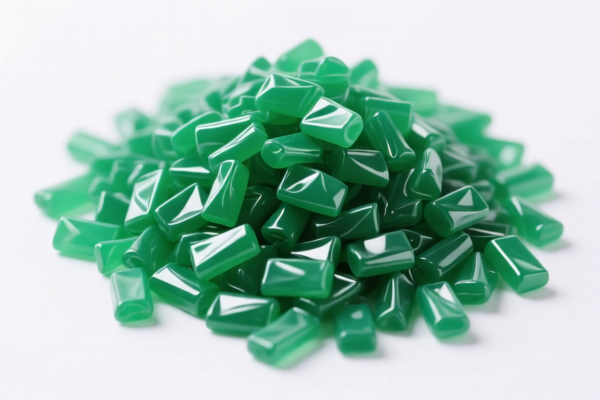
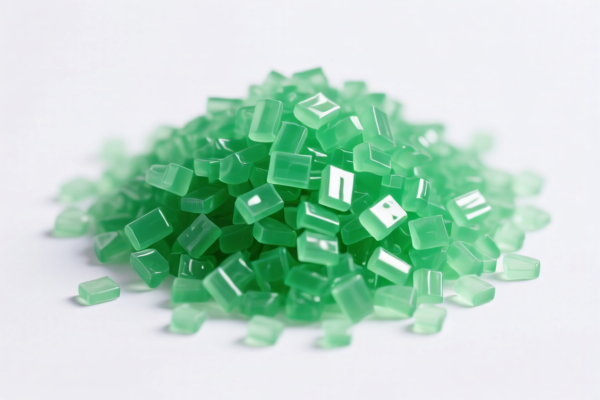


AI Analysis
🧪 Bulk Polyvinyl Chloride Resin (PVC Resin)
🌐 HS Code Reference & Customs Clearance Guide | 2026 Latest Tariff Analysis | Professional Clearance Strategy
📌 1. Product Definition & Classification: What is "Bulk PVC Resin"?
Polyvinyl Chloride (PVC) Resin is one of the most widely used thermoplastic polymers in the world. In international trade, the classification depends strictly on the physical state (primary vs. processed) and the specific form (granules, powder, sheets, or other finished goods).
Primary Forms (Resin): * Bulk/Granular PVC: The raw material, often sold in bags or super-sacks. Used for manufacturing pipes, profiles, and films. * Suspension/Emulsion Resin: Different polymerization methods resulting in different particle sizes, but still classified as "primary forms" if not compounded.
Processed Forms (Finished Goods/Parts): * Compounded Sheets/Films: PVC mixed with additives (plasticizers, stabilizers) and formed into sheets or rolls. * Final Articles: Pipes, fittings, or molded plastic items.
⚠️ Critical Distinction:
- If the product is raw resin (unplasticized or plasticized) in granular/powder form → It falls under Chapter 39, Heading 3904 (Primary Forms).
- If the product is already formed into sheets, plates, or films → It falls under Chapter 39, Heading 3920 (Other Plates, Sheets, Film, Foil, and Strip).
- If it is a miscellaneous plastic item not elsewhere specified → It falls under Chapter 39, Heading 3926 (Other Articles of Plastics).
📦 2. HS Code Classification Details (2026 Latest Tariff Alignment)
| HS Code | Product Description | Application Scenario | Physical State |
|---|---|---|---|
3904.10.00.00 |
Poly(vinyl chloride), primary forms | Raw PVC resin, vinyl chloride polymer, unplasticized | ✅ Granules/Powder |
3904.21.00.00 |
Poly(vinyl chloride), primary forms, used for pipes | PVC resin specifically formulated for pipe extrusion | ✅ Granules/Powder |
3904.22.00.00 |
Poly(vinyl chloride), primary forms, used for pipes | PVC resin for pipes (plasticized variant, if applicable) | ✅ Granules/Powder |
3920.49.00.00 |
Poly(vinyl chloride) plates, sheets, film, foil | PVC composite materials, flexible sheets, or rigid boards | ✅ Sheets/Films |
3926.90.60.90 |
Other articles of plastics, not elsewhere specified | Miscellaneous PVC plastic products (catch-all category) | ✅ Finished Goods |
🔍 Key Reminder:
- "Resin" implies the raw chemical polymer. Do not confuse raw resin with PVC Pipes (which would be3917) or PVC Windows (3926).
- If you are importing raw PVC powder/granules for manufacturing, use 3904.
- If you are importing PVC sheets for construction or signage, use 3920.
💰 3. 2026 Latest Tariff Rate Breakdown (Including Surtaxes & Policy Add-ons)
✅ Applicable Country: United States (US)
✅ Origin: China (CN)
✅ Effective Date: November 10, 2025 (and subsequent imports)
🎯 1. 3904.10.00.00 / 3904.21.00.00 / 3904.22.00.00 —— PVC Resin (Primary Forms)
This category covers the raw PVC resin granules/powders.
| Item | Detail |
|---|---|
| Base Tariff Rate | 6.5% (Ad Valorem) |
| Section 301 Surtax | +25.0% (From USITC Footnote 9903.88.01) |
| Section 122 Tariff | +10.0% (Specific surcharge for certain chemical/plastic imports) |
| Total Effective Tariff | 41.5% |
| Tax Calculation | CIF Value × 41.5% |
| De Minimis Exemption? | ❌ Not Eligible (Deny De Minimis) |
| Legal Basis Path | USITC:3904 → FOOTNOTE:9903.88.01 → SECTION 122 ADD-ON |
📌 Explanation:
- The 6.5% is the standard Most Favored Nation (MFN) rate for PVC resin.
- The 25% is the standard Section 301 tariff on Chinese plastics.
- The 10% is an additional "122 Clause" tariff specifically targeting certain polymer imports.
- Total: 41.5% is a significant cost burden. Importers must factor this into their landed cost calculations immediately.
🎯 2. 3920.49.00.00 —— PVC Plates, Sheets, Films (Composite Materials)
This category covers PVC that has already been formed into sheets or films.
| Item | Detail |
|---|---|
| Base Tariff Rate | 5.8% (Ad Valorem) |
| Section 301 Surtax | +25.0% |
| Section 122 Tariff | +10.0% |
| Total Effective Tariff | 40.8% |
| Tax Calculation | CIF Value × 40.8% |
| De Minimis Exemption? | ❌ Not Eligible |
| Legal Basis Path | USITC:3920 → FOOTNOTE:9903.88.01 → SECTION 122 ADD-ON |
📌 Note:
- Slightly lower than raw resin due to the lower base rate (5.8% vs 6.5%).
- Still subject to the same heavy surtaxes.
🎯 3. 3926.90.60.90 —— Other Plastic Articles (Catch-All)
This category is used for PVC products that don’t fit neatly into the resin or sheet categories.
| Item | Detail |
|---|---|
| Base Tariff Rate | 4.2% (Ad Valorem) |
| Section 301 Surtax | +25.0% |
| Section 122 Tariff | +10.0% |
| Total Effective Tariff | 39.2% |
| Tax Calculation | CIF Value × 39.2% |
| De Minimis Exemption? | ❌ Not Eligible |
| Legal Basis Path | USITC:3926 → FOOTNOTE:9903.88.01 → SECTION 122 ADD-ON |
📌 Warning:
- Misclassification here can lead to audits. Only use if the product is truly a "finished article" not covered by 3904 or 3920.
🛠️ 4. Customs Clearance Practical Advice (Real-World Pitfall Guide)
✅ 1. Required Documentation Checklist (Non-Negotiable)
| Document | Must Provide | Description |
|---|---|---|
| ✅ Certificate of Origin (CO) | ✔️ | Proves origin from China. Essential for applying surtaxes correctly. |
| ✅ Product Specification Sheet | ✔️ | Must state: "PVC Resin," "Unplasticized/Plasticized," "Grade," "Viscosity/Kneadability." |
| ✅ Safety Data Sheet (SDS) | ✔️ | Required for hazardous material checks, even if PVC is generally low-risk. |
| ✅ Bill of Lading (B/L) | ✔️ | Ensure the description matches the HS Code exactly (e.g., "PVC Resin Granules"). |
| ✅ Commercial Invoice | ✔️ | Must list CIF value clearly. |
| ✅ Manufacturer's Declaration | ✔️ | Confirming the product is in "primary form" (not compounded for direct use). |
✅ 2. Declaration Tactics (Key Mnemonics)
🔥 "Resin is Granule, Sheet is Film, Pipe is 3917, Don't Mix Them!"
| Scenario | Correct Declaration | Incorrect Action |
|---|---|---|
| Raw PVC Powder/Granules | 3904.xx.xx.xx |
Declaring as "Plastic Pellets" without specifying PVC |
| PVC Sheets for Signage | 3920.49.00.00 |
Declaring as "Plastic Boards" (ambiguous) |
| PVC Pipes (Finished) | 3917.xx.xx.xx |
Declaring as "PVC Resin" → Major Red Flag! |
| PVC Fittings | 3917.xx.xx.xx |
Declaring as "Plastic Parts" (3926) |
⚠️ Critical Alert:
- Do NOT declare PVC Resin as "Plastic Parts" or "Raw Materials" without the specific HS code.
- If you import PVC Pipes, do NOT use3904. Pipes are3917. Using3904for pipes is a common error that leads to severe penalties.
✅ 3. Special Situation Handling
| Situation | Handling Advice |
|---|---|
| Transshipment via Vietnam/Malaysia | Ensure the Substantial Transformation test is met. If PVC resin is just repackaged, origin remains China, and 41.5% tariff still applies. |
| Mixed Containers | If a container contains both PVC Resin (3904) and PVC Pipes (3917), declare them separately on the same entry. Do not group them. |
| Plasticized vs. Unplasticized | Unplasticized PVC (uPVC) is typically 3904.10. Plasticized PVC (pPVC) may fall under 3904.21/22. Ensure your SDS and specs match. |
| Bulk Super-Sacks vs. 25kg Bags | Packaging type does not change the HS Code. Both are 3904. |
🌍 5. Global Market Comparison (2026 Latest)
| Country/Region | Recommended HS Code | Tariff (CN Origin) | Certification | Notes |
|---|---|---|---|---|
| 🇺🇸 USA | 3904.10.00.00 |
41.5% (Resin) | No specific, but SDS required | High due to Section 301 + 122 |
| 🇨🇳 China | 3904.10.00.00 |
0-6.5% | CCC (if final product) | No surtaxes |
| 🇪🇺 EU | 3904.10.00.00 |
0-6.5% | REACH Registration | REACH compliance is critical for chemicals |
| 🇲🇽 Mexico | 3904.10.00.00 |
0-5% | NOM Standards | USMCA may apply if originating in US/Canada |
| 🇦🇺 Australia | 3904.10.00.00 |
5% | Australian Industrial Chemicals Introduction Scheme (AICIS) | AICIS registration required |
📌 Conclusion:
- USA is the most challenging market due to the 41.5% total tariff.
- EU requires REACH compliance, which is a major administrative hurdle for chemical imports.
- Mexico and Canada offer better rates under USMCA if the PVC is truly originated in North America.
📌 6. Common Errors & Pitfall Guide (Lessons Learned)
❌ Error 1: Declaring PVC Pipes as 3904 (Resin)
👉 Consequence: Customs will reject the entry, demand reclassification to 3917, and may impose penalties. Tariff difference is negligible, but compliance risk is high.
❌ Error 2: Declaring PVC Sheets as 3904
👉 Consequence: Underpayment of duties (if any differences exist) or overpayment. More importantly, it misrepresents the product form, leading to inspections.
❌ Error 3: Ignoring Section 122 Tariff
👉 Consequence: Underpayment of 10%. CBP will assess back-tariffs + interest. Always include the 10% surcharge in cost calculations.
❌ Error 4: Using "Plastic Pellets" as the description
👉 Consequence: Vague description leads to Customs queries. Always use "Polyvinyl Chloride Resin, Granules".
✅ Correct Declaration Example:
"PVC RESIN, PRIMARY FORM, UNPLASTICIZED, GRANULAR, FOR PIPE EXTRACTION, MODEL XYZ, MADE IN CHINA"
🎯 7. Conclusion: Precise Classification, Cost Efficiency!
🎯 Remember the Rules:
🔹 "Resin is 3904 (41.5%), Sheet is 3920 (40.8%), Pipe is 3917."
🔹 "Always add 10% Section 122 + 25% Section 301 for China-origin PVC."
🔹 "Packaging doesn't change HS, but Product Form does!"
📌 Pro Tip:
If you are importing large volumes of PVC Resin, consider Advance Rulings from CBP to lock in the classification. Also, explore if your PVC is eligible for any specific chemical exemptions or if you can source from non-China origins (e.g., Southeast Asia, Middle East) to avoid the 35% surtax package.
📣 Immediate Action:
📞 Contact your freight forwarder + Provide SDS + Verify HS Code
3904.10.00.00
🚀 Ensure your landed cost includes 41.5% tariff to avoid margin erosion.
✨ Professional clearance starts with accurate classification!
💼 Every percent of tariff saved is pure profit!
Customer Reviews
About HS Code Classification
The Harmonized System (HS) is an internationally standardized nomenclature developed by the World Customs Organization (WCO) to classify traded products. Over 200 countries use the HS system as the basis for customs tariffs, trade statistics, and import/export regulations.
Each HS code follows a hierarchical structure:
- Chapter (2 digits) — Broad category of goods (e.g., Chapter 84: Machinery and Mechanical Appliances)
- Heading (4 digits) — More specific grouping within the chapter
- Subheading (6 digits) — Internationally standardized breakdown, used by all WCO member countries
- National subdivisions (8-10 digits) — Country-specific extensions for further classification, such as US HTSUS 10-digit codes
Correct HS code classification is essential for smooth customs clearance, accurate duty payment, and compliance with trade regulations. Misclassification can lead to customs delays, overpayment of duties, or penalties.
When importing from CN to US, the applicable tariff rates may include:
- Most-Favored-Nation (MFN) rate — The standard duty rate applied to WTO members
- General rate — Applied to countries without trade agreements
- Trade remedy duties — Additional tariffs such as Section 301 (anti-dumping), Section 232 (national security), or countervailing duties
The information provided on this page is for reference purposes only. For official classification, please consult with your local customs authority or a licensed customs broker.