Bull Ear Label
CN → US| HS Code | Tariff Rate | Origin | Destination | Doc |
|---|---|---|---|---|
| 4821102000 | 35.0% | CN | US | Official Doc |
| 4821902000 | 35.0% | CN | US | Official Doc |
| 7326908688 | 87.9% | CN | US | Official Doc |
| 7326908676 | 87.9% | CN | US | Official Doc |
Product Images
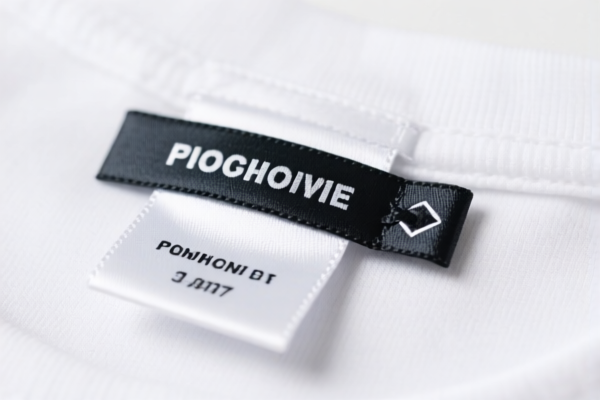
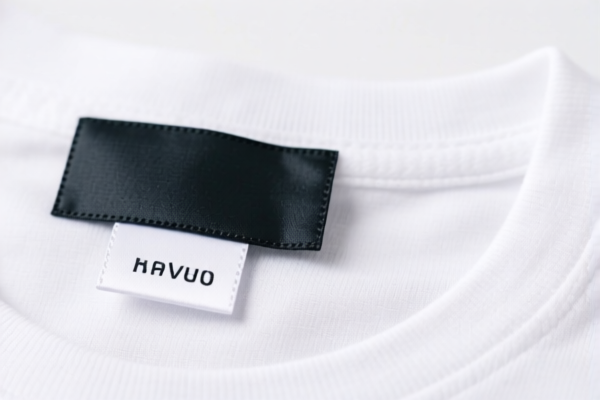
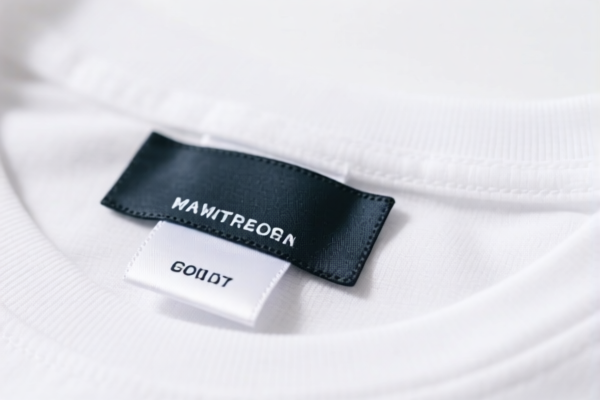

AI Analysis
🏷️ Bull Ear Label (Paper and Paperboard Labels)
🌐 HS Code Reference & Customs Clearance Guide | 2026 Latest Tariff Analysis | Professional Clearance Strategy
📌 1. Product Definition and Classification: What is a "Bull Ear Label"?
A "Bull Ear Label" is a specific type of label characterized by its distinct shape—typically rectangular with two "ears" or wings at the top (or sides) that protrude outward. These labels are commonly used for: * Retail Pricing: Attached to shelves or products for easy identification. * Hang Tags: Used on clothing, bags, or merchandise. * Product Identification: Used in warehousing or logistics.
In international trade, these fall under "Paper and Paperboard Labels of all kinds, whether or not printed." The key to accurate classification is determining the printing method and whether it is self-adhesive.
⚠️ Key Classification Points:
- If printed via lithographic process (even if partially printed) →4821.10.20.00
- If self-adhesive (not lithographic, or general "other" printed labels) →4821.90.20.00
- Note: Non-paper materials (e.g., plastic, metal) do NOT fall under these HS codes. This guide strictly covers paper/paperboard bull ear labels.
📦 2. HS Code Classification Details (2026 Official Tariff Reference)
| HS Code | Product Description | Applicable Scenario | Key Characteristic |
|---|---|---|---|
4821.10.20.00 |
Printed by Lithographic Process | Retail price tags, promotional hang tags printed with offset/litho ink | ✅ Lithographic Printing |
4821.90.20.00 |
Other: Self-Adhesive | Price stickers, product labels with adhesive backing (non-litho or mixed methods) | ✅ Self-Adhesive |
🔍 Important Reminder:
-4821.10.20.00is for labels where the printing process is lithographic.
-4821.90.20.00is for self-adhesive labels, which is the most common type for "bull ear" price tags sold in rolls.
- If a bull ear label is not self-adhesive and not lithographically printed (e.g., simple stamped paper), it may fall under other "Other" subheadings, but for commercial bull ear labels, the two above are the primary candidates.
💰 3. 2026 Tariff Rate Breakdown (Including Surcharges)
✅ Applicable Country: United States (US)
✅ Origin: China (CN)
✅ Effective Time: 2025 November 10 onwards (including subsequent imports)
🎯 1. 4821.10.20.00 – Paper Labels Printed by Lithographic Process
| Item | Detail |
|---|---|
| Base Tariff | 0.0% |
| Surcharges | +25.0% (Section 301 Tariff) |
| Total Tax Rate | 25.0% |
| Tax Calculation | CIF Value × 25% |
| De Minimis Exemption? | ❌ No (subject to Section 301 surcharges) |
| Legal Basis | Section 301 Tariff (USITC Footnote) |
📌 Explanation:
- The base tariff is 0%, but the 25% Section 301 surcharge applies to all Chinese-origin paper labels.
- Total effective rate: 25%. This is a significant cost that must be factored into your pricing strategy.
🎯 2. 4821.90.20.00 – Other Paper Labels: Self-Adhesive
| Item | Detail |
|---|---|
| Base Tariff | 0.0% |
| Surcharges | +25.0% (Section 301 Tariff) |
| Total Tax Rate | 25.0% |
| Tax Calculation | CIF Value × 25% |
| De Minimis Exemption? | ❌ No (subject to Section 301 surcharges) |
| Legal Basis | Section 301 Tariff (USITC Footnote) |
📌 Explanation:
- Similar to lithographic labels, self-adhesive bull ear labels from China are subject to a 25% surcharge.
- Total effective rate: 25%.
- Note: If the label is not self-adhesive and not lithographic, it may fall under a different "Other" subheading, but most commercial bull ear labels are self-adhesive.
🛠️ 4. Customs Clearance Practical Advice (Best Practices & Pitfalls)
✅ 1. Documentation Checklist (Essential)
| Document | Required | Purpose |
|---|---|---|
| ✅ Product Spec Sheet | ✔️ | Specify material (paper type), size, adhesive type, printing method |
| ✅ Commercial Invoice | ✔️ | Clearly state "Paper Bull Ear Labels" and HS Code |
| ✅ Packing List | ✔️ | Detail weight, dimensions, and number of rolls/units |
| ✅ Proof of Origin | ✔️ | Certificate of Origin (CO) for China-origin goods |
| ✅ Advertising/Sales Collateral | ✔️ | Photos of the label to confirm "bull ear" shape and printing type |
💡 Tip: Ensure your invoice explicitly states "Self-Adhesive" if using
4821.90.20.00, as this is a key differentiator.
✅ 2. Classification Tips (Avoid Misclassification)
🔥 "Know Your Printing, Know Your Tax!"
| Scenario | Correct HS Code | Reason |
|---|---|---|
| Bull ear label with offset/litho ink | 4821.10.20.00 |
Printing method is lithographic |
| Bull ear label with glue/adhesive backing | 4821.90.20.00 |
It is self-adhesive |
| Bull ear label made of plastic | ❌ Not in this list | Plastic labels fall under different HS codes (e.g., 3921) |
| Bull ear label made of metal | ❌ Not in this list | Metal labels fall under different HS codes (e.g., 7326) |
✅ 3. Special Cases & Clearance Advice
| Case | Advice |
|---|---|
| Mixed Shipments | If shipping both litho and self-adhesive labels, separate them by HS Code for accurate duty calculation |
| Sample Shipments | Even samples are subject to the 25% surcharge if from China. No de minimis exemption for Section 301 goods |
| Repackaging in 3rd Country | If labels are printed in China, shipped to Vietnam, repackaged, and then to the US, origin remains China. Tariff still applies unless substantial transformation occurs (rare for simple repackaging) |
🌍 5. Global Market Comparison (2026 Latest)
| Country/Region | Recommended HS Code | Tariff (China Origin) | Notes |
|---|---|---|---|
| 🇺🇸 USA | 4821.10.20.00 / 4821.90.20.00 |
25% | Section 301 surcharge applies |
| 🇨🇳 China | 4821.10.20.00 / 4821.90.20.00 |
0% | No surcharges for domestic trade |
| 🇪🇺 EU | 4821.10.20.00 / 4821.90.20.00 |
0% | No surcharges |
| 🇬🇧 UK | 4821.10.20.00 / 4821.90.20.00 |
0% | No surcharges |
📌 Conclusion:
- USA is the only major market imposing a 25% surcharge on paper labels from China.
- For other markets, the tariff is 0%, making non-US exports significantly cheaper.
📌 6. Common Mistakes & Pitfalls (Lessons Learned)
❌ Mistake 1: Using "Label" generic description without specifying "self-adhesive" or "lithographic"
👉 Result: Customs may classify under a higher-duty "Other" category or delay clearance.
✅ Fix: Be specific. Use "Self-Adhesive Paper Label" or "Lithographically Printed Paper Label".
❌ Mistake 2: Assuming de minimis exemption ($800) applies
👉 Result: Denied. Section 301 surcharges do not apply to de minimis shipments. All shipments are subject to the 25% tax.
✅ Fix: Factor the 25% tax into all shipments, including samples.
❌ Mistake 3: Misclassifying plastic/metal labels as paper labels
👉 Result: Incorrect HS code → penalty or reclassification.
✅ Fix: Ensure material composition is accurate. Paper labels only.
🎯 7. Conclusion: Professional Classification for Cost Efficiency
🎯 Key Takeaway:
🔹 Bull Ear Labels from China to USA = 25% Duty
🔹 Classification depends on: Printing Method (Litho) vs. Adhesive Type (Self-Adhesive)
🔹 No de minimis exemption for Section 301 goods
📌 Pro Tip:
If you are importing large volumes, consider:
1. Advance Ruling: Apply for a CBP Advance Ruling to lock in the HS Code and duty rate.
2. Supply Chain Diversification: Consider sourcing from countries not subject to Section 301 (e.g., Vietnam, India) if cost is critical.
3. Duty Drawback: If you re-export the goods, you may claim duty drawback.
📣 Action Plan:
📞 Consult a Customs Broker to confirm the exact printing method of your bull ear labels.
📄 Prepare Detailed Specs highlighting "Self-Adhesive" or "Lithographic Printing".
💡 Budget for 25% Duty in your landed cost calculations.
✨ Precision in Classification = Savings in Customs!
💼 Every percentage point counts in global trade!
Customer Reviews
About HS Code Classification
The Harmonized System (HS) is an internationally standardized nomenclature developed by the World Customs Organization (WCO) to classify traded products. Over 200 countries use the HS system as the basis for customs tariffs, trade statistics, and import/export regulations.
Each HS code follows a hierarchical structure:
- Chapter (2 digits) — Broad category of goods (e.g., Chapter 84: Machinery and Mechanical Appliances)
- Heading (4 digits) — More specific grouping within the chapter
- Subheading (6 digits) — Internationally standardized breakdown, used by all WCO member countries
- National subdivisions (8-10 digits) — Country-specific extensions for further classification, such as US HTSUS 10-digit codes
Correct HS code classification is essential for smooth customs clearance, accurate duty payment, and compliance with trade regulations. Misclassification can lead to customs delays, overpayment of duties, or penalties.
When importing from CN to US, the applicable tariff rates may include:
- Most-Favored-Nation (MFN) rate — The standard duty rate applied to WTO members
- General rate — Applied to countries without trade agreements
- Trade remedy duties — Additional tariffs such as Section 301 (anti-dumping), Section 232 (national security), or countervailing duties
The information provided on this page is for reference purposes only. For official classification, please consult with your local customs authority or a licensed customs broker.