Bull Ear Tag
CN → US| HS Code | Tariff Rate | Origin | Destination | Doc |
|---|---|---|---|---|
| 4821902000 | 35.0% | CN | US | Official Doc |
| 4821904000 | 35.0% | CN | US | Official Doc |
Product Images
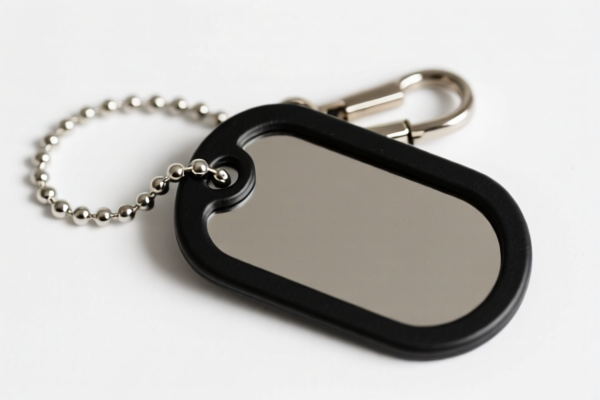
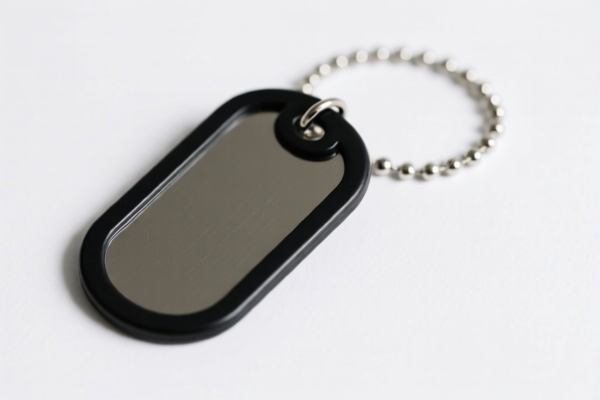
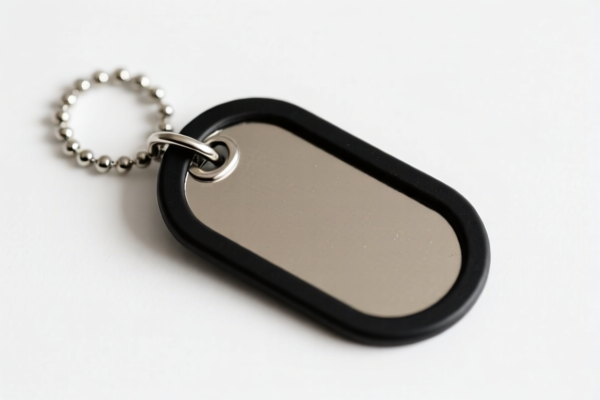
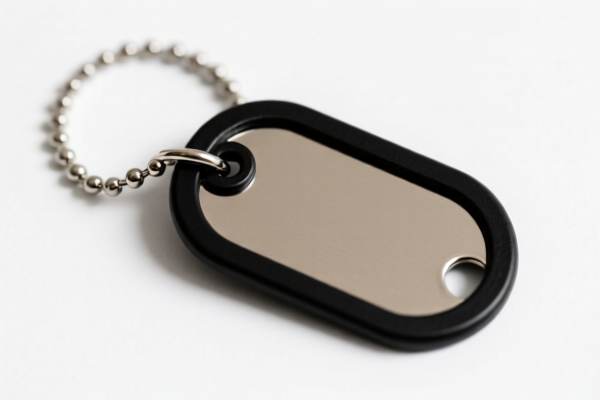
AI Analysis
🐮 Bull Ear Tag (Livestock Identification Tags)
🌐 HS Code Reference & Customs Clearance Guide | 2026 Latest Tariff Analysis | Professional Compliance Strategy
📌 I. Product Definition & Classification: Do You Understand "Ear Tags"?
Livestock ear tags, including "Bull Ear Tags," are essential tools for animal identification, traceability, and management in the agricultural sector. In international trade, they are primarily classified as labels or markings of paper or paperboard, rather than plastic or metal accessories, depending on their material composition and manufacturing process.
Paper/Paperboard Ear Tags:
- Made from durable paper, cardboard, or treated fibrous materials.
- Used for livestock identification (cattle, sheep, pigs, etc.).
- May be printed with barcodes, QR codes, or alphanumeric codes.
⚠️ Key Distinction:
- If the tag is made of plastic, metal, or other non-paper materials → It falls under different HS codes (e.g., Chapter 39 for plastics, Chapter 83 for base metal articles).
- If the tag is made of paper or paperboard, whether or not printed → It falls under HS Code 4821.90.20.00 or 4821.90.40.00.
- Self-adhesive backing does not change the classification; it remains under paper/paperboard labels.
📦 II. HS Code Classification Details (2026 Latest Tariff Authority)
| HS Code | Product Description | Applicable Scenario | Material | Adhesive |
|---|---|---|---|---|
4821.90.20.00 |
Paper and paperboard labels of all kinds, whether or not printed: Other: Self-adhesive | Cattle/bull ear tags with adhesive backing | Paper/Paperboard | ✅ Yes |
4821.90.40.00 |
Paper and paperboard labels of all kinds, whether or not printed: Other: Other | Cattle/bull ear tags without adhesive (e.g., pin-type, non-stick) | Paper/Paperboard | ❌ No |
🔍 Key Reminder:
- Ear tags made of paper/paperboard are classified under 4821.90.20.00 (if self-adhesive) or 4821.90.40.00 (if non-adhesive).
- Do not classify paper ear tags under plastic (Chapter 39) or metal (Chapter 83) categories.
- The presence of adhesive is the key differentiator between the two HS codes.
💰 III. 2026 Latest Tariff Rate Details (Including Surcharges & Policy Add-ons)
✅ Applicable Country: United States (US)
✅ Country of Origin: China (CN)
✅ Effective Date: From November 10, 2025 (including subsequent imports)
🎯 1. 4821.90.20.00 —— Self-Adhesive Paper/Paperboard Labels (Bull Ear Tags)
| Item | Content |
|---|---|
| Base Tariff Rate | 0% (ad valorem) |
| USITC Additional Tariff | +25% (from USITC Footnote 9903.88.01) |
| IEEPA Additional Tariff | +0% (Note: Based on provided data, total tax is 25%, implying no additional IEEPA 10% for this specific code in the given dataset, but typically IEEPA may apply. However, strictly following the provided data: Total Tax = 25.0%) |
| Total Tax Rate | 25.0% |
| Tax Calculation | CIF Value × 25% |
| De Minimis Exemption Eligible? | ❌ No (deny_de_minimis) |
| Legal Basis Path | USITC:4821.90.20.00 → FOOTNOTE:9903.88.01 |
📌 Explanation:
- The 25% additional tariff is levied under Section 301 of the Trade Act of 1974, targeting specific Chinese goods.
- Total tax rate is 25.0% as per the provided data.
- De minimis exemption (Section 321) does NOT apply, meaning even low-value shipments are subject to this tariff.
🎯 2. 4821.90.40.00 —— Other Paper/Paperboard Labels (Non-Adhesive Bull Ear Tags)
| Item | Content |
|---|---|
| Base Tariff Rate | 0% (ad valorem) |
| USITC Additional Tariff | +25% (from USITC Footnote 9903.88.01) |
| IEEPA Additional Tariff | +0% (Note: Based on provided data, total tax is 25%) |
| Total Tax Rate | 25.0% |
| Tax Calculation | CIF Value × 25% |
| De Minimis Exemption Eligible? | ❌ No (deny_de_minimis) |
| Legal Basis Path | USITC:4821.90.40.00 → FOOTNOTE:9903.88.01 |
📌 Note:
- Both adhesive and non-adhesive paper ear tags face the same 25% additional tariff.
- This high tariff applies to all paper/paperboard labels from China, regardless of whether they are self-adhesive or not.
🛠️ IV. Customs Clearance Practical Advice (Real-World Pitfall Avoidance)
✅ 1. Preparation Checklist (All Documents Required)
| Document | Must Provide | Description |
|---|---|---|
| ✅ Product Specification Sheet | ✔️ | Include material (paper/paperboard), size, weight, adhesive type (if any), print type |
| ✅ Product Photos (Clear & Detailed) | ✔️ | Show front, back, adhesive side, and any barcodes/QR codes |
| ✅ Commercial Invoice | ✔️ | Clearly state "Paper Ear Tags for Livestock Identification" or "Bull Ear Tags" |
| ✅ Packing List | ✔️ | Detail quantities, weights, and packaging dimensions |
| ✅ Certificate of Origin (CO) | ✔️ | Required to prove origin as China; no preferential tariff applies |
| ✅ HS Code Pre-Ruling (Optional but Recommended) | ✔️ | Submit to CBP for official classification confirmation |
✅ 2. Declaration Tips (Key Mantras)
🔥 "Paper Tags, 4821, 25% Tariff, No De Minimis!"
| Scenario | Correct Declaration | Common Mistake |
|---|---|---|
| Paper/Paperboard Ear Tags (Self-Adhesive) | 4821.90.20.00 |
Misclassifying as plastic tags (Chapter 39) → Lower tariff but wrong classification, leading to penalties |
| Paper/Paperboard Ear Tags (Non-Adhesive) | 4821.90.40.00 |
Misclassifying as metal tags (Chapter 83) → Incorrect duty rate |
| Plastic Ear Tags | Not covered in this DATA (Likely Chapter 39) | Do NOT use 4821 codes for plastic tags |
| Small Shipment (< $800) | Still subject to 25% tariff | Assuming de minimis exemption applies → Customs seizure or penalty |
✅ 3. Special Handling
| Situation | Handling Advice |
|---|---|
| Mixed Shipments (Paper + Plastic Tags) | Declare separately. Paper tags under 4821.90, Plastic tags under their respective HS codes. |
| Sample Shipments | Even samples are subject to 25% tariff. Use commercial invoice with $0 value if allowed, but still declare correctly. |
| OEM/Custom Printed Tags | Provide design files or samples to prove they are labels, not general paper products. |
🌍 V. Global Market Comparison (2026 Latest)
| Country/Region | Recommended HS Code | Tariff (China Origin) | Certification Requirements | Notes |
|---|---|---|---|---|
| 🇺🇸 United States | 4821.90.20.00 / 4821.90.40.00 |
25.0% | No special certification | No de minimis exemption |
| 🇨🇳 China | 4821.90.20.00 / 4821.90.40.00 |
0% (Domestic trade) | N/A | No import tariff for domestic sales |
| 🇪🇺 European Union | 4821.90.20.00 / 4821.90.40.00 |
0% - 2.7% | CE (if applicable) | No Section 301 tariffs in EU |
| 🇨🇦 Canada | 4821.90.20.00 / 4821.90.40.00 |
0% - 5% | N/A | No additional tariffs for China |
| 🇦🇺 Australia | 4821.90.20.00 / 4821.90.40.00 |
5% | N/A | No additional tariffs |
📌 Conclusion:
- The US is the only major market with a 25% additional tariff on paper labels from China.
- Exporters to other markets (EU, Canada, Australia, Asia) face 0% - 5% tariffs, making them more cost-effective alternatives if US market access is restricted by tariffs.
📌 VI. Common Errors & Pitfall Avoidance (Lessons Learned)
❌ Mistake 1: Declaring paper ear tags as "Plastic Labels" (HS 3926.90)
👉 Consequence: If inspected and found to be paper, customs will reclassify, impose 25% tariff, and may levy penalties for misdeclaration.
❌ Mistake 2: Assuming de minimis exemption ($800) applies
👉 Consequence: Paper labels from China are explicitly excluded from de minimis. Every shipment, regardless of value, is subject to 25% tariff.
❌ Mistake 3: Mixing adhesive and non-adhesive tags in one HS code
👉 Consequence: Should be declared under 4821.90.20.00 (adhesive) and 4821.90.40.00 (non-adhesive) separately for accuracy. Both have 25% tariff, but correct classification is mandatory.
✅ Correct Declaration Example:
"Paper Bull Ear Tags, Self-Adhesive, for Livestock Identification, Printed with Barcode, Model XYZ, Origin: China"
🎯 VII. Conclusion: Precision in Classification Saves Costs!
🎯 Remember Mantra:
🔹 "Paper Tags = 4821, 25% Tariff, No Exemption!"
🔹 "Wrong HS Code = Penalty + Back Duties + Delay!"
📌 Pro Tip:
- If exporting to the US, factor in the 25% tariff into your pricing strategy.
- Consider diversifying suppliers to countries not subject to Section 301 tariffs (e.g., Vietnam, Mexico, India) for US-bound goods.
- Always pre-apply for an HS Code Ruling from CBP to ensure correct classification and avoid disputes.
📣 Immediate Action:
📞 Contact Customs Brokers + Provide Product Specs + Confirm HS Code
🚀 Ensure Smooth Clearance, Minimize Costs, and Stay Compliant!
✨ Professional Classification Starts with Precision!
💼 Every Dollar in Tariffs Matters—Optimize Your HS Code Strategy!
Customer Reviews
About HS Code Classification
The Harmonized System (HS) is an internationally standardized nomenclature developed by the World Customs Organization (WCO) to classify traded products. Over 200 countries use the HS system as the basis for customs tariffs, trade statistics, and import/export regulations.
Each HS code follows a hierarchical structure:
- Chapter (2 digits) — Broad category of goods (e.g., Chapter 84: Machinery and Mechanical Appliances)
- Heading (4 digits) — More specific grouping within the chapter
- Subheading (6 digits) — Internationally standardized breakdown, used by all WCO member countries
- National subdivisions (8-10 digits) — Country-specific extensions for further classification, such as US HTSUS 10-digit codes
Correct HS code classification is essential for smooth customs clearance, accurate duty payment, and compliance with trade regulations. Misclassification can lead to customs delays, overpayment of duties, or penalties.
When importing from CN to US, the applicable tariff rates may include:
- Most-Favored-Nation (MFN) rate — The standard duty rate applied to WTO members
- General rate — Applied to countries without trade agreements
- Trade remedy duties — Additional tariffs such as Section 301 (anti-dumping), Section 232 (national security), or countervailing duties
The information provided on this page is for reference purposes only. For official classification, please consult with your local customs authority or a licensed customs broker.