Bulrush Woven Floor Mats
CN → US| HS Code | Tariff Rate | Origin | Destination | Doc |
|---|---|---|---|---|
| 4601296000 | 39.8% | CN | US | Official Doc |
| 4602191700 | 35.0% | CN | US | Official Doc |
| 4601298000 | 35.0% | CN | US | Official Doc |
Product Images
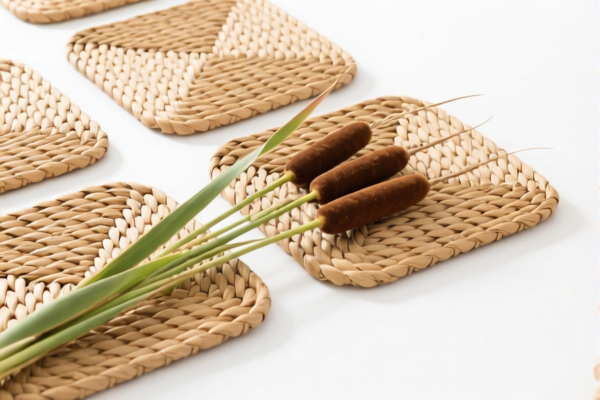
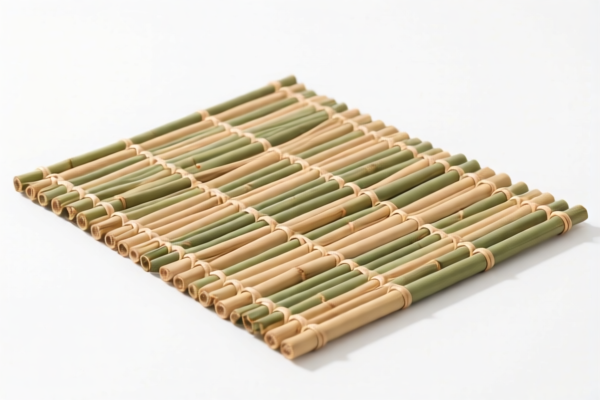
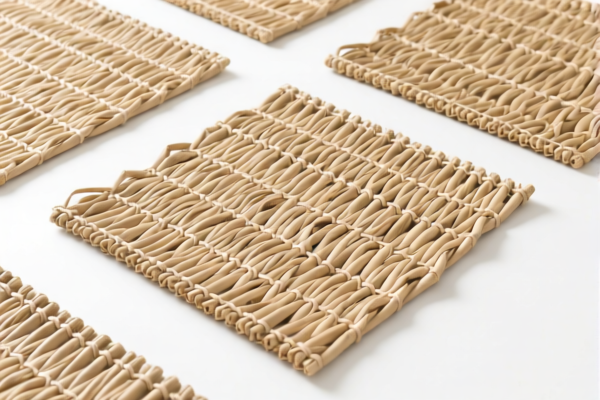
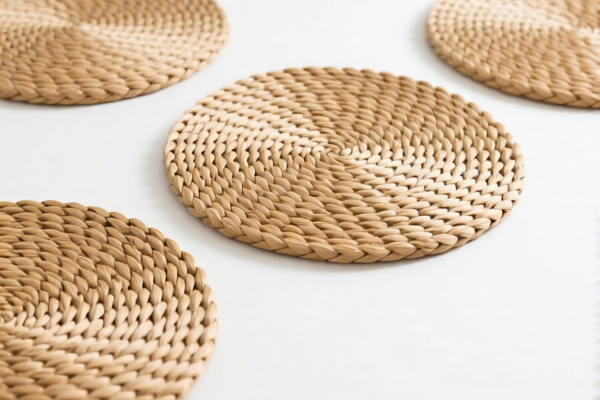
AI Analysis
🌿 Bulrush Woven Floor Mats: The Ultimate 2026 US Import Guide
🌐 HS Code Classification & Customs Clearance Strategy | 2026 Latest Tariff Analysis | Professional Compliance Protocol
📌 I. Product Definition: Are You Sure It’s Just a "Mat"?
Bulrush woven floor mats are traditional, handcrafted (or machine-made) woven goods made from plant materials (specifically bulrush/reed). In international trade, the distinction between a "woven mat" and a "finished woven article" is critical for accurate classification. Misclassification can lead to severe customs delays, penalties, or unexpected tariff hikes.
Key Distinction: * Woven Mats (Heading 4601): Typically classified as "Matting, mats, and matting of plaited materials," often implying a specific structural integrity or finish associated with floor coverings. * Woven Articles (Heading 4602): Classified as "Woven goods," which is a broader category for finished articles made of plaited materials (basketry, furniture, decorative items).
⚠️ Critical Compliance Point:
- If the product is explicitly defined as a "Floor Mat" with specific dimensions and use, it leans toward 4601.
- If it is a general "Woven Article" made of plant materials without specific matting classification, it leans toward 4602.
- The Risk: Both categories are currently subject to heavy US Import Tariffs due to Section 301 and IEEPA regulations.
📦 II. HS Code Classification Details (2026 Latest Tariff Authority)
Below are the three possible HS Codes derived from the product description, with their respective tax implications.
| HS Code | Product Description | Application Scenario | Key Characteristics |
|---|---|---|---|
4601.29.60.00 |
Woven Mats of Plant Materials | Specifically classified as "Mats" made of reed/bulrush. | • Summary: Bulrush woven floor mats, plant material, mat form. • Usage: Specific flooring/woven product classification. |
4602.19.17.00 |
Woven Articles of Reed/Rush | Classified as "Other woven articles" of vegetable plaiting materials. | • Summary: Fits under "Wickerwork, basketry and other woven articles." • Material: Plant-based, woven structure. |
4601.29.80.00 |
Other Woven Mats | A residual category for woven mats not specifically listed elsewhere in 4601. | • Summary: Bulrush woven floor mats, plant material, floor mat usage. • Note: Broad "Other" category within matting. |
🔍 Classification Logic:
- Customs often scrutinize whether the item is a "mat" (4601) or a general "woven article" (4602).
- 4601 generally covers matting, mats, and matting of plaited materials.
- 4602 covers finished woven goods (like baskets, trays, or decorative mats).
- Warning: The difference in "Total Tax" between4601.29.60.00(39.8%) and4602.19.17.00(35.0%) is due to differing Base Duty Rates, not the additional surcharges.
💰 III. 2026 Tariff Rate Breakdown (Including Surtaxes & Policies)
✅ Applicable Country: United States (US)
✅ Origin: China (CN) (Assumed based on typical bulrush export origin & tariff structure)
✅ Effective Date: Current trade policies (2025-2026)
🎯 1. 4601.29.60.00 —— Woven Mats (Specific Mat Classification)
| Item | Details |
|---|---|
| Base Duty Rate | 4.8% (Ad Valorem) |
| Section 301 Surcharge | +25.0% (Additional Duties) |
| IEEPA / Section 122 Surcharge | +10.0% (China-specific) |
| Total Effective Tax Rate | 39.8% |
| Tax Calculation | CIF Value × 39.8% |
| De Minimis Exemption | ❌ Not Eligible (Deemed ineligible for Section 321 de minimis due to Section 301/IEEPA restrictions) |
| Legal Basis | HTSUS 4601.29.60 → Section 301 Footnote → IEEPA Authority |
📌 Explanation:
- The 4.8% base duty is relatively low, but the 25% Section 301 tariff and 10% IEEPA tariff dominate the cost.
- This code attracts the highest total tax among the options.
🎯 2. 4602.19.17.00 —— Woven Articles (Plant Material)
| Item | Details |
|---|---|
| Base Duty Rate | 0.0% (Free) |
| Section 301 Surcharge | +25.0% (Additional Duties) |
| IEEPA / Section 122 Surcharge | +10.0% (China-specific) |
| Total Effective Tax Rate | 35.0% |
| Tax Calculation | CIF Value × 35.0% |
| De Minimis Exemption | ❌ Not Eligible |
| Legal Basis | HTSUS 4602.19.17 → Section 301 Footnote → IEEPA Authority |
📌 Explanation:
- This is the most tax-efficient classification.
- The Base Duty is 0%, saving 4.8% compared to the other 4601 codes.
- However, the additional surcharges (35%) are identical to the other codes.
🎯 3. 4601.29.80.00 —— Other Woven Mats
| Item | Details |
|---|---|
| Base Duty Rate | 0.0% (Free) |
| Section 301 Surcharge | +25.0% (Additional Duties) |
| IEEPA / Section 122 Surcharge | +10.0% (China-specific) |
| Total Effective Tax Rate | 35.0% |
| Tax Calculation | CIF Value × 35.0% |
| De Minimis Exemption | ❌ Not Eligible |
| Legal Basis | HTSUS 4601.29.80 → Section 301 Footnote → IEEPA Authority |
📌 Explanation:
- Like4602.19.17.00, this code has a 0% base duty, resulting in a 35% total tax.
- It is functionally equivalent in cost to4602.19.17.00but falls under the "Matting" heading.
🛠️ IV. Customs Clearance Practical Advice (Pitfall Avoidance Guide)
✅ 1. Documentation Checklist (Non-Negotiable)
| Document | Required | Notes |
|---|---|---|
| Commercial Invoice | ✔️ | Must clearly state "Bulrush Woven Floor Mats," Material: 100% Plant, Method: Woven. |
| Product Photos | ✔️ | Show texture, weave pattern, and edges. Prove it is a "mat" and not raw reed. |
| Bill of Lading | ✔️ | Ensure HS Code matches invoice. |
| Customs Bond | ✔️ | Single or Continuous bond required for formal entry. |
| ISF Filing | ✔️ | 10+2 must be filed 24 hours before vessel loading. |
✅ 2. Classification Strategy (Key Mnemonic)
🔥 "Base Rate Matters, Surcharges Are Fixed!"
| Scenario | Recommended HS Code | Total Tax | Why? |
|---|---|---|---|
| General Woven Product | 4602.19.17.00 |
35.0% | 0% Base Duty → Lowest Total Tax. |
| Specific Floor Mat | 4601.29.80.00 |
35.0% | 0% Base Duty → Lowest Total Tax. |
| Strict Mat Classification | 4601.29.60.00 |
39.8% | 4.8% Base Duty → Higher Total Tax. Avoid if possible. |
📌 Note:
- While4601.29.60.00may seem more "specific," the 4.8% base duty makes it 4.8% more expensive than the other two options.
- If the product can be reasonably described as a "Woven Article" (4602) or "Other Mat" (4601.29.80), choose the 0% base duty code to save money.
✅ 3. Special Handling
| Situation | Advice |
|---|---|
| De Minimis (Section 321) | ❌ Do NOT use. Section 301 and IEEPA surcharges apply even to small shipments. |
| Wood Packaging | ✅ Ensure pallets are ISPM 15 compliant (heat-treated). Bulrush mats themselves are plant material, but packaging must not trigger phytosanitary checks. |
| Labeling | ✅ Must include "Made in China" and country of origin. |
🌍 V. Global Market Comparison (2026)
| Market | Recommended HS Code | Total Tax (China Origin) | Notes |
|---|---|---|---|
| 🇺🇸 USA | 4602.19.17.00 or 4601.29.80.00 |
35.0% | Avoid 4601.29.60.00 (39.8%). |
| 🇨🇳 China (Export) | N/A | 0% | China encourages export of woven goods. |
| 🇪🇺 EU | 4601.20 or 4602.19 |
~5-7% | Lower base duties, no Section 301. |
| 🇬🇧 UK | 4601.20 or 4602.19 |
~5-7% | Post-Brexit tariffs similar to EU. |
📌 Conclusion:
- The US market is the most challenging due to 35-40% effective tariffs.
- For other markets (EU, UK, Asia), the tax burden is significantly lower.
- Strategy: If targeting the US, consider tariff engineering (ensuring classification under 0% base duty codes) or supply chain diversification (if feasible).
📌 VI. Common Errors & Pitfalls (Lessons Learned)
❌ Error 1: Using 4601.29.60.00 without justification.
👉 Consequence: Paying an extra 4.8% in base duty unnecessarily.
✅ Fix: Verify if 4601.29.80.00 or 4602.19.17.00 is more appropriate for your specific product type.
❌ Error 2: Assuming De Minimis (Section 321) applies.
👉 Consequence: Package seized, fines, and back-payment of 35%+ tax.
✅ Fix: File formal entry with bond. Do not ship via postal service claiming de minimis.
❌ Error 3: Missing "Made in China" labeling.
👉 Consequence: CBP refusal, fines, and return/shipping costs.
✅ Fix: Ensure permanent, legible "Made in China" marking on each mat or packaging.
❌ Error 4: Incorrect ISPM 15 packaging.
👉 Consequence: Phytosanitary quarantine, treatment costs, or destruction.
✅ Fix: Use heat-treated pallets and stamp them with the IPPC logo.
🎯 VII. Conclusion: Smart Classification Saves Money
🎯 Key Takeaway:
🔹 Total Tax = Base Duty + 25% (Sec 301) + 10% (IEEPA)
🔹 Base Duty is the only variable!
🔹 Choose 0% Base Duty Codes (4602.19.17.00or4601.29.80.00) to minimize cost.
📌 Pro Tip:
If your bulrush mats are exported to the US, consult a customs broker to confirm the most favorable classification between 4602 (Woven Articles) and 4601.29.80 (Other Mats), as both offer 35% total tax. Avoid 4601.29.60.00 unless explicitly required by specific market standards.
📣 Immediate Action:
📞 Contact a licensed US Customs Broker for a Binding Ruling on your specific product.
🚀 Optimize your supply chain and labeling to ensure smooth, compliant clearance.
✨ Precision in Classification, Profit in Clearance!
💼 Every percentage point saved is pure profit!
Customer Reviews
About HS Code Classification
The Harmonized System (HS) is an internationally standardized nomenclature developed by the World Customs Organization (WCO) to classify traded products. Over 200 countries use the HS system as the basis for customs tariffs, trade statistics, and import/export regulations.
Each HS code follows a hierarchical structure:
- Chapter (2 digits) — Broad category of goods (e.g., Chapter 84: Machinery and Mechanical Appliances)
- Heading (4 digits) — More specific grouping within the chapter
- Subheading (6 digits) — Internationally standardized breakdown, used by all WCO member countries
- National subdivisions (8-10 digits) — Country-specific extensions for further classification, such as US HTSUS 10-digit codes
Correct HS code classification is essential for smooth customs clearance, accurate duty payment, and compliance with trade regulations. Misclassification can lead to customs delays, overpayment of duties, or penalties.
When importing from CN to US, the applicable tariff rates may include:
- Most-Favored-Nation (MFN) rate — The standard duty rate applied to WTO members
- General rate — Applied to countries without trade agreements
- Trade remedy duties — Additional tariffs such as Section 301 (anti-dumping), Section 232 (national security), or countervailing duties
The information provided on this page is for reference purposes only. For official classification, please consult with your local customs authority or a licensed customs broker.