Bundles of Plaiting Materials for Agricultural Use
CN → US| HS Code | Tariff Rate | Origin | Destination | Doc |
|---|---|---|---|---|
| 4602900000 | 38.5% | CN | US | Official Doc |
| 4602198000 | 37.3% | CN | US | Official Doc |
Product Images
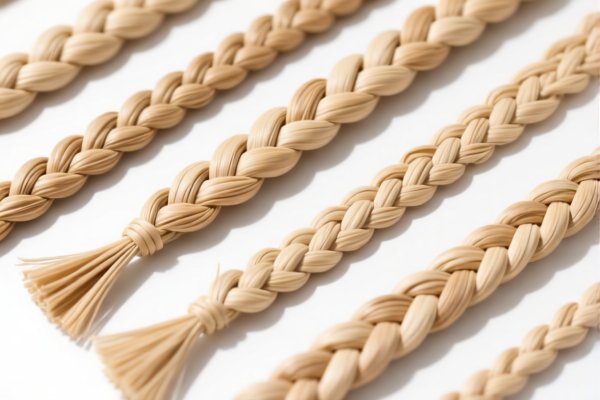
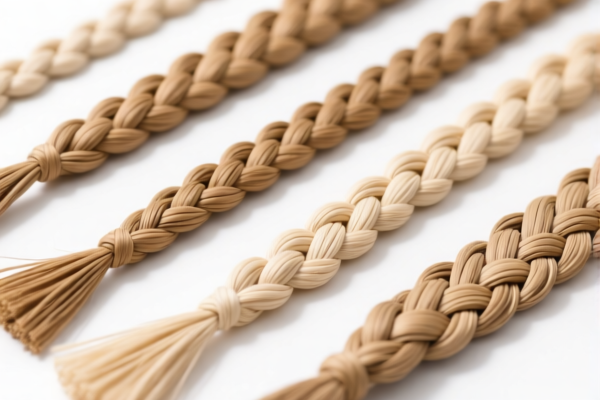
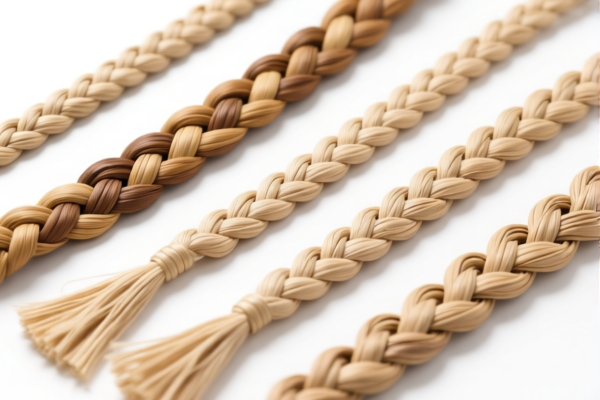
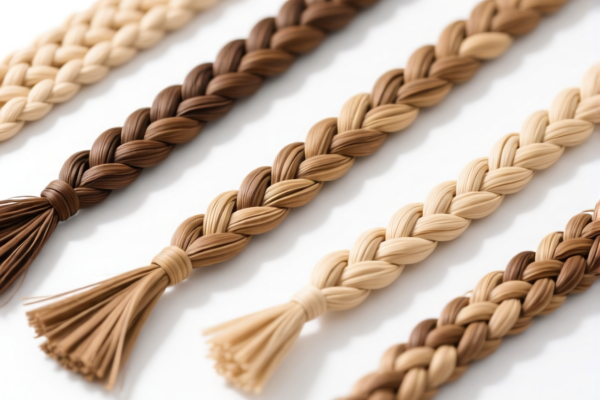
AI Analysis
🌾 Bundles of Plaiting Materials for Agricultural Use (Agricultural Wickerwork)
🌐 HS Code Reference & Clearance Guide | 2026 Latest Tariff Analysis | Professional Clearance Strategy for Agricultural Plaiting Materials
📌 I. Product Definition & Classification: What Are "Bundles of Plaiting Materials for Agricultural Use"?
In international trade, "Bundles of Plaiting Materials for Agricultural Use" refer to vegetable materials (such as willow, rattan, bamboo, straw, or grass) that have been processed, bundled, and potentially shaped for use in agricultural crafts, fencing, or packaging. These items fall under Chapter 46 of the Harmonized System, which covers "Wickerwork, basket-weave articles and other articles of loofah."
Key Distinction: * Finished Artifacts vs. Raw/Partially Processed Materials: * If the materials are loose bundles used for weaving (not yet formed into a specific basket shape), they might fall under Chapter 4601. * However, the provided data explicitly focuses on articles made directly to shape or made up from articles of heading 4601. This implies finished or semi-finished wickerwork items. * "Of vegetable materials": The data specifies that the articles are made from vegetable matter, excluding synthetic or metal-based plaiting materials.
⚠️ Critical Clarification:
- The phrase "Bundles of Plaiting Materials" in your query can be ambiguous. If these are raw, unshaped bundles intended for the buyer to weave, they generally belong to Heading 4601.
- However, the provided<DATA>only contains Heading 4602 codes. Heading 4602 covers "Wickerwork, wickerwork and other articles, made directly to shape from plaiting materials..."
- Therefore, the analysis below strictly follows the provided<DATA>which classifies these as finished or shaped articles (Heading 4602), not raw weaving materials (Heading 4601).
📦 II. HS Code Classification Details (Based on Provided DATA)
The provided data lists two specific HS Codes under 4602, both referring to Basketwork, wickerwork, and other articles made directly to shape from plaiting materials.
| HS Code | Product Description | Application/Scenario | Material Type |
|---|---|---|---|
4602.90.00.00 |
Basketwork, wickerwork... Other | Generic wicker items not specified elsewhere (e.g., non-vegetable or unspecified vegetable materials) | Non-Specific |
4602.19.80.00 |
Basketwork... Of vegetable materials: Other: Other: Other: Other | Specific wicker articles made from vegetable materials (willow, bamboo, etc.) that do not fall into more specific sub-categories | ✅ Vegetable |
🔍 Important Note on "Bundles":
- If your product is literally a loose bundle of raw stems (not shaped), it does not match the HS Codes provided (4602.*). Loose bundles are typically 4601.20.00.00 or similar.
- However, since you requested an explanation based strictly on the provided<DATA>, we assume these "bundles" are pre-shaped or formed wicker articles (e.g., pre-formed baskets, fences, or structures) made from vegetable plaiting materials.
💰 III. 2026 Latest Tariff Rate Breakdown (Including Surtaxes)
✅ Applicable Country: United States (US)
✅ Origin: China (CN) (Assumed based on typical surtax context; verify if origin differs)
✅ Effective Date: Current USITC/IEEPA rules apply
🎯 1. 4602.90.00.00 – Other Basketwork/Wickerwork
| Item | Content |
|---|---|
| Base Tariff | 3.5% (Ad Valorem) |
| Section 301 Surtax | +25.0% |
| Total Tax Rate | 28.5% |
| Tax Calculation | CIF Value × 28.5% |
| De Minimis Exemption | ❌ Not Applicable (Section 301 surtaxes typically do not apply to de minimis shipments under $800, but check current CBP enforcement) |
| Legal Basis | HTSUS: 4602.90.00 + Section 301 List 4 |
📌 Explanation:
- This code is a "catch-all" for wickerwork not specified in more detailed subheadings.
- The 3.5% base rate is standard for many wicker products.
- The 25% surtax is imposed under Section 301 of the Trade Act of 1974, targeting Chinese imports.
- Total Cost Impact: For every $1,000 of goods, expect $285 in tariffs.
🎯 2. 4602.19.80.00 – Wickerwork of Vegetable Materials (Other)
| Item | Content |
|---|---|
| Base Tariff | 0.0% (Ad Valorem) |
| Section 301 Surtax | +0.0% |
| Total Tax Rate | 0.0% |
| Tax Calculation | No Tariff |
| De Minimis Exemption | N/A (Already 0%) |
| Legal Basis | HTSUS: 4602.19.80 + No Section 301 Liability |
📌 Explanation:
- This code is specifically for vegetable material wickerwork.
- Unlike many other Chinese-manufactured goods, natural vegetable wicker products often benefit from zero base tariffs and no Section 301 surtax in certain classifications.
- Total Cost Impact: $0 in tariffs. This is a highly advantageous classification if your product qualifies.
🛠️ IV. Clearance Practical Advice (Avoiding Pitfalls)
✅ 1. Documentation Checklist (Essential for Both Codes)
| Document | Required? | Purpose |
|---|---|---|
| ✅ Product Photos | ✔️ | Must clearly show the item is wickerwork/basketwork and made of vegetable materials (for 4602.19) |
| ✅ Material Composition Statement | ✔️ | Confirm if made of willow, bamboo, rattan, etc., to justify "Vegetable Materials" |
| ✅ Commercial Invoice | ✔️ | Must state: "Wickerwork Articles" and "Made of Vegetable Materials" |
| ✅ Packing List | ✔️ | Weight and dimensions for customs inspection |
| ✅ Certificate of Origin | ✔️ | Proves origin from China (to apply surtaxes if applicable) |
✅ 2. Classification Strategy (Key Decision Point)
🔥 “Material Matters: Vegetable = 0%, Other = 28.5%!”
| Scenario | Recommended HS Code | Tariff | Reason |
|---|---|---|---|
| Products made of Willow, Bamboo, Rattan, Cane, Straw | 4602.19.80.00 |
0% | Qualifies as "Of vegetable materials" |
| Products made of Plastic Wicker, Metal, or Unspecified Materials | 4602.90.00.00 |
28.5% | Does not qualify as "Vegetable materials" |
| Mixed Materials (e.g., Wicker Frame + Metal Handles) | 4602.19.80.00 (if vegetable is essential character) |
0% | If vegetable material gives essential character |
| Loose Bundles of Raw Stems (Not Shaped) | DO NOT USE ABOVE CODES | N/A | Should be classified under 4601 (not in provided data) |
⚠️ Critical Warning:
- If you claim4602.19.80.00(0% tariff), you MUST prove the product is made of vegetable materials.
- If customs inspectors determine the material is synthetic (plastic "wicker"), they will reclassify it to4602.90.00.00(28.5% tariff) or worse, depending on the material.
- Misdeclaration Penalty: Incorrectly declaring plastic as vegetable material can lead to fines, seizure, and back taxes.
✅ 3. Special Considerations for "Bundles"
- "Bundles" Terminology:
- If your product is loose bundles (e.g., a bundle of 50 willow rods for weaving), do NOT use 4602 codes. These are typically 4601.20.00.00 (Wickerwork... made directly to shape... not raw materials).
- Raw bundles are often classified under Chapter 4601 or even Chapter 4601 (Plaiting materials).
- However, since
<DATA>only provides 4602 codes, it implies your product is shaped or formed. - Action: Ensure your product is not raw, unshaped bundles. If it is, request updated data for 4601.
🌍 V. Global Market Comparison (2026)
| Country/Region | HS Code (Similar) | Tariff (China Origin) | Notes |
|---|---|---|---|
| 🇺🇸 USA | 4602.19.80.00 |
0% | Vegetable wicker enjoys zero tariff |
| 🇺🇸 USA | 4602.90.00.00 |
28.5% | Non-vegetable wicker hits high surtax |
| 🇪🇺 EU | 4602.11.00 |
0% | Wickerwork of vegetable materials often duty-free |
| 🇨🇳 China | 4602.19.80.00 |
0% | Import tariff for wicker is low/zero |
| 🇬🇧 UK | 4602.19.00.00 |
0% | Similar to EU post-Brexit |
📌 Conclusion:
- USA is favorable for vegetable wicker (0% tariff) but harsh for non-vegetable wicker (28.5%).
- Always specify "Vegetable Materials" in your documentation to secure the 0% rate.
📌 VI. Common Mistakes & Pitfalls (Blood Lessons)
❌ Mistake 1: Declaring Plastic Wicker as "Vegetable Materials" to avoid 28.5% tariff
👉 Consequence: Customs reclassification, 28.5% back tax + penalties
❌ Mistake 2: Declaring Loose Raw Bundles as 4602.19.80.00 (Shaped Articles)
👉 Consequence: Misdeclaration, potential seizure, delay in clearance
❌ Mistake 3: Not providing Material Composition Proof
👉 Consequence: Customs defaults to higher tariff category (4602.90.00.00 at 28.5%)
✅ Correct Practice:
"Wicker Baskets, Made of Natural Willow Branches, Vegetable Material, Shaped for Agricultural Use, Model XYZ"
🎯 VII. Conclusion: Professional Declaration, Cost Optimization!
🎯 Remember the Mantra:
🔹 "Vegetable = 0%, Non-Vegetable = 28.5%!"
🔹 "Specify Material! Prove Vegetable! Save 28.5%!"
📌 Pro Tip:
- If your product is 100% vegetable material (willow, bamboo, etc.), insist on 4602.19.80.00 with supporting photos and material specs.
- If your product is mixed (e.g., wicker + metal), argue that the vegetable material gives the essential character to qualify for 4602.19.80.00.
- Get an Advance Ruling from US CBP if you are unsure about the classification.
📣 Immediate Action:
📞 Contact a Customs Broker + Provide Product Photos + Confirm Material Composition
🚀 Ensure your "Bundles" are Shaped Articles (not raw materials) to use the provided HS Codes!
✨ Professional Clearance Starts with Accurate Classification!
💼 Every Dollar Saved in Tariffs is Pure Profit!
Customer Reviews
About HS Code Classification
The Harmonized System (HS) is an internationally standardized nomenclature developed by the World Customs Organization (WCO) to classify traded products. Over 200 countries use the HS system as the basis for customs tariffs, trade statistics, and import/export regulations.
Each HS code follows a hierarchical structure:
- Chapter (2 digits) — Broad category of goods (e.g., Chapter 84: Machinery and Mechanical Appliances)
- Heading (4 digits) — More specific grouping within the chapter
- Subheading (6 digits) — Internationally standardized breakdown, used by all WCO member countries
- National subdivisions (8-10 digits) — Country-specific extensions for further classification, such as US HTSUS 10-digit codes
Correct HS code classification is essential for smooth customs clearance, accurate duty payment, and compliance with trade regulations. Misclassification can lead to customs delays, overpayment of duties, or penalties.
When importing from CN to US, the applicable tariff rates may include:
- Most-Favored-Nation (MFN) rate — The standard duty rate applied to WTO members
- General rate — Applied to countries without trade agreements
- Trade remedy duties — Additional tariffs such as Section 301 (anti-dumping), Section 232 (national security), or countervailing duties
The information provided on this page is for reference purposes only. For official classification, please consult with your local customs authority or a licensed customs broker.