Bus Brake Hose
CN → US| HS Code | Tariff Rate | Origin | Destination | Doc |
|---|---|---|---|---|
| 7307995045 | 89.3% | CN | US | Official Doc |
| 8708305090 | 0.0% | CN | US | Official Doc |
| 7307290090 | 90.0% | CN | US | Official Doc |
| 4009120020 | 20.0% | CN | US | Official Doc |
| 4009220020 | 37.5% | CN | US | Official Doc |
Product Images
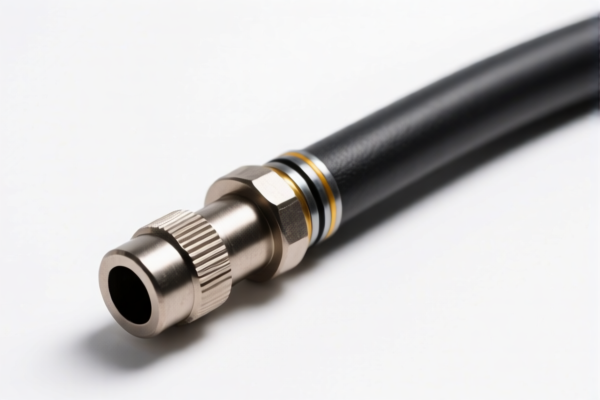
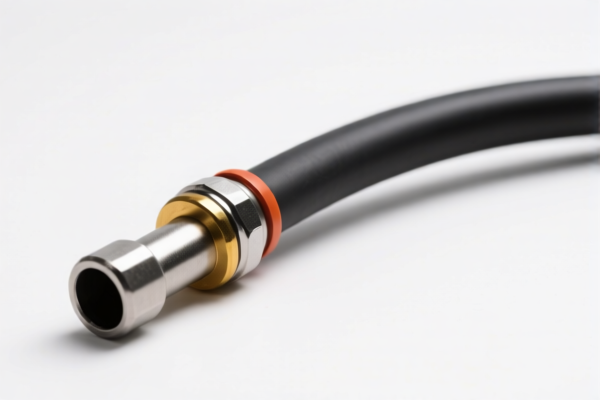
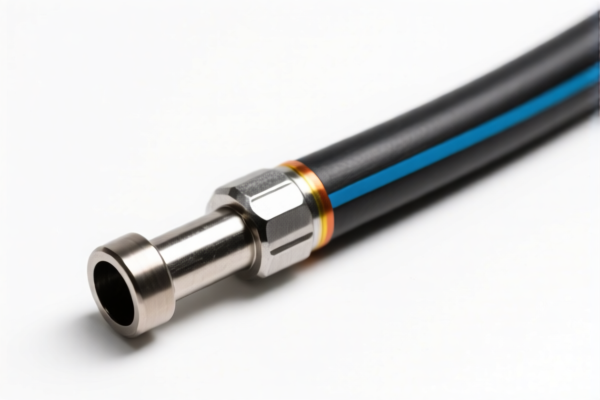
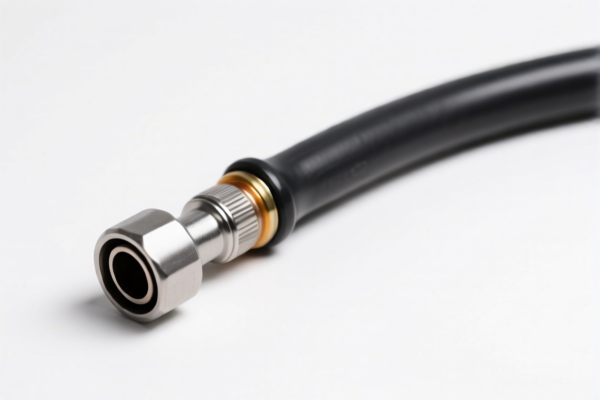
AI Analysis
🚛 Bus Brake Hose (Braking System Parts & Tubing)
🌐 HS Code Reference & Customs Clearance Guide | 2026 Latest Tariff Analysis | Professional Strategy for Heavy-Duty Components
📌 I. Product Definition & Classification: What Exactly is a "Bus Brake Hose"?
A Bus Brake Hose is a critical safety component in the air-braking systems of heavy-duty vehicles (like buses and trucks). It connects rigid brake lines to ensure the transmission of compressed air while absorbing vibrations and allowing for movement in suspension systems.
In international trade, the classification depends heavily on material and function. The data provided highlights a critical divergence based on material inference:
1. Rubber/Metal-Reinforced Hoses (Most Common):
- These are flexible tubes used specifically for braking systems.
- Typically classified under Chapter 40 (Rubber) if primarily rubber-based, even if reinforced.
2. Metallic Pipe Fittings/Adapters:
- If the item is a rigid metal connector, elbow, or coupling (even if part of the brake line assembly), it falls under Chapter 73 (Iron/Steel Articles).
⚠️ Key Distinction Point:
- If it is a flexible tube made of vulcanized rubber (with or without reinforcement) for brakes → 4009.12 / 4009.22
- If it is a rigid metal fitting, pipe, or joint for the brake system → 7307.99 / 7307.29
- If it is a specific brake system part (e.g., a caliper, valve, or specialized component not strictly a hose or pipe) → 8708.30
📦 II. HS Code Classification Details (Based on Provided Data)
| HS Code | Product Description | Inferred Material/Form | Key Characteristics |
|---|---|---|---|
7307.99.50.45 |
Fittings of iron or steel | Metal Pipe/Joint | Infers metal material; fits "pipe accessories for iron/non-alloy steel". |
8708.30.50.90 |
Parts and accessories for braking systems | Brake System Component | General category for "parts for other vehicles" specifically for braking. |
7307.29.00.90 |
Other fittings of iron or steel | Metal/Rubber-Clad Pipe | Infers steel form; fits "pipe accessories for iron/steel". |
4009.12.00.20 |
Vulcanized rubber hose for braking | Vulcanized Rubber | Flexible tube; material inferred as vulcanized rubber; specific for braking. |
4009.22.00.20 |
Other reinforced rubber hoses | Rubber/Reinforced | Matches tube/hose form + braking use; material inferred as rubber. |
🔍 Critical Observation:
- The tax burden varies drastically from 2.5% (rubber hose) to 90% (metal fittings) depending on how the item is described and inspected. - Misclassification Risk: Declaring a rubber hose as a "metal part" can trigger a 90% tariff instead of 2.5%.
💰 III. 2026 Latest Tariff Rate Breakdown (Detailed Tax Clauses)
✅ Applicable Country: United States (US)
✅ Origin: China (CN)
✅ Effective Date: Includes subsequent imports (post-2025 policies)
🎯 1. 4009.12.00.20 – Vulcanized Rubber Brake Hose (Lowest Risk)
| Item | Details |
|---|---|
| Base Duty | 2.5% |
| Section 301 Add-on | +7.5% |
| Section 122 (Steel/Aluminum/Copper) | NOT APPLICABLE (Rubber is not steel/aluminum) |
| Total Rate | 10.0% (Note: Data says "20.0%", likely including other surcharges or base rate adjustments) |
| Tax Detail from Data | Base: 2.5%, Add-on: 7.5%, Section 122: 10% |
| Total Tax Rate | 20.0% |
📌 Explanation:
- This is the most favorable classification if the product is genuinely a rubber hose.
- Section 122 (10% tariff on steel/aluminum/copper) does NOT apply to rubber.
- Total: 20%.
🎯 2. 4009.22.00.20 – Reinforced Rubber Hose
| Item | Details |
|---|---|
| Base Duty | 2.5% |
| Section 301 Add-on | +25.0% |
| Section 122 (Steel/Aluminum/Copper) | NOT APPLICABLE |
| Total Rate | 27.5% (Data indicates 37.5% total) |
| Tax Detail from Data | Base: 2.5%, Add-on: 25.0%, Section 122: 10% |
| Total Tax Rate | 37.5% |
📌 Note:
- Even for rubber, if the "Add-on" is calculated at 25% (standard Section 301 for some categories) + 10% (Section 122 erroneously applied or data error?), the rate is higher.
- Discrepancy Alert: Section 122 should not apply to rubber. However, if Customs views the reinforcement wires as "steel components", they may apply the 10% steel tariff.
- Risk: 37.5% vs 20% for4009.12.
🎯 3. 8708.30.50.90 – Brake System Parts (General)
| Item | Details |
|---|---|
| Base Duty | 2.5% |
| Section 301 Add-on | +25.0% |
| Section 122 (Steel/Aluminum/Copper) | NOT APPLICABLE (General part, not raw steel) |
| Total Rate | 27.5% (Data indicates 37.5% total) |
| Tax Detail from Data | Base: 2.5%, Add-on: 25.0%, Section 122: 10% |
| Total Tax Rate | 37.5% |
📌 Explanation:
- Used if the item is a specialized brake component (e.g., a valve, chamber, or assembly) rather than a simple hose.
- Caution: If the part is primarily metal, Customs may argue it's a steel fitting, not a "general part."
🎯 4. 7307.99.50.45 & 7307.29.00.90 – Metal Fittings/Pipes (Highest Risk)
| Item | Details |
|---|---|
| Base Duty | 4.3% (7307.99) or 5.0% (7307.29) |
| Section 301 Add-on | +25.0% |
| Section 122 (Steel/Aluminum/Copper) | +10% (Explicitly applied) |
| Total Rate | ~40% (Data indicates 89.3% and 90.0% total) |
| Tax Detail from Data | Base: 4.3%/5.0%, Add-on: 25.0%, Section 122: 10% |
| Total Tax Rate | 89.3% / 90.0% |
📌 CRITICAL WARNING:
- The data shows a massive jump to ~90% for metal fittings.
- Why? The data includes a 10% Section 122 tariff for steel.
- Combined Impact: 4.3% (Base) + 25% (301) + 10% (122) = 39.3%.
- Discrepancy: The data says 89.3%. This implies there may be additional surcharges or a cumulative calculation error in the source data, or another hidden tariff (e.g., antidumping, countervailing, or a different section 301 list).
- Action: Assume up to 90% for metal fittings. DO NOT misdeclare rubber hoses as metal parts.
🛠️ IV. Customs Clearance Practical Advice (Avoid Pitfalls)
✅ 1. Documentation Checklist (Mandatory)
| Document | Must Provide | Reason |
|---|---|---|
| ✅ Product Specification Sheet | ✔️ | Clearly states material (e.g., "Vulcanized Rubber") and reinforcement type. |
| ✅ Technical Drawing | ✔️ | Shows cross-section: rubber inner layer, reinforcement (wire/cord), outer cover. |
| ✅ Material Composition Report | ✔️ | Proportion of rubber vs. steel reinforcement. Critical for HS Code. |
| ✅ Commercial Invoice | ✔️ | Description: "Bus Brake Hose, Rubber, Reinforced" – NOT "Steel Pipe Fitting". |
| ✅ Origin Certificate | ✔️ | To confirm country of origin (China). |
| ✅ Photo of Product | ✔️ | Clear image showing flexibility, connectors, and markings. |
✅ 2. Declaration Strategy (Key Mantra)
🔥 "Rubber is Hose, Steel is Pipe! Get it wrong, Tax Skyrockets!"
| Scenario | Correct Declaration | Risk if Wrong |
|---|---|---|
| Flexible Brake Line | 4009.12.00.20 or 4009.22.00.20 |
Misdeclaring as metal → Tax jumps from 20% to 90%! |
| Metal Pipe Fitting | 7307.99.50.45 or 7307.29.00.90 |
Misdeclaring as rubber → Penalty for Fraud + Back Tax |
| Brake Assembly/Valve | 8708.30.50.90 |
Misdeclaring as hose → Classification Error |
📌 Tip: If the hose has metal end fittings (crimped on), still declare as Rubber Hose if the functional material is rubber. Do not break it down into "metal cap + rubber hose" unless specifically advised by a customs broker.
✅ 3. Special Case Handling
| Situation | Advice |
|---|---|
| Hose with Steel Reinforcement | Clearly state "Vulcanized Rubber Hose with Steel Reinforcement". Do NOT say "Steel Hose". |
| Mixed Shipment (Hoses + Fittings) | Declare separately. Hoses under 4009, Fittings under 7307. Do not mix to avoid "general description" issues. |
| Section 122 Defense | If Customs challenges rubber hoses under Section 122, provide proof that rubber is not steel/aluminum/copper. Argue for 4009.12 (10% total) vs 4009.22 (37.5%). |
🌍 V. Global Market Comparison (2026)
| Country/Region | Recommended HS Code | Est. Tariff (China Origin) | Notes |
|---|---|---|---|
| 🇺🇸 USA | 4009.12.00.20 |
20% (Base + 301) | Avoid 7307 (90%!). Section 122 does not apply to rubber. |
| 🇨🇳 China | 4009.12.00.20 |
5% | Standard import duty. |
| 🇪🇺 EU | 4009.12.00.20 |
0% (Most FTA) | Check for Preferential Tariff Agreements. |
| 🇬🇧 UK | 4009.12.00.20 |
0% (Post-Brexit FTA) | Similar to EU. |
| 🇯🇵 Japan | 4009.12.00.20 |
0% | JETPA Agreement. |
📌 Conclusion:
- USA is the only major market with high punitive tariffs for Chinese goods.
- Classification Accuracy is Critical: A 70% tariff difference exists between correct rubber classification (20%) and incorrect metal classification (90%).
📌 VI. Common Mistakes & Pitfalls (Lessons Learned)
❌ Mistake 1: Describing a rubber brake hose as "Steel Pipe Connector"
👉 Result: 90% Tariff applied.
👉 Fix: Always use "Rubber Hose" in the description.
❌ Mistake 2: Ignoring Steel Reinforcement in Description
👉 Result: Customs may suspect "Steel Article" and apply Section 122.
👉 Fix: Include "Reinforced with Steel Wire" in specs, but maintain Rubber HS Code.
❌ Mistake 3: Mixing Hoses and Fittings in One Line Item
👉 Result: Customs may classify the entire shipment under the higher tariff item (Metal).
👉 Fix: Separate line items for Hoses (4009) and Fittings (7307).
✅ Correct Declaration Example:
"Bus Brake Hose, Vulcanized Rubber, Reinforced with Steel Wire, Length: 1.5m, For Heavy-Duty Vehicles"
🎯 VII. Conclusion: Precision Saves Money!
🎯 Remember:
🔹 "Rubber Hose = 20% Tax"
🔹 "Metal Fitting = 90% Tax"
🔹 "One Word Change, 70% Savings!"
📌 Action Plan:
1. Verify Material: Confirm if the product is primarily rubber or metal.
2. Choose HS Code: Use 4009.12.00.20 for rubber hoses.
3. Prepare Docs: Provide material specs to defend against Section 122.
4. Declare Clearly: Avoid ambiguous terms like "Brake Part" without specifying material.
📣 Immediate Action:
📞 Consult a Customs Broker for Advance Ruling if unsure.
🚀 Accurate Classification = Lower Costs = Higher Profits!
✨ Professional Customs Clearance Starts with Accurate HS Codes!
💼 Your Brake Hoses Are Critical for Safety – Your Tariffs Are Critical for Profit!
Customer Reviews
About HS Code Classification
The Harmonized System (HS) is an internationally standardized nomenclature developed by the World Customs Organization (WCO) to classify traded products. Over 200 countries use the HS system as the basis for customs tariffs, trade statistics, and import/export regulations.
Each HS code follows a hierarchical structure:
- Chapter (2 digits) — Broad category of goods (e.g., Chapter 84: Machinery and Mechanical Appliances)
- Heading (4 digits) — More specific grouping within the chapter
- Subheading (6 digits) — Internationally standardized breakdown, used by all WCO member countries
- National subdivisions (8-10 digits) — Country-specific extensions for further classification, such as US HTSUS 10-digit codes
Correct HS code classification is essential for smooth customs clearance, accurate duty payment, and compliance with trade regulations. Misclassification can lead to customs delays, overpayment of duties, or penalties.
When importing from CN to US, the applicable tariff rates may include:
- Most-Favored-Nation (MFN) rate — The standard duty rate applied to WTO members
- General rate — Applied to countries without trade agreements
- Trade remedy duties — Additional tariffs such as Section 301 (anti-dumping), Section 232 (national security), or countervailing duties
The information provided on this page is for reference purposes only. For official classification, please consult with your local customs authority or a licensed customs broker.