Bus Inner Tube
CN → US| HS Code | Tariff Rate | Origin | Destination | Doc |
|---|---|---|---|---|
| 8708706060 | 37.5% | CN | US | Official Doc |
| 4013100010 | 38.7% | CN | US | Official Doc |
| 8708998180 | 37.5% | CN | US | Official Doc |
Product Images
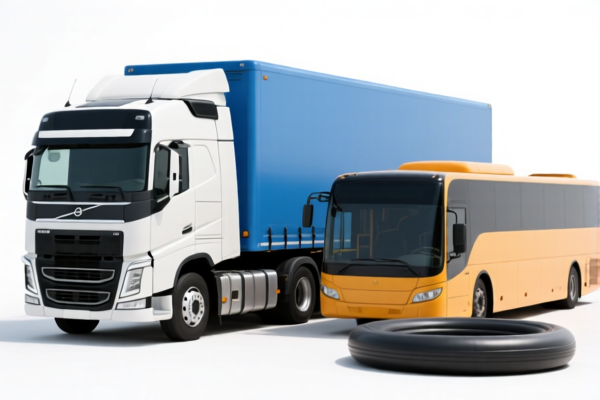
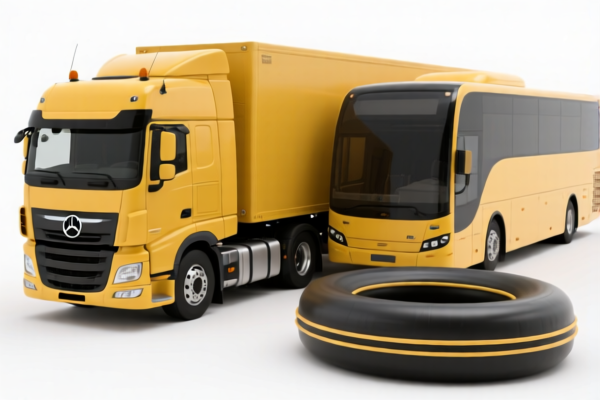
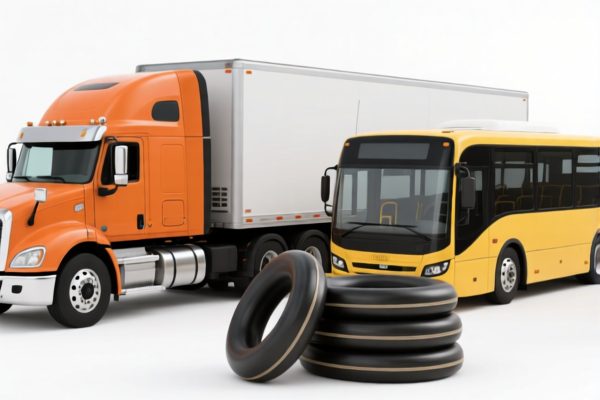
AI Analysis
🚌 Bus Inner Tubes (Automotive Rubber Tubes)
🌐 HS Code Reference & Customs Clearance Guide | 2026 Latest Tariff Analysis | Professional Clearance Strategy
📌 I. Product Definition & Classification: Do You Really Understand "Bus Inner Tubes"?
Bus inner tubes are critical safety components for pneumatic tires used in heavy-duty vehicles like buses and trucks. In international trade, the classification depends heavily on the intended vehicle type and material composition. While often categorized under general "rubber tubes," specific HS codes differentiate between truck/bus applications and passenger car applications, which drastically affects tariff rates.
⚠️ Key Distinction Point:
- If the tube is specifically designed for passenger cars, it falls under 4013.10.00.10.
- If the tube is considered a part/accessory of road wheels or general automotive parts (including buses/trucks depending on specific customs interpretation or if the "4013.10" category is strictly limited to passenger cars in certain jurisdictions), it may be classified under 8708.70.60.60 or 8708.99.81.80.
- Material: Rubber (Natural or Synthetic).
📦 II. HS Code Classification Details (2026 Latest Tariff Authority Comparison)
Based on the provided data, here are the three possible HS Codes for Bus/Road Vehicle Inner Tubes, along with their specific tax breakdowns.
| HS Code | Product Description | Application Scope | Estimated Total Tax (CN Origin) |
|---|---|---|---|
8708.70.60.60 |
Parts & Accessories of Road Wheels | Road vehicle wheels (Tires/Rims context); Rubber inferred | 37.5% |
4013.10.00.10 |
Pneumatic Rubber Tires & Inner Tubes for Passenger Cars | Passenger Car Specific; Rubber Material | 38.7% |
8708.99.81.80 |
Parts & Accessories of Motor Vehicles | General Auto Parts/Accessories; Rubber inferred | 37.5% |
🔍 Critical Note:
-4013.10.00.10is the most specific code for pneumatic tires and tubes. However, the summary explicitly states it is for "Passenger Cars" (乘用车). If your bus inner tube is not strictly for passenger cars, this classification might be challenged or deemed inapplicable, leading to potential penalties.
-8708.70.60.60and8708.99.81.80are classified as Auto Parts/Accessories. These are often used for heavy-duty vehicles (like buses) or when the product is viewed as a wheel component rather than just a rubber tube.
- Tax Difference: The difference between 37.5% and 38.7% seems small, but in high-volume shipments, it impacts profit margins significantly.
💰 III. 2026 Latest Tariff Rate Breakdown (Including Surcharges & Policy Add-ons)
✅ Applicable Country: United States (US)
✅ Origin: China (CN)
✅ Effective Date: Post-2025 policies (including Section 301 and IEEPA)
🎯 1. 8708.70.60.60 & 8708.99.81.80 —— Auto Parts & Accessories
Both these codes fall under the "Auto Parts" category, which currently attracts high tariffs due to trade policies.
| Item | Content |
|---|---|
| Basic Tariff | 2.5% (Ad Valorem) |
| Section 301 Surcharge | +25.0% (Trade Act of 1974, Section 301) |
| 122 Provision / IEEPA Surcharge | +10.0% (International Emergency Economic Powers Act) |
| Total Effective Tax Rate | 37.5% |
| Tax Calculation | CIF Value × 37.5% |
| De Minimis Exemption | ❌ NOT APPLICABLE (Deny de minimis) |
| Legal Basis Path | USITC:8708.70.60.60 / USITC:8708.99.81.80 → FOOTNOTE:301 → IEEPA:122 |
📌 Explanation:
- The 25% is the standard Section 301 tariff on Chinese auto parts.
- The 10% is the additional IEEPA tariff (often referred to as the "122 clause" in some contexts or linked to executive orders affecting specific Chinese goods).
- Total 37.5% is a very high barrier. These codes do not qualify for de minimis (under $800) exemption for Chinese goods.
🎯 2. 4013.10.00.10 —— Passenger Car Rubber Inner Tubes
This code is specifically for passenger car tubes. If incorrectly applied to bus tubes, it may be rejected.
| Item | Content |
|---|---|
| Basic Tariff | 3.7% (Ad Valorem) |
| Section 301 Surcharge | +25.0% |
| 122 Provision / IEEPA Surcharge | +10.0% |
| Total Effective Tax Rate | 38.7% |
| Tax Calculation | CIF Value × 38.7% |
| De Minimis Exemption | ❌ NOT APPLICABLE (Deny de minimis) |
| Legal Basis Path | USITC:4013.10.00.10 → FOOTNOTE:301 → IEEPA:122 |
📌 Explanation:
- Slightly higher basic tariff (3.7% vs 2.5%) leads to a total of 38.7%.
- Crucial Warning: If you are shipping Bus inner tubes under this code, customs may reject it because the summary specifies "Passenger Car" (乘用车). Bus tires are often larger (radial) and have different specifications. Misclassification here could lead to back taxes, fines, and shipment delays.
🛠️ IV. Customs Clearance Practical Advice (Battle-Tested Pitfall Avoidance)
✅ 1. Documentation Checklist (Non-Negotiable)
| Document | Required? | Notes |
|---|---|---|
| ✅ Product Specification Sheet | ✔️ | Must state: Inner Diameter, Width, Valve Type, Material (Butyl Rubber?), Max Pressure. |
| ✅ Application Statement | ✔️ | Explicitly state: "For Use in Bus/Heavy-Duty Vehicles" OR "For Passenger Cars". Do not be vague. |
| ✅ Material Declaration | ✔️ | Confirm rubber type (e.g., Butyl, Natural Rubber). |
| ✅ Commercial Invoice | ✔️ | Clearly describe as "Bus Inner Tube" or "Rubber Inner Tube for Road Vehicles". |
| ✅ Packing List | ✔️ | Net/Gross weight, dimensions. |
| ✅ Origin Certificate (if applicable) | ✔️ | Not useful for China-US trade due to tariffs, but required for other markets. |
✅ 2. Classification Strategy (Key Mnemonic)
🔥 "Bus Goes to 8708, Car Goes to 4013, Don't Mix!"
| Scenario | Recommended HS Code | Risk if Wrong |
|---|---|---|
| Bus/Truck Inner Tube | 8708.70.60.60 or 8708.99.81.80 |
Using 4013.10.00.10 (Passenger Car) may be deemed misdeclaration. |
| Passenger Car Inner Tube | 4013.10.00.10 |
Using 8708 codes might be accepted but could trigger questions about "part vs. good". |
| Mixed Shipment (Bus + Car) | Split Declaration | Do not lump together. Different HS codes, different descriptions. |
✅ 3. Special Handling Tips
| Situation | Handling Advice |
|---|---|
| Butyl vs. Natural Rubber | Specify clearly. Some customs officers may request further classification if material is ambiguous. |
| Valve Type | Mention if it includes a valve. If it does, it might still be classified as a tube, but if the valve is separate, it could be a different accessory code. |
| Preventive Measure | Apply for Advance Ruling (Pre-Ruling) from CBP before shipping. Given the 37-38% tariff, a ruling provides legal certainty and prevents post-clearance audits. |
🌍 V. Global Market Comparison (2026 Update)
| Country/Region | Recommended HS Code (Bus Tube) | Est. Tariff | Notes |
|---|---|---|---|
| 🇺🇸 USA | 8708.70.60.60 / 8708.99.81.80 |
37.5% | High Section 301 + IEEPA tariffs. No de minimis. |
| 🇨🇳 China | 4013.10.00.10 or 8708.99 |
Low/Zero | Imports from other countries may have preferential rates. |
| 🇪🇺 EU | 4013.10 or 8708.99 |
Varies | Check EEC tariffs. Generally lower than US, but anti-dumping may apply. |
| 🇲🇽 Mexico | 4013.10 or 8708.99 |
Low/Zero | Under USMCA, if manufactured in USMCA region, 0% tariff. |
📌 Conclusion for US Market:
The US market is high-cost for Chinese rubber tubes due to combined tariffs.
- Total Tax: ~37.5% - 38.7%
- Strategy: Consider sourcing from Vietnam, Thailand, or Mexico to leverage USMCA or FTAs, or build this cost into your pricing.
📌 VI. Common Mistakes & Pitfalls (Blood & Tears Lessons)
❌ Mistake 1: Declaring "Bus Inner Tube" under 4013.10.00.10 (Passenger Car Code)
👉 Consequence: Customs may flag it as misclassification. If rejected, you face 37.5% vs 38.7% disputes, delays, and potential fines.
👉 Fix: Use 8708 codes for non-passenger vehicles.
❌ Mistake 2: Ignoring the "122 Clause" / IEEPA Surcharge
👉 Consequence: Underestimating total landed cost. Budgeting only 25% + Basic, but actual is 37.5%.
👉 Fix: Always include IEEPA 10% in your cost model for Chinese goods to the US.
❌ Mistake 3: Assuming De Minimis ($800) Applies
👉 Consequence: Shipments under $800 from China are NOT exempt for these goods. They are subject to full tariffs.
👉 Fix: Do not use de minimis for bulk rubber parts from China.
🎯 VII. Conclusion: Precision in Classification Saves Thousands!
🎯 Key Takeaways:
🔹 Bus Tubes → Use 8708 codes (Parts of Road Wheels/Vehicles) → 37.5% Total Tax.
🔹 Car Tubes → Use 4013.10.00.10 → 38.7% Total Tax.
🔹 Never Mix Bus and Car tubes in one HS code declaration.
🔹 Always Account for the 10% IEEPA surcharge on top of the 25% Section 301.📣 Immediate Action:
- Verify your product is indeed for Buses and not passenger cars.
- Choose8708.70.60.60or8708.99.81.80for bus tubes.
- Apply for a CBP Pre-Ruling if shipment volume is significant.
- Budget for ~37.5% landed cost for US imports from China.
✨ Professional Customs Clearance Starts with Accurate Classification!
💼 Every Percent Counts in Logistics!
Customer Reviews
About HS Code Classification
The Harmonized System (HS) is an internationally standardized nomenclature developed by the World Customs Organization (WCO) to classify traded products. Over 200 countries use the HS system as the basis for customs tariffs, trade statistics, and import/export regulations.
Each HS code follows a hierarchical structure:
- Chapter (2 digits) — Broad category of goods (e.g., Chapter 84: Machinery and Mechanical Appliances)
- Heading (4 digits) — More specific grouping within the chapter
- Subheading (6 digits) — Internationally standardized breakdown, used by all WCO member countries
- National subdivisions (8-10 digits) — Country-specific extensions for further classification, such as US HTSUS 10-digit codes
Correct HS code classification is essential for smooth customs clearance, accurate duty payment, and compliance with trade regulations. Misclassification can lead to customs delays, overpayment of duties, or penalties.
When importing from CN to US, the applicable tariff rates may include:
- Most-Favored-Nation (MFN) rate — The standard duty rate applied to WTO members
- General rate — Applied to countries without trade agreements
- Trade remedy duties — Additional tariffs such as Section 301 (anti-dumping), Section 232 (national security), or countervailing duties
The information provided on this page is for reference purposes only. For official classification, please consult with your local customs authority or a licensed customs broker.