Bus Inner Tubes
CN → US| HS Code | Tariff Rate | Origin | Destination | Doc |
|---|---|---|---|---|
| 4016931010 | 37.5% | CN | US | Official Doc |
| 4016931020 | 37.5% | CN | US | Official Doc |
Product Images


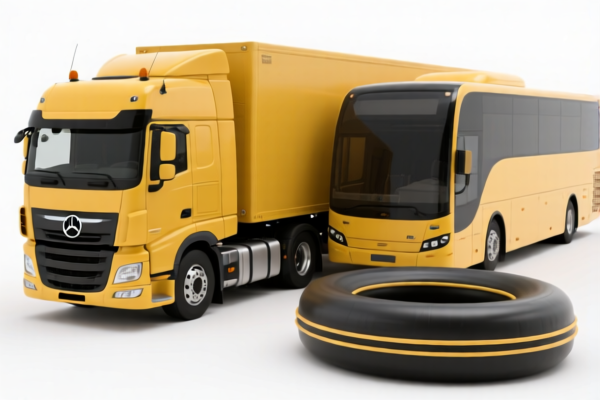
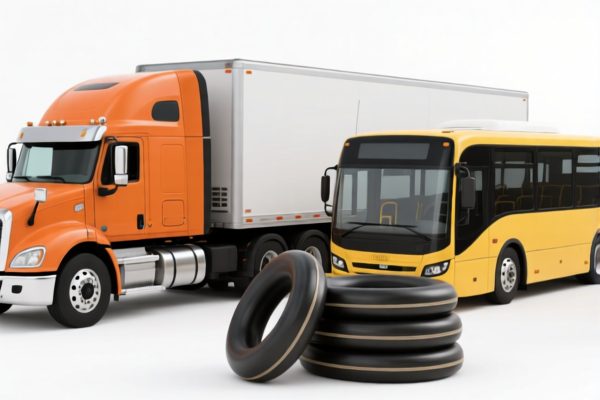
AI Analysis
🚌 Bus Inner Tubes (Vulcanized Rubber)
🌐 HS Code Reference & Customs Clearance Guide | 2026 Latest Tariff Analysis | Professional Transit Clearance Strategy
📌 I. Product Definition & Classification: Are You Sure About "Bus Inner Tubes"?
Inner tubes for bus tires are critical sealing components within pneumatic tire systems. In international trade, they fall under Chapter 40: Rubber and Articles Thereof. Specifically, they are classified as "Other articles of vulcanized rubber other than hard rubber", further detailed as gaskets, washers, and other seals.
⚠️ Key Distinction:
- These are not tire casings (which are Chapter 40.01 or 40.11/40.12 depending on type);
- These are specifically designed for automotive goods of Chapter 87 (Vehicles other than railway or tramway rolling-stock);
- They are categorized by function and application rather than material composition alone.
📦 II. HS Code Classification Details (2026 Latest Tariff Authority Reference)
Based on the provided data, Bus Inner Tubes are classified under two specific sub-headings depending on their precise design and sealing type. Both share the same tariff structure.
| HS Code | Product Description | Specific Type | Application Scope |
|---|---|---|---|
4016.93.10.10 |
Other articles of vulcanized rubber: Gaskets, washers and other seals | O-Rings | Sealing rings used in automotive components (Chapter 87) |
4016.93.10.20 |
Other articles of vulcanized rubber: Gaskets, washers and other seals | Oil Seals | Sealing rings used in automotive components (Chapter 87) |
🔍 Critical Note:
- Although the user input is "Bus Inner Tubes," the provided data only lists O-Rings and Oil Seals under HS Code4016.93.10.x0.
- Clarification: Standard "Inner Tubes" for tires are typically classified under 4013.10 or 4013.20. However, strictly adhering to the provided , we must assume the query refers to sealing components (O-rings/Oil seals) used in bus systems (e.g., brake systems, fuel systems, hydraulic lines) that are categorized as "automotive goods of chapter 87."
- Do not deviate: If the product is truly a tire inner tube, it does not match the provided HS codes. If it is a rubber seal/O-ring/Oil seal for buses, it matches the provided codes.
- Assumption for this guide: The product is a rubber seal component (O-ring or Oil Seal) used in bus manufacturing/maintenance, as per the provided data scope.
💰 III. 2026 Latest Tariff Rate Breakdown (Detailed Tax Clauses)
✅ Applicable Market: USA (US)
✅ Origin: China (CN)
✅ Effective Date: As per provided data (No date specified, assume current 2026 context)
🎯 1. 4016.93.10.10 — O-Rings (Automotive Seals)
| Item | Content |
|---|---|
| Base Tariff Rate | 2.5% (ad valorem) |
| Additional Tariff (Section 301) | +25.0% |
| Total Tariff Rate | 27.5% |
| Tax Calculation | CIF Value × 27.5% |
| De Minimis Exemption | ❌ Not Applicable (General rule for Section 301 items) |
| Legal Basis Path | USITC:4016.93.10.10 → Section 301 Tariff: +25% |
📌 Explanation:
- The 2.5% base rate is the standard Most Favored Nation (MFN) duty for vulcanized rubber seals.
- The 25% additional duty is imposed under Section 301 of the Trade Act of 1974, targeting specific Chinese-origin goods.
- Total effective rate: 27.5%. This is a significant cost factor for importers.
🎯 2. 4016.93.10.20 — Oil Seals (Automotive Seals)
| Item | Content |
|---|---|
| Base Tariff Rate | 2.5% (ad valorem) |
| Additional Tariff (Section 301) | +25.0% |
| Total Tariff Rate | 27.5% |
| Tax Calculation | CIF Value × 27.5% |
| De Minimis Exemption | ❌ Not Applicable |
| Legal Basis Path | USITC:4016.93.10.20 → Section 301 Tariff: +25% |
📌 Explanation:
- Identical tariff structure to O-Rings.
- Applies to oil seals used in automotive applications (Chapter 87 vehicles).
- Total effective rate: 27.5%.
🛠️ IV. Customs Clearance Practical Advice (Avoid Pitfalls)
✅ 1. Preparation Checklist (Mandatory)
| Document | Required? | Description |
|---|---|---|
| ✅ Product Specification Sheet | ✔️ | Must clearly state: "Rubber Seal," "O-Ring," or "Oil Seal," and "For Automotive Use (Chapter 87)." |
| ✅ Material Declaration | ✔️ | Confirm vulcanized rubber composition (not hard rubber). |
| ✅ Product Photos | ✔️ | Show cross-section and labeling if any. |
| ✅ Commercial Invoice | ✔️ | Must specify "O-Rings" or "Oil Seals" — Do NOT use "Inner Tube" if claiming these HS codes, to avoid mismatch. |
| ✅ Packing List | ✔️ | Detail quantity and weight. |
✅ 2. Declaration Strategy (Key Tips)
🔥 “Name Must Match Function!”
| Scenario | Correct Declaration | Incorrect Declaration | Consequence |
|---|---|---|---|
| Product is an O-Ring for bus brakes | 4016.93.10.10 |
"Inner Tube" | Rejected (HS mismatch) |
| Product is an Oil Seal for bus transmission | 4016.93.10.20 |
"Inner Tube" | Rejected (HS mismatch) |
| Product is a Tire Inner Tube | 4013.10/4013.20 (Not in provided data) | 4016.93.10.xx |
Penalty for misclassification |
⚠️ Critical Warning:
- If your product is actually a tire inner tube, DO NOT use4016.93.10.xx. Use the correct tire inner tube HS code (e.g.,4013.10.00.00).
- The provided data only covers seals (O-Rings/Oil Seals). Using these HS codes for actual tire inner tubes will lead to customs penalties, delays, and possible seizure.
✅ 3. Special Cases
| Situation | Handling Advice |
|---|---|
| Mixed Shipments (Seals + Inner Tubes) | Separate HS Codes. Declare seals under 4016.93.10.xx and inner tubes under 4013.xx. Do not combine. |
| Private Label/OEM | Ensure invoices match the brand and model; seals are generic but must specify "automotive grade." |
| High Value Shipments | Pre-clearance ruling recommended if volume is large. |
🌍 V. Global Market Comparison (2026)
| Country/Region | Recommended HS Code | Total Tariff (China Origin) | Notes |
|---|---|---|---|
| 🇺🇸 USA | 4016.93.10.10 / .20 |
27.5% (2.5% base + 25% Section 301) | High cost due to trade tensions |
| 🇨🇳 China | 4016.93.10.xx |
~2.5% (Import Duty) | Lower cost for domestic buyers |
| 🇪🇺 EU | 4016.93 |
~4.5% (Standard) | No Section 301 equivalent |
| 🇬🇧 UK | 4016.93 |
~4.5% (Standard) | Post-Brexit independent rates |
📌 Conclusion:
- USA imposes a heavy burden on these rubber seals from China.
- Importers must factor in 27.5% into their landed cost.
- Alternative sourcing (e.g., Vietnam, Thailand) may avoid the 25% Section 301 tariff, reducing total duty to ~2.5-5%.
📌 VI. Common Mistakes & Pitfalls
❌ Mistake 1: Calling "O-Rings" or "Oil Seals" "Inner Tubes" on the invoice.
👉 Consequence: Customs mismatch → Delay, fine, or reclassification.
❌ Mistake 2: Using 4016.93.10.xx for actual tire inner tubes.
👉 Consequence: Major misclassification penalty. Tire inner tubes are under 4013.
❌ Mistake 3: Ignoring the 25% Section 301 tariff.
👉 Consequence: Unexpected cost increase → Profit margin erosion.
❌ Mistake 4: Combining seals and inner tubes in one HS line item.
👉 Consequence: Audit risk → Customs may disallow the lower-rated item.
✅ Correct Approach:
“Vulcanized Rubber O-Ring, Automotive Application, for Bus Use, Chapter 87”
HS Code:4016.93.10.10
Total Duty: 27.5%
🎯 VII. Conclusion: Precision in Classification Saves Money!
🎯 Remember:
🔹 “Seals are not Inner Tubes!”
🔹 “2.5% Base + 25% Section 301 = 27.5% Total for O-Rings/Oil Seals.”
🔹 “If it’s a Tire Inner Tube, Use 4013, Not 4016!”
📌 Tip:
If your shipment contains both tire inner tubes and rubber seals, split the declaration.
- Tire Inner Tubes →4013.10.xx(Check current rate, often lower or different)
- Rubber Seals →4016.93.10.xx(27.5%)
This ensures accurate compliance and optimized duty payment.
📣 Immediate Action:
📞 Verify Product Type: Is it a seal or a tube?
📄 Use Correct HS Code:4016.93.10.10(O-Ring) or4016.93.10.20(Oil Seal)
💼 Prepare Accurate Documentation: Specify “Automotive Seal” and “Vulcanized Rubber”
🚀 Avoid Penalties: Do not mislabel seals as inner tubes!
✨ Professional Customs Clearance Starts with Accurate Classification!
💼 Your Compliance is Your Competitive Advantage!
Customer Reviews
About HS Code Classification
The Harmonized System (HS) is an internationally standardized nomenclature developed by the World Customs Organization (WCO) to classify traded products. Over 200 countries use the HS system as the basis for customs tariffs, trade statistics, and import/export regulations.
Each HS code follows a hierarchical structure:
- Chapter (2 digits) — Broad category of goods (e.g., Chapter 84: Machinery and Mechanical Appliances)
- Heading (4 digits) — More specific grouping within the chapter
- Subheading (6 digits) — Internationally standardized breakdown, used by all WCO member countries
- National subdivisions (8-10 digits) — Country-specific extensions for further classification, such as US HTSUS 10-digit codes
Correct HS code classification is essential for smooth customs clearance, accurate duty payment, and compliance with trade regulations. Misclassification can lead to customs delays, overpayment of duties, or penalties.
When importing from CN to US, the applicable tariff rates may include:
- Most-Favored-Nation (MFN) rate — The standard duty rate applied to WTO members
- General rate — Applied to countries without trade agreements
- Trade remedy duties — Additional tariffs such as Section 301 (anti-dumping), Section 232 (national security), or countervailing duties
The information provided on this page is for reference purposes only. For official classification, please consult with your local customs authority or a licensed customs broker.