Bus Tire Radial High Load
CN → US| HS Code | Tariff Rate | Origin | Destination | Doc |
|---|---|---|---|---|
| 4011201015 | 39.0% | CN | US | Official Doc |
| 4012909000 | 37.7% | CN | US | Official Doc |
| 4013100020 | 38.7% | CN | US | Official Doc |
| 4011201005 | 39.0% | CN | US | Official Doc |
| 4011201015 | 39.0% | CN | US | Official Doc |
Product Images
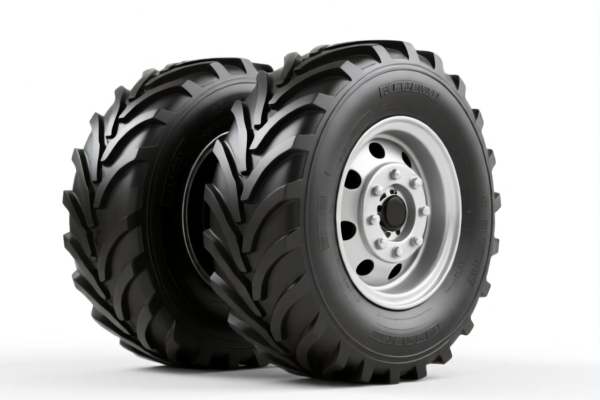
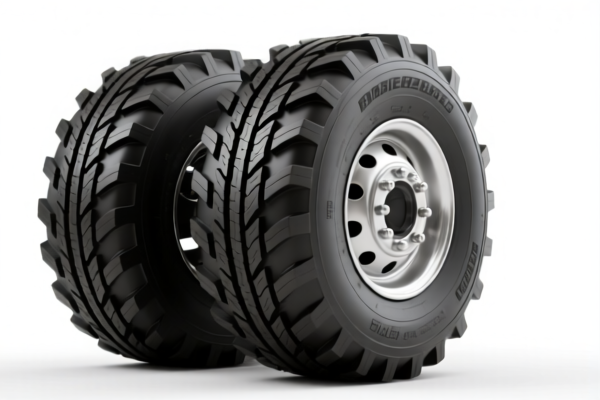
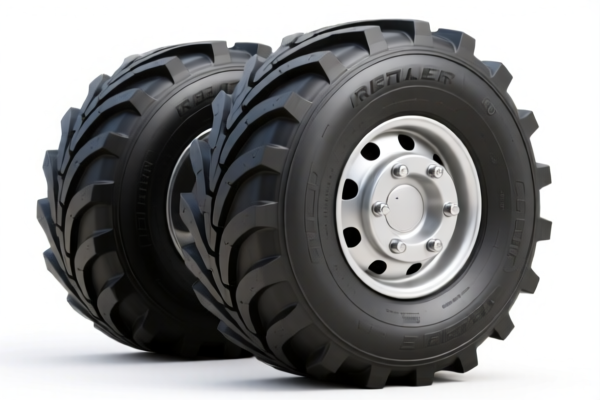
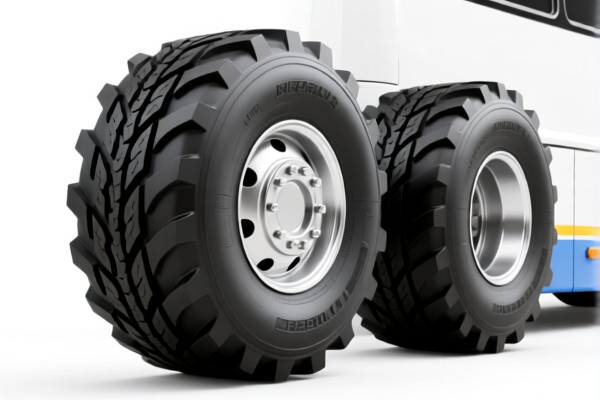
AI Analysis
🚌 Bus & Truck Tires: Radial High-Load & Specialized Rubber Tires (HS Code Reference)
🌐 HS Code Reference & Customs Clearance Guide | 2026 Latest Tariff Analysis | Professional Clearance Strategy
📌 I. Product Definition & Classification: Do You Really Understand "Bus Tires"?
"Bus tire radial high load" refers to specialized rubber tires designed for heavy-duty passenger vehicles (buses) and commercial trucks. In international trade, these are not generic "tires" but are strictly categorized based on their construction type (Radial/Suburban vs. Bias) and application (Bus vs. Truck).
1. Radial High-Capacity Tires (4011.20)
These are tires with radial ply construction, specifically engineered for high loads on buses and trucks. They offer better heat dissipation and fuel efficiency compared to bias-ply tires.
2. Pneumatic, Solid, or Cushion Tires (4012.90)
This category includes not just air-filled tires but also solid rubber tires or cushion tires used in industrial forklifts or specific bus applications. If the tire is solid or cushion-type, it falls here, even if used on a bus.
3. Inner Tubes (4013.10)
If the shipment includes inner tubes (the rubber bladder inside the tire) specifically for trucks and buses, these are classified separately under HS Code 4013.10, regardless of the tire itself.
⚠️ Key Distinction Point:
- Radial vs. Bias: If it's radial, look at 4011.20. If it's bias or solid/cushion, look at 4012.90 or other 4011 subheadings.
- Tire vs. Tube: The tire itself and its inner tube are never combined in one HS Code for classification purposes. They must be declared separately if both are imported.
- Bus vs. Truck: While many radial tires fit both, specific subheadings may distinguish between "Bus" and "Truck" based on size and load rating.
📦 II. HS Code Classification Details (2026 Latest Tariff Authority Comparison)
Based on the provided data, here are the precise HS Codes and their corresponding tax structures for Radial High-Load Bus/Truck Tires:
| HS Code | Product Description | Application Scenario | Material & Structure |
|---|---|---|---|
4011.20.10.15 |
Radial High-Capacity Tires for Buses | Specifically for buses; high load capacity; radial structure. | Rubber, Radial Ply |
4011.20.10.05 |
Radial Tires for Trucks | Specifically for trucks; radial structure. | Rubber, Radial Ply |
4012.90.90.00 |
Other Tires (Pneumatic, Solid, or Cushion) | Applies to truck/bus tires that are solid, cushion, or non-radial pneumatic types not covered in 4011.20.10. | Rubber, Various Structures |
4013.10.00.20 |
Inner Tubes for Trucks and Buses | Rubber inner tubes specifically for trucks/buses. Includes tire core forms. | Rubber, Tubular |
🔍 Critical Reminder:
- Radial Tires used on buses and trucks are primarily classified under 4011.20.
- 4012.90.90.00 is a "catch-all" for tires that are not standard radial truck/bus tires (e.g., solid tires, cushion tires, or bias-ply tires if not specified elsewhere).
- Inner Tubes (4013.10) are accessories to the tire but have their own HS Code. Do not include inner tubes in the tire's tariff calculation.
💰 III. 2026 Latest Tariff Rate Breakdown (Including Surtaxes & Policy Additions)
✅ Applicable Country: United States (US)
✅ Country of Origin: China (CN)
✅ Effective Date: 2025-11-10 onwards (for subsequent imports)
🎯 1. 4011.20.10.15 & 4011.20.10.05 —— Radial Tires for Buses/Trucks
| Item | Details |
|---|---|
| Base Tariff | 4.0% (Ad Valorem) |
| Section 301 Surtax | +25.0% (USITC Footnote related to Section 301) |
| Section 122 Surtax | +10.0% (Specific policy tariff for certain rubber products) |
| Total Tariff Rate | 39.0% |
| Tax Calculation | CIF Value × 39.0% |
| De Minimis Exemption | ❌ Not Available (deny_de_minimis) |
| Legal Authority Path | Base: 4011.20 → 301: 9903.01.25 → 122: Specific Rubber Provisions |
📌 Explanation:
- Base 4%: Standard MFN tariff for radial truck/bus tires.
- 25% Section 301: Additional tariff imposed on Chinese-made tires under Section 301 of the Trade Act.
- 10% Section 122: Additional tariff specifically targeting certain rubber products from China.
- Total 39%: This is a very high effective tariff rate. Importers must factor this into landed cost calculations.
🎯 2. 4012.90.90.00 —— Other Tires (Solid/Cushion/Non-Radial)
| Item | Details |
|---|---|
| Base Tariff | 2.7% (Ad Valorem) |
| Section 301 Surtax | +25.0% |
| Section 122 Surtax | +10.0% |
| Total Tariff Rate | 37.7% |
| Tax Calculation | CIF Value × 37.7% |
| De Minimis Exemption | ❌ Not Available |
| Legal Authority Path | Base: 4012.90 → 301: 9903.01.25 → 122: Specific Rubber Provisions |
📌 Note:
- Although the base tariff is slightly lower (2.7% vs. 4.0%), the total effective rate (37.7%) is still extremely high.
- This code is often used for solid bus tires or forklift tires if they are not radial pneumatic tires.
- Even if the product is "for buses," if it is solid or cushion-type, it falls here, not under 4011.20.
🎯 3. 4013.10.00.20 —— Inner Tubes for Trucks/Buses
| Item | Details |
|---|---|
| Base Tariff | 3.7% (Ad Valorem) |
| Section 301 Surtax | +25.0% |
| Section 122 Surtax | +10.0% |
| Total Tariff Rate | 38.7% |
| Tax Calculation | CIF Value × 38.7% |
| De Minimis Exemption | ❌ Not Available |
| Legal Authority Path | Base: 4013.10 → 301: 9903.01.25 → 122: Specific Rubber Provisions |
📌 Note:
- Inner tubes are often shipped with tires. If declared separately, they incur this separate tariff.
- Do not bundle inner tubes into the tire's value if they are separate line items, as this can cause classification errors.
- Total rate is 38.7%, slightly lower than radial tires but still prohibitive for low-margin goods.
🛠️ IV. Customs Clearance Practical Advice (Real-World Pitfall Avoidance)
✅ 1. Documentation Checklist (Mandatory)
| Document | Required | Explanation |
|---|---|---|
| ✅ Product Specification Sheet | ✔️ | Must specify: Radial/Bias, Solid/Pneumatic, Bus/Truck application, Load Index, Speed Rating. |
| ✅ Material Composition | ✔️ | Confirm 100% Rubber content. Any other materials (e.g., steel belts) should be noted but do not change HS Code. |
| ✅ Commercial Invoice | ✔️ | Must clearly state: "Radial Tire for Bus," "Inner Tube for Truck," etc. Avoid generic terms like "Rubber Tire." |
| ✅ Packing List | ✔️ | Clearly separate Tires and Inner Tubes if imported together. |
| ✅ Certificate of Origin (CO) | ✔️ | If not from China, to avoid Section 301/122 taxes. |
| ✅ UL/FM Certification (if applicable) | ✔️ | Some bus tires require safety certifications for North American markets. |
✅ 2. Declaration Tips (Key Principles)
🔥 "Be Specific: Radial vs. Solid, Bus vs. Truck, Tube vs. Tubeless"
| Scenario | Correct Declaration | Incorrect Declaration | Consequence |
|---|---|---|---|
| Radial Bus Tire | 4011.20.10.15 |
"Rubber Tire for Bus" | High risk of misclassification, audit, or penalty. |
| Solid Bus Tire | 4012.90.90.00 |
4011.20.10.15 |
Wrong HS Code → Rejection or Retention. |
| Inner Tube | 4013.10.00.20 |
Included in Tire Value | Undervaluation or wrong classification. |
| Tubeless Tire (No Tube) | 4011.20.10.15 |
Declare as 4013.10 |
Over-taxation (38.7% vs 39.0% is small, but classification error remains). |
✅ 3. Special Cases
| Situation | Handling Advice |
|---|---|
| Re-treaded Tires | Not covered in this data. Re-treaded tires fall under 4012.20 and have different tariff structures (often higher or subject to different rules). |
| Tires with Traction Lugs (Off-Road) | These may fall under 4011.10 or 4011.90, not 4011.20. 4011.20 is specifically for road-use bus/truck tires. |
| Importing from Non-China Origins | If tires are made in Vietnam, Mexico, or Thailand, they may be exempt from Section 301 and Section 122 tariffs. Ensure Certificate of Origin is valid. |
| Bundled Sale (Tire + Tube) | Declare separately. The tariff for the tire (39.0%) and tube (38.7%) are nearly identical, but combined declaration can lead to customs confusion. |
🌍 V. Global Market Comparison (2026 Latest)
| Country/Region | Recommended HS Code | Tariff (China Origin) | Notes |
|---|---|---|---|
| 🇺🇸 USA | 4011.20.10.15 / 4012.90.90.00 |
37.7% - 39.0% | High Section 301 + Section 122 taxes. |
| 🇨🇳 China | 4011.20.10.15 |
~5% (MFN) | Low import tariff, but export taxes may apply. |
| 🇪🇺 EU | 4011.20.10 |
0% - 4% | No Section 301/122 equivalent. |
| 🇲🇽 Mexico | 4011.20.10 |
0% (if USMCA compliant) | Check origin rules for USMCA benefit. |
| 🇦🇺 Australia | 4011.20.10 |
5% | No Section 301/122. |
📌 Conclusion:
- USA is the most expensive market due to 39% effective tariff.
- EU and Australia are more favorable with low or zero tariffs.
- Origin Strategy: Consider sourcing from non-China countries (e.g., Vietnam, Thailand) if importing to the US to avoid 35% in surtaxes.
📌 VI. Common Mistakes & Pitfalls (Lessons Learned)
❌ Mistake 1: Declaring Inner Tubes as part of the Tire value
👉 Consequence: Customs may view this as undervaluation or misclassification. Declare separately.
❌ Mistake 2: Using "Rubber Tire" as the product name
👉 Consequence: Customs cannot determine if it's radial, bias, solid, or off-road. Use detailed names.
❌ Mistake 3: Ignoring Section 122 Tariffs
👉 Consequence: Many importers only account for Section 301 (25%) and forget the additional 10%, leading to underpayment and penalties.
❌ Mistake 4: Assuming All Bus Tires are 4011.20
👉 Consequence: If the tire is solid or cushion-type, it falls under 4012.90. Misclassification leads to delays.
✅ Correct Approach:
"Radial Pneumatic Tire for Bus, High Load Capacity, 12R22.5, Radial Construction, Rubber, Model XYZ, Origin: China"
🎯 VII. Conclusion: Precision Classification, Cost Control, and Compliance
🎯 Remember the Key Points:
🔹 "Radial Bus Tires = 39.0% Total Tax"
🔹 "Solid/Cushion Tires = 37.7% Total Tax"
🔹 "Inner Tubes = 38.7% Total Tax"
🔹 "Section 301 (25%) + Section 122 (10%) = 35% Surtax"
🔹 "Declare Separately: Tire and Tube"
📌 Pro Tip:
If your tires are originating from Vietnam, Mexico, or Thailand, you may qualify for exemptions from Section 301 and Section 122 tariffs. Ensure your Certificate of Origin is accurate and verified.
Consider applying for an Advance Ruling from US Customs (CBP) if you are importing large volumes to ensure correct classification and avoid penalties.
📣 Immediate Action:
📞 Consult a licensed customs broker + Provide detailed product specs + Apply for HS Code Advance Ruling
🚀 Ensure your bus tires pass customs smoothly, minimize costs, and maximize profit!
✨ Professional Clearance Starts with Accurate Classification!
💼 Every percentage point of tariff counts!
Customer Reviews
About HS Code Classification
The Harmonized System (HS) is an internationally standardized nomenclature developed by the World Customs Organization (WCO) to classify traded products. Over 200 countries use the HS system as the basis for customs tariffs, trade statistics, and import/export regulations.
Each HS code follows a hierarchical structure:
- Chapter (2 digits) — Broad category of goods (e.g., Chapter 84: Machinery and Mechanical Appliances)
- Heading (4 digits) — More specific grouping within the chapter
- Subheading (6 digits) — Internationally standardized breakdown, used by all WCO member countries
- National subdivisions (8-10 digits) — Country-specific extensions for further classification, such as US HTSUS 10-digit codes
Correct HS code classification is essential for smooth customs clearance, accurate duty payment, and compliance with trade regulations. Misclassification can lead to customs delays, overpayment of duties, or penalties.
When importing from CN to US, the applicable tariff rates may include:
- Most-Favored-Nation (MFN) rate — The standard duty rate applied to WTO members
- General rate — Applied to countries without trade agreements
- Trade remedy duties — Additional tariffs such as Section 301 (anti-dumping), Section 232 (national security), or countervailing duties
The information provided on this page is for reference purposes only. For official classification, please consult with your local customs authority or a licensed customs broker.