Bus for transporting 10 or more people
CN → US| HS Code | Tariff Rate | Origin | Destination | Doc |
|---|---|---|---|---|
| 8702106100 | 37.0% | CN | US | Official Doc |
| 8702103100 | 37.0% | CN | US | Official Doc |
| 8706000540 | 39.0% | CN | US | Official Doc |
Product Images
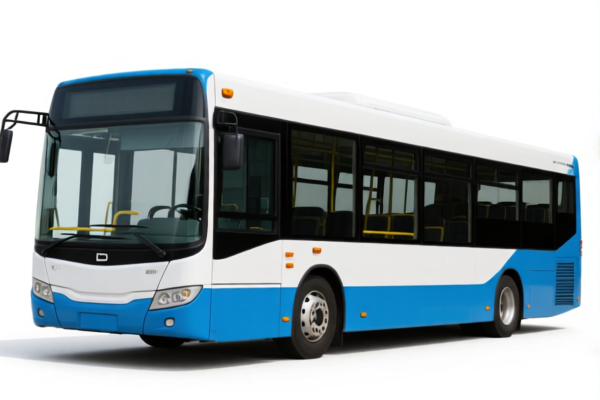
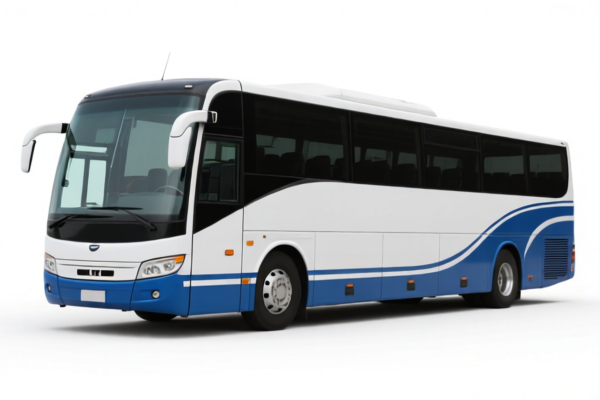
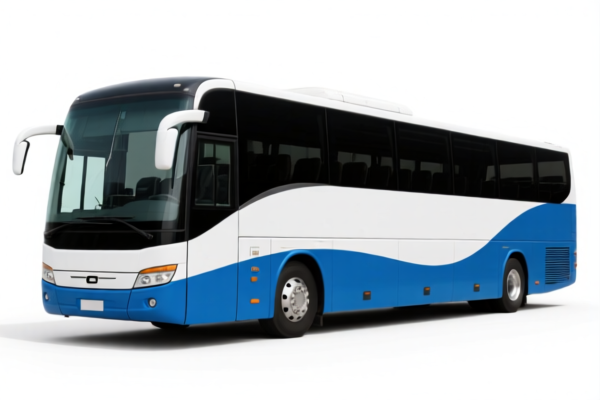
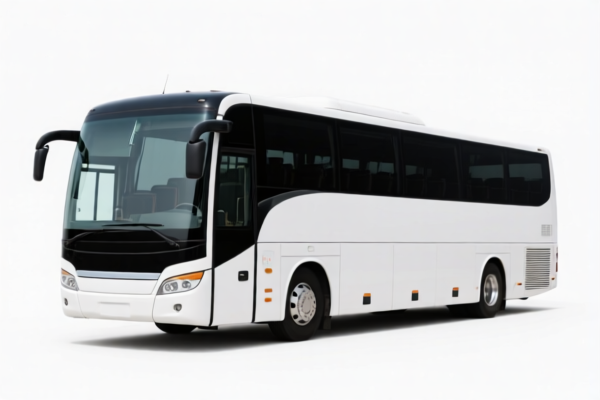
AI Analysis
🚌 Large Passenger Buses (Transporting 10+ Persons)
🌐 HS Code Reference & Customs Clearance Guide | 2026 Latest Tariff Analysis | Professional Clearance Strategy
📌 I. Product Definition & Classification: Do You Really Understand "Buses"?
Buses for transporting 10 or more persons are heavy-duty passenger vehicles designed for mass transit, tour operations, and school transport. In international trade, classification depends heavily on the vehicle composition (complete vehicle vs. chassis only) and passenger capacity.
1. Complete Buses (8702.10.xxxxxx):
Includes the complete vehicle body, engine, chassis, wheels, and interior fittings. It is a fully operational unit ready for passenger transport.
2. Chassis with Cab/Body (8706.00.xxxxxx):
Refers specifically to the chassis with cab or the body/chassis of vehicles heading for heading 8702 (Buses). This often applies when importing parts for assembly or incomplete vehicles intended for bus manufacturing.
⚠️ Key Distinction Point: - If the item is a complete, ready-to-drive bus for 10+ passengers →归入 8702.10.31.00 or 8702.10.61.00. - If the item is a chassis, cab, or body specifically for a bus (not a complete running vehicle) → 归入 8706.00.05.40.
📦 II. HS Code Classification Details (2026 Latest Tariff Authority Comparison)
| HS Code | Product Description | Applicable Scenario | Vehicle Status |
|---|---|---|---|
8702.10.31.00 |
Buses for transporting 10+ persons, meeting passenger capacity requirements. | Complete buses (coaches, city buses, shuttle buses) ready for use. | ✅ Complete Vehicle |
8702.10.61.00 |
Buses for transporting 10+ persons, conforming to vehicle type and usage description. | Complete buses, often specified for specific regulatory or structural standards. | ✅ Complete Vehicle |
8706.00.05.40 |
Chassis/cab/body for vehicles of heading 8702, explicitly for transporting 10+ persons. | Chassis imports, body kits, or incomplete vehicle frames for assembly. | ❌ Incomplete/Component |
🔍 Important Reminder: - All complete buses (with wheels, engine, seats, windows) must be classified under 8702.10.xxxx. - Do not misclassify a complete bus as a "chassis" (8706) or vice versa. Misclassification leads to severe penalties. - The "10 or more persons" criteria is critical. Vehicles for fewer than 10 persons may fall under different headings (e.g., passenger cars).
💰 III. 2026 Latest Tariff Rate Breakdown (Including Additional Taxes & Policy Surcharges)
✅ Applicable Country: United States (US)
✅ Origin: China (CN)
✅ Effective Date: From November 10, 2025 (and subsequent imports)
🎯 1. 8702.10.31.00 —— Complete Bus (10+ Passengers)
| Item | Content |
|---|---|
| Base Tariff Rate | 2.0% (ad valorem) |
| USITC Additional Tariff | +25% (under Section 301) |
| 122 Clause Tariff | +10% (Specific trade measure) |
| Total Tariff Rate | 37.0% |
| Tax Calculation | CIF Value × 37% |
| De Minimis Exemption | ❌ Not Eligible |
| Legal Basis Path | Section 301: 9903.01.24 → 122 Clause: 9903.01.25 → USITC: 8702.10.31.00 → FOOTNOTE: 9903.88.01 |
📌 Explanation: - The 25% is the standard Section 301 duty on Chinese goods. - The 10% is a specific "122 Clause" tariff applied to certain vehicle categories. - Base Rate 2% is the standard MFN rate for buses. - Total 37% is extremely high, significantly impacting profitability.
🎯 2. 8702.10.61.00 —— Complete Bus (10+ Passengers, Specific Type)
| Item | Content |
|---|---|
| Base Tariff Rate | 2.0% (ad valorem) |
| USITC Additional Tariff | +25% (under Section 301) |
| 122 Clause Tariff | +10% (Specific trade measure) |
| Total Tariff Rate | 37.0% |
| Tax Calculation | CIF Value × 37% |
| De Minimis Exemption | ❌ Not Eligible |
| Legal Basis Path | Section 301: 9903.01.24 → 122 Clause: 9903.01.25 → USITC: 8702.10.61.00 → FOOTNOTE: 9903.88.01 |
📌 Note: - Tax rate is identical to
8702.10.31.00. - Applies to complete buses meeting specific usage or structural criteria defined by US Customs. - Both sub-headings carry the same heavy tax burden.
🎯 3. 8706.00.05.40 —— Chassis/Body for Buses (10+ Passengers)
| Item | Content |
|---|---|
| Base Tariff Rate | 4.0% (ad valorem) |
| USITC Additional Tariff | +25% (under Section 301) |
| 122 Clause Tariff | +10% (Specific trade measure) |
| Total Tariff Rate | 39.0% |
| Tax Calculation | CIF Value × 39% |
| De Minimis Exemption | ❌ Not Eligible |
| Legal Basis Path | Section 301: 9903.01.24 → 122 Clause: 9903.01.25 → USITC: 8706.00.05.40 → FOOTNOTE: 9903.88.01 |
📌 Critical Warning: - Although the base rate is slightly higher (4.0%), the total rate is 39%, which is 2% higher than complete buses. - This applies to chassis with cabs or bus bodies imported separately. - Do not assume chassis imports are cheaper; they are subject to even stricter scrutiny and higher total rates.
🛠️ IV. Customs Clearance Practical Advice (Battle-Tested Pitfall Guide)
✅ 1. Required Documentation Checklist (Non-negotiable)
| Document | Mandatory? | Description |
|---|---|---|
| ✅ Product Specification Sheet | ✔️ | Must include seating capacity, vehicle dimensions, engine type, VIN. |
| ✅ Vehicle Identification Number (VIN) | ✔️ | Crucial for HS code verification and duty exemption checks. |
| ✅ Commercial Invoice | ✔️ | Clearly state "Bus for Transporting 10+ Persons" or "Bus Chassis". |
| ✅ Packing List | ✔️ | Detail all parts if shipping as CKD (Completely Knocked Down). |
| ✅ Certificate of Origin (CO) | ✔️ | Essential for proving Chinese origin (and thus applicable tariffs). |
| ✅ Safety Compliance Documents | ✔️ | FMVSS (Federal Motor Vehicle Safety Standards) compliance proof is often required. |
✅ 2. Declaration Techniques (Key Mantras)
🔥 "Complete Bus = 8702, Chassis = 8706, Name Precision Saves Millions!"
| Scenario | Correct Declaration | Wrong Practice |
|---|---|---|
| Complete Bus (10+ pax) | 8702.10.31.00 or 8702.10.61.00 |
Misclassified as Auto Parts → Risk of Penalty |
| Bus Chassis/Cab | 8706.00.05.40 |
Misclassified as Complete Bus → Wrong Duty Base |
| Complete Bus | Declare as "Bus" | Declare as "Passenger Car" → Wrong HS Code |
| CKD (Parts for Assembly) | Declare as Chassis/Body | Declare as "Bus" → Severe Misclassification |
✅ 3. Special Situation Handling
| Situation | Handling Advice |
|---|---|
| ODM/OEM Buses | Provide original design drawings and client order. Avoid generic descriptions. |
| Electric Buses | Still classified under 8702.10.xxxx. Ensure battery specs are declared to avoid EPA/EPA-related delays. |
| School Buses | May require additional safety certifications. Clearly mark as "School Bus" if applicable. |
| Pre-Customs Ruling | Strongly Recommended. Apply for an Advance Ruling to lock in the HS Code and duty rate before shipment. |
🌍 V. Global Major Market Clearance Comparison (2026 Latest)
| Country/Region | Recommended HS Code | Tariff (China Origin) | Certification Requirements | Notes |
|---|---|---|---|---|
| 🇺🇸 USA | 8702.10.xxxx / 8706.00.xxxx |
37% - 39% | FMVSS, EPA | Highest tariffs globally. Section 301 + 122 Clause apply. |
| 🇨🇳 China | 8702.10.xxxx |
5% (Imported) | CCC | No Section 301 surcharge. |
| 🇪🇺 EU | 8702.10.xxxx |
4.5% (General) | WVEE Type Approval | No Section 301. High environmental standards. |
| 🇯🇵 Japan | 8702.10.xxxx |
5% - 10% | JIS/Type Approval | Strict safety and emission checks. |
| 🇦🇺 Australia | 8702.10.xxxx |
5% | ADR Compliance | Moderate tariffs. |
📌 Conclusion: - The USA is the most challenging market for bus exports due to the 37-39% total tariff. - China, EU, Japan, and Australia have significantly lower tariff burdens. - For US imports, supply chain diversification (e.g., assembly in Vietnam or Mexico) is the only viable long-term strategy to avoid these tariffs.
📌 VI. Common Errors & Pitfall Guide (Blood Lessons)
❌ Error 1: Misclassifying a Complete Bus as Auto Parts or Chassis. 👉 Consequence: Customs may reassess duty, apply incorrect HS codes, and levy penalties. If declared as "Parts" (lower duty) but found to be a bus, you face back taxes + fines.
❌ Error 2: Ignoring the "10 or more persons" criteria. 👉 Consequence: If the bus has fewer than 10 seats, it may fall under passenger car headings (e.g., 8703), which have different tariffs. Misdeclaration leads to underpayment and subsequent audits.
❌ Error 3: Using generic terms like "Vehicles" or "Transportation Equipment". 👉 Consequence: Customs will detain the shipment for clarification, causing delays, storage fees, and potential detention.
❌ Error 4: Failing to declare VIN. 👉 Consequence: Without a VIN, Customs cannot verify the vehicle type or origin, leading to hold-ups and potential rejection.
✅ Correct Practice:
"Large Passenger Bus, 45 Seats, Diesel Engine, VIN: [XXXXXXXXXXXXXXXXX], FMVSS Compliant, Model XYZ"
🎯 VII. Conclusion: Professional Declaration, Cost Control, Efficiency!
🎯 Remember the Mantra:
🔹 "Complete Bus = 8702, Chassis = 8706, 10+ Pax = Key Factor."
🔹 "US Tariffs are 37-39%, Plan Early or Move Supply Chain!"
🔹 "VIN is Mandatory, Generic Names Cause Delays!"
📌 Pro Tip: If your buses are assembled in Vietnam, Mexico, Thailand, or Malaysia, you may apply for IEEPA Exemptions or Free Trade Agreement (FTA) benefits, potentially reducing tariffs to 0% - 5%. Strongly recommend applying for an Advance Ruling (Pre-classification) with US Customs and Border Protection (CBP) before shipping to mitigate risk.
📣 Immediate Action:
📞 Contact a Professional Freight Forwarder + Provide Vehicle Photos + Apply for HS Code Advance Ruling
🚀 Ensure your buses clear customs smoothly, reduce costs, and maximize profit!
✨ Professional Customs Clearance Starts with Accurate Classification!
💼 Every Dollar of Cost Should Be Precisely Calculated!
Customer Reviews
About HS Code Classification
The Harmonized System (HS) is an internationally standardized nomenclature developed by the World Customs Organization (WCO) to classify traded products. Over 200 countries use the HS system as the basis for customs tariffs, trade statistics, and import/export regulations.
Each HS code follows a hierarchical structure:
- Chapter (2 digits) — Broad category of goods (e.g., Chapter 84: Machinery and Mechanical Appliances)
- Heading (4 digits) — More specific grouping within the chapter
- Subheading (6 digits) — Internationally standardized breakdown, used by all WCO member countries
- National subdivisions (8-10 digits) — Country-specific extensions for further classification, such as US HTSUS 10-digit codes
Correct HS code classification is essential for smooth customs clearance, accurate duty payment, and compliance with trade regulations. Misclassification can lead to customs delays, overpayment of duties, or penalties.
When importing from CN to US, the applicable tariff rates may include:
- Most-Favored-Nation (MFN) rate — The standard duty rate applied to WTO members
- General rate — Applied to countries without trade agreements
- Trade remedy duties — Additional tariffs such as Section 301 (anti-dumping), Section 232 (national security), or countervailing duties
The information provided on this page is for reference purposes only. For official classification, please consult with your local customs authority or a licensed customs broker.