Business Card
CN → US| HS Code | Tariff Rate | Origin | Destination | Doc |
|---|---|---|---|---|
| 4901100040 | 17.5% | CN | US | Official Doc |
| 4823908680 | 35.0% | CN | US | Official Doc |
| 4911914040 | 17.5% | CN | US | Official Doc |
| 4911998000 | 17.5% | CN | US | Official Doc |
| 4901990091 | 17.5% | CN | US | Official Doc |
Product Images
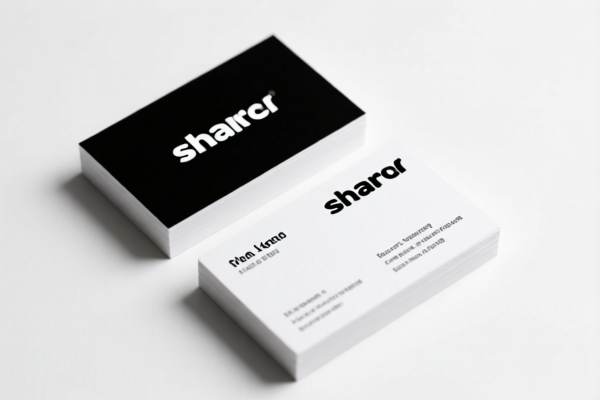
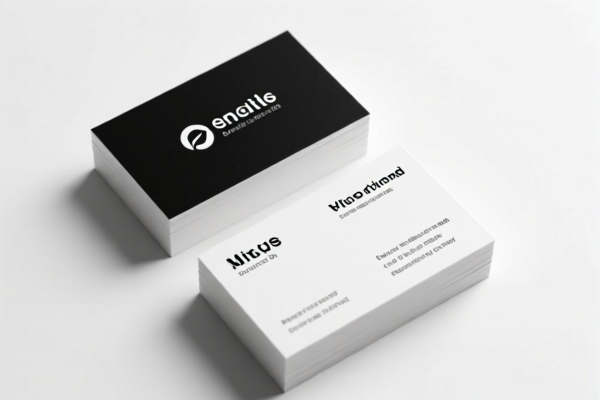


AI Analysis
🃏 Business Cards: The Ultimate Import Guide (2026)
🌐 HS Code Reference & Customs Clearance Strategy | 2026 Tariff Breakdown | Professional Importer's Blueprint
📌 I. Product Definition: What is a "Business Card"?
In the world of international trade, a Business Card is a small printed piece of paper (or similar material) containing identifying information about a person or organization. Despite its simplicity, classification hinges on material composition and printing type.
Core Characteristics: * Material: Primarily paper, paperboard, or cardstock. * Function: Identification, networking, and marketing. * Format: Small, single-sided or double-sided, folded or flat.
⚠️ Critical Classification Logic: * If classified as "Printed Matter" (Paper-based): Falls under Chapter 49 (Books, Newspapers, Printing). * If classified as "Paper Goods" (Material-based): Falls under Chapter 48 (Paper & Paperboard). * Key Difference: The "Paper Goods" classification usually attracts higher penalties due to broader anti-dumping or Section 301/122 tariffs compared to specific printed items.
📦 II. Detailed HS Code Classification (2026 Tariff Reference)
| HS Code | Product Description | Classification Logic | Total Tax Rate (2026) |
|---|---|---|---|
4901.99.00.91 |
Printed Matter (Books, Leaflets) | Fits "Leaflets and similar printed matter"; extremely low page count. | 17.5% |
4911.91.40.40 |
Printed Pictures/Designs | Fits "Other printed images, designs, or photographs"; paper-based. | 17.5% |
4911.99.80.00 |
Other Printed Matter | General "Other printed products"; no material conflict (Paper). | 17.5% |
4901.10.00.40 |
Single Page Printed Matter | Fits "Single-page" characteristic; paper material confirmed by common sense. | 17.5% |
4823.90.86.80 |
Paper/Paperboard Articles | Fits "Other articles of paper/paperboard"; focuses on material over print. | 35.0% |
🔍 Key Insight: * Codes 4901.x & 4911.x: Represent the standard "Printed Matter" classification. These are generally the preferred routes for business cards as they are specific to the content (printing). * Code 4823.90.86.80: Represents the "Raw Material/General Article" route. This is often a fallback if the printing is considered generic, but it carries a significantly higher tax burden (35%).
💰 III. 2026 Tariff Rate Breakdown (Detailed Analysis)
✅ Applicable Jurisdiction: USA (US)
✅ Origin: China (CN)
✅ Effective Period: 2026 (Based on current 122/301 clause structures)
🎯 Group A: The "Printed Matter" Advantage (HS Codes: 4901.99.00.91, 4911.91.40.40, 4911.99.80.00, 4901.10.00.40)
These codes share the same tax structure, offering the most cost-effective route for business cards.
| Tax Component | Rate | Legal/Policy Basis | Explanation |
|---|---|---|---|
| Base Duty (MFN) | 0.0% | General Most-Favored-Nation | No standard tariff for these printed items. |
| Additional Duty | +7.5% | Section 301 / Retaliatory | Specific "Additional Duty" applied to Chinese printed goods. |
| 122-Clause Duty | +10.0% | Section 122 (New Era Tariff) | A specific "122 Clause" tariff applied to paper/printing imports. |
| 🚨 TOTAL RATE | 17.5% | Sum of all above | The standard rate for compliant Business Cards. |
📌 Why this is better: * The 17.5% rate is the industry standard for "Printed Business Cards." * It avoids the punitive "Material" classification.
🎯 Group B: The "Paper Article" Penalty (HS Code: 4823.90.86.80)
This classification treats the card as a generic paper product rather than a printed item.
| Tax Component | Rate | Legal/Policy Basis | Explanation |
|---|---|---|---|
| Base Duty (MFN) | 0.0% | General Most-Favored-Nation | Standard paper goods often have 0% base. |
| Additional Duty | +25.0% | Section 301 / Anti-Dumping | Significantly higher "Additional Duty" applied to generic paper products. |
| 122-Clause Duty | +10.0% | Section 122 | Same 122 clause applies, but the base is higher. |
| 🚨 TOTAL RATE | 35.0% | Sum of all above | Double the cost of printed classification! |
⚠️ Risk Alert: * If a customs officer decides your business card is "just paper" and not "printed matter" (e.g., minimal ink, generic design), they may force the 35.0% rate. * Cost Impact: For a $10,000 shipment, the tax difference is $1,750 vs. $3,500.
🛠️ IV. Customs Clearance Practical Guide (Actionable Tips)
✅ 1. Documentation Checklist (Must-Have)
| Document | Requirement | Why it Matters |
|---|---|---|
| Commercial Invoice | Must clearly state "Business Cards" and "Printed" | Prevents classification as "General Paper Goods" (4823). |
| Product Description | Detail: "Offset printed on cardstock, 300gsm" | Proves the "Printed" nature (Chapter 49) vs. "Material" (Chapter 48). |
| Material Specs | Confirm paper/cardboard composition | Supports the "Paper" argument if challenged. |
| Packaging Photos | Show finished product with design | Visual proof that it is a marketing tool, not raw material. |
| Origin Certificate | If applicable | Helps verify country of origin for 122/301 clauses. |
✅ 2. Classification Strategy (The "Golden Rule")
🔥 Strategy: Always declare as "Printed Matter" (Chapter 49).
| Scenario | Recommended HS Code | Tax Rate | Avoid? |
|---|---|---|---|
| Standard Offset Printed Cards | 4901.99.00.91 or 4911.91.40.40 |
17.5% | ❌ Do NOT use 4823 (35%) |
| Design-heavy / Artistic Cards | 4911.99.80.00 |
17.5% | ❌ Do NOT use 4823 (35%) |
| Single Page Flyers/Cards | 4901.10.00.40 |
17.5% | ❌ Do NOT use 4823 (35%) |
| Generic Blank Cardstock | 4823.90.86.80 |
35.0% | ✅ ONLY if truly UNPRINTED |
Pro Tip: In your invoice, use phrases like:
"Custom printed business cards, high-quality offset printing, informational content, paper substrate." Avoid: "Paper cards" or "Paper cutouts" without mentioning printing.
✅ 3. Handling Audits & Disputes
- Scenario: Customs asks, "Why is this 49xx and not 48xx?"
- Response: "These are printed items containing specific text, logos, and contact information designed for marketing (Chapter 49), not generic paper products (Chapter 48). The primary value is the print, not the material."
- Evidence: Provide a sample with the design clearly visible.
🌍 V. Global Market Comparison (2026 Context)
| Market | Recommended HS Code | Est. Tax Rate (China Origin) | Key Note |
|---|---|---|---|
| 🇺🇸 USA | 4901.99.00.91 / 4911.91.40.40 |
17.5% | Critical: Avoid 4823 (35%). |
| 🇨🇳 China (Export) | Varies | Depends on destination | Ensure destination HS matches. |
| 🇪🇺 EU | 4901/4911 | ~0-3% | Usually lower tariffs, no 122 clause. |
| 🇯🇵 Japan | 4901/4911 | ~3% | Paper goods tax structure differs. |
📌 Conclusion: The USA is the only major market in this data set with the aggressive 122 Clause and Additional Duty combination. * Smart Move: Use Chapter 49 codes (
4901,4911) to stay at 17.5%. * Blunder: Using Chapter 48 (4823) leads to 35.0% – a 100% increase in tax cost!
📌 VI. Common Mistakes & Pitfalls (Learn from Others)
❌ Mistake 1: Vague Description * Bad: "Paper Cards" * Good: "Printed Business Cards, Cardstock, 300gsm" * Result: Avoids the 4823 (35%) trap.
❌ Mistake 2: Ignoring the "122 Clause" * Issue: Assuming 0% base tax means 0% total. * Reality: 0% Base + 7.5% Addl + 10% 122 = 17.5%. * Solution: Budget for 17.5% in all cost calculations.
❌ Mistake 3: Confusing "Material" vs. "Printed" * Issue: Thinking "Paper" always means Chapter 48. * Reality: If it has print content, Chapter 49 takes precedence for business cards.
🎯 VII. Final Verdict: Cost-Saving Strategy
🎯 The Winning Formula:
"Printed Content = Chapter 49 (17.5%)"
"Generic Material = Chapter 48 (35%)"
- Action: Ensure your commercial invoice explicitly states "Printed Business Cards".
- Selection: Prioritize
4901.99.00.91or4911.91.40.40as they are the most specific to the nature of the product. - Warning: Never use
4823.90.86.80unless the cards are truly unprinted (e.g., blank stock).
📌 Final Tip: If your shipment contains high-value metallic cards or plastic cards, the classification might change to Chapter 39 or Chapter 79, potentially altering the tax structure entirely. For standard paper business cards, stick to the 17.5% Chapter 49 route.
✨ Precision Classification = Maximum Profit!
💼 Don't let a 17.5% misunderstanding cost you double the tax!
Customer Reviews
About HS Code Classification
The Harmonized System (HS) is an internationally standardized nomenclature developed by the World Customs Organization (WCO) to classify traded products. Over 200 countries use the HS system as the basis for customs tariffs, trade statistics, and import/export regulations.
Each HS code follows a hierarchical structure:
- Chapter (2 digits) — Broad category of goods (e.g., Chapter 84: Machinery and Mechanical Appliances)
- Heading (4 digits) — More specific grouping within the chapter
- Subheading (6 digits) — Internationally standardized breakdown, used by all WCO member countries
- National subdivisions (8-10 digits) — Country-specific extensions for further classification, such as US HTSUS 10-digit codes
Correct HS code classification is essential for smooth customs clearance, accurate duty payment, and compliance with trade regulations. Misclassification can lead to customs delays, overpayment of duties, or penalties.
When importing from CN to US, the applicable tariff rates may include:
- Most-Favored-Nation (MFN) rate — The standard duty rate applied to WTO members
- General rate — Applied to countries without trade agreements
- Trade remedy duties — Additional tariffs such as Section 301 (anti-dumping), Section 232 (national security), or countervailing duties
The information provided on this page is for reference purposes only. For official classification, please consult with your local customs authority or a licensed customs broker.